
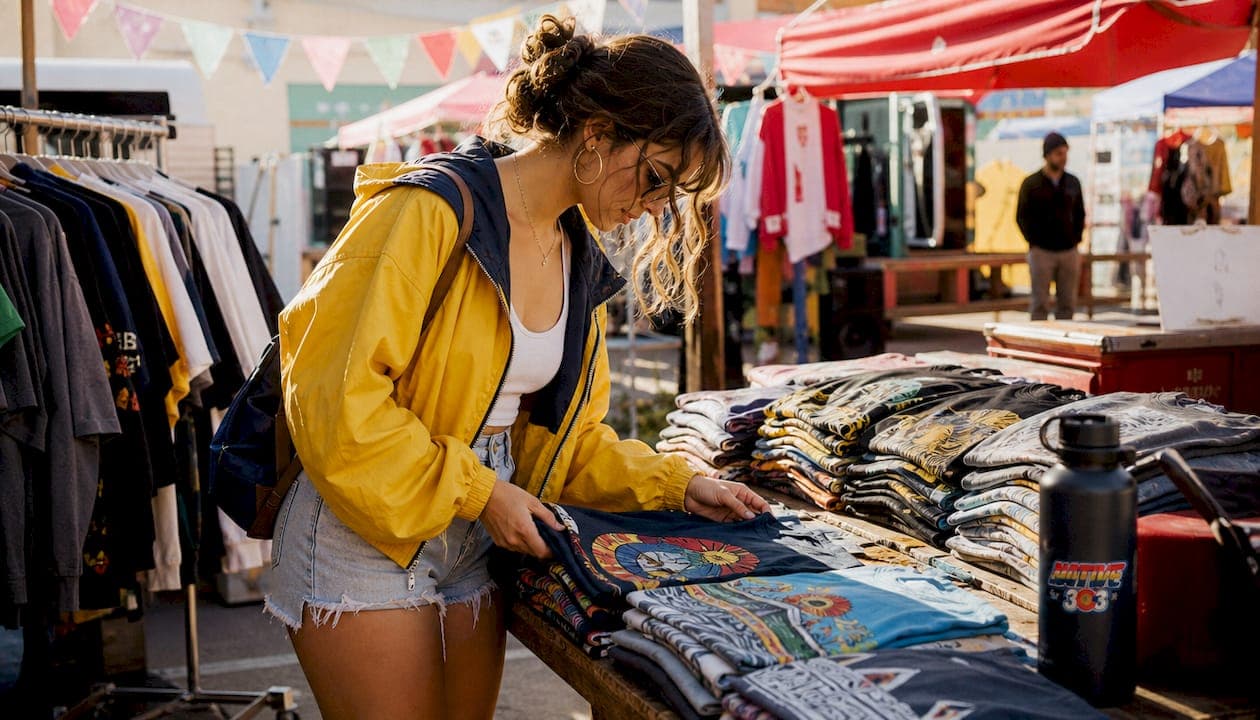
Exclusive apparel resale culture is a values-driven secondary market where rarity, provenance, and storytelling create personal identity and cultural status — not just discounted goods. The global secondhand market has reached $448 billion and is expanding much faster than the broader fashion industry. For Denver shoppers, that means a real opportunity to find pieces that carry local memory, not just a label.
- Buyers get: one-of-a-kind pieces with documented provenance, cultural resonance, and identity value you cannot replicate with a new purchase
- Curators provide: story-led selection, authentication, condition grading, and the editorial context that tells you why a piece matters
- The market: Gen Z and Millennials are expected to drive 71% of all resale growth through 2030, and a large portion of shoppers now discover secondhand finds through social media
For Denver nostalgia buyers, this culture is where a vintage Mile High show tee or a neighborhood skate shop collab becomes more than apparel. It becomes a piece of the city's story — and Native303apparel is built around exactly that idea.
Table of Contents
- What drives exclusive apparel resale culture today?
- How does the exclusive resale market actually work?
- What should buyers evaluate before purchasing?
- How do sellers and curators capture more value?
- How does Denver nostalgia raise the value of exclusive pieces?
- What are the ethical and care basics for exclusive resale?
- Key Takeaways
- Why local stories are the ones worth chasing
- Denver-inspired exclusive drops from Native303apparel
What drives exclusive apparel resale culture today?
The shift from bargain hunting to prestige resale did not happen by accident. Buyers pay premiums for pre-owned pieces because those pieces do something new clothing cannot: they signal taste, history, and a specific point of view.
Five forces explain the current market:
- Identity and self-definition: Curating a wardrobe from archival pieces and limited drops communicates who you are more precisely than buying off a current rack
- Rarity cycles: Limited-edition fashion and one-off drops create genuine scarcity; once a run sells out, the secondary market is the only source
- Storytelling and provenance: A piece tied to a real event, place, or person carries narrative value that often exceeds its original retail price
- Sustainability as accelerator: Extending garment life aligns with how younger buyers want to spend; resale lets them act on that without sacrificing style
- Gen Z and Millennial adoption: These cohorts treat pre-owned as a default entry point into premium fashion, not a compromise
The psychological shift is just as significant as the economic one. Owning a storied piece signals an "eye for the unique" that mass retail simply cannot replicate. Boutique curators and private-client resale services now mirror the high-touch experience of primary luxury retail, pairing digital efficiency with human-led relationships that deepen over time.
Pro Tip: When scanning listings, look for three things immediately: a named provenance (event, place, original owner), at least four condition photos, and a grading note. Listings missing all three are commodity resale, not exclusive resale.
How does the exclusive resale market actually work?
Supply control and authentication drive competitive advantage in exclusive resale far more than platform design or interface polish. The platforms and curators that win are the ones that control what comes in, not just what goes out.
| Platform type | How it sources | Value driver | Buyer experience |
|---|---|---|---|
| Peer-to-peer apps | Individual sellers list directly | Price and volume | Self-service; variable quality |
| Consignment platforms | Sellers ship; platform grades and lists | Authentication and reach | Standardized grading; buyer protection |
| Boutique curators | Curators source, restore, and drop | Curation, storytelling, rarity | High-touch; editorial context |
| Wholesale feedstock partners | Bulk textile recovery and grading | Supply scale and circularity | B2B; feeds curators and brands |
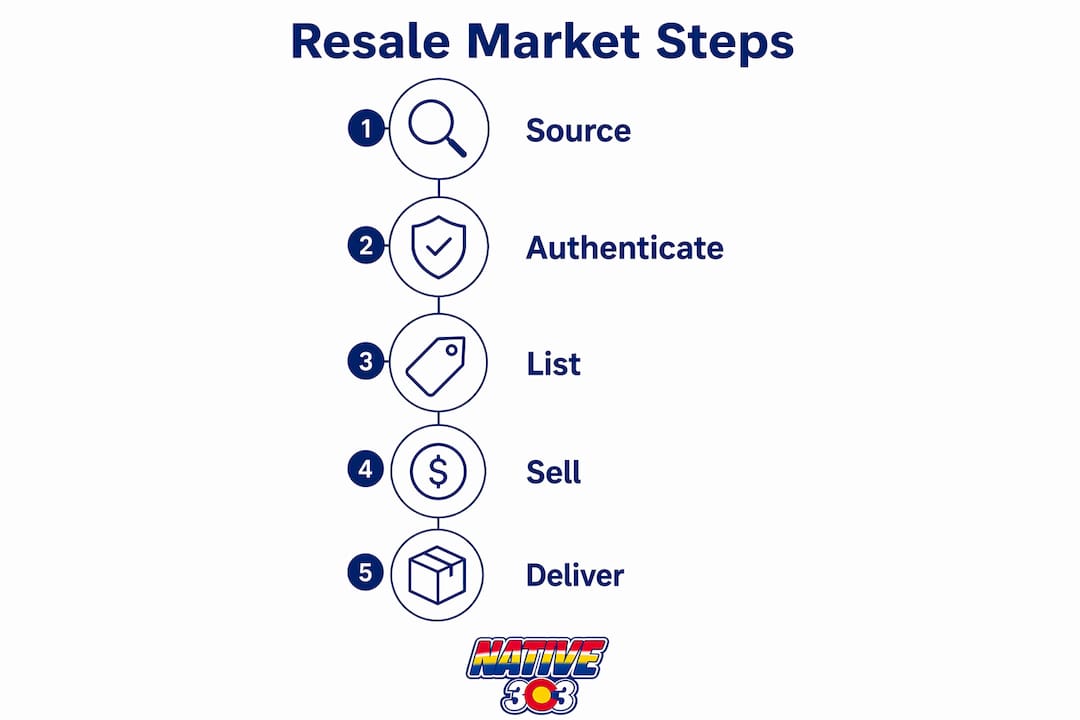
The lifecycle from sourcing to sale follows a repeatable sequence:
- Sourcing: estate sales, musician closets, community collectors, brand archives, and textile recovery pipelines
- Authentication and grading: condition assessment, provenance verification, and documentation — the baseline every serious buyer expects
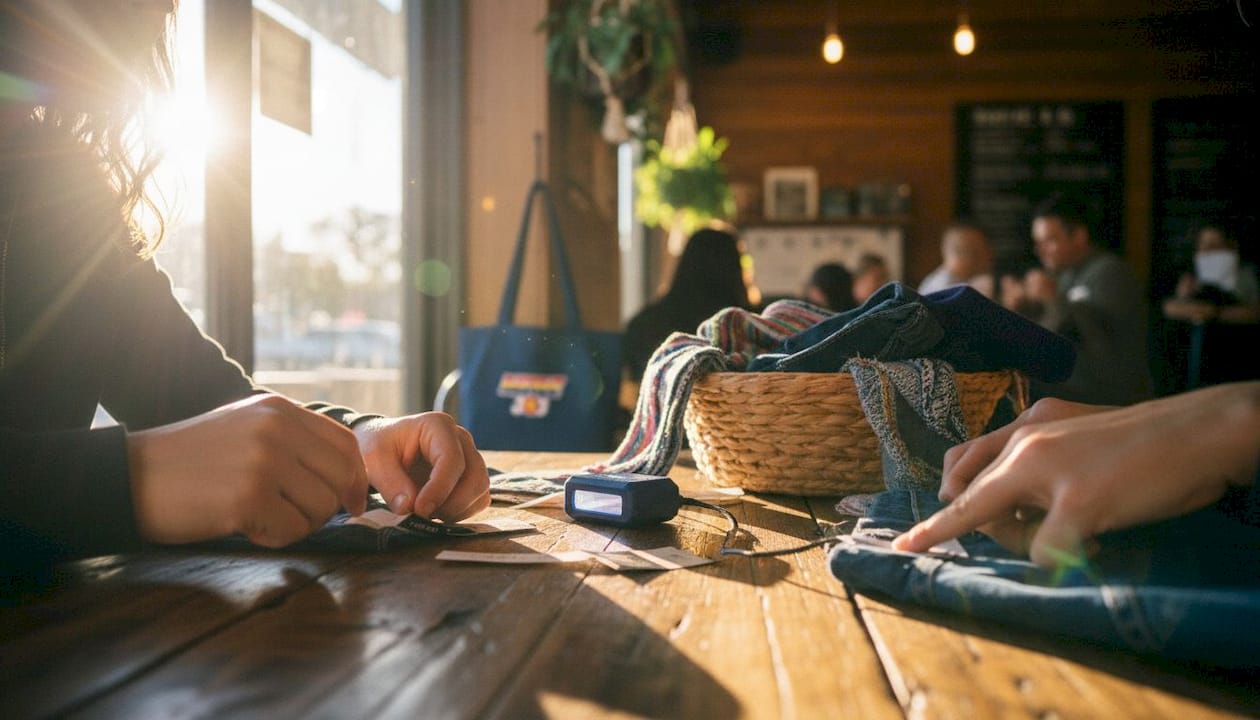
- Restoration: cleaning, minor repair, and professional preparation so pieces feel display-ready without losing patina
- Curated drop or listing: editorial context, provenance copy, and staged photography that tell the story
- Clienteling and aftercare: waitlists, private access, and ongoing buyer relationships that turn one-time purchases into collector habits
Circular supply pipelines are making this process commercially repeatable at scale, which means the gap between boutique curators and large platforms is narrowing on logistics — but widening on story.
What should buyers evaluate before purchasing?
Use a short, repeatable checklist to avoid overpaying and to surface the culturally relevant finds worth your money. Skipping even one step is how buyers end up with a piece that looks right but has no story behind it.
- Verify provenance. Ask for documentation: original receipts, event programs, photos of the piece in context, or a written seller statement. No provenance, no premium.
- Review condition grading. Reputable sellers use a clear scale (mint, excellent, good, fair). Request at least four photos: front, back, label, and any wear points.
- Assess rarity signals. Limited print runs, collab tags, numbered editions, or regional distribution all indicate genuine scarcity. Cross-reference with limited-edition release types to understand what you are looking at.
- Check cultural relevance. For Denver buyers: does this piece connect to a real local moment, venue, or community? Place-based fashion carries a premium that generic vintage does not.
- Request measurements. Never rely on tagged size alone. Ask for chest, length, and shoulder measurements. Vintage sizing runs inconsistently, and a piece that does not fit loses most of its wearable value.
On pricing: a piece with strong provenance and cultural relevance will cost more than comparable commodity resale. That gap reflects the storytelling premium. Expect to pay it for the right piece, and be skeptical of "exclusive" listings priced at thrift store levels with no documentation.
How do sellers and curators capture more value?
Storytelling and client relationships are the primary levers curators use to command premium prices. The garment itself is often secondary to the narrative built around it.
Practical steps for sellers and curators:
- Source provenance first. Before you list, document the chain of ownership. Who wore it, where, and when? A community-inspired piece with a named local connection sells differently than an identical piece without one.
- Authenticate professionally. Use category specialists or hybrid AI-plus-human workflows for high-value items. Document the process and include it in the listing.
- Restore, do not over-restore. Clean and repair to display-ready condition, but preserve patina. A worn graphic on a 1990s local band tee is part of the value, not a defect.
- Write provenance copy. One strong paragraph naming the piece's origin, cultural context, and condition tells buyers more than a spec sheet. Archival research pays off here.
- Use staged, editorial photography. Flat lays on a white background read as commodity. Context shots — worn, styled, placed against a relevant backdrop — signal curation.
Pro Tip: Build recurring supply relationships with estate sale companies, local musicians, and venue managers before you need inventory. A standing relationship means first access to pieces before they hit the open market. Pair that with a waitlist for your drops and you create demand before supply arrives.
High-touch clienteling — waitlists, private drops, curator outreach — turns occasional buyers into repeat collectors. For small-batch curators, that relationship is the business model.
How does Denver nostalgia raise the value of exclusive pieces?
Hyperlocal provenance materially increases desirability for Denver buyers. A piece tied to a specific neighborhood, venue, or cultural moment in the metro area carries a story that no out-of-state seller can replicate.
Where to source Denver-rooted pieces:
- Local estate sales in Capitol Hill, Baker, and Five Points neighborhoods, where decades of music and arts culture left behind genuine archival material
- Community collectors and musicians who hold merch from defunct clubs, local label releases, and neighborhood events
- Stadium and arena merch archives connected to Colorado sports history
- Repair and restoration partners who work with local families on heirloom pieces
- Local skate shop archives and collab remnants from brands that operated in the metro area
Local history shapes apparel identity in ways that are hard to fake. A Mile High show tee from a specific tour, a neighborhood fair graphic from the 1980s, or a local skate shop collab from a brand that no longer exists — these pieces carry place-based stories that resonate with Denver buyers on a level that generic vintage cannot reach.
Native303apparel commissions and releases Denver-inspired designs that draw directly on this nostalgia: metro eateries, clubs, and classic shops that shaped the city's identity. Buyers can request provenance context or inquire about locally themed commissions through the brand's store.
What are the ethical and care basics for exclusive resale?
Resale extends garment life, but its sustainability impact is complex. Resale complements new production rather than replacing it outright, and buyers and sellers both carry responsibilities that go beyond the transaction.
Ethics checklist:
- Disclose condition honestly. Misrepresenting wear, repairs, or alterations is the fastest way to lose buyer trust permanently.
- Respect cultural provenance. Pieces tied to Indigenous, religious, or community-specific traditions require extra care. Selling them without context or consent can cause real harm.
- Verify ownership clearly. If provenance is disputed or unclear, resolve it before listing. A one-sentence legal caution: provenance and ownership disputes can carry legal consequences; consult a qualified attorney if you have any doubt about a piece's chain of title.
Care checklist for preserving value:
- Store in acid-free tissue or breathable garment bags, away from direct light
- Clean with the gentlest effective method; dry cleaning is often safer than machine washing for archival pieces
- Repair structurally (seams, closures) but avoid over-restoration that erases patina
- Document any restoration work and disclose it to future buyers
Resale's sustainability promise is real but partial. Extending a garment's life by nine months reduces its carbon, water, and waste footprint — but the full circular benefit only materializes when pieces stay in active use rather than sitting in a closet waiting for the right buyer.
For buyers integrating exclusive pieces into a working wardrobe, outfit recycling strategies help maximize both wear frequency and long-term value.
Key Takeaways
Exclusive apparel resale culture creates lasting value through provenance, rarity, and storytelling — and Denver's hyperlocal history gives local buyers a genuine edge in finding pieces that carry both cultural and monetary weight.
| Point | Details |
|---|---|
| Culture drivers | Identity, rarity, and storytelling explain why buyers pay premiums for pre-owned exclusive pieces. |
| Market scale | The global secondhand market has reached $448 billion, growing much faster than overall fashion. |
| Buyer checklist | Verify provenance, review condition grading, confirm measurements, and assess cultural relevance before buying. |
| Seller advantage | Provenance copy, professional authentication, and high-touch clienteling are the primary levers for premium pricing. |
| Native303apparel | Denver-inspired, story-led limited releases from Native303apparel connect local nostalgia directly to exclusive apparel culture. |
Why local stories are the ones worth chasing
Most resale advice focuses on brand names and condition grades. Those matter, but they miss the deeper point. The pieces that hold value longest — and mean the most to the people who own them — are the ones tied to a real place and a real moment.
A reconstructed tee from a defunct Denver club is not just vintage. It is evidence that something happened here, that people showed up, that a community existed. That is what provenance actually means when you strip away the jargon. It is not paperwork. It is proof.
The exclusive resale market rewards buyers who understand that distinction. When you know what you are looking for — a piece with a named origin, a documented history, a connection to a community you actually belong to — you stop browsing and start collecting. The difference in how those pieces feel to own is not subtle.
If you are a Denver buyer, that edge is already yours. The city's history is sitting in estate sales, musician closets, and neighborhood archives right now. The question is whether you go find it before someone else does.
Denver-inspired exclusive drops from Native303apparel
Most resale platforms give you volume. Native303apparel gives you Denver. Every release draws directly from the metro's real history: the eateries, clubs, and classic shops that shaped the city's identity across decades.
The drops are limited by design. Once a run sells out, it does not return — which is exactly what makes each piece worth owning. You can browse current and upcoming releases at Native303apparel, check fit details on the size guide, and learn more about the brand's Denver roots on the About page. If you have a specific local story, venue, or neighborhood in mind, reach out directly to ask about provenance context or commission inquiries. The next drop is already in progress.
Useful sources
- ThredUp's 14th Annual Resale Report — GlobalData-conducted market study with U.S. and global secondhand market size, growth projections, and generational adoption data; primary source for scale and demand figures
- Luxury Resale's Next Big Battle Is No Longer Digital — industry analysis on supply control, authentication infrastructure, and circular supply pipelines as the new competitive frontier
- Inside the World of Resale for the Ultra-Rich — Vogue reporting on high-touch clienteling, private-client services, and the relational model driving loyalty in premium resale
- How Cool-Girl Closets Became Resale's Gold Mine — Vogue feature on provenance narratives, editorial curation, and how storytelling raises perceived value above original retail price
- ThredUp's Rebrand and the Psychology That Made Resale Cool — analysis of the psychological shift from stigma to cultural capital, and the social signaling mechanics behind aspirational resale