
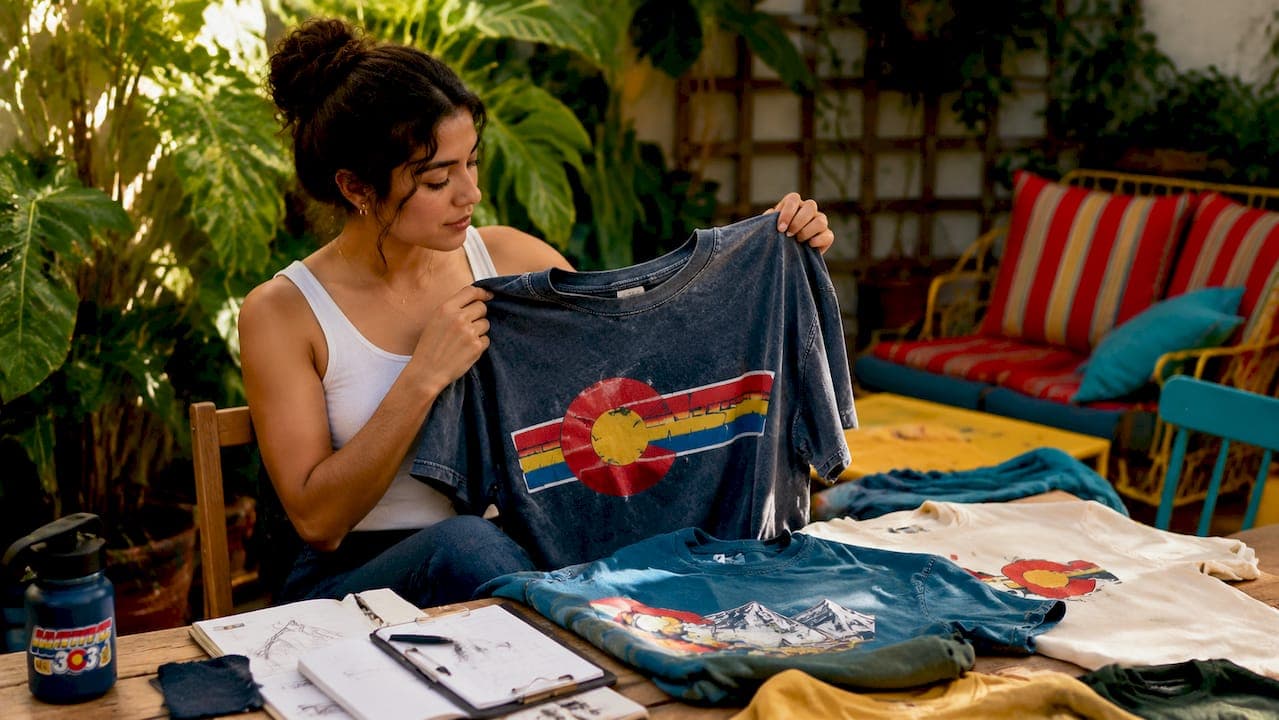
Genuine Denver-inspired clothing is defined by three non-negotiable features: garment-dyed fabric, Direct-to-Garment (DTG) printing, and storytelling rooted in real local history. Generic mass-produced shirts wear the word "Colorado" but carry none of its weight. The difference between authentic Colorado nostalgia apparel and a tourist trap tee comes down to what you can feel, read, and trace back to a real community. Native303apparel builds every design around metro Denver's iconic eateries, clubs, and shops, making it a reliable benchmark when you want to spot genuine Denver-inspired clothing designs that actually mean something.
What fabric and printing methods indicate authentic Denver-inspired apparel?
Authentic Denver apparel starts with the fabric. Garment-dyed and soft-washed fabrics create a broken-in feel that mass-produced shirts cannot replicate. That lived-in softness is not an accident. It comes from a specific wash process applied after the garment is sewn, which sets the color unevenly in a way that reads as vintage without making the shirt fall apart after six washes.
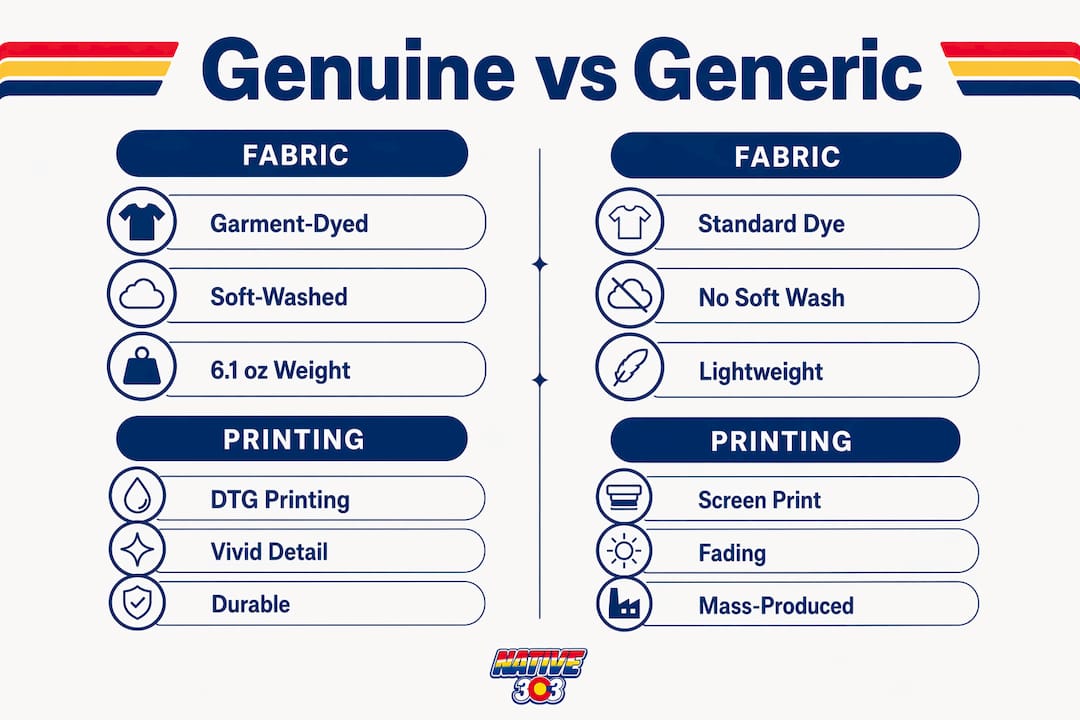
The weight of the fabric matters just as much as the finish. Midweight 6.1 oz ringspun cotton balances softness with year-round durability. That weight is the industry standard for premium heritage tees. Anything lighter tends to lose its shape quickly. Anything heavier starts to feel like a sweatshirt.
Printing method is the second major signal. DTG printing applies design directly to fabric with vivid colors and sharp edges that do not crack or peel over time. Traditional screen printing works for simple graphics, but multicolor designs with fine detail require DTG to hold up through repeated washing. If a shirt's graphic looks slightly blurry or starts cracking after a few washes, the brand cut corners on printing.
Pro Tip: Flip the shirt inside out and check the label. A tear-away label signals that the brand invested in garment comfort. A printed label inside the collar is another positive sign. If the label lists only "polyester blend" with no cotton weight, put it back.
| Feature | Authentic Denver apparel | Generic mass-produced shirt |
|---|---|---|
| Fabric type | Garment-dyed, soft-washed ringspun cotton | Standard pre-washed cotton or poly blend |
| Fabric weight | 6.1 oz midweight | 4.5–5.3 oz lightweight |
| Print method | DTG or DTF with vivid, durable color | Screen print, prone to cracking |
| Label | Tear-away or printed inside collar | Scratchy woven label |
| Vintage feel | Built into fabric wash process | Simulated with distressed graphic overlay |
How do authentic Denver clothing designs incorporate local culture and history?
Authentic Colorado heritage t-shirt designs do not rely on mountain silhouettes and generic elk graphics. The real markers are specific cultural references that only a local would recognize or care to research. The word "Colorado" itself comes from Spanish, meaning "colored red," a reference to the reddish soil seen by early Spanish explorers. Brands that acknowledge this history signal a deeper commitment to the place than brands that slap a mountain range on a shirt and call it done.
Authentic local designs embed community ties through collaborations with local artists, musicians, and nonprofits rather than relying on generic outdoor imagery. INDYINK, a Denver-based brand with more than 20 years of local presence, has partnered with thousands of local entities to produce designs with intentional meaning. That kind of track record is a benchmark. When a brand can name the artist, the neighborhood, and the story behind a design, the shirt earns its price tag.
Watch for these cultural storytelling elements when evaluating any locally inspired shirt for Coloradans:
- Named local references. The design cites a specific Denver neighborhood, venue, or era, not just "Colorado" or "Mile High."
- Artist attribution. The brand names the local artist or creative partner behind the graphic.
- Historical narrative. The design connects to a real event, cultural movement, or community milestone.
- Multicultural acknowledgment. The design reflects Denver's Spanish, Indigenous, and immigrant heritage rather than a single outdoor lifestyle trope.
- Community partnership. The brand has a documented relationship with a local nonprofit, school, or arts organization.
Authentic designs reflect Denver's lived-in identity through music, art, and multicultural heritage rather than stereotypical outdoor imagery. That distinction separates a shirt worth keeping from one that ends up in a donation bin.
What pricing and construction features distinguish authentic local clothing?
Price is a reliable signal when you know what range to expect. Premium authentic Denver apparel retails between $36 and $40 for items made with US-grown cotton and quality construction. That range reflects the cost of better raw materials, ethical sourcing, and skilled printing. A $15 shirt with a Denver skyline graphic is almost certainly printed on a lightweight blank with a screen-print graphic that will crack within a season.
Construction details separate a shirt built to last from one built to sell quickly. Check these features before buying:
- Reinforced ribbed collar. The collar should hold its shape after washing. A collar that stretches out after two wears signals low-quality knitting.
- Tear-away label. Reinforced collars and tear-away labels contribute directly to garment longevity and comfort through repeated wear.
- Side seams. Tubular construction (no side seams) is cheaper to produce and loses shape faster. Side-seamed shirts hold their fit longer.
- Even dye saturation. Hold the shirt up to light. Garment-dyed fabrics show slight tonal variation, which is intentional. Blotchy or streaky dye is a defect, not a feature.
- Consistent print registration. The graphic should sit centered and straight. Misaligned prints indicate low production standards.
Higher price reflects quality and ethical sourcing, not just branding. A shirt priced at $38 from a local Denver brand almost always costs more to produce than a $38 shirt from a national fast-fashion retailer. The difference shows up in how the shirt feels and holds up after a year of regular wear.
What practical steps help you spot genuine Denver-inspired clothing designs?
Evaluating authenticity takes about two minutes if you know what to check. The process works whether you are shopping in person or reviewing product photos online.
Start with the fabric description. Any brand serious about quality lists the fabric weight, fiber content, and wash treatment in the product description. If that information is missing, the brand is hiding something. Next, look at the print. Zoom into product photos and check whether the graphic has sharp edges and consistent color. A blurry or pixelated graphic in a product photo means the print quality is low.
Then read the brand story. Genuine Denver apparel is made through local artist collaborations and community partnerships rather than mass production. A brand's "About" page should name specific people, places, or partnerships. Vague language like "inspired by the West" or "celebrating Colorado culture" without specifics is a red flag.
| Design feature | Authentic Denver apparel | Generic look-alike |
|---|---|---|
| Graphic source | Named local artist or community partner | Stock illustration or clip art |
| Cultural reference | Specific neighborhood, venue, or era | Generic state outline or mountain range |
| Brand story | Names people, places, and partnerships | Vague regional inspiration language |
| Fabric info | Weight, fiber, and wash treatment listed | "100% cotton" with no further detail |
| Price point | $36–$40 for premium construction | Under $20 with no quality disclosure |
Common mistakes shoppers make include judging authenticity by logo size or graphic complexity alone. A large, detailed graphic on a cheap blank is still a cheap shirt. The logo tells you nothing about the fabric, the print method, or the story behind the design.
Pro Tip: Search the brand name alongside the artist or neighborhood referenced in the design. If the collaboration is real, you will find social media posts, press coverage, or community event mentions that confirm it. No results usually means the "local" story is invented.
Native303apparel publishes its design narratives openly, connecting each piece to a specific memory from metro Denver's past. That transparency is itself a quality signal. You can check the brand's background to see how each design connects to a real Denver story before you buy.
Key Takeaways
Authentic Denver-inspired clothing requires garment-dyed fabric, DTG printing, and verifiable local storytelling to qualify as genuine Colorado nostalgia apparel.
| Point | Details |
|---|---|
| Fabric is the first filter | Look for garment-dyed, soft-washed 6.1 oz ringspun cotton as the baseline for authentic vintage feel. |
| DTG printing signals quality | Direct-to-Garment printing produces sharp, durable graphics that do not crack or peel after washing. |
| Price reflects construction | Genuine Denver apparel retails at $36–$40, reflecting US-grown cotton and reinforced garment construction. |
| Cultural specificity matters | Authentic designs name real Denver neighborhoods, artists, and community partnerships, not generic regional imagery. |
| Brand transparency is a tell | Brands that publish their design stories and artist collaborations are far more likely to deliver genuine local apparel. |
Denver fashion is more than a mountain on a shirt
Denver's clothing scene has always been underestimated, and I think that works in favor of people who pay attention. For years, the default assumption was that Colorado style meant fleece vests and hiking boots. That was never the full picture. The city has a deep music history, a layered immigrant heritage, and neighborhoods with distinct visual identities that have nothing to do with the outdoors.
Denver fashion is moving beyond hiking aesthetics toward elegant, versatile apparel that works equally well on the trail and at a dinner table. That shift is real, and it shows up in how the best local brands approach design. The brands worth your money are the ones treating a t-shirt as a document, not a decoration.
My honest advice: stop buying shirts that could have been made anywhere. The best locally inspired shirts for Coloradans carry a specific memory or reference that makes you want to explain the shirt to someone who asks. That is the test. If you cannot tell a story about what is on your chest, the brand did not do its job. Native303apparel's design showcase is a good place to see what that standard looks like in practice.
— Rob
Authentic Denver designs at Native303apparel
Native303apparel was built around one idea: metro Denver's iconic eateries, clubs, and shops deserve to live on in something you can wear. Every design connects to a real memory from the city's past, produced with garment-dyed fabrics and DTG printing that hold up the way the memories do.
The brand works with local creative partners to make sure each piece carries a story you can trace. If you want to style vintage Colorado apparel that actually reflects where you are from, start with the full collection at Native303apparel. Not sure about sizing? The size guide covers everything you need before you order.
FAQ
What makes a Denver-inspired shirt genuinely authentic?
Authentic Denver-inspired shirts use garment-dyed fabric, DTG printing, and designs tied to specific local artists, neighborhoods, or cultural history. Generic regional imagery without named references or community partnerships signals mass production, not local authenticity.
What fabric weight is standard for quality Colorado heritage tees?
Midweight 6.1 oz ringspun cotton is the industry standard for durable, comfortable Colorado heritage t-shirt designs. Lighter fabrics lose shape faster and do not hold the garment-dyed vintage finish as well.
How much should I expect to pay for authentic Denver apparel?
Genuine Denver apparel with premium US-grown cotton and reinforced construction retails between $36 and $40. Shirts priced significantly below that range typically use lighter blanks and lower-quality printing methods.
How do I verify that a brand's local story is real?
Search the brand name alongside the artist, venue, or neighborhood referenced in the design. Real collaborations leave a trail of social media posts, press coverage, or community event mentions that confirm the partnership.
What is Colorado nostalgia apparel?
Colorado nostalgia apparel is the recognized category for clothing that references specific local memories, venues, and cultural moments from Colorado's past. It differs from general Colorado-themed merchandise by grounding each design in a verifiable local narrative rather than generic state imagery.