
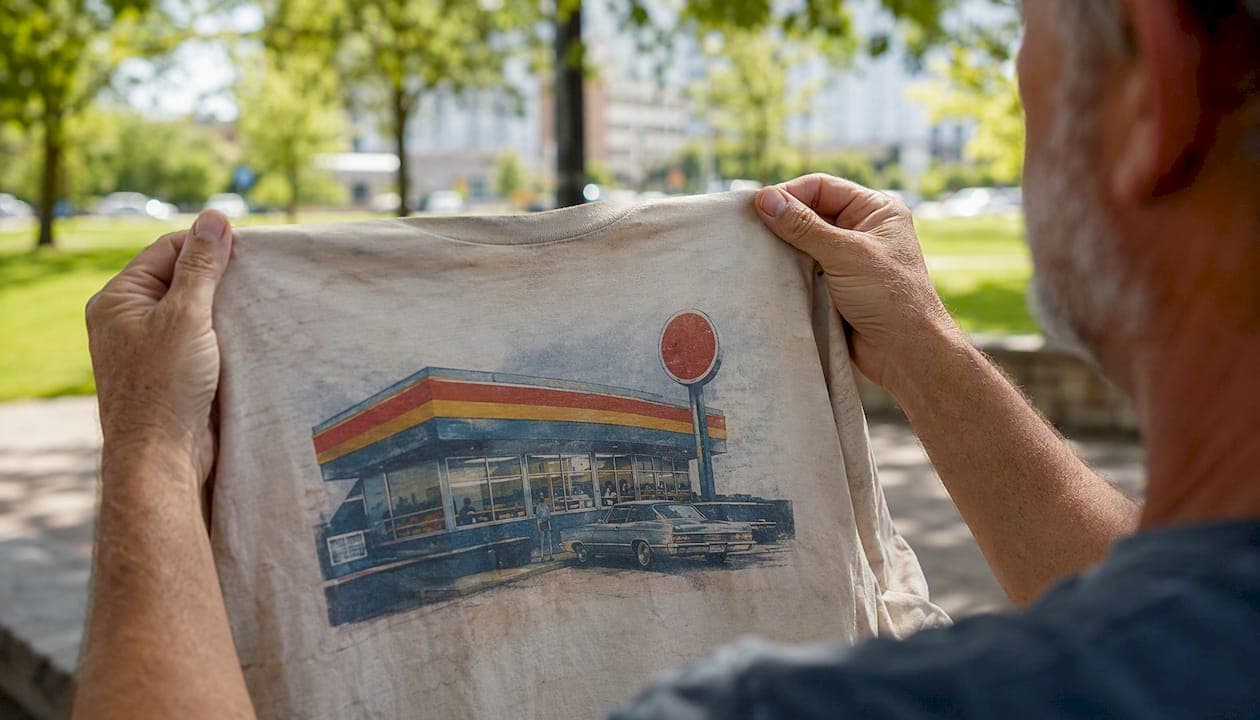
Locals buy Denver-themed nostalgia apparel because it signals community identity, recalls the personal milestone years locked in memory, and feels authentic when tied to real places like long-loved eateries or clubs. Research on psychological safety and nostalgia confirms that people gravitate toward familiar imagery during periods of stress or change, and consumer research shows perceived authenticity is what separates a meaningful keepsake from a forgettable souvenir. Native303apparel builds on exactly that: designs rooted in real Denver venues, documented provenance, and the specific visual cues that trigger genuine memory.
The most common reasons Denver and Colorado collectors reach for nostalgic apparel:
- Identity signaling — wearing a piece that says "I was here, I belong here"
- Memory anchoring — reconnecting with the years that shaped you most
- Community belonging — sharing an in-group reference only longtime locals recognize
- Comfort and psychological safety — especially during times of personal or civic change
- Collectible and keepsake value — limited runs that document local history
- Aesthetic appeal — era-accurate graphics that hold up as everyday fashion
Key takeaways
Locals collect Denver nostalgia apparel because it anchors identity, recalls the reminiscence-bump years, and carries authentic provenance that generic retro goods cannot replicate.
| Point | Details |
|---|---|
| Reminiscence bump drives intent | Era-specific cues targeting ages 15–25 raise purchase intent more than generic vintage imagery. |
| Authenticity over aesthetics | Documented provenance and real local ties predict trust; surface retro styling alone does not. |
| Design specificity matters | Named venues, era-accurate typography, and limited-run numbering turn apparel into collectible history. |
| Preserve what you collect | Cold washing, acid-free storage, and provenance labeling keep keepsakes meaningful for decades. |
| Native303apparel | Offers Denver nostalgia apparel with documented local designs and limited runs for serious collectors. |
Table of Contents
- Why nostalgia works: the psychology behind collecting local keepsake apparel
- Design elements that make Denver nostalgia apparel irresistible
- How brands make nostalgia feel real — and how to spot inauthentic retro attempts
- A practical checklist for choosing meaningful nostalgia apparel
- How to care for and preserve nostalgic apparel so it stays meaningful
- Why local nostalgia apparel is worth doing right
- Native303apparel: Denver nostalgia apparel built on real provenance
- Research and local resources cited
- Sources
Why nostalgia works: the psychology behind collecting local keepsake apparel
Nostalgic apparel works because it provides comfort, strengthens identity, and links your present self to the years that mattered most. That connection is not accidental; it is grounded in well-documented cognitive and emotional mechanisms.
The reminiscence bump is the clearest of those mechanisms. Psychologists use the term to describe the disproportionately vivid memories people form between roughly ages 15 and 25. Experimental research by Ju et al. found that advertisements targeting those bump years elicit higher "diachronic relevance" and greater purchase intent, with diachronic relevance fully mediating the bump's effect on intent. For a 55-year-old Denver native, a shirt referencing a club or diner from the late 1980s is not just retro — it is neurologically loaded.
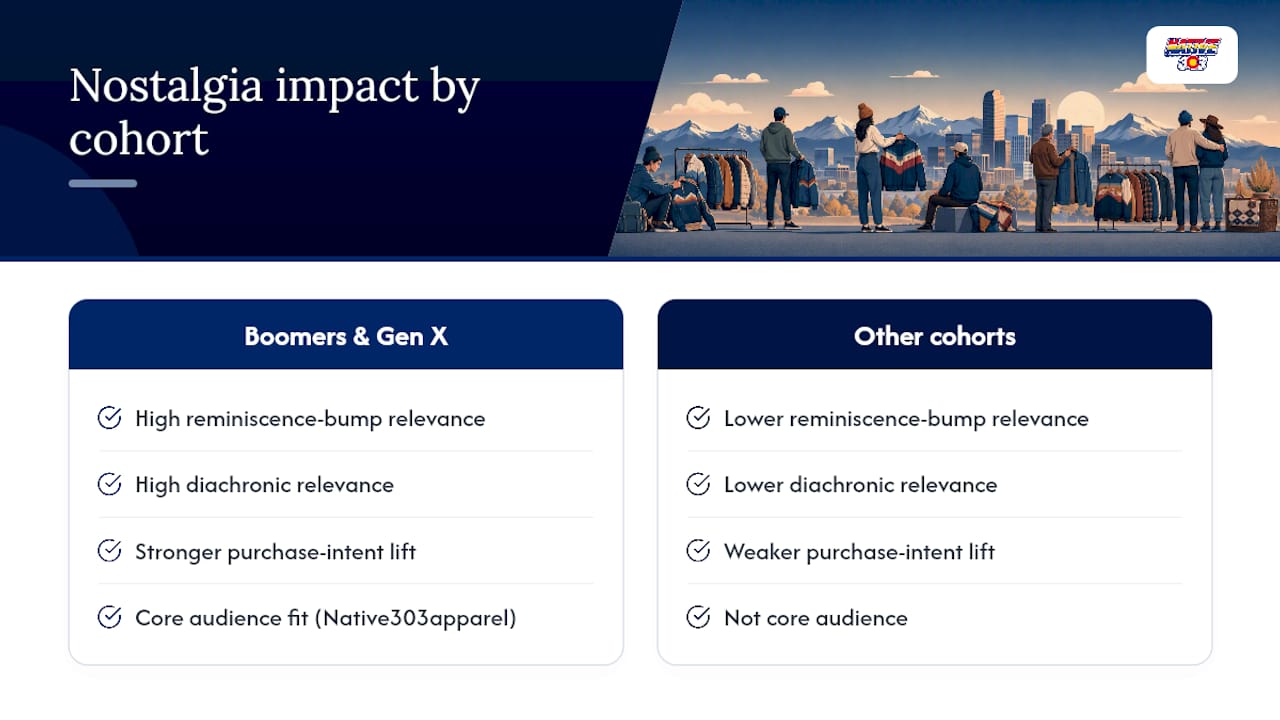
Generational timing matters too. Late-stage Boomers and Gen X adults sit squarely in the age range where bump-era cues are most potent, which maps almost perfectly onto Native303apparel's core audience of older Colorado natives. A recent study on nostalgia marketing confirmed that generational differences alter emotional response strength, with older cohorts showing stronger purchase-intent lifts from nostalgic appeals.
Nostalgia also functions as a social signal. Wearing hyperlocal apparel distinguishes longtime residents from newcomers and creates an in-group dynamic around shared local memories — the "if you know, you know" effect that local streetwear trends have amplified into a broader cultural moment.
Pro Tip: Nostalgia is most persuasive during community transitions — a neighborhood redevelopment, a beloved business closing, or a personal milestone like a reunion. Those are the moments when place-based apparel moves from "nice to have" to genuinely meaningful.
Design elements that make Denver nostalgia apparel irresistible
The visual and textual cues that reliably trigger local memory are specific, not generic. A shirt that says "Colorado" in a distressed font is decoration. A shirt that names a specific Capitol Hill diner from 1987 is a conversation starter.
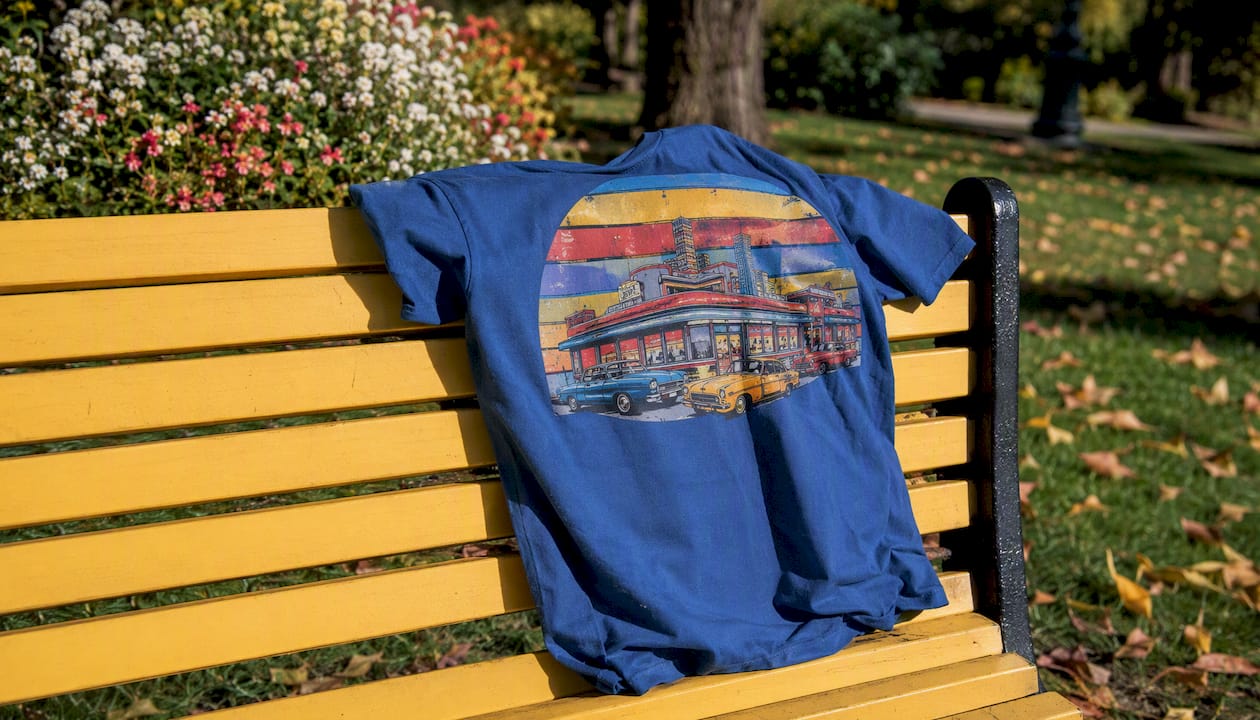
Research on nostalgic labeling..pdf) shows that replacing generic labels with descriptive, place-based, or nostalgic ones increases purchase intent and favorability — particularly for products that are intrinsically tied to memory (local foods, neighborhood venues). The effect breaks down when the nostalgic label feels forced or unearned, which is why provenance matters as much as aesthetics.
| Design cue | Why it works | Example |
|---|---|---|
| Named local venue | Triggers specific episodic memory | A defunct Denver music club by name |
| Era-accurate typography | Signals authenticity to the decade | 1970s block lettering or era-appropriate grunge fonts |
| Local food or drink reference | Intrinsically nostalgic; tied to sensory memory | A beloved local burger joint's logo style |
| Provenance tag or date | Confirms the design is documented history | "Est. 1974, closed 2001" on the hem |
| Limited-run numbering | Adds collectible scarcity | "Print #47 of 200" |
Key design triggers to look for or request:
- Specific street addresses or neighborhood names (Five Points, LoDo, Colfax Avenue)
- Era-accurate color palettes (harvest gold and avocado green for 1970s; neon and black for 1980s)
- References to local foods, drinks, or events tied to a specific decade
- Typography that matches the signage style of the era being referenced
- Provenance tags documenting the venue's history and the design's origin
Pro Tip: The most resonant designs feel personal, not panoramic. A single named place beats a collage of generic Colorado imagery every time. Scale down; go specific.
Place-based fashion and era-specific graphics both explain in detail why these cues work for Denver collectors specifically.
How brands make nostalgia feel real — and how to spot inauthentic retro attempts
Authenticity beats generic retro aesthetics every time. Consumer research is consistent on this: perceived authenticity and alignment with a brand's real history are what predict trust and long-term engagement, not surface-level vintage styling.
The difference shows up in the sourcing process. Licensing designs for long-gone local establishments requires proactive outreach to former owners or their descendants, documenting permission, and building a paper trail that turns merchandise into curated local history. Reporting on local apparel makers confirms that this process is what separates provenance-rich pieces from generic "vintage-style" goods.
When a design traces back to a real conversation with the family that ran a neighborhood spot for thirty years, the shirt carries that story. Buyers feel it. They ask about it. That's the difference between a keepsake and a costume.
Native303apparel approaches its Denver designs the same way: tracing each piece to a documented local venue, with design choices grounded in the actual era and aesthetic of that place. See the brand's about page for the full provenance approach.
Pro Tip: Before buying, ask three questions: Where did the original artwork come from? Does the seller have permission to use it? How many were printed? A seller who can answer all three is selling history. One who can't is selling a vibe.
A practical checklist for choosing meaningful nostalgia apparel
The best pieces in any local collection share one quality: a direct, personal link to a real place or time in your own life. Start there and work outward.
- Confirm the place link. Does the design reference a specific Denver or Colorado venue you actually remember? Generic state pride apparel is not the same as local memory apparel.
- Check provenance. Can the seller document where the design came from and whether it was licensed or researched?
- Assess material quality. Keepsakes need to last. Look for ring-spun cotton, quality screen printing, and construction that holds up to gentle washing over decades.
- Note the edition or print run. Limited runs hold more meaning and more value. Ask how many were printed.
- Consider display and storage. Will you wear it, frame it, or store it? Your answer should influence the weight and finish you choose at purchase.
- Ask about the design's era accuracy. Does the typography, color palette, and graphic style actually match the decade being referenced?
A few practical tips on timing and sourcing:
- Follow local brands on social media for drop announcements; limited runs sell out fast
- Local events, reunions, and neighborhood festivals often feature exclusive releases
- Ask sellers directly about licensing for closed businesses before buying
Spotting genuine Denver-inspired designs and building a vintage graphic tee collection both offer deeper collector guidance from the Native303apparel blog.
How to care for and preserve nostalgic apparel so it stays meaningful
Light, moisture, and abrasion are the three fastest ways to shorten a keepsake's life. A shirt that survives thirty years in a drawer is worth nothing; one stored correctly can outlast its owner.
- Wash inside-out in cold water on a gentle cycle, or hand-wash for printed graphics
- Air-dry flat rather than machine-drying, which degrades both fabric and print
- Store folded in archival tissue inside an acid-free box, away from direct sunlight
- Avoid prolonged display in direct light — UV exposure fades prints faster than washing does
- Label each piece with a small card noting the venue name, era, where you bought it, and the print number if known
- Frame fragile or sentimental pieces behind UV-protective glass rather than storing them folded
Pro Tip: Take a photo of each piece alongside a handwritten card noting its provenance before you store it. Future family members will know exactly what they're holding — and why it matters.
Why local nostalgia apparel is worth doing right
The conventional take on nostalgic clothing trends frames them as a marketing tactic: brands deploy retro imagery, buyers feel warm, sales follow. That framing misses what actually drives a Denver native to keep a shirt for forty years.
Social media amplification has made local nostalgia more visible, but it has also flooded the market with generic "vintage-style" pieces that reference nothing real. The result is that authenticity has become the actual scarce resource. A shirt that names a real place, documents its provenance, and gets the era right is rarer than it should be — and that rarity is exactly what makes it worth collecting.
The research on purchase intent consistently shows nostalgia drives buying behavior. What the research cannot capture is the specific weight of holding something that proves you were part of a place's story. That is what the checklist above is really protecting.
Native303apparel: Denver nostalgia apparel built on real provenance
Native303apparel creates Denver and Colorado nostalgia apparel grounded in documented local history, not generic retro styling. Every design traces back to a real venue — a specific eatery, club, or shop that shaped metro Denver's identity.
- Provenance-forward designs: each piece references a named local venue with era-accurate graphics and documented design origins
- Limited runs with collectible value: small print runs mean your piece is a genuine keepsake, not mass-market merchandise
If you're ready to own a piece of Denver's story, browse the full collection at Native303apparel and find the design that takes you back.
Research and local resources cited
- Ju et al., 2016 — reminiscence bump and purchase intent (Applied Cognitive Psychology)
- Toronto Metropolitan University — nostalgia marketing and psychological safety
- Advances in Consumer Research — authenticity and nostalgia
- Denver Monthly — nostalgia campaigns and social media amplification
- Book chapter on nostalgia marketing effects, 2026
- Shaw Local — licensing and provenance in local apparel
- Native303apparel blog — local nostalgia design examples
Sources
- Why nostalgia marketing works — and how brands are cashing in on your memories - News and Events - Toronto Metropolitan University (TMU)
- Ju et al., 2016 — reminiscence bump advertising study (Applied Cognitive Psychology)
- Advances in Consumer Research — authenticity and nostalgia research
- The Impact of Nostalgia in Modern Marketing Campaigns - Denver Monthly
- Book chapter on nostalgia marketing effects (2026)
- 815 Rewind Apparel celebrates memorable bygone locales - Shaw Local