
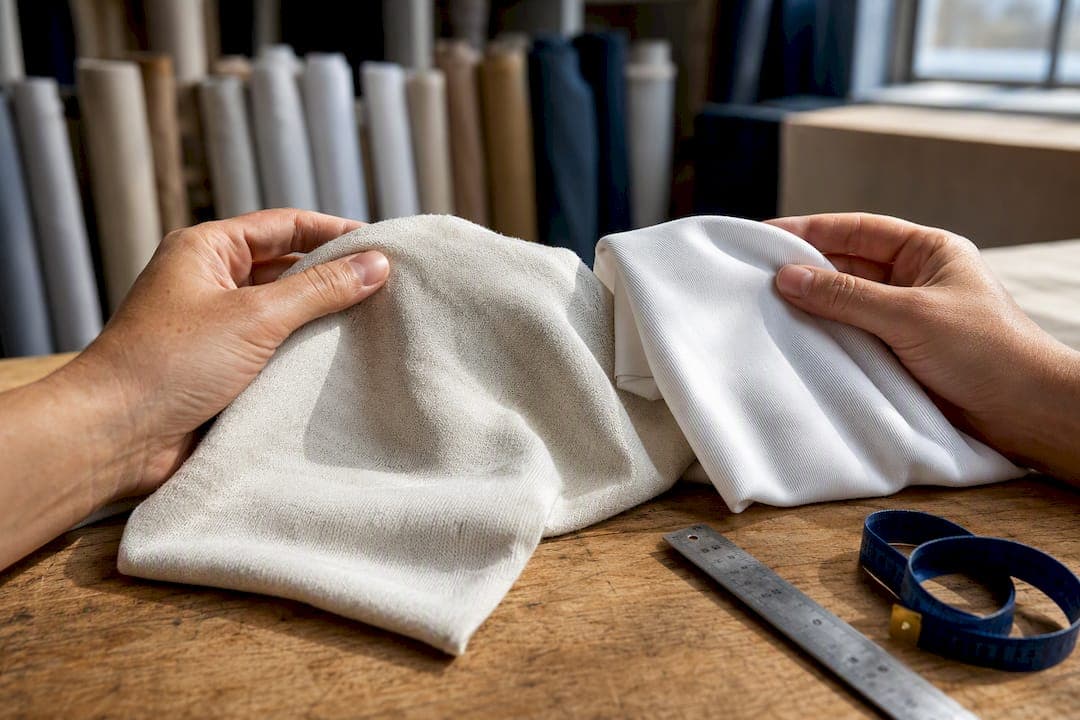
For everyday comfort and skin contact, 100% cotton wins. For durability, wrinkle resistance, and easy care, polyester takes it. For the sweet spot most people actually wear, a cotton/poly blend, usually 80/20, 65/35, or 50/50, splits the difference. The FTC Textile Fiber Rule and biodegradation research back up why the fiber content on that tag matters more than most shoppers realize, and Native303apparel builds its tees around exactly this tradeoff.
TL;DR:
- Higher cotton content improves softness and breathability but increases shrinkage and wrinkling, especially in pure cotton garments.
- Polyester blends offer better shape retention, faster drying, and greater durability but can feel less natural and may retain odors more stubbornly.
- The most common blends, like 65/35 and 50/50, balance cost, comfort, and performance, with 65/35 favored for workwear and 50/50 for everyday casual wear.
- Blending fibers at the manufacturing stage ensures uniformity, while dyeing and finishing techniques influence fabric aging, shrinkage, and appearance.
- For sensitive skin or high-moisture activities, higher cotton ratios (80/20 or above) are preferable to minimize irritation and retain comfort.
Table of Contents
- Common Cotton/Poly Blend Ratios and What They Mean
- Cotton vs Polyester T-Shirt: The Material Properties That Actually Matter
- Care and Durability: How to Keep a Blend Looking New
- Which Blend Fits Your Project: Tees, Workwear, and Quilting
- Reading the Tag: FTC Labeling Rules You Should Know
- How Native303apparel Applies These Fabric Choices
- Comfort and Skin Sensitivity: Does the Blend Matter?
- Cost Comparison: Cotton, Polyester, and Blends
- How Cotton-Polyester Blends Are Actually Made
- Reading Fiber Labels for Your Next Sewing Project
- A Sewing-Practical Rule of Thumb
- Shop Ready-Made Tees or Start a Custom Design
- Sources
- FAQ
Common Cotton/Poly Blend Ratios and What They Mean
The ratio on the tag tells you almost everything about how a shirt will feel, wash, and age. Higher cotton content means softer hand and better breathability but more shrinkage and wrinkling. Higher polyester content means the opposite: less give, more shape retention, faster drying.
Here's how the standard ratios break down in practice:
- 80/20 (cotton/polyester): Close to a pure cotton hand with noticeably less shrinkage and wrinkling. Common in premium retail tees and fashion basics where softness still matters most.
- 65/35: The classic workwear and uniform ratio. It holds up to repeated industrial laundering, resists pilling better than higher cotton blends, and presses cleanly without heavy ironing.
- 50/50: The most common blend for promotional and everyday t-shirts. It balances cost, comfort, and durability, though it can feel slightly plasticky compared to higher cotton content.
- Tri-blends (cotton/polyester/rayon): Usually around 50/25/25. These add rayon for drape and that heathered, vintage look popular in fashion-fit tees.
For sewing, ratio changes more than comfort. Blends with more polyester fray less at cut edges and press with lower heat settings than 100% cotton, which is useful if you're topstitching or working with a home iron that runs hot. Higher cotton blends need more careful preshrinking before cutting pattern pieces, since the fabric moves more in the wash than a poly-heavy blend will.
Cotton vs Polyester T-Shirt: The Material Properties That Actually Matter
The biggest technical difference between cotton and polyester comes down to a number most shoppers never see: moisture regain. Cotton holds roughly 7 to 8.5% of its weight in water at standard conditions, while polyester holds about 0.4%, according to CottonWorks fiber data. That gap explains almost every practical difference between the two fibers.
Cotton absorbs sweat and holds it, which feels comfortable against skin but leaves a shirt damp and heavy during heavy activity. Polyester barely absorbs moisture, so it relies on engineered wicking, structured yarns and knit geometry that pull sweat to the fabric surface where it evaporates faster. That's why running shirts and base layers lean polyester or poly-heavy blends: the fiber itself doesn't get wet, so the fabric dries in minutes instead of hours.
Durability tells a similar story. Polyester generally beats cotton on abrasion resistance and dimensional stability, which is exactly why 65/35 blends dominate uniforms and workwear that see constant friction and washing. Cotton pills less than you'd expect on its own, but blend it with polyester and pilling tends to increase, since the stronger synthetic fibers anchor the pills that cotton would otherwise shed.
Odor retention cuts the other direction. Polyester's hydrophobic surface holds onto bacteria and body oils more stubbornly than cotton, which is why synthetic workout shirts can smell after just one wear even after washing.
Environmentally, the divide is stark. Aquatic biodegradation testing found cotton degrades substantially over time, while polyester microfibers persist largely unchanged. In a blend, the cotton portion breaks down and the polyester fraction remains behind. A life cycle assessment accounting for microfiber emissions found polyester's ecosystem impact runs notably higher than cotton's once that persistence is factored in, a detail most fabric guides skip entirely.

Care and Durability: How to Keep a Blend Looking New
Shrinkage happens faster than most people expect, and it front-loads hard. Textile processing guidance shows most shrinkage in cotton and cotton blends shows up within the first one to three home washes, and by wash number five the garment has typically settled into its final dimensions. If a shirt survives three washes without a noticeable size change, it's not going to surprise you later.
Follow this sequence to protect fit and print quality:
- Wash new cotton and cotton-blend garments in cold or warm water, never hot, for the first several cycles to control shrinkage.
- Skip high heat in the dryer. Tumble low or line dry, especially for blends over 65% cotton, since heat is what locks in shrinkage.
- Turn printed shirts inside out before washing to protect ink from friction and fading.
- For sewing projects, always prewash yardage using the same method you'll use on the finished garment, then re-measure your pattern pieces.
- Use a mild detergent without fabric softener on performance blends, since softener coatings interfere with wicking finishes.
Pro Tip: If you're sewing with fabric that hasn't been preshrunk, run it through two full wash-and-dry cycles before cutting, not one. A single wash removes sizing but often understates true shrinkage, especially on knits.
Printed and garment-dyed pieces need their own care logic beyond fiber content. Native303apparel's guide to washing graphic tees covers how to stretch a print's life to 50 to 100 washes, and the breakdown of ring-spun versus carded cotton explains why two "100% cotton" tags can still shrink at different rates.

Which Blend Fits Your Project: Tees, Workwear, and Quilting
Matching fabric to purpose saves you from buying the wrong shirt or cutting into the wrong yardage. The right choice depends less on which fiber is "better" and more on what the garment needs to survive.
- Everyday and retail tees: 100% cotton delivers the softest hand and best breathability for casual wear. A 50/50 blend costs less and resists wrinkling, while 65/35 splits the difference for a shirt that still feels like cotton but holds shape through the dryer.
- Activewear and performance layers: Tri-blends and poly-heavy fabrics manage sweat far better than cotton, since the engineered wicking structure pulls moisture away from skin instead of letting it sit.
- Workwear and uniforms: 65/35 is the industry default for a reason. It handles repeated commercial laundering, resists abrasion, and needs minimal ironing between shifts.
- Home sewing and quilting: 100% cotton remains the standard for its predictable behavior and press quality, but always preshrink yardage first using the guide to improved shrinkage performance as a reference for tolerance planning.
- Vintage-inspired garments: Higher cotton content (80/20 or better) paired with a garment-dyed finish gets closest to the soft, worn-in feel collectors look for.
Reading the Tag: FTC Labeling Rules You Should Know
Every garment label has to disclose the generic fiber name and percentage by weight of each fiber present, so a tag reading "60% Cotton, 40% Polyester" is a legal requirement, not marketing copy, under the FTC Textile Fiber Rule. There's also a built-in 3% tolerance, meaning actual fiber content can vary slightly from what's printed without violating the rule.
Specialty cotton names come with extra obligations. If a hang-tag claims Pima or Egyptian cotton, FTC guidance requires the generic term "cotton" to appear alongside it, plus the actual percentage of that premium fiber if it isn't 100%.
Before you buy or sell sewn goods, check for:
- Generic fiber names and percentages, not vague terms like "cotton blend."
- Specialty cotton claims backed by an actual percentage disclosure.
- Care instructions that match the fiber content, not a generic template.
How Native303apparel Applies These Fabric Choices
Fabric selection isn't a single decision. It's a chain of choices, and each one affects the next. Cotton yarn construction (ring-spun versus carded) sets the baseline softness and shrinkage behavior. Dye method (garment-dyed versus pigment-dyed) changes hand feel and how the fabric ages over years of wear. Print method (water-based versus plastisol ink) determines how the design holds up against that fiber content and wash routine.
Native303apparel's own maker guides walk through each layer:
- Ring-spun vs. carded cotton for understanding shrinkage tests before cutting or printing.
- Garment-dyed vs. pigment-dyed for reading fabric hand and aging by touch alone.
- Water-based vs. plastisol ink for matching print technique to fiber content.
- What vintage-inspired cotton fabric actually means for makers chasing that worn-in Denver tee look.
The workflow for a vintage-style tee usually starts with a higher-cotton blend, moves to a garment-dyed or enzyme-washed finish for softness, then lands on water-based ink so the print ages with the fabric instead of sitting stiff on top of it.
Comfort and Skin Sensitivity: Does the Blend Matter?
Skin contact is where fiber content stops being an abstract spec and becomes a daily comfort issue. Cotton's higher moisture regain means it absorbs sweat and body oils rather than trapping them against skin, which is a major reason dermatologists and parents alike favor cotton for infant clothing, sleepwear, and anyone with eczema or general skin sensitivity.
Polyester's hydrophobic surface doesn't breathe the same way, and for some people that translates into a warmer, clammier feel during long wear, especially in humid climates. It isn't an allergy in the strict clinical sense for most wearers, since polyester allergy is uncommon, but plenty of people report irritation, itching, or heat rash from synthetic fabrics that never fully goes away with cotton.
Blends land in between, and the ratio matters here too. An 80/20 or 65/35 blend keeps enough cotton against the skin to soften polyester's stiffness while adding shrink resistance. A 50/50 blend pushes closer to polyester's feel, which is fine for outerwear or structured pieces but less ideal for base layers or anything worn directly against sensitive skin for hours. If you or someone you're sewing for reacts to synthetic fabric, start with higher cotton content and adjust from there rather than assuming any blend will work equally well.
Cost Comparison: Cotton, Polyester, and Blends
Raw polyester is generally the cheapest fiber to produce, since it's manufactured from petroleum-based polymers rather than grown, harvested, and processed like cotton. That cost advantage is exactly why so many budget garments lean polyester-heavy, and why pure polyester tees often undercut cotton tees at the checkout.
100% cotton typically costs more per yard or per finished garment, driven by agricultural variables like weather, water use, and harvest yield that don't affect synthetic fiber production the same way. Premium cotton types, like Pima or combed ring-spun cotton, push the price higher still because of finer fiber processing.
Blends sit where you'd expect: a 50/50 blend usually costs less than 100% cotton but more than pure polyester, since manufacturers are still paying for cotton's growing and processing costs, just at a reduced volume. An 80/20 blend costs closer to pure cotton because there's simply more of the expensive fiber in the mix.
For sewists working with yardage, the price gap between cotton and cotton-blend fabric is often smaller than the gap between blends and pure polyester, since cotton dominates the material cost either way. If budget is the primary driver of your project, a 50/50 or 65/35 blend usually delivers the best value without sacrificing durability the way an all-cotton fabric might over repeated washing.
How Cotton-Polyester Blends Are Actually Made
Blending isn't as simple as mixing two fibers and spinning them together. Cotton and polyester are typically blended at the fiber stage, before spinning, so the two materials are drawn and twisted into a single yarn rather than woven as separate threads. This is what gives blended fabric its uniform hand instead of a patchy or inconsistent feel.
The ratio gets set during this blending stage, and it directly determines how the finished fabric behaves under heat and moisture. Polyester is a heat-set synthetic, meaning it can be permanently shaped with heat during finishing, which is part of why polyester-heavy blends resist wrinkling. Cotton fiber has no such heat-set property, so blends with more polyester "borrow" that wrinkle resistance from the synthetic portion of the yarn.
Dyeing adds another wrinkle, literally and figuratively. Cotton and polyester absorb dye differently, cotton takes reactive dyes well while polyester requires disperse dyes at high temperature, which means blended fabric often needs a two-stage dyeing process to get even color across both fibers. This is part of why solid-color blends can be trickier to dye evenly than pure cotton, and why some cheaper blended garments show slight color variation between the cotton and polyester fibers under close inspection.
Knit blends behave differently than wovens during finishing, too. Wet processing research on knitted cotton fabrics shows that relaxation drying and compaction steps matter enormously for dimensional stability, and blends with higher polyester content shrink less specifically because the synthetic fiber resists the swelling and shrinking that raw cotton undergoes during wet finishing.
Reading Fiber Labels for Your Next Sewing Project
Before you buy yardage, read the bolt end or selvage label the same way you'd read a garment tag: generic fiber name first, then percentage by weight.
Match the blend to your pattern's needs before cutting. Knits for t-shirts and activewear often benefit from added polyester or spandex content for recovery and shape retention after repeated stretching.
If you're substituting fabric from what a pattern calls for, matching fiber content within about 20 percentage points keeps drape and shrinkage behavior close enough to avoid fit surprises. And if the label lists a specialty cotton name like Pima, remember that FTC rules require disclosure of the actual percentage if it isn't the sole fiber, so read past the marketing language on the swing tag.
A Sewing-Practical Rule of Thumb
If comfort against skin is the priority, reach for cotton. If durability and low maintenance matter most, reach for polyester or a poly-heavy blend. Everything else is a negotiation between those two poles. When Native303apparel builds a vintage-style tee, the starting point is almost always a cotton-heavy blend, because the softness and drape read as authentic in a way a poly-dominant fabric never quite manages. Before cutting anything, prewash the yardage and read the tag twice.
— Rob
Shop Ready-Made Tees or Start a Custom Design
Native303apparel builds every piece around the fabric logic covered here: cotton-forward blends for that lived-in Denver feel, paired with print methods chosen to match. The store carries tees, sweatshirts, hoodies, and tote bags, each built on blends selected for how they'll actually wear over years, not just how they look on day one.

If you've got a specific Denver spot, a shuttered club or a corner shop everyone remembers, in mind and want it on a fabric that matches the vibe, the custom design service turns that memory into a piece built the same way. You tell us the story and the feel you're after; we handle the fabric and print decisions covered in this guide. Start a request and get a design that's actually yours, not a generic template with a Colorado flag slapped on it.
Sources
- Textile Fiber Rule (16 CFR Part 303) — Federal Trade Commission
- Aquatic biodegradation study comparing cotton and polyester microfibers — PubMed
- Comparative LCA of cellulosic and synthetic textiles accounting for microfiber emissions — Integrated Environmental Assessment and Management
- Fibers booklet — CottonWorks
FAQ
Which Is Better, Poly Cotton or Cotton Blend?
Neither wins outright.
Is 100% Cotton Better Than a Polyester Blend?
For shrinkage control, wrinkle resistance, and abrasion resistance, a polyester blend typically outperforms pure cotton, according to CottonWorks fiber data.
Is 65% Cotton and 35% Polyester Good for Summer?
A 65/35 blend works reasonably well for summer since it retains much of cotton's breathability while resisting wrinkles better than pure cotton. It won't wick moisture as efficiently as a poly-heavy performance fabric, but for casual summer wear it holds up through frequent washing without much shrinkage.
Is 80% Cotton and 20% Polyester a Good Blend?
Yes, 80/20 is one of the closest blends to pure cotton in feel and breathability while still gaining meaningful shrink resistance from the polyester fraction. It's a common choice for premium tees, including higher-cotton pieces where softness matters but some shape retention is still useful.
What's the Difference Between a Tri-Blend and a Cotton Tee?
A tri-blend mixes cotton, polyester, and rayon, usually around 50/25/25, which creates the soft, heathered look popular in fashion-fit tees. A straight cotton tee has more structure and a heavier drape, while a tri-blend feels lighter and drapes closer to the body.