
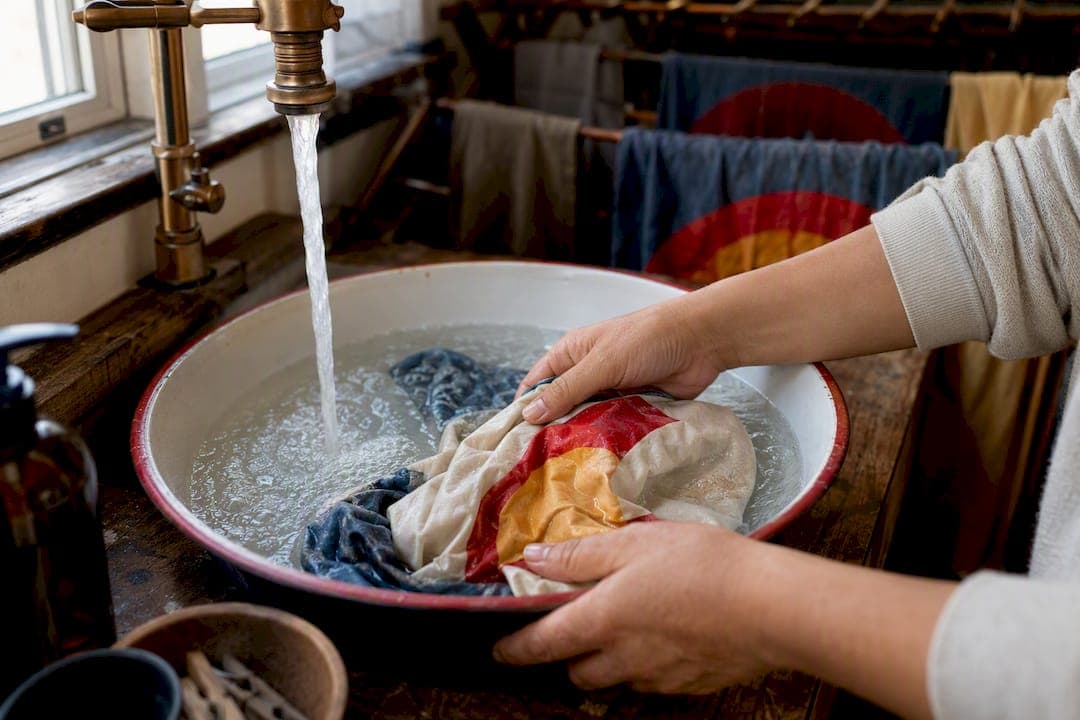
The best way to wash graphic tees is to turn them inside out, wash cold on a gentle cycle with mild liquid detergent, skip the bleach and fabric softener, then air-dry or tumble on low heat and pull them out while still slightly damp. That single routine protects the vast majority of printed shirts. Screen print, DTG, and vinyl transfers each have their own quirks, covered below, but this general routine is recommended for almost every graphic tee in your closet.
TL;DR:
- Washing graphic tees in cold water on a gentle cycle with inside-out placement significantly reduces print cracking and peeling.
- Hand-washing is recommended for vintage, embellished, or new transfer designs to prevent damage from machine agitation.
- Air drying is safest for prints, but if using a dryer, select the lowest heat setting and remove shirts while damp to avoid heat damage.
- Constant heat exposure from ironing or high dryer temperatures accelerates print deterioration, so use inside-out or steaming techniques.
- Proper storage, such as folding with print facing outward and avoiding prolonged stacking, prevents creases and fading over time.
Table of Contents
- How to Machine-Wash Graphic Tees Without Damaging the Print
- When Should You Hand-Wash a Graphic Tee Instead?
- Drying and Ironing: Avoid Heat-Related Damage
- How to Remove Stains Without Ruining the Print
- Care Rules by Print Type: Screen Print, DTG, HTV/DTF, and Sublimation
- How to Store Graphic Tees So They Don't Crease or Fade
- Quick Do's and Don'ts Checklist for Washing Graphic Tees
- Why This Care Guidance Actually Holds Up
- A Personal Note on Keeping Sentimental Tees Alive
- Sources
How to Machine-Wash Graphic Tees Without Damaging the Print
Heat is the enemy here, not water. Hot water and high dryer heat are the primary cause of cracking and peeling across nearly every print type, so the fix starts with your machine settings, not your detergent brand.
Follow these steps for a wash load that won't chip away at your prints:
- Turn every shirt inside out. This is the single habit that does the most to cut down on friction-based wear against the print.
- Set the machine to cold water and a gentle or delicate cycle. Skip warm and hot entirely.
- Sort the load by weight and color, and pull out anything abrasive.
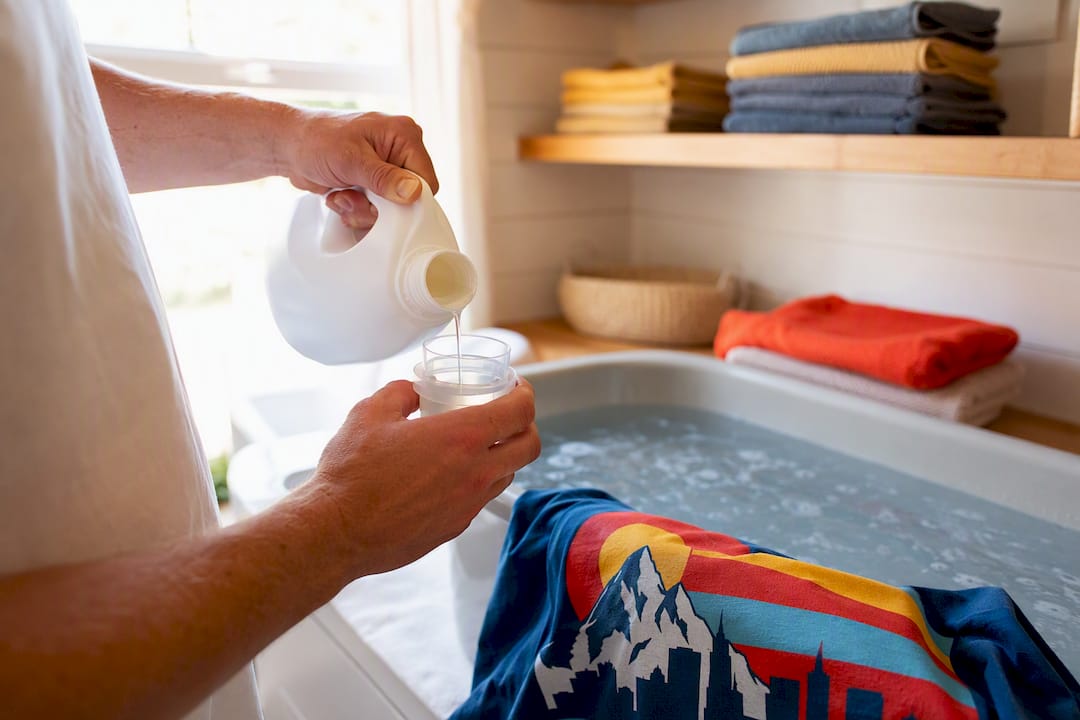
- Add a mild liquid detergent, measured a little lighter than the bottle suggests.
- Load loosely. A crammed drum means more rubbing, twisting, and stress on every seam and print edge.
A few things to keep out of that load: jeans with hardware, towels, anything with Velcro or zippers, and hoodies with metal drawstring tips. They act like sandpaper against a soft print. If you're washing a tee with a delicate or embellished design, drop it into a mesh laundry bag before it goes in, which keeps it from tangling with heavier items.
Detergent choice matters more than most people realize. Liquid detergent dissolves fully in cold water, while powder can leave undissolved granules behind at low temperatures, and those granules act like tiny abrasives against the ink. Skip anything with optical brighteners, and never use chlorine bleach near a printed shirt. Bleach breaks down both the cotton fibers and the ink binder at the same time.
Always check the care label first. If it specifies a lower spin speed or a specific water temperature, that instruction overrides the general advice here.
When Should You Hand-Wash a Graphic Tee Instead?
Hand-washing earns its place for a handful of situations: vintage shirts with fragile, cracked, or aged prints; anything with rhinestones, foil, or embellishment; a brand-new heat-transfer design that hasn't been through its first wash yet; or any shirt whose care label flat out says "hand wash only." If a tee falls into any of those categories, skip the machine.
Here's the routine:
- Fill a clean basin or sink with cold water.
- Add a small amount of mild liquid detergent and swirl it through the water before adding the shirt.
- Submerge the tee and gently press the fabric with your hands. Never scrub or twist.
- Let it soak for a few minutes if it's visibly soiled, then press again gently.
- Rinse twice in clean, cold water to make sure no detergent residue stays behind in the fibers.
- Instead of wringing, roll the shirt in a clean towel and press to pull out excess water. Wringing twists seams and stresses the print in ways that add up over time.
For a brand-new transfer design, that first hand-wash sets the tone. Treat it gently once, and it'll usually hold up fine in a normal cold machine cycle after that.
Drying and Ironing: Avoid Heat-Related Damage
Heat does more damage to a printed shirt than water ever will. It softens the ink or vinyl adhesive just enough that normal tumbling and friction peel it away one wash at a time. That's why air drying is the safest method for virtually every print type, and it costs you nothing but a little patience.
If you need the dryer:
- Use the lowest heat setting, or tumble low with no heat at all.
- Pull the shirt out while it's still slightly damp rather than running it to bone dry.
- Keep it inside out through the whole cycle.
- Never hang a wet shirt directly over a radiator or vent to speed things up. That's just concentrated heat with extra steps.
Ironing is where a lot of good prints meet their end. Never run an iron directly over a graphic. Turn the shirt inside out first, or lay a thin pressing cloth over the design if you must iron the front. A handheld steamer is the lower-risk option since it never makes direct contact with the ink or vinyl.
Hoodies and sweatshirts need a slightly different approach. Dry them flat, spread the hood out so it doesn't hold moisture in a fold, and give the whole thing more time than a t-shirt would need. Trapped dampness inside a folded hood is a common cause of musty smells and mildew spots that show up weeks later. For heavier fleece and lifestyle garments generally, care routines built for thicker fabric tend to run longer drying cycles at lower heat, which applies just as well to a graphic hoodie.
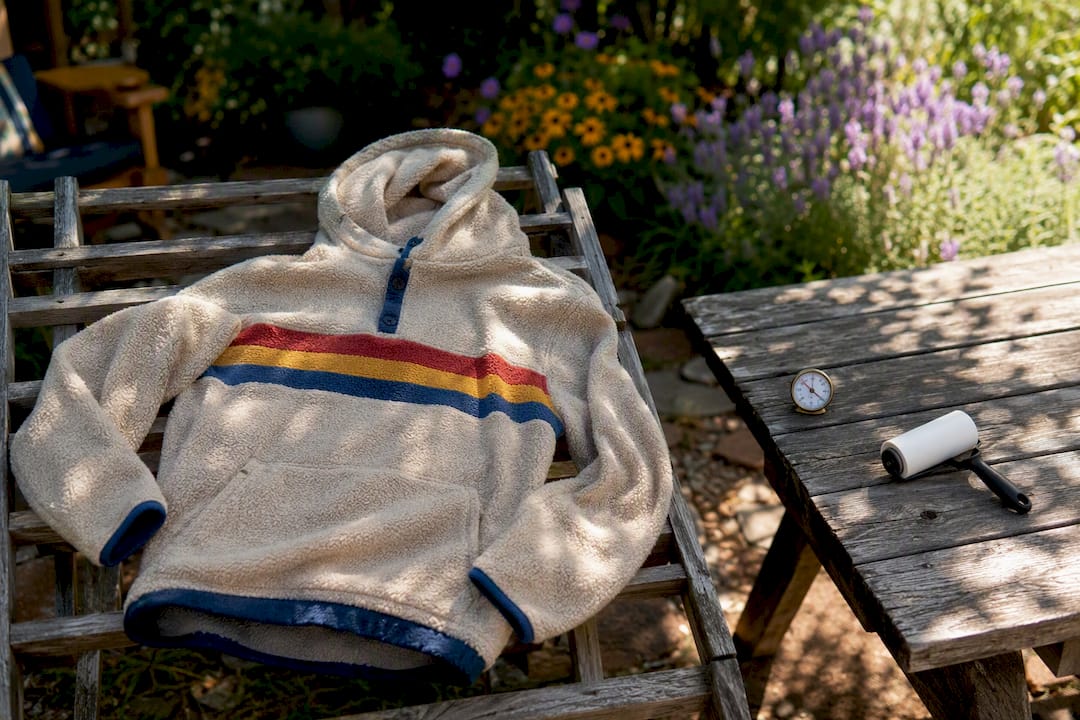
Pro Tip: Keep a lint roller nearby for air-dried shirts. Line-dried cotton attracts more surface fuzz than dryer-tumbled fabric, and a quick roll before you fold it saves you from wearing it covered in fuzz.
How to Remove Stains Without Ruining the Print
The instinct to grab a stain stick and scrub straight into a fresh spot on your shirt is exactly the wrong move when that spot sits on or near a print. Concentrated stain removers applied directly to ink or vinyl can lift the adhesive or bleach the color right along with the stain.
Work from the back of the fabric whenever you can. Pressing a stain out from behind pushes it away from the print instead of driving it further in.
A few rules to keep in mind:
- Dilute your stain treatment rather than applying it full strength, and test it on an inner seam first.
- Blot and lift gently. Never rub hard against a printed area, even through the back of the fabric.
- Treat the stain before it goes through a full wash cycle, since heat can set a stain permanently.
- If a stain sits directly over delicate vinyl or foil, consider taking the shirt to a professional cleaner rather than risking it yourself.
Sometimes a print is already too far gone. A screen print that's cracked and peeling from years of wear, or a DTG design that's faded past recognition, usually isn't coming back no matter how careful you get with stain treatment. At that point, the honest move is accepting the shirt for what it is, or replacing it if the design matters enough to you.
Care Rules by Print Type: Screen Print, DTG, HTV/DTF, and Sublimation
Not every graphic tee is made the same way, and the print method on your shirt determines exactly how it fails. Different print methods break down differently: screen print tends to crack, DTG fades, and heat-transfer vinyl lifts at the edges before peeling off entirely.
| Print type | How it fails | Wash | Dry | Iron |
|---|---|---|---|---|
| Screen print | Cracks and flakes with repeated heat exposure | Cold, gentle cycle | Air-dry or lowest heat | Never direct; inside out only |
| DTG (direct-to-garment) | Fades and dulls from harsh detergent and heat | Cold, mild liquid detergent | Air-dry preferred | Avoid direct heat entirely |
| HTV / DTF (vinyl transfer) | Lifts at edges, peels with friction and heat | Cold, inside out, gentle cycle | Air-dry strongly preferred | Never iron directly on vinyl |
| Sublimation | Comparatively durable, but harsh chemicals can dull colors | Cold, standard mild detergent | Low heat is generally tolerated | Low heat, inside out |
A well-cured, quality screen print can survive 50 to 100 or more cold, gentle washes before it shows real wear, while heat exposure alone can cut that number dramatically. If you're not sure what print method you're dealing with, run a finger over it. Screen print sits slightly raised with a slight texture. DTG feels almost part of the fabric itself, softer and flatter. Vinyl transfers feel like a distinct layer with a clean cut edge. Sublimation shows no texture at all since the dye is embedded in the fibers.
When you genuinely can't tell, default to the most conservative routine: cold water, gentle cycle, air dry, no direct iron. It's the safe answer no matter which print process you're working with. If you want to understand why certain applications hold up better than others, how a print gets cured onto the shirt has a lot to do with its long-term durability, sometimes more than anything you do at home.
How to Store Graphic Tees So They Don't Crease or Fade
Storage matters almost as much as washing. A shirt folded the wrong way for months can develop permanent creases right through the print, and one left in direct sun fades faster than one washed carelessly for a year.
Fold shirts with the graphic facing outward rather than compressed into the center. Long-term hanging works better on wide hangers, which help preserve collar shape and keep the print from pressing against itself in a fold.
- Store shirts in a cool, dry, dark space away from direct sunlight to prevent UV fading.
- Avoid airtight plastic bins for long-term storage, since trapped humidity encourages mildew and can cause prints to stick to the fabric behind them.
- For genuinely collectible pieces, slip acid-free tissue paper between stacked shirts and rotate the stack occasionally so the same shirt isn't bearing weight indefinitely.
Pro Tip: If two printed shirts are stacked directly on top of each other for months, the pressure alone can transfer a faint impression from one design onto the other. A layer of tissue paper between them costs almost nothing and prevents it entirely.
For anyone building an actual collection rather than a rotation of everyday shirts, a dedicated preservation guide for vintage pieces covers box storage and humidity control in more depth than daily wear requires.
Quick Do's and Don'ts Checklist for Washing Graphic Tees
Pin this to memory for every load of laundry that includes a printed shirt.
- Turn inside out before every single wash, no exceptions.
- Wash cold, on the gentle or delicate cycle.
- Use a mild liquid detergent, measured light.
- Skip bleach and fabric softener completely.
- Air-dry when you can. Use the lowest dryer setting and pull shirts out damp if you can't.
- Keep abrasive items like jeans and towels out of the same load.
- Use a mesh bag for anything delicate or embellished.
- Iron inside out only, or steam instead.
- Hand-wash vintage, embellished, or brand-new transfer designs.
- Accept professional cleaning for stubborn stains near delicate prints rather than risking it yourself.
| Situation | Action |
|---|---|
| Everyday cotton graphic tee | Machine wash cold, gentle cycle, air-dry |
| Vintage or embellished print | Hand-wash only |
| New heat-transfer design | Hand-wash the first cycle |
| Stubborn stain near the print | Blot gently or seek professional cleaning |
Why This Care Guidance Actually Holds Up
Native303apparel builds shirts around Denver's own history, from long-gone eateries to neighborhood shops that shaped the city, which means these prints carry sentimental weight most mass-market graphics never will. That's part of why care instructions matter here beyond the fabric itself.
If you're curious how a print's origin affects its lifespan, bespoke design and production choices play a bigger role in durability than most buyers realize, and pairing that knowledge with correct washing habits is what actually keeps a shirt looking sharp for years. Anyone building out a collection of city-specific designs benefits from understanding both sides: how a print is made, and how to treat it once it's in rotation. A simple care card tucked into every order, rather than buried in an FAQ page, would go a long way toward making that first wash the right one.
A Personal Note on Keeping Sentimental Tees Alive
I once tossed a shirt with real sentimental value into a hot wash out of pure laziness, and watched the print crack apart over the next three washes. Lesson learned the expensive way. Now I read every care label, and I hand-wash anything I'd actually miss if it fell apart.
— Rob
Sources
- How to Wash Printed T-Shirts to Make the Design Last Longer — Printable Press
- How to Wash 100% Cotton Printed T-Shirts - Care Guide for Printed Tees | TechGeeksApparel
- How to Wash Printed Tees and Hoodies Without Fading – Lone Creek Apparel
- How to Wash Printed Shirts — Make the Print Last — Prodigy Promos