
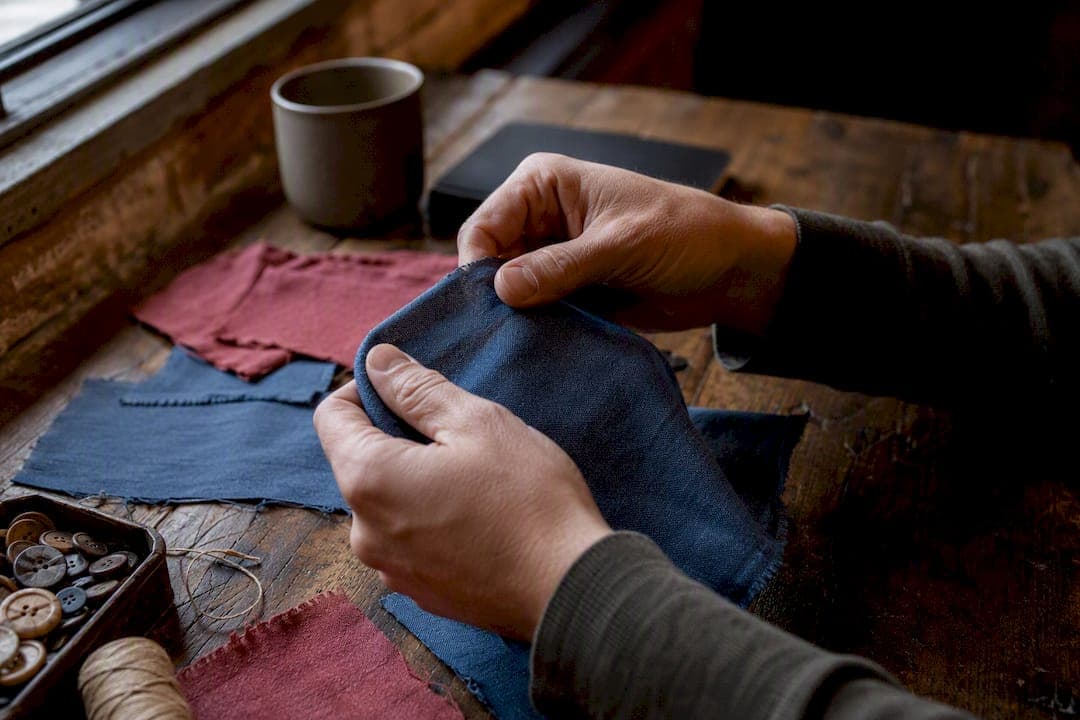
Pigment dyeing coats the outside of a finished garment with color and a binder, giving you that faded, worn-in look but weaker wash resistance. Garment dyeing sends the same finished piece through a reactive dye bath that bonds color into the fiber itself, producing even, long-lasting saturation. If you want a vintage, broken-in feel at a lower cost, go pigment. If you want consistent color that survives years of washing, go garment dyed. Below: how each process actually works, a side-by-side comparison, and how to tell which one you're holding.
TL;DR:
- Pigment dyeing coats the fabric surface with color, making shirts look faded and worn-in but more prone to fading and crocking after washing.
- Garment dyeing involves chemically bonding dye molecules inside the fibers, resulting in uniform, vibrant color that resists fading over time, but requires more water and cost.
- Pigment-dyed shirts often show lighter or no color inside and feel stiffer initially, while garment-dyed shirts look the same inside and out and feel soft from the start.
- For durability and color consistency, especially in high-wash-use conditions, garment dyeing is the superior choice, though it comes with higher resource costs.
- To identify the dyeing method, check for lighter inside color and surface stiffness in pigment-dyed shirts, versus uniform color and softness in garment-dyed garments.
Table of Contents
- Pigment Dyeing: How It's Done and What to Expect
- Garment Dyeing: Process, Durability, and What Printers Need to Know
- Garment Dyed vs. Pigment Dyed: Side-by-Side Comparison
- Sources
Pigment Dyeing: How It's Done and What to Expect
Pigment dyeing happens after the shirt is already cut and sewn. Instead of soaking into the cotton fibers, pigment colorant sits on the fabric's surface, held there by a binding agent because pigments themselves don't dissolve in water. That's the whole trick behind the look: color that clings to the outside rather than living inside the yarn.
The typical production sequence runs:
- Pre-treatment rinse to open up the fabric and remove finishing residue.
- Pigment application combined with a binder that glues the color to the surface.
- A rinse and cure cycle to set what's been applied.
- Enzyme softening, which also happens to rough up the surface slightly and produce that broken-in texture.
That last step is why pigment-dyed shirts often feel a little stiff out of the bag but soften fast. It's also why the color looks intentionally uneven, lighter at seams, faded at stress points, almost like the shirt has already lived a life. Some writers in the industry call pigment dyeing more of a surface coating or fabric paint than true dyeing, and that distinction matters for durability. Because the color never penetrates the fiber, repeated washing and friction can cause fading or crocking, where pigment rubs off onto other fabric.
For printers, pigment-dyed blanks need special handling. Low-bleed or dye-blocking inks help stop unfixed dye from migrating into the print during curing. Consumers should wash pigment-dyed pieces in cool water with like colors and expect some color transfer during the first few washes until loose pigment works its way out.
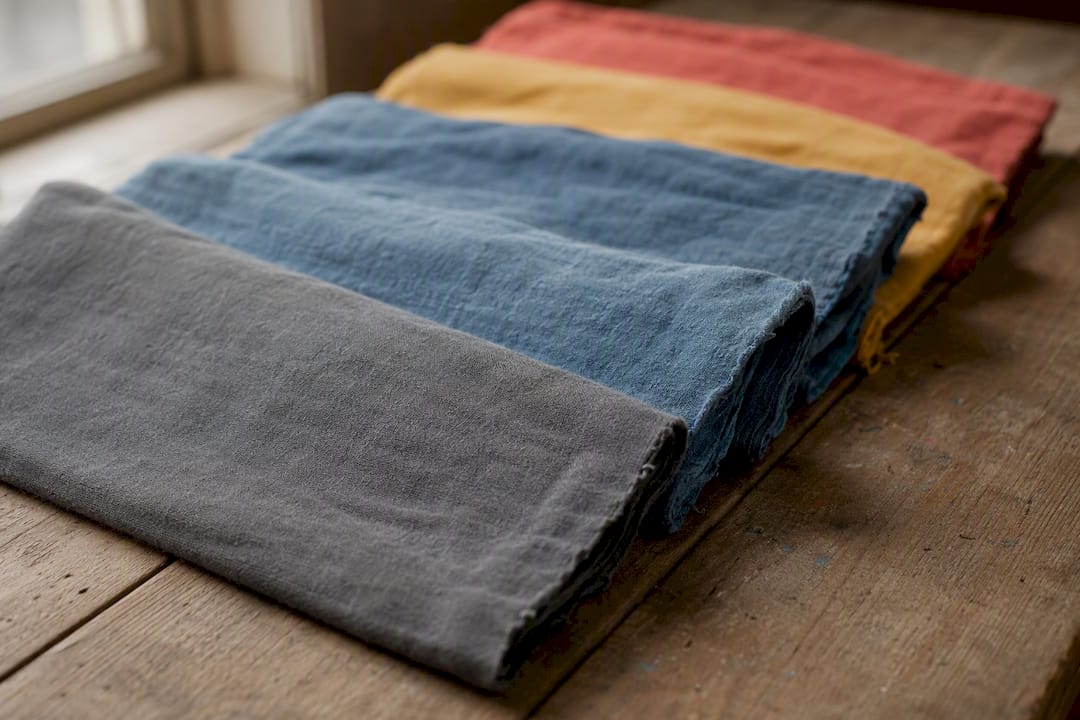
Pro Tip: If you're buying pigment-dyed blanks in bulk, ask the supplier for their crocking and colorfastness test results before you commit. A five-minute question can save you a warehouse of shirts that bleed onto everything they touch.
Garment Dyeing: Process, Durability, and What Printers Need to Know
Garment dyeing, sometimes called reactive dyeing, works at the molecular level. The dye molecules form actual chemical bonds with the fibers, which is why garment-dyed pieces come out with more uniform, vibrant color and hold up far better to washing and sun exposure than pigment-dyed pieces do.
The process, in practice:
- The shirt is cut and sewn first, exactly like pigment dyeing.
- It's submerged in a dye bath where reactive dye molecules chemically bond to the cotton fibers.
- Multiple rinse and fixation stages lock the color in and strip out anything that didn't bond.
- A final soft finish is applied, though garment-dyed shirts already feel soft coming out of the bath since there's no surface coating stiffening the hand.
Because the dye penetrates all the way through, the inside of the shirt matches the outside. Seams don't fade lighter, cuffs don't look different from the body. That consistency is exactly why retail brands lean on garment dyeing when they need every unit in a run to look identical off the rack.
For screen printers, garment-dyed fabric behaves more predictably once it's been through its wash cycles. Dye migration risk drops sharply because the color isn't sitting loose on the surface waiting to move. Standard care instructions (cool wash, similar colors) still apply, but you're not managing the same bleed risk you get with pigment.
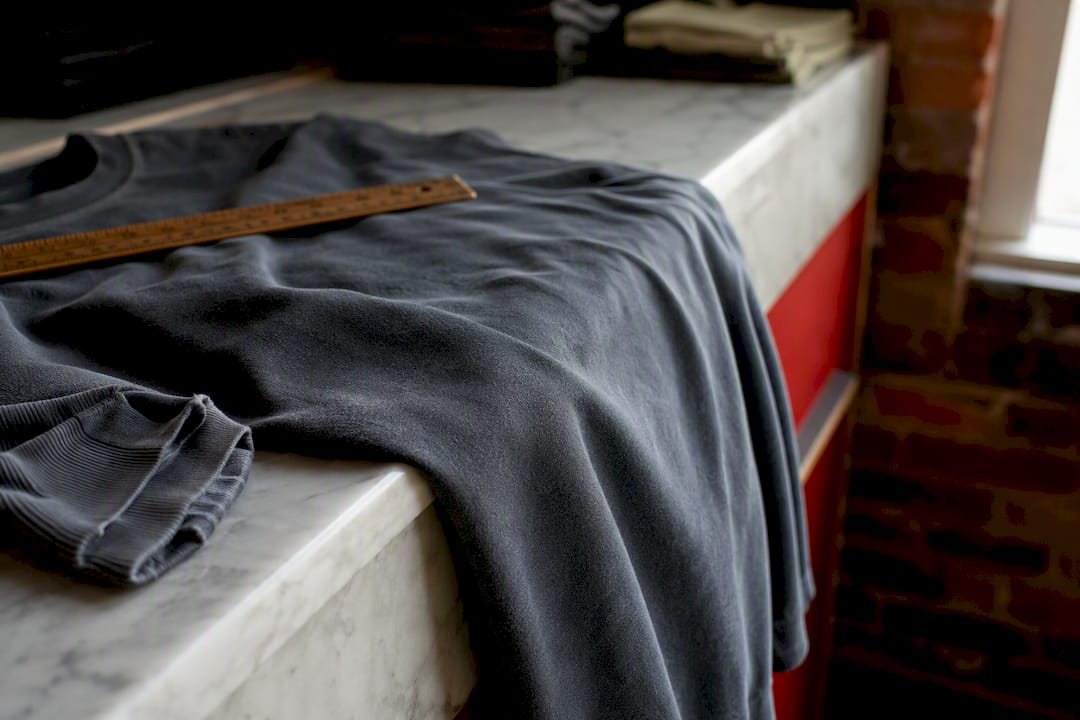
The tradeoff shows up on the production side. Reactive dyeing runs through more stages and uses more water than pigment processes, some estimates put pigment methods at roughly a third of the water draw. That's a real cost, both financial and environmental, that gets baked into the price of a garment-dyed tee.
Garment Dyed vs. Pigment Dyed: Side-by-Side Comparison
Once you line the two methods up across the traits that actually affect how a shirt looks, feels, and lasts, the choice usually makes itself.
| Factor | Pigment dyed | Garment dyed |
|---|---|---|
| Appearance | Faded, weathered, deliberately uneven | Uniform, vibrant, consistent across the piece |
| Fabric hand | Slightly stiff at first, softens with wear | Soft from the first wear |
| Color uniformity | Inside often lighter than outside; seam variation | Interior matches exterior |
| Wash fastness | Prone to fading and crocking over time | Strong resistance to fading and rubbing |
| Printing considerations | Needs dye-blocking inks to prevent migration | Lower migration risk once fully cured |
| Cost & resources | Fewer stages, generally cheaper to produce | More stages, higher production cost |
| Water use | Lower, roughly a third less in some processes | Higher due to multi-stage dye baths |
A few takeaways worth internalizing:
- Pick pigment dyeing when the vintage, sun-bleached aesthetic is the point, not a flaw.
- Pick garment dyeing when you need color to match perfectly across a production run, especially for retail or branded merchandise.
- If the shirt gets washed constantly, think uniforms, workwear, everyday tees, garment dye's wash fastness pays for itself over time.
- If water use is a real concern for your production line, pigment's lighter footprint is worth weighing against its shorter color lifespan.
For a limited-run vintage graphic tee, pigment often wins on both cost and look. For a hoodie or a piece meant to survive years of laundering, garment dye is the safer bet.
How to Tell Which Dyeing Method a Shirt Actually Uses
Flip the shirt inside out first. Pigment-dyed pieces usually show lighter or absent color inside compared to the outside, and you'll often spot slight color variation right at the seams. Garment-dyed shirts look the same inside and out, no contrast anywhere.
Feel the fabric next. A slight surface coating or stiffness, especially in unwashed stock, points to pigment. Softness straight out of the package points to garment dye.
- Rub a damp white cloth against a hidden seam. Heavy color transfer suggests pigment; little to none suggests garment dye.
- Treat that rub test as a rough indicator, not a lab result, since fabric weight and dye batch affect results.
- Ask the seller directly: "Was this pigment-dyed or reactive-dyed?"
- Ask: "Do you have washfastness or crocking data?" and "What pre-treatments were used?"
Pro Tip: Keep the rub test light. A hard scrub on any dark garment will transfer some color, that's not proof of poor quality, just friction doing what friction does.
Why Native303apparel Chooses Specific Finishes for Its Vintage Tees
Native303apparel builds designs around Denver's old eateries, clubs, and shops, so the goal is graphics that look like they've survived a few decades on a real closet shelf. That's why certain worn graphic styles call for pigment's faded finish, while pieces meant to hold sharp color longer get treated differently. Want the deepest vintage fade? Look for our pigment-finished designs. Want color that holds steady wash after wash? Check the garment-dyed listings.
— Rob
Shop the Collection and Check Your Fit Before You Buy
Every Native303apparel product page notes the fabric and finish so you're not guessing which dye method you're getting. If you're building out a vintage-inspired wardrobe, pairing a pigment-faded graphic tee with a garment-dyed hoodie gives you both looks without sacrificing durability where it counts.
Before you order, run your measurements against the size guide so the fit matches the finish you picked. For care specifics on printed graphics once your shirt arrives, this apparel care guide covers how to keep prints looking sharp through repeated washes.
Ready to see the designs themselves? Browse the full collection and find the Denver nostalgia piece that fits your closet.
Quick Takeaways: Choosing Between Pigment and Garment Dye
| Priority | Choose |
|---|---|
| Vintage, faded aesthetic | Pigment dyed |
| Long-term color consistency | Garment dyed |
| Frequent washing/heavy use | Garment dyed |
| Lower upfront cost | Pigment dyed |
| Printing without migration risk | Garment dyed |
- Want that broken-in look on day one? Go pigment.
- Need every shirt in a batch to match? Go garment dyed.
- Printing on pigment blanks? Insist on dye-blocking inks.
- Either way, wash cool with like colors for the first few cycles.
Sources
- Screenprinting
- Garment Dyed vs Pigment Dyed vs Piece Dyed vs Yarn Dyed – Gooten
- Pigment vs Garment Dyeing: Which Method is Right for You? – Thrive Screen Printing
- The Difference Between Pigment-Dyed and Garment-Dyed T-Shirts | ShirtSpace