
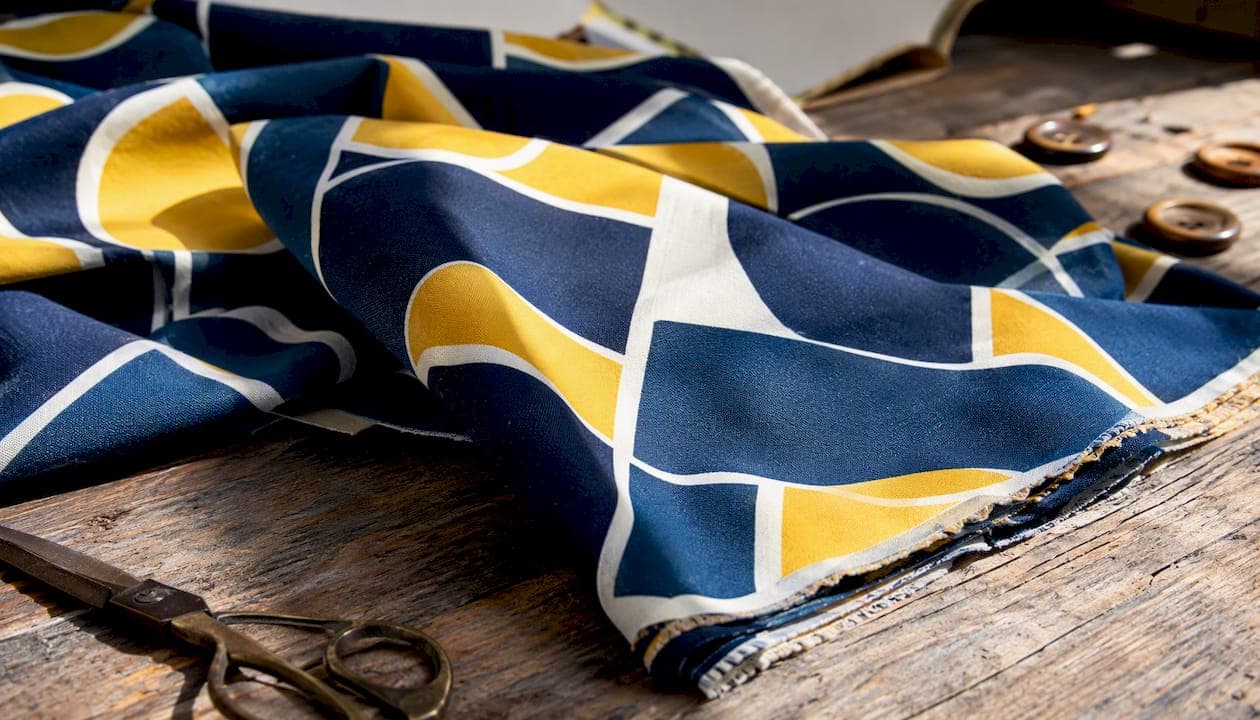
Vintage-inspired cotton fabric is modern cotton cloth printed or finished to reproduce the look of an earlier era: the small-scale florals of a 1930s feedsack, the bold geometrics of a mid-century kitchen curtain, the soft palette of Depression-era quilts. It's new fabric wearing an old face.
Two examples make this concrete. A feedsack-style print with tiny ditsy florals on a cream ground is built to evoke the printed cotton sacks farm families repurposed into dresses and quilts in the 1930s and '40s. A mid-century-inspired print with oversized atomic starbursts or bold color blocking channels the 1950s and '60s instead, when manufacturers such as Moda started reissuing these motifs on standard quilting cotton.
Nearly all of it starts as the same raw material. About 90% of cotton textiles worldwide come from Upland cotton, Gossypium hirsutum, which is why a feedsack reproduction and a plain quilting cotton often share the same fiber base even though they look decades apart.
This guide walks through:
- How to tell an authentic vintage piece from a modern reproduction print
- Which cotton types and weights fit quilting, apparel, or home decor
- Where to actually buy both reproduction yardage and real vintage fabric
- How to wash, cut, and sew vintage-inspired cotton without wrecking it
Key Takeaways
Vintage-inspired cotton fabric succeeds when the print, weight, and finish are matched to both the target era and the specific project it's sewn into.
| Point | Details |
|---|---|
| Definition | Vintage-inspired cotton is new fabric printed or finished to mimic an earlier era's look, not original period cloth. |
| Authentic vs. reproduction | Choose reproduction for everyday sewing and wearables; save authentic pieces for restoration and collectible work. |
| Fabric by project | Quilting cotton for quilts, lawn or voile for dresses, polished cotton or chintz for tablecloths and cushions. |
| Identification signs | Check for chain-stitch holes, coarser weave hand, and imperfect print registration on suspected vintage pieces. |
| Sourcing rule of thumb | Buy reproduction from fabric houses like Moda or Riley Blake; hunt authentic pieces on Etsy, eBay, or at estate sales. |
Table of Contents
- What Makes Cotton Fabric Look and Feel "Vintage"
- The Eras Behind Vintage-Inspired Cotton Prints
- Matching Fabric to Your Project
- Authentic Vintage Cotton vs. Modern Reproduction: What's the Difference
- Where to Buy Vintage-Inspired and Authentic Vintage Cotton
- Feedsack Fabric: The History and Identification Deep Dive
- How to Prewash, Cut, and Sew Vintage-Inspired Cotton
- Why Vintage-Inspired Cotton Keeps Showing Up in Modern Sewing Rooms
- Sources
What Makes Cotton Fabric Look and Feel "Vintage"
A print reads as vintage-inspired because of a handful of design choices working together, not because of any single feature. Print scale is the biggest tell: authentic feedsack and 1930s prints tend to run small, with motifs an inch or less across, while a modern reproduction sometimes scales the same floral up to fill more visual space. Ground color matters too. Cream, ecru, or slightly yellowed white reads as older; stark white typically signals a newer print job.
Color palette does a lot of the storytelling. A 1930s-inspired print leans toward soft pastels, dusty pink, faded blue, buttery yellow. A 1950s-style print gets punchier, with saturated turquoise, cherry red, and black outlines. Motif type also shifts by decade: tiny ditsy florals and novelty conversational prints (teapots, sewing notions, farm animals) signal the 1930s and '40s, while atomic starbursts, boomerangs, and oversized florals point to the '50s and '60s.
Physical cues matter as much as the artwork. Base cloth weight changes what a fabric is good for and how "old" it feels in your hands. Cotton fabric spans several types and weights, from lightweight lawn and voile to midweight quilting cotton to heavier chintz and canvas, and that weight shapes the drape and durability. Weave density and finish also play a role. Standard quilting cotton has a plain, matte weave, while chintz gets a glazed, polished finish that makes it feel stiffer and shinier, closer to what you'd find on a 1950s tablecloth than a housedress.
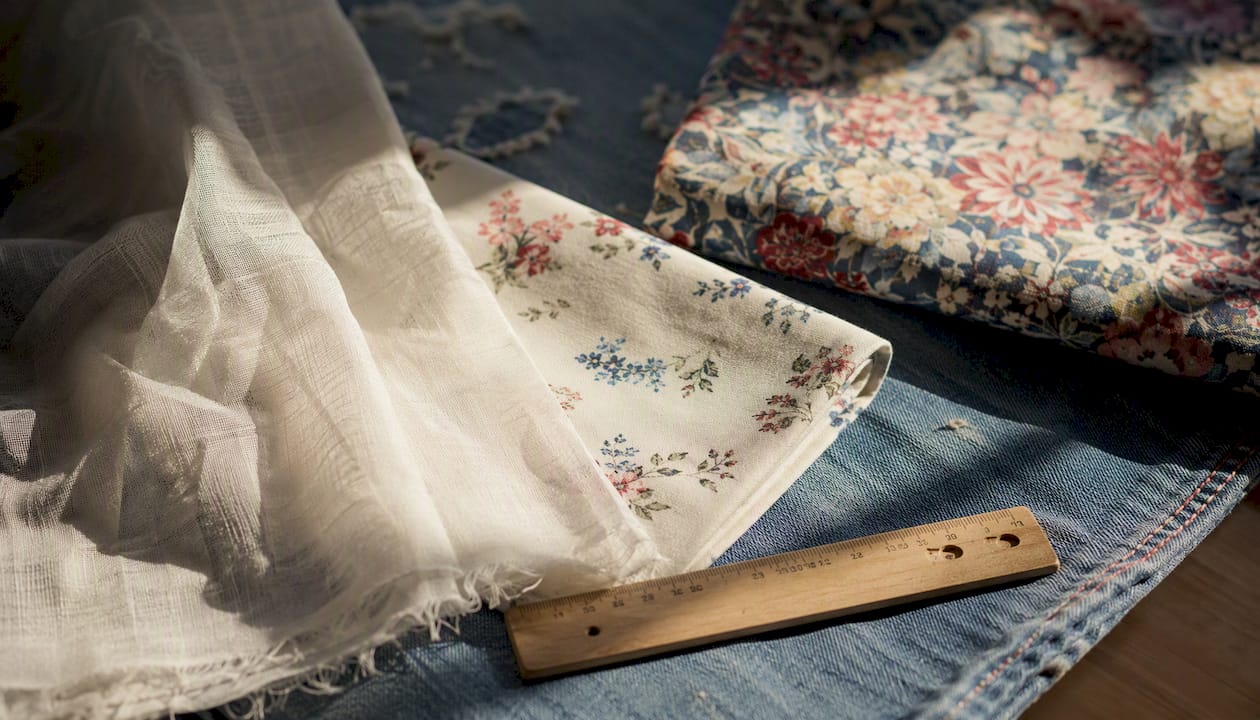
Print registration is a quieter signal but a real one. Older printing methods sometimes left slightly soft or offset edges where colors didn't align perfectly. Modern digital and rotary printing produces crisp, exact registration, so a print with slightly blurred edges can be either genuinely old or a reproduction deliberately styled to mimic that imperfection.
Here's what to check when you're evaluating a bolt or a listing photo:
- Zoom in on the print edges: crisp and perfect usually means modern reproduction
- Note the ground color: cream or ecru skews vintage-styled, bright white skews contemporary
- Feel the hand if you can: soft and slightly loose weave reads older or lawn-weight; firm and tight reads standard quilting cotton
- Check the finish: matte suggests apparel or quilting use, polished or glazed suggests decor-focused chintz
Pro Tip: Don't judge a fabric's age by its softness alone. A brand-new reproduction print pre-washed and treated with a fabric softener finish can feel just as broken-in as a 40-year-old feedsack scrap. Weave density and print registration are more reliable age indicators than hand alone.
The Eras Behind Vintage-Inspired Cotton Prints
Every vintage-inspired print borrows from a specific stretch of textile history, and knowing the timeline helps you shop with intention instead of guessing.
- 1920s to 1950s, feedsack era: Flour, sugar, and feed companies started printing their cotton sacks with florals and novelty motifs so farm families could repurpose the empty bags into clothing and quilts. This is the origin point for most "vintage cotton" reproduction lines you'll see today.
- 1930s to 1940s, calico and small-scale prints: Tiny repeating florals and conversational novelty prints dominated, often on a light or cream ground, driven partly by fabric rationing and partly by feedsack aesthetics carrying over into commercial yardage.
- 1950s, polished cotton and chintz: Glazed, firm-handed cottons became popular for tablecloths, drapes, and decor. A 1950s polished cotton chintz sample shows exactly this: a stiff, shiny hand suited to home goods rather than everyday clothing.
- 1920s, Art Deco geometrics: Repeating angular patterns, sunburst motifs, and metallic-inspired color combos showed up on cotton and silk alike, less common in quilting cotton today but a recognizable reference point in retro-styled apparel prints.
- 1950s to 1960s, mid-century boldness: Larger-scale florals, atomic shapes, and saturated color palettes marked a shift away from the muted feedsack aesthetic.
These eras stay popular in craft circles for a practical reason: quilting has always leaned on reproduction fabric to recreate historical block patterns authentically, and the recent cottagegrandmillennial revival in home decor has pulled 1950s chintz and floral prints back into mainstream demand.
Matching Fabric to Your Project
The project you're making should decide the fabric weight and print scale you buy, not the other way around. A print that looks charming on a bolt can behave badly once it's cut and sewn into the wrong garment or object.
Quilting is the most forgiving use case. Standard quilting cotton, a midweight, tightly woven fabric, holds up to piecing, pressing, and repeated washing without much drama. It's the default choice for feedsack-style reproduction prints because that's largely what the industry designs for.
Wearable apparel asks more of the fabric. A soft, lightweight cotton lawn or voile drapes well for dresses and blouses, while quilting cotton, sewn into a garment, tends to feel stiff and boxy. Shirting-weight cotton splits the difference, sturdy enough for structured shirts but softer than standard quilting cotton.
Home decor items want either weight extreme. Lightweight cotton voile works for sheer curtains, while firmer bases, polished cotton or chintz, give tablecloths and decorative cushions the body and shape they need to hold a crisp silhouette.
| Project type | Best fabric | Weight/hand | Sewing note |
|---|---|---|---|
| Quilting and patchwork | Quilting cotton | Medium, tight weave | Prewash to prevent uneven shrinkage between blocks |
| Dresses and blouses | Cotton lawn or voile | Light, soft drape | Use a smaller needle (60/8 or 70/10) to avoid puckering |
| Structured shirts | Shirting cotton | Medium, crisp | Interface collars and cuffs for shape retention |
| Tote bags and pouches | Quilting cotton or canvas | Medium to heavy | Reinforce handles and stress points with double stitching |
| Tablecloths and cushions | Polished cotton or chintz | Firm, glazed finish | Test iron on scrap first, glaze can scorch at high heat |
Pattern scale should match project size, too. A small-scale feedsack floral gets lost on a large tablecloth but shines on a fitted blouse or a quilt block. A bold mid-century print can overwhelm a small pouch but anchors a statement curtain panel beautifully.
Authentic Vintage Cotton vs. Modern Reproduction: What's the Difference
Authentic vintage cotton is original fabric manufactured decades ago, with real age, wear, and handling limits. Reproduction fabric is new cotton printed today to look like it, and it behaves like any other modern quilting cotton off the bolt. That distinction changes everything about how you buy, wash, and sew it.
Telling the two apart takes a closer look than checking the print alone, since reproduction prints have gotten remarkably accurate. Three physical checks are the most reliable: stitch-hole evidence, weave hand, and print registration.
- Stitch holes: Authentic feedsack pieces were sewn shut with chain stitching. Even after that thread is removed, you'll often find a faint row of small holes along one edge where the seam used to be.
- Weave and hand: Genuine vintage cotton usually has a coarser or more irregular weave than today's tightly controlled quilting cotton, a byproduct of older milling equipment.
- Print registration: Vintage printing methods sometimes left slightly imperfect color alignment. Crisp, perfectly aligned edges usually point to a modern reproduction, though not always, since some reproductions deliberately mimic that softness.
- Selvage and maker marks: Original selvages sometimes carry printed mill names or pattern numbers that don't match any current fabric house catalog.
- Odor and discoloration: A musty smell or uneven yellowing at fold lines is common in fabric that's been stored for decades, something a reproduction print won't have straight off the bolt.
Choose authentic vintage cotton for restoration quilts, collectible projects, or when the historical provenance itself is the point. Choose reproduction fabric for everyday sewing, wearables, and anything that needs to survive regular washing, since reproduction quilting cotton behaves predictably in a way that decades-old fiber often can't.
Authentic pieces also carry real fragility. Test colorfastness on a hidden corner before any wash, avoid wringing or aggressive agitation, and treat any piece that feels brittle or thin as display-only rather than sewable yardage.
Where to Buy Vintage-Inspired and Authentic Vintage Cotton
Your sourcing channel depends entirely on whether you want reproduction fabric that behaves predictably or original vintage material with real history attached.
For reproduction prints, the big fabric houses are your most reliable bet. Moda Fabrics, Riley Blake, and Windham Fabrics all publish coordinated feedsack-style and mid-century-inspired lines season after season, typically sold through quilt shops and craft stores both in person and online. These lines restock quickly and come in consistent bolt widths, which matters if your project needs multiple yards of the same dye lot.
For authentic vintage pieces, marketplaces like Etsy and eBay are the main hunting grounds, alongside antique stores and estate sales for in-person finds. Supply here is irregular by nature. You're buying whatever a seller happened to inherit or find, not a manufactured product line, so patience and repeat searching matter more than brand loyalty.
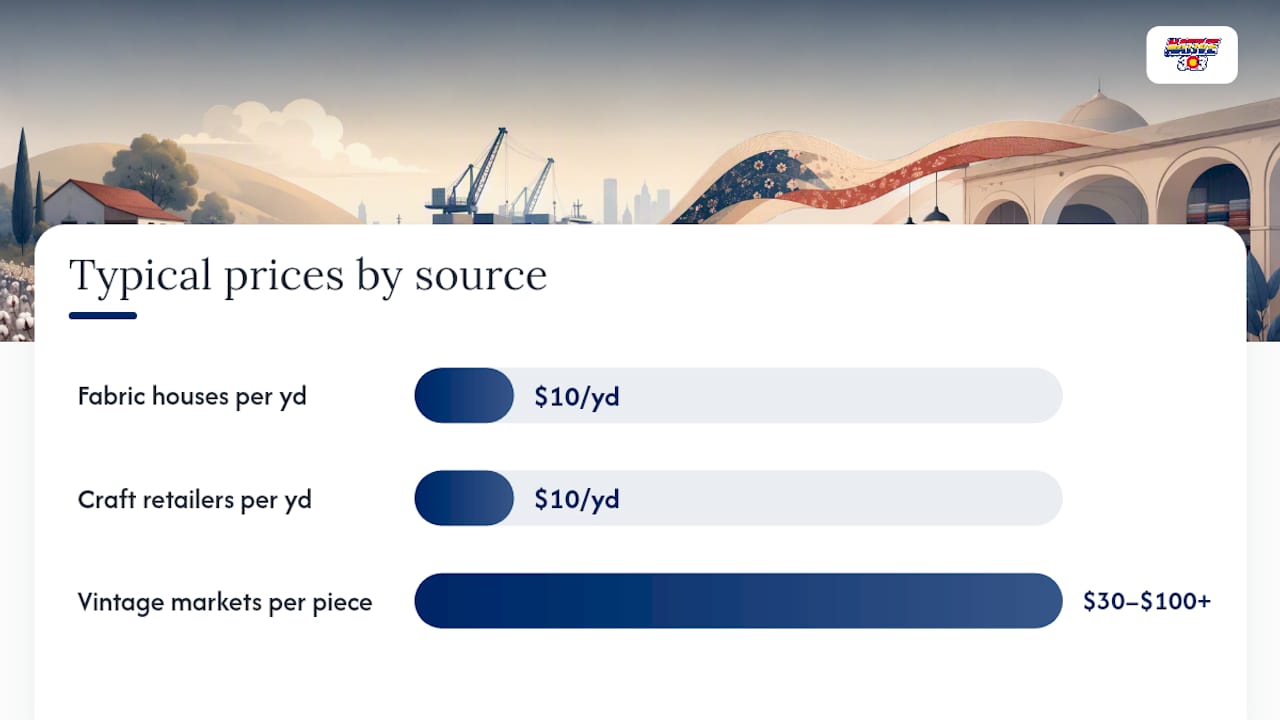
| Source type | Examples | Typical price | Availability |
|---|---|---|---|
| Modern fabric houses | Moda, Riley Blake, Windham | $10 per yard | Fast, consistent restocks |
| Craft and fabric retailers | Local and online quilt shops | $10 per yard | Seasonal, tied to fabric house releases |
| Vintage marketplaces | Etsy, eBay, antique stores | $30 to $100+ per piece or fat quarter | Irregular, one-of-a-kind stock |
Before buying vintage yardage sight unseen, ask the seller for close-up photos of the selvage and any visible stitch holes, confirm the piece's condition in writing, and check the return policy since fabric flaws don't always show up in listing photos. Coordinated reproduction bundles, sold as fat-quarter stacks or precuts, are worth grabbing when a print line you like is in stock, since fabric houses discontinue prints without much warning.
If you're building out a wardrobe piece from either source and want inspiration on how the finished fabric wears, our post on styling vintage-inspired tees walks through pairing retro prints with a modern silhouette.
Feedsack Fabric: The History and Identification Deep Dive
Feedsack fabric is printed cotton originally used to package flour, sugar, and animal feed from roughly the 1920s through the 1950s, and it's the single biggest reason the quilting community treats vintage cotton as a craft tradition rather than just a color trend. Companies realized that printing their sacks with attractive florals gave farm families a reason to buy their brand over a competitor's plain sack, since the empty bags got sewn into dresses, aprons, and quilts once the flour was gone. Collections at institutions like the International Quilt Museum preserve entire Depression-era quilts built almost entirely from repurposed feedsacks, which is why the print scale and palette from that period still define what "vintage cotton" means to most quilters today.
If you're trying to confirm whether a piece is genuinely from that era, run these three tests in order:
- Check for a chain-stitch hole row. Look along one edge of the fabric for a faint, evenly spaced line of tiny holes. That's where the sack was originally stitched closed, and the holes usually remain even after the thread is long gone.
- Feel the weave density. Rub the fabric between your fingers and compare it to a known modern quilting cotton. Authentic feedsack fabric often feels slightly coarser or less uniform, a mark of older, less precise milling.
- Compare print registration and color bleed. Look closely at where two colors meet in the print. Slight blurring or minor color overlap suggests an older printing process; if you're shopping online, zoom into listing photos at the highest resolution the seller provides.
Sourcing authentic feedsack fabric means checking estate sales, antique shops, and the vintage sections of Etsy and eBay, and prices swing widely with condition and rarity: expect anywhere from $30 to well over $100 for a piece large enough to actually sew with, depending on print rarity and yardage.
Handle any confirmed authentic piece gently. Hand wash in cool water only, test colorfastness on a hidden corner first, and skip the washing machine entirely if the fibers feel thin or brittle, since machine agitation can shred decades-old cotton in a single cycle. If a piece feels historically significant or is falling apart at the seams, a textile conservator is worth the consultation before you cut into it.
Pro Tip: When searching Etsy or eBay, skip the word "vintage" alone, since it's used loosely by sellers. Search "feedsack fabric stitch holes" or "feedsack chain stitch" instead. Sellers who know what they're holding tend to mention these details directly in their listing titles.
How to Prewash, Cut, and Sew Vintage-Inspired Cotton
Prewash modern reproduction cotton before you cut a single piece. If you're working with a confirmed authentic vintage scrap instead, test a small hidden corner first rather than tossing the whole piece straight into a wash.
Here's the process that keeps both project types on track:
- Prewash reproduction cotton in cool water with a mild detergent to remove sizing and pre-shrink the fabric, since untreated cotton shrinks and skipping this step can throw off finished garment measurements by a noticeable margin.
- Spot-test authentic vintage pieces on an inch-square hidden corner before committing to a full wash, checking for color bleed, fraying, or unexpected shrinkage.
- Choose a smaller needle for lightweight cotton like lawn or voile (size 60/8 or 70/10) and a standard needle (70/10 or 80/12) for quilting-weight cotton, since the wrong needle size causes visible puckering on lighter weaves.
- Stabilize fragile or loosely woven pieces with a lightweight fusible interfacing on the wrong side before cutting, especially useful for aged vintage yardage that's started to thin out.
- Press with a pressing cloth on polished or glazed cottons like chintz, since direct high heat can scorch or dull the glaze finish.
A few additional details make a real difference in the finished piece. Match your seam allowance to the fabric's fragility: standard 5/8 inch works fine for sturdy reproduction cotton, but bumping up to a full inch on authentic vintage yardage gives you room to work around weak spots without running out of fabric. For period prints with directional motifs, like a novelty print with little teapots or animals, cut pattern pieces with the motif oriented consistently rather than letting it fall randomly, the same way you'd match a plaid.
Finishing choices should match the end use. Wearable garments benefit from French seams or bias-bound edges for durability and a clean interior finish, while home goods like pillow covers and curtain panels typically hold up fine with a simple serged or zigzag-finished seam, since they see far less stress and washing than clothing.
Why Vintage-Inspired Cotton Keeps Showing Up in Modern Sewing Rooms
Makers gravitate toward vintage-inspired cotton for a straightforward reason: it delivers the emotional pull of nostalgia without any of the fragility that comes with sewing actual 80-year-old fabric. A feedsack-style print gives a quilt instant warmth and history, but it still behaves like the cotton you already know how to sew, prewash, and press without worrying about it disintegrating in the wash.
That same instinct, taking a specific place or era and turning it into something wearable, is exactly what drives Native303apparel's approach to design. Understanding why a small-scale floral reads as 1930s or why a bold geometric reads as 1950s is the same skill set that goes into building apparel around a specific memory or landmark rather than a generic template. If you're curious how that translates into finished pieces, our posts on community-inspired clothing and era-specific graphics in apparel dig into that connection further, and the Native303apparel store itself is a working example of nostalgia translated into wearable design.
For more on the author, see the author biography.
Sources
- Kew: Cotton
- Sewing
- Sewport: Cotton fabric directory
- United Notions: Moda Fabrics listing
- Fabzure: Aesthetic fabric guide