
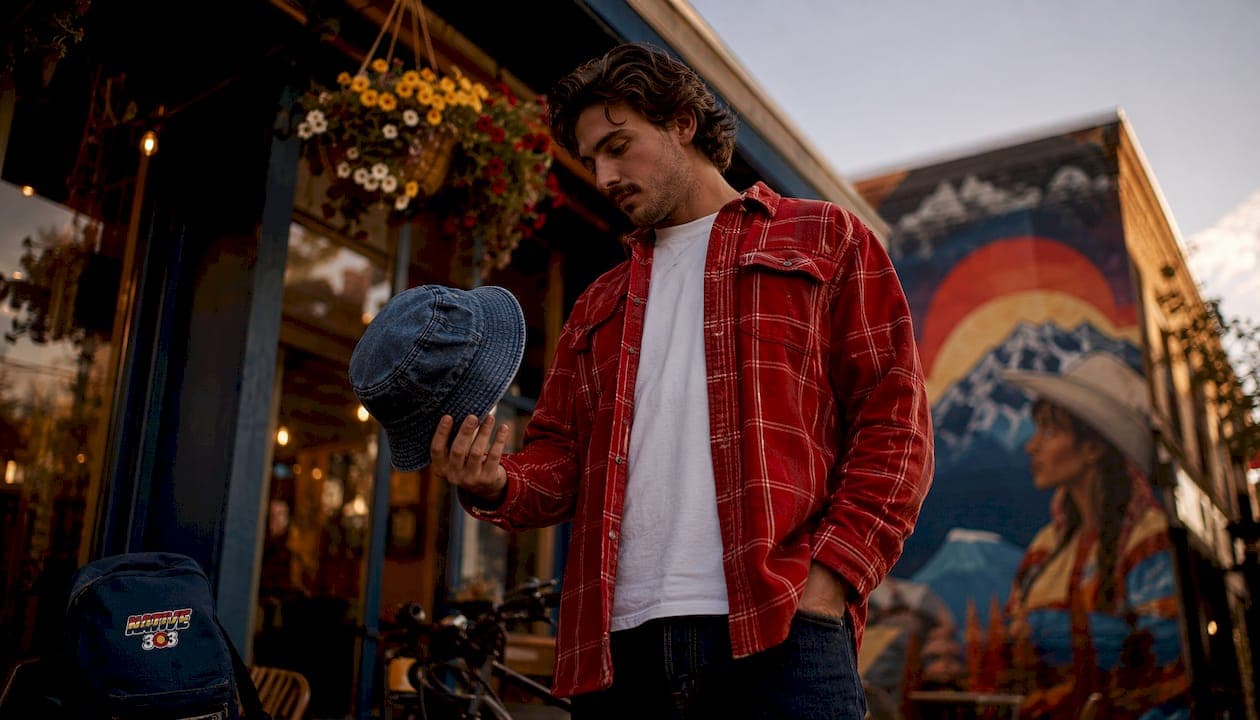
A Denver-ready vintage look is simpler than it sounds: anchor one vintage statement piece to modern basics, tailor it to fit your body, and pull in a local color cue or motif that signals where you're from. That's the whole formula. The sections below break it into concrete steps — from sourcing and silhouette rules to seasonal outfit templates built around Denver's mountain climate and the nostalgic palette Native303apparel draws from.
- One vintage anchor piece, everything else modern
- Prioritize shoulder fit above all other measurements
- Use Denver's red, yellow, and blue stripe palette as your accent signal
- One-vintage-piece rule prevents the costume effect before it starts
- Care and storage are as important as the initial buy
Pro Tip: Photograph your existing wardrobe before you shop. Knowing what you already own makes it far easier to spot a vintage piece that pairs with five items you already wear.
Table of Contents
- What are the core vintage apparel styling tips for men?
- How do you build a Denver-flavored vintage look?
- What vintage pieces should you start with?
- How does fit and tailoring make vintage look modern?
- Which accessories add vintage character without going overboard?
- What are the best seasonal outfit templates for Denver?
- How do you care for and preserve vintage garments?
- Why does vintage styling actually matter?
- How do you wear vintage in casual versus formal Denver settings?
- Key Takeaways
- Denver vintage style is a story worth telling
- Native303apparel fits right into these styling rules
- Further reading and sourcing
What are the core vintage apparel styling tips for men?
The look succeeds by contrast and proportion. One vintage anchor plus modern basics plus correct proportions — that's it. Mixing eras intentionally is the move: an oversized vintage blazer over slim modern trousers, or a fitted vintage shirt tucked into relaxed contemporary jeans. The contrast is what reads as style rather than costume.
Silhouette balance means keeping volume on one end. Bold on top, slim on the bottom. Bold on the bottom, clean on top. Never both at once. Limit bold patterns to one piece per outfit; everything else earns its place by staying quiet.
"Combine a vintage item with modern items and not with many other vintage items — that makes you look more rooted in the present day rather than the 1930s or '40s." — Gentleman's Gazette
The costume trap springs when you stack too many period-accurate pieces. One or two vintage elements per outfit is the ceiling. Integration beats imitation every time.
Pro Tip: If you can name the decade your outfit is from without thinking, you've gone too far. A stranger should see personal style, not a Halloween costume.
How do you build a Denver-flavored vintage look?
Tie one vintage element to a Denver cue — a color, a motif, or a texture — and the outfit reads local instead of generic. Native303apparel's warm stripe palette (red, yellow, and blue) is a ready-made shortcut: use those colors as accent pieces, layering trims, or a graphic tee beneath a vintage jacket.
Denver's style pulls from mountain utility, diner nostalgia, and a skate-and-outdoor culture that rewards rugged textures and earthy tones. That combination gives vintage pieces a natural home here.
Denver-specific signals to work in:
- Mountain-ready textures: canvas, waxed cotton, heavy denim, suede
- Earthy base tones (tan, rust, olive) with a pop of Broncos-adjacent red or blue
- Footwear that handles both pavement and trail: rugged leather boots, clean trail runners
- Local motifs from Denver's diner and club era — the kind Native303apparel captures in its graphic designs
Two outfit examples that land the Denver angle: a vintage denim jacket over a Native303 stripe tee with rugged leather boots for fall; a '70s suede jacket with neutral chinos, a subtle red-trim scarf, and clean boots for a Broncos-friendly pop. For deeper context on Denver retro graphic themes, the Native303 blog is worth a look.
What vintage pieces should you start with?
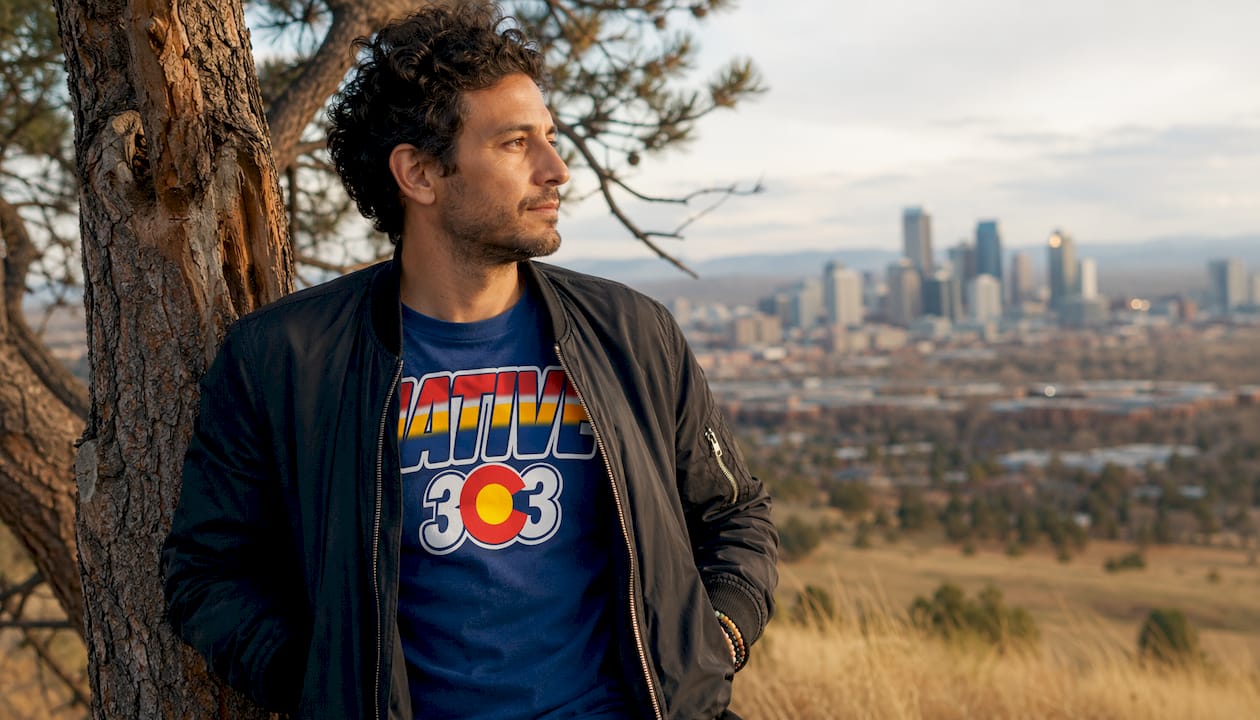
Prioritize versatile pieces that pair with at least five items you already own. The natural fibers rule applies here: cotton, wool, silk, and linen age better, drape better, and hold up to alterations far better than synthetic blends.
Top starter pieces:
- Leather or denim jacket (pairs with everything)
- Structured blazer in wool or tweed
- High-waisted or straight-leg trousers
- Wool or chunky-knit sweater
- One statement accessory (belt, watch, or scarf)
Quick vetting checklist for thrift shopping:
- Check seams: French seams (pre-1940s) and pinked seams (1950s) signal quality construction
- Inspect zippers and buttons for era-appropriate materials and condition
- Smell the fabric — musty odors often survive washing
- Look for stains, tears, or lining damage before committing
| Source | What to Find There |
|---|---|
| Denver thrift shops | Everyday vintage, denim, workwear, flannels |
| Regional consignment stores | Curated blazers, outerwear, leather goods |
| eBay, Etsy, Depop | Specific era pieces, rare finds, vetted sellers |
| Estate sales | High-quality natural-fiber garments, accessories |
A modern shirt in a clean, lightweight cotton works well as the modern base beneath any vintage layer.
How does fit and tailoring make vintage look modern?
Shoulder fit is the non-negotiable. If the shoulder seam doesn't sit at your actual shoulder, no other alteration saves the garment. Fit comes first — a modern-fitted base with vintage details reads better than an all-authentic-era outfit that hangs incorrectly.
Vintage sizing runs inconsistent and often smaller, with tighter shoulders and shorter torsos across many eras. Budget for tailoring before you buy.
Alterations worth the cost:
- Taking in a blazer at the waist
- Shortening sleeves or hemming trousers
- Removing dated shoulder pads
- Replacing worn linings
Measurements to bring while shopping: shoulder width, chest, natural waist, sleeve length, and inseam. If structural damage (broken seams at stress points, moth holes in the body of a garment, rotted lining) requires more than two or three fixes, pass.
Pro Tip: A $15 thrift find plus a $40 tailor beats a $200 vintage piece that fits badly. The tailor is the investment.
Which accessories add vintage character without going overboard?
One well-chosen vintage accessory delivers more impact than three period pieces stacked together. Accessories shift the tone of a vintage piece from costume to curated — but only when used with restraint.
High-impact, low-risk picks:
- Leather belt with natural patina
- Silk or wool scarf (doubles as a Denver layering tool)
- Vintage-style sunglasses: aviators, wayfarers, or round frames
- Period-appropriate watch with a simple dial
- Silk pocket square for blazer looks
Echo the outfit's color palette with your accessory, not the era. A red-toned scarf that picks up a stripe on a Native303 tee reads intentional. A bowler hat, a pocket watch, and a vintage tie worn together reads like a prop department. Save multiple accessories for special events; on a regular Denver day, one is enough.
What are the best seasonal outfit templates for Denver?
Pick one vintage anchor, ground it with modern bases, then adjust fabrics and layers for Denver's swings between warm afternoons and cold nights.
| Season | Vintage Anchor | Modern Base | Footwear |
|---|---|---|---|
| Spring | Denim jacket or lightweight vintage shirt | Crisp tee + straight-leg jeans | Transitional leather boots |
| Summer | Vintage short-sleeve button-down or band tee | Tailored shorts or lightweight chinos | Clean low-profile sneakers |
| Fall | Suede or leather vintage jacket + neutral knit | High-waisted trousers | Sturdy lug-sole boots |
| Winter | Wool overcoat or heavy vintage knit | Layered thermal base + modern trousers | Weather-ready leather boots |
- Natural fibers (wool, cotton, canvas) handle Denver's temperature swings better than synthetics
- Layer a Native303 stripe-accented scarf in winter for a local color pop
- Fall and winter call for rugged footwear — Denver sidewalks after a snowfall are unforgiving
For more on mixing Denver tees into layered outfits, the Native303 blog has practical templates.
How do you care for and preserve vintage garments?
Treat vintage pieces like investment items, because that's what they are. Gentle care and timely repairs preserve both value and wearability.
- Cleaning: Always check the fabric before washing. Hand-wash or gentle dry-clean wool and silk; spot-treat when possible to avoid unnecessary stress on aged fibers.
- Repairs: Replace missing buttons promptly, mend small tears before they spread, and reline jackets when the lining starts to shred. A tailor handles all of this for a reasonable cost.
- Storage: Use breathable garment bags, not plastic. Cedar blocks or sachets deter moths. Keep pieces in a cool, dry space away from direct light, which fades natural dyes faster than anything else.
Why does vintage styling actually matter?
Vintage styling communicates personal story, supports sustainable choices, and produces visual interest that fast fashion simply can't replicate. Thrift and resale shopping yields better-quality natural-fiber garments than most new fast-fashion alternatives, and applying a capsule mindset to vintage finds keeps the wardrobe curated rather than cluttered.
- Individuality: A vintage piece is, by definition, not on every other guy at the bar.
- Sustainability: Buying secondhand extends a garment's life and reduces demand for new production.
- Storytelling: Worn graphics and heritage pieces carry cultural weight that a brand-new shirt cannot fake.
Tailoring and modern pairing are what keep these looks wearable. Without them, vintage slides into costume. With them, it becomes personal style.
How do you wear vintage in casual versus formal Denver settings?
Casual Denver settings — coffee shops on Colfax, weekend markets on South Broadway, a show at Red Rocks — reward relaxed vintage pairings. A vintage band tee with modern slim chinos and clean sneakers fits every one of those venues. A vintage denim or suede jacket over a plain tee reads effortlessly local.
Formal Denver settings (a rooftop dinner, a gallery opening, a wedding at a mountain venue) call for more structure. A tailored vintage blazer in wool or tweed over a modern dress shirt and slim trousers works well. Keep accessories minimal: one watch, one pocket square. The vintage piece provides the character; the modern base keeps it appropriate. Avoid full vintage suits unless you've had them tailored to a contemporary silhouette — an unaltered wide-lapel suit from the '70s reads costume at a formal event, not classic.
Key Takeaways
The most effective Denver vintage look anchors one vintage statement piece to modern basics, prioritizes shoulder fit above all else, and pulls in a local color cue from Denver's red, yellow, and blue palette.
| Point | Details |
|---|---|
| One vintage piece rule | Start with a single vintage anchor; everything else should be modern to avoid the costume effect. |
| Silhouette balance | Keep volume on one end only — bold top with slim bottom, or vice versa. |
| Fit and tailoring first | Shoulder fit is non-negotiable; budget for alterations before you buy. |
| Natural fibers | Prioritize cotton, wool, silk, and linen — they age better and hold up to tailoring. |
| Native303apparel as your Denver accent | Use Native303apparel's red, yellow, and blue stripe pieces as modern anchors or color accents within any seasonal template. |
Denver vintage style is a story worth telling
The conventional wisdom says vintage styling is about finding the right piece. It's not. It's about editing. The guys who look sharp in vintage aren't the ones with the rarest finds — they're the ones who know when to stop. One jacket. One accessory. Modern trousers. Done.
What makes Denver specifically interesting as a vintage context is that the city's aesthetic already blends eras naturally. Mountain utility, '70s diner culture, '90s skate influence — they coexist here in a way that makes mixing vintage and modern feel native rather than affected. A suede jacket from 1974 doesn't look out of place on the 16th Street Mall. It looks like it belongs.
The local angle is also where most vintage guides fall short. Generic advice tells you to "add a vintage piece." Denver-specific advice tells you to reach for rust, olive, and that particular shade of Broncos blue — and to make sure your boots can handle a March snowstorm. That specificity is what separates a styled outfit from a dressed one.
Native303apparel fits right into these styling rules
If you've been building toward a vintage-inspired Denver wardrobe, Native303apparel gives you the modern anchor pieces that make the whole system work. The brand's graphic tees — rooted in Denver's diner nostalgia, club culture, and local color — slot directly into the one-vintage-piece rule: wear one as your modern base beneath a vintage jacket, or use the red, yellow, and blue stripe palette as your seasonal accent.
Native303apparel pieces are designed to tell a Denver story without requiring a full vintage wardrobe to do it. A Native303 tee under a thrifted suede jacket is a complete outfit. Check the size guide before ordering — especially if you're mixing Native303 pieces with vintage items that already run small. Browse the collection and pick one piece that fits the seasonal template you're building toward.
Further reading and sourcing
- Gentleman's Gazette — Classic, Not Costumey: the definitive guide to wearing vintage without looking dated
- RomperJack — Men's Vintage Fashion Beginner's Guide: practical era-by-era breakdown for building a starter wardrobe
- TheVou — Vintage Style Shopping Guide for Men: seasonal templates and accessory primers
- Native303apparel blog: Denver-specific styling guides, local motif deep dives, and outfit templates built around the city's culture
- How to spot genuine Denver-inspired designs: useful before shopping for locally themed pieces
- Build a Black-owned brand wardrobe: sourcing guide for integrating independent brands into a vintage-curated wardrobe
For Denver thrift shopping, South Broadway between Alameda and Mississippi has the highest concentration of consignment and vintage stores in the metro area. Online, Depop and Etsy both have strong seller communities for pre-1980s American menswear.