
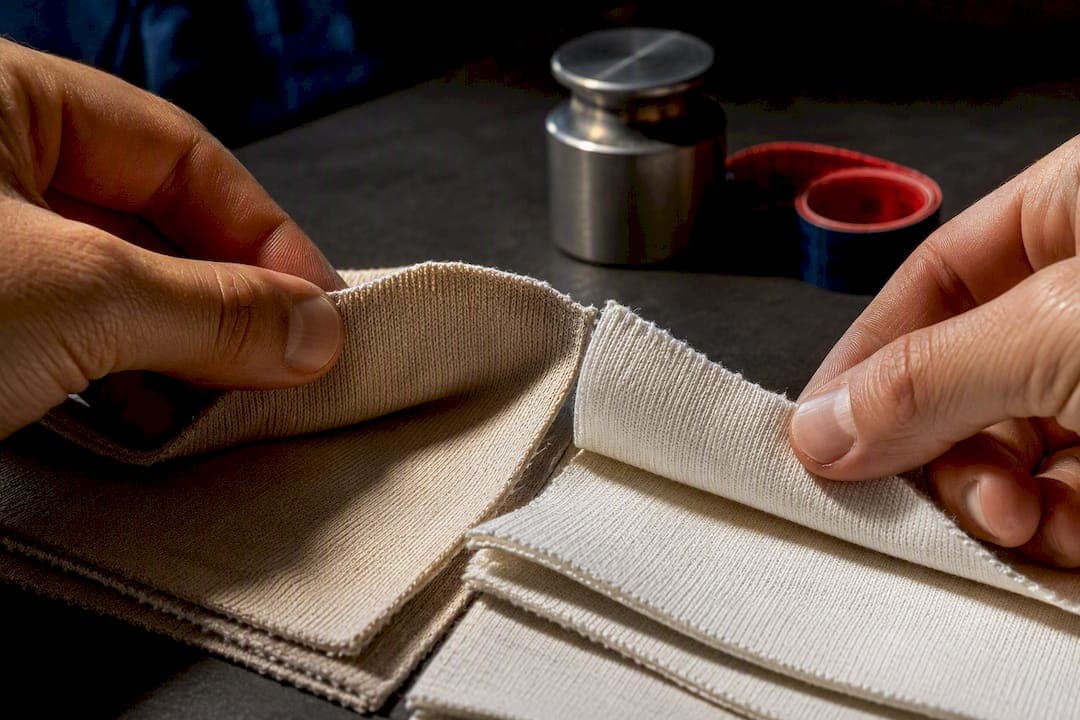
A heavyweight t-shirt is any tee built from fabric around 5.5 to 6 ounces per square yard (roughly 185 to 203 GSM) or heavier, with true heavyweight starting closer to 6.1 to 7 ounces. It's the right choice if you want a shirt that holds its shape, survives years of washes, and prints cleaner than thin fabric ever will. Skip it only if you need a shirt that packs flat or disappears under layers.
TL;DR:
- Heavyweight T-shirts typically start at 5.5 ounces per square yard (185 GSM), with true heavyweight closer to 6.1 to 7 ounces.
- Heavier fabrics hold their shape better and appear cleaner in photos, but they may feel larger in size compared to midweight shirts.
- Selection should be based on GSM, fiber quality, and pre-shrunk treatment, not just the marketing term "heavyweight."
- Proper washing (cold, inside out, gentle detergent, air drying) extends the shirt's lifespan to over 50 wash cycles.
- For printing, heavy fabric offers better stability, resulting in sharper graphics and reduced puckering.
Table of Contents
- What Does "Heavyweight" Actually Mean in GSM and Ounces?
- How Does Fabric Weight Change the Fit?
- What Makes a Heavyweight Tee Feel Different From a Regular One?
- How Long Should a Heavyweight T-Shirt Actually Last?
- How Should You Wash and Store a Heavyweight Tee?
- How Does Fabric Weight Affect Printing and Embroidery?
- What Should You Check Before Buying a Heavyweight T-Shirt?
- Native303apparel's Practical Care and Collector Tips
- Is a Heavyweight T-Shirt Worth Buying?
- Sources
- FAQ
What Does "Heavyweight" Actually Mean in GSM and Ounces?
Fabric weight is typically measured in grams per square meter (GSM) or ounces per square yard (oz/yd²), with 1 oz/yd² approximately equal to 33.91 GSM.
Once you know the conversion, weight bands become easy to sort. Here's how the industry generally breaks them down:
- Lightweight: generally around 3 to 4.5 oz/yd² (approximately 120 to 150 GSM), thin and drapey, common in basics and athletic tees.
- Midweight: around 4.6 to 5.5 oz/yd² (about 150 to 180 GSM), common in retail t-shirts.
- Heavyweight: starting roughly at 5.5 oz/yd² (about 185 to 203 GSM) and heavier, structured and durable, favored for graphic tees and streetwear.
- Super-heavyweight: generally considered above 7.5 oz/yd² (254 GSM and up), thick and boxy for cooler weather or heavy-duty printing.
Quick conversions worth memorizing: 6 oz corresponds approximately to 203 GSM, and 7.5 oz is about 254 GSM. Industry sources generally treat 5.5 ounces as the entry point for heavyweight, with 6.1 to 7 ounces marking "true" heavyweight and anything past 7.1 ounces qualifying as super-heavyweight territory. That range covers most of what you'll find labeled "heavyweight" on product pages today, and it's the number to check before you compare anything else about a shirt.
How Does Fabric Weight Change the Fit?
Heavier fabric doesn't stretch to fit your body the way a thin tee does. It holds its own shape, which changes how a shirt drapes and how it should be sized.
Lightweight cotton clings and moves with you. Heavyweight cotton has enough structure to stand slightly away from the body, which is exactly why it looks cleaner in photos and holds a crease at the shoulder seam instead of collapsing. That structure is also why a heavyweight tee in your usual size can feel a size bigger than a midweight shirt in the same size. The fabric itself is taking up more visual space.
Before you order anything, run this quick check against a shirt you already own and love:
- Lay your best-fitting tee flat and measure the chest width, pit to pit, then double it.
- Measure shoulder to shoulder across the back, and measure length from the collar seam straight down to the hem.
- Compare those three numbers against the brand's actual size guide rather than relying on the size label alone, since heavyweight cuts vary by brand.
- If your chest measurement sits right between two sizes, size up for a boxy or oversized look and stay true to size for a classic fit.
Fit style matters just as much as the number on the tag. A classic fit heavyweight tee should sit close to true-to-size measurements with a little room at the chest. Boxy and oversized cuts run intentionally large, so sizing down one notch from your usual size often looks more deliberate than swimming in fabric. Athletic-fit heavyweights are cut narrower through the torso, and since the fabric already resists clinging, you can usually stay true to size without looking overly fitted.
Pro Tip: Heavyweight cotton loses very little length or width after the first wash when it's pre-shrunk, but a non-pre-shrunk shirt can tighten noticeably. If a listing doesn't say "pre-shrunk," size up half a size as insurance.
What Makes a Heavyweight Tee Feel Different From a Regular One?
GSM tells you the weight, but not the whole story. Two shirts can share an identical 220 GSM rating and still feel completely different in your hands, because weight interacts with fiber choice, yarn spinning method, and knit density in ways a single number can't capture.
Fiber content is the first variable. Pure 100% cotton breathes better and softens with age, while cotton-poly blends resist wrinkling but can trap heat, an important distinction if you're buying a heavyweight tee to wear in summer. Supima and other longer-staple cottons produce a smoother, more durable yarn than standard upland cotton, which is part of why some heavyweight shirts cost noticeably more than others at the same GSM.
Spinning method matters just as much:
- Ring-spun cotton twists fibers tightly into a fine, strong yarn, producing a softer hand and better durability over repeated washes.
- Open-end cotton uses a cheaper, looser spinning process that results in a coarser, less durable fabric, common in bargain-bin heavyweight tees.
- Combed cotton removes short fibers before spinning, giving an even smoother finish that's often paired with ring-spun yarn on premium blanks.
Yarn count and knit density work together with GSM rather than separately from it. A shirt knit with finer yarn at a tighter density can hit the same weight as one knit with thicker yarn more loosely, but the tighter knit typically resists pilling and holds its shape longer. This is exactly why GSM alone isn't a complete quality signal: the number tells you how heavy the fabric is, not how well it was built.
Finishing treatments add the final layer. Garment-dyed shirts are dyed after being sewn, giving a slightly faded, lived-in look and a softer hand right out of the package. Pre-shrunk fabric has already gone through its major shrinkage before you ever wash it, which protects your fit long-term. Enzyme-washed finishes soften rougher cotton without weakening the weave, a common trick for making heavyweight blanks feel broken-in from day one.
How Long Should a Heavyweight T-Shirt Actually Last?
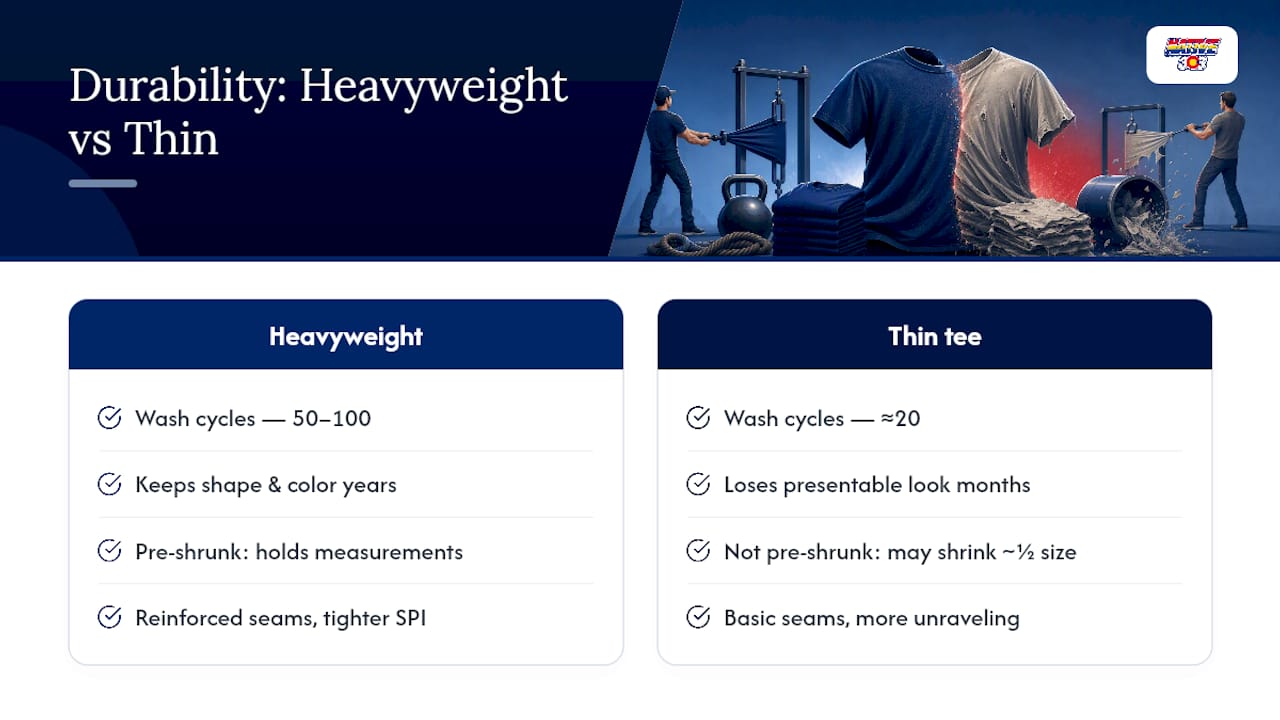
Weight and construction together predict how many wash cycles a shirt survives before it starts looking tired. A well-built heavyweight tee in the 200 to 254 GSM range, made from ring-spun cotton with reinforced seams, should comfortably outlast a midweight retail basic by a wide margin, holding its shape and color through years of regular washing rather than months.
Following a precise wash routine, a well-made graphic tee can survive 50 to 100 wash cycles before print or fabric quality noticeably declines. That number swings heavily based on wash temperature, dryer heat, and whether the shirt is turned inside out before it goes in the machine.
Shrinkage is where a lot of buyers get burned. It isn't caused by weight alone. It's caused by whether the fabric was pre-shrunk before the shirt was sewn, since heavyweight fabric that skips pre-shrinking can still tighten noticeably after the first hot wash, sometimes losing a half size in length. A pre-shrunk heavyweight tee, by contrast, typically holds its measurements within a fraction of an inch wash after wash.
Before buying, check the parts of a shirt that wear out first: the collar rib (loose or curling collars fail early), the shoulder seams (double-stitched seams resist tearing under stress), and the hem stitching (skipped stitches unravel faster). A shirt with a tighter stitches-per-inch count at these stress points will outlast one that looks identical on a hanger.
Run the math on cost per wear and heavyweight tees start looking cheap rather than expensive. A $35 heavyweight shirt worn weekly for two years works out to roughly $0.35 per wear, while a $15 thin tee that pills and stretches out after 20 washes costs about $0.75 per wear for a shorter, less presentable life.
How Should You Wash and Store a Heavyweight Tee?
Care routine matters more for heavyweight cotton than most people assume, since dense fabric holds moisture and detergent residue longer than thin fabric does. Getting the wash cycle wrong doesn't just fade a print. It can shorten a shirt's lifespan by years.
- Turn the shirt inside out before washing to protect any print or embroidery from direct friction against other garments.
- Wash in cold water on a gentle cycle with a mild, dye-safe detergent, avoiding anything with bleach or optical brighteners.
- Skip the dryer when you can and air-dry flat or on a hanger, since heat is the single biggest cause of shrinkage and print cracking.
- If you need the dryer, use low heat and pull the shirt out while it's still slightly damp.
- Store folded rather than hung on a hook long-term, and keep shirts out of direct sunlight, since UV exposure fades both fabric dye and printed graphics.
Pro Tip: Repair small issues the moment you notice them. A loose thread at the collar or a starting hole at the hem takes thirty seconds to hand-stitch, but left alone it turns into a hole that ends the shirt's life early.
For garment-dyed or pigment-dyed heavyweights specifically, stick to cold water every time. Warm water accelerates color bleed on these finishes far more than it does on standard piece-dyed cotton.
How Does Fabric Weight Affect Printing and Embroidery?
Heavier fabric gives printers a more stable surface to work with, and that shows up directly in the finished product. Thin fabric stretches slightly under a screen printing squeegee, which can cause registration issues on multi-color designs. Heavyweight cotton resists that stretch, which is part of why dense fabric reduces puckering and curing rejects in screen printing runs.
Direct-to-garment (DTG) printing behaves differently on heavier cotton too. Thicker, tighter-knit fabric absorbs ink more evenly, producing sharper detail on complex graphics, though it can also require slightly longer curing times to fully set the ink into denser fibers. For embroidery, heavyweight fabric holds stitches without puckering around the design the way thin jersey often does.
The trade-off shows up in logistics rather than print quality. Heavier blanks add shipping weight and cost, an important consideration for anyone printing at scale rather than buying single shirts.
If you're buying a printed heavyweight tee, or you're a small brand sourcing blanks, ask the seller these questions before committing:
- What's the exact GSM or ounce weight of the blank, not just "heavyweight" as a marketing term?
- Is the fabric pre-shrunk, and what fiber percentage is it?
- Can they show a test print on the actual blank, not a stock photo?
- What ink type do they use, and does it match what works best on heavier cottons and darker colors?
What Should You Check Before Buying a Heavyweight T-Shirt?
Run through this checklist before you add anything to your cart, whether you're buying one shirt or sourcing blanks for a small print run.
- GSM or oz/yd² weight stated explicitly, not just the word "heavyweight" on its own.
- Fiber content, ideally 100% cotton or a high-cotton blend for breathability and durability.
- Knit type, since ring-spun and combed cotton consistently outperform open-end for softness and longevity.
- Pre-shrunk status, confirmed in the listing rather than assumed.
- Stitches per inch at the collar, shoulder, and hem if that detail is available.
- Opacity, especially important for dark prints on light shirts or vice versa.
- A brand-specific size chart, since heavyweight cuts vary more between brands than lightweight basics do.
- Return policy, because fit on heavyweight fabric is harder to guess from a product photo alone.
If you can hold the shirt before buying, three quick tests tell you almost everything a spec sheet won't. Fold a section of fabric between your fingers. It should feel dense and spring back rather than crumple limp. Hold it up to a light source; true heavyweight cotton should show minimal see-through even in lighter colors. Stretch a seam gently; it should resist and return to shape rather than gap or pucker.
| What to check | Why it matters |
|---|---|
| GSM/oz weight | Confirms the shirt is actually heavyweight, not marketing language |
| Fiber content | Determines breathability, softness, and durability |
| Pre-shrunk status | Predicts how much the fit will change after washing |
| Stitch density | Signals how long seams will hold under regular wear |
Expect to pay more for the combination of high GSM, ring-spun cotton, and reinforced construction. A basic heavyweight blank might run $12 to $20, while a printed, garment-dyed collector tee built on premium cotton often lands between $28 and $45, and that gap usually reflects real differences in fiber and finishing rather than pure markup.
Native303apparel's Practical Care and Collector Tips
Collector-grade graphic tees deserve collector-grade care, and the routine matters more than people expect. Following a precise wash and dry process protects both the fabric and the print for 50 to 100 wash cycles, which is the difference between a shirt that fades in a year and one that still looks sharp after five.
The core steps worth repeating: wash inside out, use cold water, choose a gentle detergent without bleach or brighteners, and air-dry or tumble dry on low heat only when necessary. Skipping any one of these speeds up fading, cracking, and shrinkage, even on a well-made heavyweight blank.
Telling garment-dyed from pigment-dyed heavyweights by feel matters for care, too. Garment-dyed shirts feel softer and slightly more faded right out of the package because the dye process happens after the shirt is sewn. Pigment-dyed shirts often feel a touch stiffer initially and can show more surface color variation. Both require gentler washing than standard piece-dyed cotton, but garment-dyed pieces bleed color more easily in warm water, so cold water isn't optional there.
- Check the internal size guide before ordering, since heavyweight cuts run differently across brands.
- Read the dedicated care guide before the first wash, not after the first fade.
- If you're building outfits around a heavyweight graphic tee, pairing it with the right layers gets more mileage out of a structured cut.
Is a Heavyweight T-Shirt Worth Buying?
Heavyweight tees earn their price when you actually wear the same shirt for years. If you're the kind of buyer who rotates through a handful of favorite graphics on repeat, the extra ounces of cotton pay for themselves in wash cycles alone. Where heavyweight loses its case is packing for a trip or layering under something else. A 7-ounce tee under a hoodie in July is a mistake nobody needs to make twice.
The checklist matters more than the marketing word "heavyweight" printed on a tag. GSM, fiber content, and pre-shrunk status tell you more in thirty seconds than a product description will in three paragraphs. Buy for the number, not the label.
— Rob
Sources
- What Weight is Heavyweight T-Shirt? The Definitive Fabric Weight Guide
- How Much Does a Shirt Weigh? Guide for Small Businesses (2026) - Shopify
FAQ
How Do Heavyweight T-Shirts Fit Compared to Regular Tees?
Heavyweight tees tend to fit slightly boxier than midweight shirts in the same labeled size because the denser fabric holds its shape rather than clinging to the body. Check chest and shoulder measurements against the brand's own size chart rather than relying on the label alone.
What Is Considered Heavyweight in a T-Shirt?
Fabric generally qualifies as heavyweight starting around 5.5 to 6 ounces per square yard, or roughly 185 to 203 GSM, with true heavyweight running 6.1 to 7 ounces and super-heavyweight starting past 7.1 ounces.
What Makes a Good Heavyweight T-Shirt?
A good heavyweight tee combines a stated GSM or ounce weight with 100% cotton or a high-cotton blend, ring-spun or combed yarn, pre-shrunk fabric, and reinforced stitching at the collar and seams.
What Is a Good GSM for a Heavyweight T-Shirt?
Most quality heavyweight tees fall between 200 and 254 GSM, which corresponds to roughly 6 to 7.5 ounces per square yard and covers the range where durability, structure, and print quality all improve noticeably over midweight fabric.