
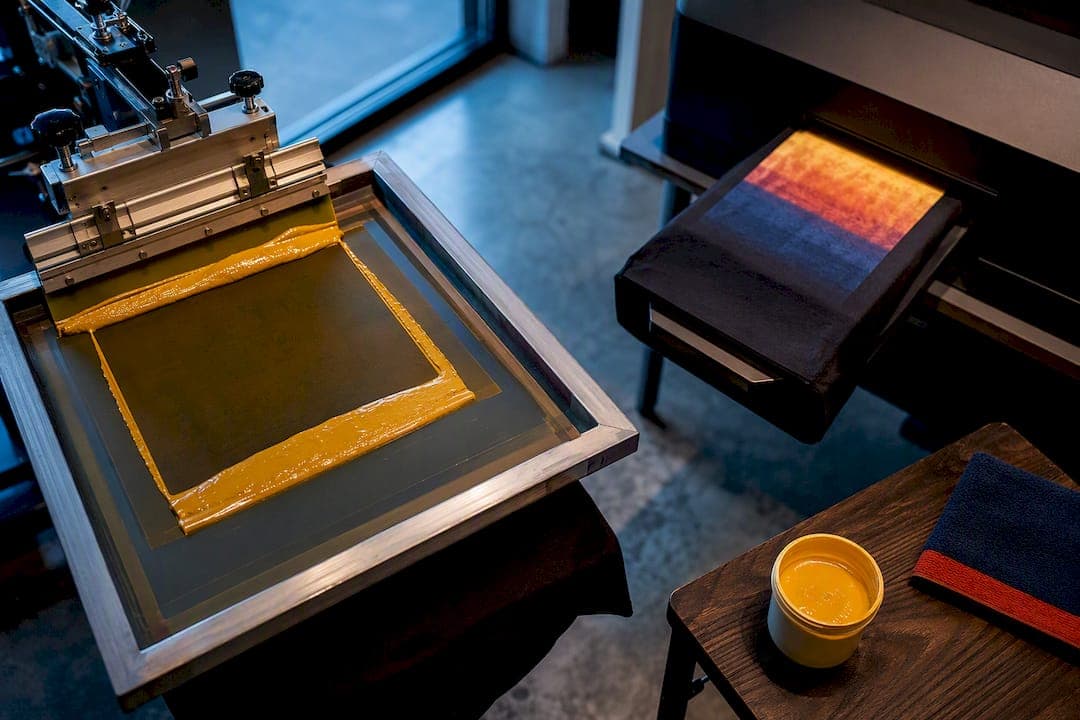
DTG wins for one-off shirts and small runs, and any design with photographic detail or gradients. Screen printing wins once your order size is larger, you need exact Pantone matches, or want specialty effects like puff or metallic ink. The crossover point varies with color count and fabric but generally occurs at a moderate order size.
TL;DR:
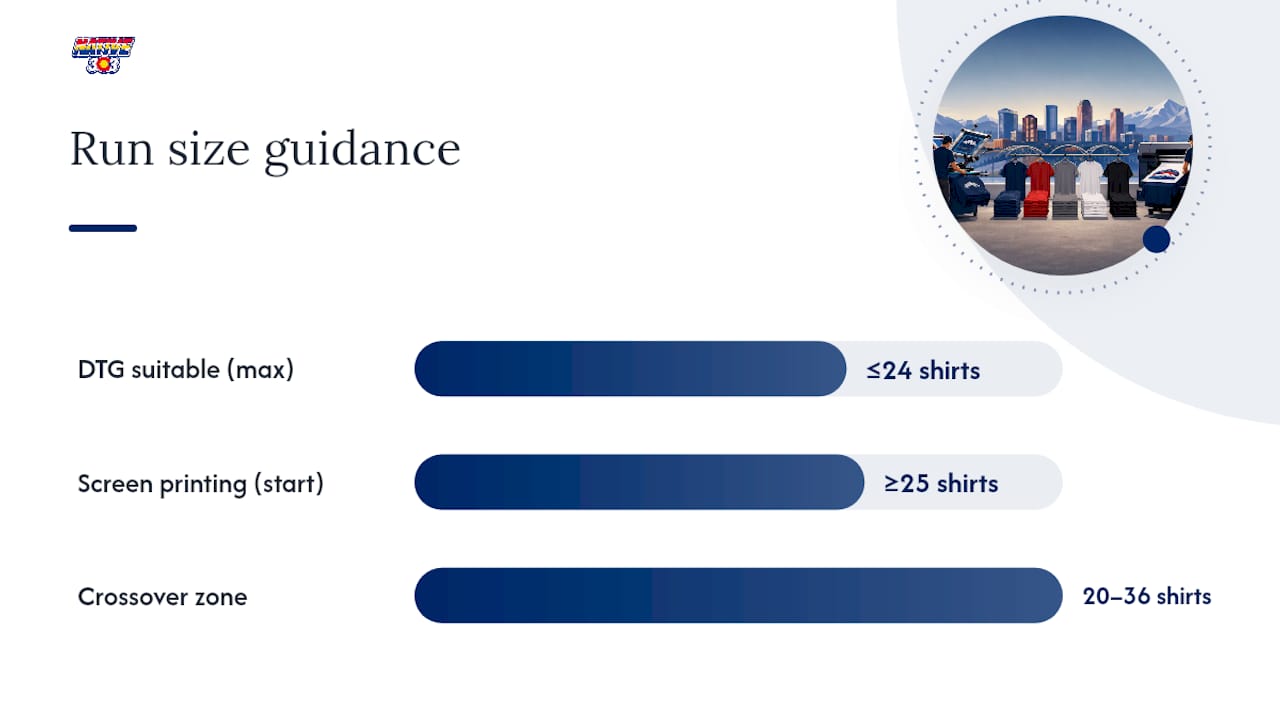
- Orders under 24 shirts typically favor DTG due to no setup costs and faster turnaround times for small runs.
- Screen printing becomes more cost-effective for orders exceeding 24 to 36 shirts, especially with solid colors and multiple units of the same design.
- Specialty inks like metallic, puff, or glow-in-the-dark are exclusive to screen printing, making it necessary for specific visual effects.
- DTG provides excellent detail and gradient rendering, but screen printing offers greater durability and precise Pantone color matching for bulk batches.
- Proper curing and fabric choice are crucial for the longevity and quality of both methods, with cotton being ideal for DTG and more fabric options suited for screen printing.
Table of Contents
- Screen Print vs DTG: A Side-By-Side Comparison
- How Do Screen Printing and DTG Actually Work?
- What's the Real Cost Difference by Run Size?
- Print Quality, Color Handling, and Durability
- Fabric, Pretreatment, and How the Print Feels
- Which Specialty Effects Only Screen Printing Can Do?
- How Fast Can You Actually Get Shirts Printed?
- Washing and Care Habits That Extend Print Life
- Can You Tell DTG From Screen Print Just by Touch?
- Decision Checklist: Which Method Fits Your Order?
- What Native303apparel Has Learned Printing Denver Nostalgia Designs
- The Part Nobody Tells You Before You Order
- Get Denver-Inspired Apparel Without Making the Print Decision Yourself
- Sources
Screen Print vs DTG: A Side-By-Side Comparison
Pick your lane by matching your job to the columns below. Neither method wins across the board, and that's the whole point of running them side by side.
| Factor | DTG | Screen Printing |
|---|---|---|
| Best for | One-offs, small batches, photo-real art | Bulk orders, solid colors, brand consistency |
| Cost by run size | Cheaper under ~20 to 24 shirts | Cheaper above ~24 to 36 shirts |
| Print detail | Excellent, handles gradients and full color | Great for bold graphics; halftones need mesh setup |
| Durability | Good, ink sits closer to the fiber surface | Typically outlasts DTG with proper curing |
| Fabric compatibility | Best on 100% cotton | Adapts to cotton, blends, poly with the right ink |
| Turnaround | Fast, near-zero setup | Slower setup, faster once running |
| Specialty effects | None reliably | Metallic, puff, discharge, glow-in-the-dark |
| Hand feel | Soft, ink absorbs into fabric | Ranges from soft (water-based) to heavier (plastisol) |
The one-line version: DTG earns its keep on detail and small quantities, screen printing earns its keep on volume and ink effects you simply can't fake digitally.
- If your order is under 24 pieces, start with DTG pricing first.
- If you're printing 25 or more of the same design, get a screen print quote before anything else.
- If the design calls for metallic, puff, or glow ink, screen printing is your only real option.
How Do Screen Printing and DTG Actually Work?
Understanding the mechanics explains why the pricing and quality tradeoffs exist in the first place. This isn't trivia. It's the reason one method gets cheaper at volume and the other doesn't.
Screen printing works like a stencil system:
- The design gets separated into individual colors, each becoming its own stencil, or screen.
- A mesh screen is coated and exposed for each color, burning the design into the emulsion.
- A printer loads each screen onto a press and pulls a squeegee across it, forcing ink through the mesh onto the shirt.
- This repeats for every color layer, one screen at a time, in registration with the last.
- The shirt runs through a conveyor dryer or flash cure unit to set the ink permanently.
DTG (direct-to-garment) skips the stencils entirely:
- Artwork gets processed through RIP software, which preps the file for the printer like a document going to a specialty inkjet.
- Dark or blended fabrics get a pretreatment spray so the ink bonds and stays vibrant instead of soaking in unevenly.
- Printheads lay down ink directly onto the fabric, color by color, in a single pass much like a desktop printer on paper.
- The shirt gets heat-cured to set the ink and lock in color.
- Printheads need regular cleaning and calibration; skipping maintenance causes clogging and inconsistent output, an operating cost rarely mentioned in a quote.
That difference in process is exactly why screen printing has a fixed setup cost per color, while DTG has almost none. One method front-loads labor into screen prep; the other front-loads nothing and pays for it in per-unit ink and machine time instead.
What's the Real Cost Difference by Run Size?
Setup is the whole story here. Screen printing charges you upfront for burning screens and dialing in registration, then the per-shirt cost drops fast as quantity climbs. DTG charges almost nothing upfront and a flatter rate per shirt no matter how many you order.
| Run size | Typical cheaper method | Why |
|---|---|---|
| 1 to 12 shirts | DTG | No screen setup cost to amortize |
| 12 to 24 shirts | Usually DTG, sometimes a toss-up | Setup costs start competing with per-unit DTG pricing |
| 24 to 36 shirts | Usually screen printing | Setup cost per shirt drops below DTG's flat rate |
| 36+ shirts | Screen printing | Per-shirt cost keeps falling as volume rises |
Printable Press puts the general crossover somewhere between 12 and 36 shirts depending on your specific job, and that range moves based on a few variables:
- Color count. More screens mean more setup cost, which pushes the crossover point higher (more shirts needed before screen printing pays off).
- Specialty inks. Metallic or puff ink adds cost to screen printing but isn't available on DTG at all, so this isn't really a price comparison, it's a capability one.
- Garment cost. Higher-end blanks make the per-shirt ink cost a smaller share of the total, narrowing the gap between methods.
- Printer pricing structure. Some shops bundle setup into the quote; others itemize it. Always ask for both numbers separately.
Pro Tip: Ask any printer for setup cost and per-shirt cost as two separate line items, not one bundled number. That's the only way to actually calculate your own crossover point instead of trusting a shop's rule of thumb.
A smart middle path: order a DTG sample to approve the design and color, then move to screen printing once you lock the final art and hit your quantity threshold.
Print Quality, Color Handling, and Durability
DTG's biggest strength is detail: it can render gradients, drop shadows, and photographic imagery that screen printing would need a dozen screens to fake. The tradeoff shows up on dark fabric, where DTG's color gamut and opacity both take a hit unless the shop pretreats carefully and runs a solid white underbase first.
Screen printing flips that equation:
- Ink sits with real opacity even on black or navy shirts, no pretreatment gymnastics required.
- Pantone matching is exact, which matters enormously for brand logos that need to look identical across a 500-shirt run.
- Ink deposits are thicker, and that ink layer generally holds up to repeated washing better than DTG under comparable care.
- High-mesh-count screens can reproduce surprisingly fine detail; color count, not resolution, is usually what limits a screen-printed design, not the mesh itself.
Durability isn't a simple "screen print always wins" story, though. Curing temperature, ink chemistry, and the fabric itself all move the needle. A poorly cured screen print will crack and peel just as fast as a poorly pretreated DTG shirt fades. Properly cured screen prints tend to outlast DTG on most substrates, but "properly cured" is the load-bearing phrase in that sentence, not the printing method.
Fabric, Pretreatment, and How the Print Feels
DTG performs best on 100% cotton. That's not a soft recommendation, it's close to a hard rule. Cotton absorbs ink evenly, which is exactly what DTG needs to look sharp.
- Dark cotton and cotton blends need pretreatment spray before printing, or colors will look washed out and gray.
- High-polyester fabric fights DTG chemistry and usually produces dull, uneven results without specialty processes most shops don't run.
- Screen printing adapts to cotton, blends, and poly with the right ink formula, giving it far more fabric flexibility overall.
- Ink choice changes the feel entirely: plastisol sits on top of the fibers for opacity and a heavier hand, while water-based ink soaks into the fabric for a softer feel but needs more care on dark garments.
- Discharge printing is a popular workaround for getting soft, high-opacity results on dark cotton, though it's limited to natural fibers and needs an experienced hand to run correctly.
If retail-quality softness matters to you, water-based or discharge screen printing usually beats plastisol, and it beats DTG on poly blends every time. Anyone shopping vintage or garment-dyed pieces already knows how fabric changes a print's feel; the same logic applies here, just with modern ink chemistry instead of decades of wear. Our guide on garment-dyed versus pigment-dyed fabric breaks down that fabric-feel relationship in more depth.
Which Specialty Effects Only Screen Printing Can Do?
Some looks simply aren't available on a DTG printer, full stop:
- Discharge ink removes the shirt's original dye for a soft, vintage look with real opacity.
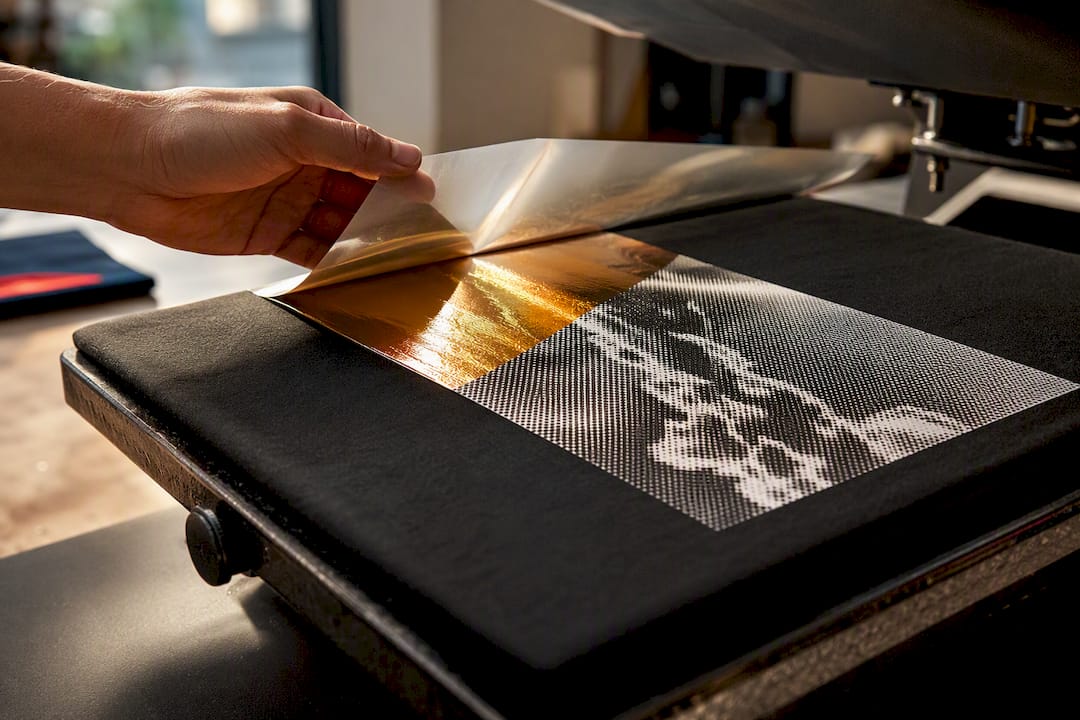
- Foil adds a metallic, reflective finish that DTG can't replicate.
- Metallic and puff inks create texture and dimension standard ink can't touch.
- High-opacity white lets screen printing pop bright colors on black fabric without a gray cast.
- Glow-in-the-dark ink is screen-print exclusive, full stop.
Plenty of shops run hybrid workflows: DTG for a detailed front graphic, screen printing for a bold back number or team name that needs to pop on dark fabric. Retail fashion tees usually lean DTG for soft hand and detail; event merch that needs neon on black almost always leans screen.
Pro Tip: If your design needs both photo-real detail and a specialty effect like foil, ask your printer about a hybrid run before assuming you have to pick one method.
How Fast Can You Actually Get Shirts Printed?
DTG wins on speed for anything small. Zero setup means a single shirt or a rush order of ten can be printed same-day in most shops, though printhead maintenance and pretreatment steps add real operational overhead behind the scenes.
Screen printing needs lead time upfront: color separations, screen exposure, and registration checks all happen before a single shirt gets printed. Once that prep is done, though, throughput on a multi-color press blows past what DTG can produce per hour.
- For rush jobs under two weeks, ask specifically about proofing speed; some custom apparel printers specialize in fast turnaround for exactly this reason.
- Always ask about dryer capacity and cure verification, not just print speed, since a bottleneck at the curing stage causes the same delays as a slow press.
Washing and Care Habits That Extend Print Life
- Turn shirts inside out before washing to reduce direct friction on the print.
- Use cold or warm water, never hot, and a mild detergent, no bleach.
- Skip the dryer's high heat setting; tumble low or air dry when possible.
- Ask your printer what cure temperature and dwell time they guarantee, since proper cure verification is one of the biggest factors in washfastness for either method.
Cracking after a handful of washes, colors bleeding, or a print that feels stiff and brittle right out of the bag are all red flags pointing to undercuring, not a flaw in the printing method itself. Our full wash and care guide for graphic tees covers the details if you want prints lasting 50 washes or more.
Can You Tell DTG From Screen Print Just by Touch?
Run your finger across the design. A raised, slightly rubbery texture usually means plastisol screen print; ink that feels almost invisible, blended into the fabric itself, points to DTG.
- Visually, DTG shows smooth photographic gradients and halftones with no visible edges between colors.
- Screen print shows distinct, layered color boundaries, sometimes with slight texture where colors overlap.
- Cracking that follows a grid or block pattern usually traces back to an undercured screen print; fading that looks blotchy and uneven across a gradient usually points to a DTG pretreatment issue.
Decision Checklist: Which Method Fits Your Order?
Run through this in order, and the answer usually falls out on its own:
- How many shirts do you need? Under 20 to 24, lean DTG. Above that, get a screen print quote.
- How complex is the design? Photorealistic or gradient-heavy art favors DTG regardless of quantity.
- What's the fabric? 100% cotton opens both options; heavy poly blends favor screen printing with the right ink.
- Do you need specialty effects? Metallic, puff, foil, or glow ink means screen printing, no debate.
- What's your budget structure? Ask for setup and per-shirt cost separately before comparing quotes.
- What's your timeline? Rush jobs under two weeks favor DTG unless the shop has open press capacity.
Quick recommendations: one-off gifts and photorealistic mockups go DTG every time. Twenty-five or more shirts in two or three solid colors, or any job needing specialty ink, go screen printing. Mixed needs, like a detailed front print with a bold back number, usually call for a hybrid approach combining both methods on the same order.
Pro Tip: Get at least two quotes for any order near the crossover zone (20 to 36 shirts) and request itemized setup versus per-shirt pricing from each. That comparison alone tells you more than any general rule of thumb.
What Native303apparel Has Learned Printing Denver Nostalgia Designs
Rob and the team at Native303apparel have run this exact decision on nearly every design that's gone into production, from detailed retro diner graphics to bold single-color mountain silhouettes. Retail drops with fine linework and shading typically go DTG for the first small batch, then move to screen printing once a design proves popular enough to justify a bulk run.
One-off custom requests, like a specific shop or venue someone wants immortalized on a shirt, almost always start as DTG since there's no volume to justify screen setup costs. If you're chasing a specific vintage garment feel, our piece on bespoke graphic tee design explains how detail level shapes that printing decision from the start. Anyone with a custom idea can submit it through the design request page and get guidance on which method fits.
The Part Nobody Tells You Before You Order
The "which is better" framing in most articles on this topic is a trap. Screen print and DTG aren't competing for the same job, they're solving different problems, and the real skill is diagnosing which problem you actually have before you request a quote.
Here's what gets underrated constantly: the inspection checklist matters almost as much as the decision framework. Buyers get burned not because they picked the wrong method, but because a shop undercured a screen print or skipped pretreatment on a DTG job and delivered something that fails after five washes. Touch the shirt. Look at the edges of the color. That five-second check tells you more about whether you got a quality job than any spec sheet the printer hands you.
If there's one place conventional advice falls short, it's treating run-size as the only variable that matters. Fabric and cure quality wreck more orders than choosing the "wrong" method ever does.
— Rob
Get Denver-Inspired Apparel Without Making the Print Decision Yourself
Native303apparel already runs this exact tradeoff on every design that goes into production, so you don't have to become a printing expert just to get a shirt that looks right and lasts. Small nostalgia-driven drops and one-off custom pieces typically run through DTG for detail and speed, while bulk restocks of fan-favorite Denver designs move to screen printing once demand justifies the run.
Browse the current lineup of Denver and Colorado nostalgia apparel inspired by the city's classic eateries, clubs, and shops, and check the size guide before you order to avoid a return. If you have a specific venue, memory, or design in mind that isn't in the shop yet, submit it through the design request page and Native303apparel will tell you honestly which printing method fits your quantity and budget, no guesswork required on your end.
Sources
- Screen Printing vs DTG Printing: How to Choose the Right Method — Printable Press
- DTG vs. Screen Printing: Pros, Cons & How Much It Costs — Printavo
- DTG Printing vs Screen Printing | Kornit Digital
- Waterbased ink vs plastisol ink — Screen Print World