
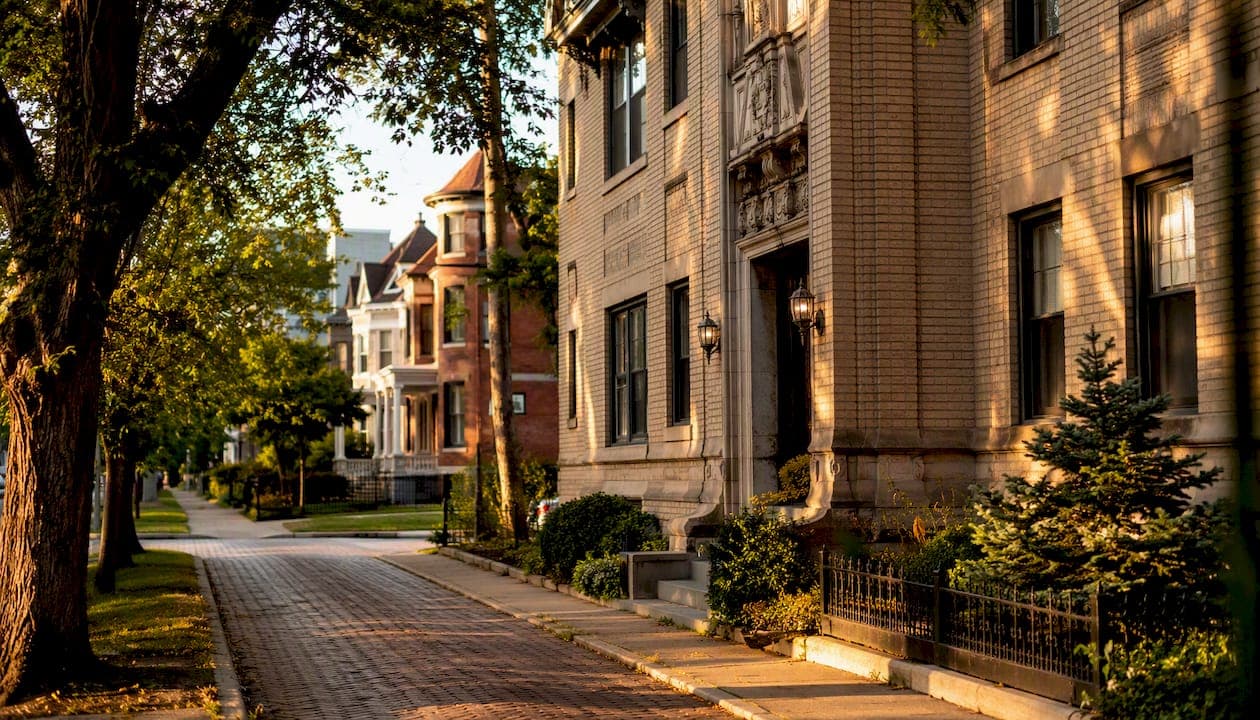
Capitol Hill is Denver's dense cultural crossroads where Gilded Age history, a persistent bohemian arts scene, and civic life collide in roughly 0.6 square miles of walkable streets. No other Denver neighborhood stacks government, historic mansions, live-music corridors, grassroots galleries, and activist community organizing this tightly. That compression is the point. It is what makes Capitol Hill the city's cultural continuity zone, the place where Denver's creative identity has been forged, tested, and repeatedly renewed.
The neighborhood's core cultural roles break down like this:
- Historical anchor: The Colorado State Capitol, Molly Brown House, and surviving Gilded Age mansions give Denver its most concentrated layer of 19th-century civic architecture.
- Cultural incubator: Colfax Avenue and 13th Avenue have sustained record shops, punk clubs, indie venues, and Beat Generation haunts for decades.
- Festival and park hub: Civic Center Park and Cheesman Park host citywide events including the People's Fair, PrideFest, and Cinco de Mayo celebrations that draw hundreds of thousands of visitors.
- Creative commerce engine: The neighborhood's density and mixed housing keep artists, designers, and small creative businesses viable even as rents climb.
Geographically, Capitol Hill runs from Broadway on the west to Downing Street on the east, and from Colfax Avenue on the north to 7th Avenue on the south. You can walk its full length in under 30 minutes, which is exactly why its cultural density hits so hard.
Key Takeaways
Capitol Hill is Denver's most culturally layered neighborhood because its dense housing stock, historic architecture, music corridors, parks, and community organizing have sustained a creative ecosystem through more than a century of economic change.
| Point | Details |
|---|---|
| Historical depth | Capitol Hill's culture runs from Gilded Age mansions through the 1893 Silver Crash apartment boom to today's bohemian and LGBTQ+ communities. |
| Density as engine | At roughly 0.6 square miles, Capitol Hill's compressed walkable streets sustain foot traffic that keeps small venues, galleries, and record shops viable. |
| Music and arts corridors | Colfax Avenue and 13th Avenue host the Fillmore, Ogden, and Bluebird venues alongside record shops and galleries that form the neighborhood's creative spine. |
| Community organizing | CHUN has returned over $660,000 to the neighborhood through People's Fair grants, funding arts projects and preservation efforts across Capitol Hill. |
| Native303apparel | Native303apparel translates Capitol Hill's visual and cultural history into Denver-inspired apparel and accessories available at the online store. |
Table of Contents
- How did Capitol Hill develop into Denver's cultural center?
- The buildings and streets that give Capitol Hill its identity
- Where does Capitol Hill's art scene actually live?
- What makes Capitol Hill's music scene different from the rest of Denver?
- How do Capitol Hill's parks and annual events shape neighborhood life?
- How does community organizing shape what Capitol Hill becomes?
- Who does Capitol Hill attract, and why does that matter for Denver?
- How Capitol Hill fuels local creative businesses and brands
- A practical walking guide to Capitol Hill's cultural highlights
- How do students and universities shape Capitol Hill's culture?
- What to eat in Capitol Hill: the neighborhood's food culture
- What Capitol Hill actually means for the people who make things here
- Bring a piece of Capitol Hill home with you
- Sources
How did Capitol Hill develop into Denver's cultural center?
The neighborhood's layered character did not happen by accident. It was built by economic shocks, opportunistic migration, and a housing stock that kept attracting people who could not afford anywhere else.
Capitol Hill's first era was pure ambition. After Denver's founding in the 1860s, the area known as Brown's Bluff became the address of choice for silver and gold barons. By the 1880s, Millionaires' Row along Pennsylvania and Grant Streets was lined with Victorian and Romanesque Revival mansions. These were not modest homes. They were statements, built to signal that Denver had arrived.
Then came 1893. The Silver Crash collapsed the market that had funded those mansions, and the families who built them either left or subdivided. Developers converted large lots into apartment buildings, and the neighborhood's character shifted permanently. The Colonnade and The Hamilton are two early 20th-century apartment blocks that survive from this period, and they tell the economic-shift story as clearly as any surviving mansion. High-density, multi-unit housing became the neighborhood's defining physical trait, and that density made rents relatively accessible for decades.
Mid-century, that affordability attracted artists, writers, and counterculture figures. The Colburn Hotel and other Capitol Hill addresses drew Beat Generation writers including Jack Kerouac and Allen Ginsberg, cementing a literary and bohemian identity that outlasted the beats themselves. Punk scenes followed in the 1970s and 1980s, then indie music in the 1990s. Each wave found the same thing: cheap apartments, walkable streets, and a community that tolerated unconventional living.
Late-20th and early-21st-century gentrification brought rising rents, condo conversions, and development pressure. The tension between preservation and new construction is ongoing. But the apartment stock built after 1893 has proven surprisingly durable as a cultural buffer, keeping enough affordable units in circulation to sustain a creative community even as surrounding neighborhoods priced out their artists.
| Era | Key development | Cultural effect |
|---|---|---|
| 1860s–1880s | Brown's Bluff / Millionaires' Row mansions | Civic grandeur, architectural legacy |
| 1893 | Silver Crash, mansion subdivision | Apartment boom, rising density |
| Early 1900s | Colonnade, Hamilton and similar blocks | Affordable multi-unit housing established |
| Mid-20th century | Bohemian and Beat influx | Literary and arts identity solidified |
| 1970s–1990s | Punk and indie music scenes | Colfax and 13th Avenue as cultural corridors |
| 2000s–present | Gentrification, condo development | Preservation battles, continued creative tension |
The buildings and streets that give Capitol Hill its identity
Architecture in Capitol Hill is not background scenery. It is the argument. The buildings explain why the neighborhood matters and why people keep fighting to preserve it.
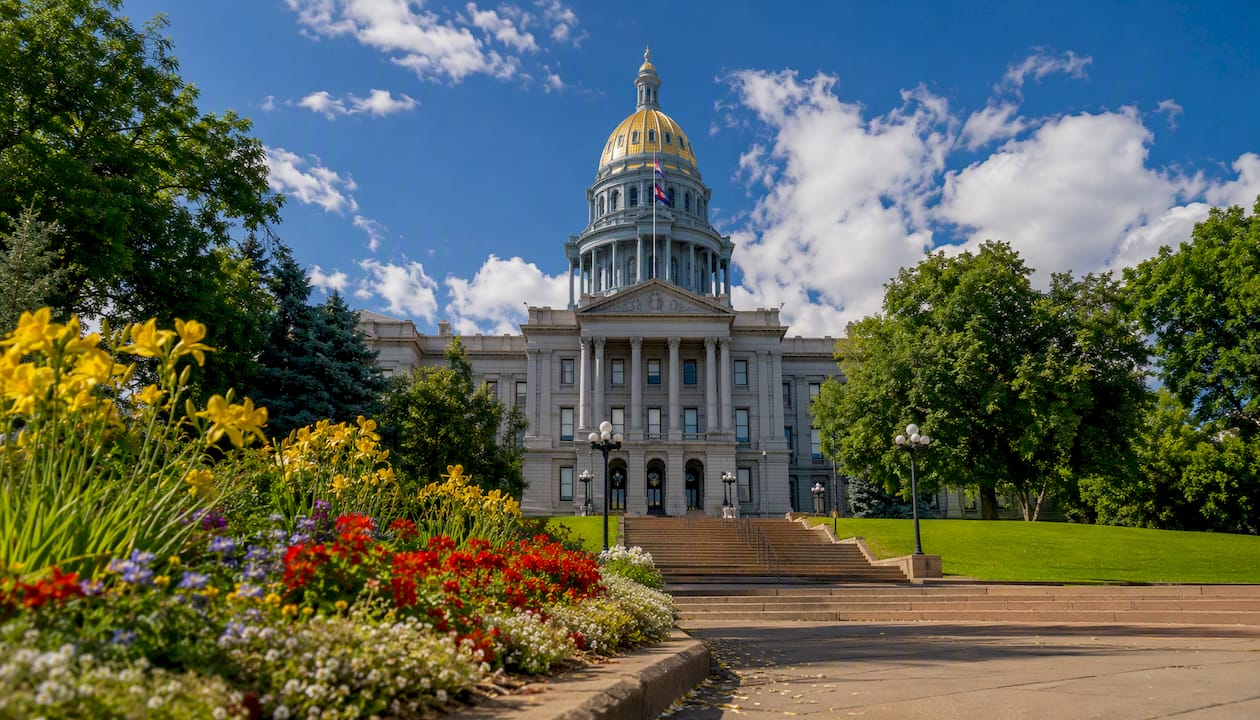
Colorado State Capitol anchors the western edge of the neighborhood and gives it its name. The gold-domed building, completed in 1908, sits at exactly one mile above sea level (the 13th step on the west entrance marks the elevation). It functions as a civic gathering point and draws visitors who then spill into the surrounding blocks.
Molly Brown House Museum at 1340 Pennsylvania Street is one of Denver's most visited historic sites. Built in 1889, it was home to Margaret "Molly" Brown, survivor of the Titanic and a prominent Denver socialite and activist. The museum offers guided tours and serves as a direct link between Capitol Hill's Gilded Age past and its present-day cultural tourism.
Grant-Humphreys Mansion at 770 Pennsylvania Street is a 1902 Neoclassical mansion now used as an event venue. Its conversion from private residence to public-use space is a common Capitol Hill story: grand architecture repurposed rather than demolished.
The Colonnade and The Hamilton are the apartment buildings that represent the post-1893 shift. Less photographed than the mansions, they are architecturally significant because they show how the neighborhood absorbed economic collapse and rebuilt itself as a place for ordinary people rather than millionaires.
Colfax Avenue runs east-west along the neighborhood's northern boundary and has been called one of the longest commercial streets in America. Its mix of bars, diners, music venues, and independent shops makes it the neighborhood's most active cultural artery. 13th Avenue, running parallel a few blocks south, carries a quieter but equally important thread: record shops, coffee houses, and small galleries that have sustained a creative scene for decades.
Esquire Theatre at 590 Downing Street operated for decades as an independent cinema before closing. Its closure reflects a broader tension in Capitol Hill between preserving independent cultural institutions and the economic pressures that threaten them. The Denver Architecture Foundation documents many of these landmark buildings and provides walking-tour context for visitors who want to understand the built environment.
| Landmark | Type | Era | Why it matters |
|---|---|---|---|
| Colorado State Capitol | Civic building | Completed 1908 | Defines neighborhood's civic identity |
| Molly Brown House Museum | Historic house museum | Built 1889 | Gilded Age history, cultural tourism anchor |
| Grant-Humphreys Mansion | Event venue | Built 1902 | Mansion-to-public-use conversion model |
| The Colonnade / The Hamilton | Apartment buildings | Early 1900s | Post-Silver Crash density story |
| Esquire Theatre | Former cinema | Mid-20th century | Independent culture, now closed |
| Colfax Avenue | Commercial corridor | Ongoing | Primary nightlife and cultural spine |
Where does Capitol Hill's art scene actually live?
The honest answer is: everywhere, at two very different scales.
The Denver Art Museum is the institutional anchor. Sitting at the edge of Civic Center Park, it holds one of the largest art collections between Chicago and Los Angeles, with particular strength in Native American art and Western American works. Its architecture alone, including the sharp angular Frederic C. Hamilton Building designed by Daniel Libeskind, draws visitors who might not otherwise come to this part of the city. The museum's programming, from major traveling exhibitions to free community days, pulls cultural visitors from across Colorado and beyond.
Adjacent to the DAM, the Ellie Caulkins Opera House seats 2,200 and anchors large-scale performing arts programming. These institutional venues give Capitol Hill a cultural weight that few urban neighborhoods outside major coastal cities can match.
But the grassroots layer is what gives the neighborhood its texture. Small galleries along Colfax and in the residential blocks between 13th and 14th Avenues rotate shows by emerging Denver artists. Opening nights at these spaces double as neighborhood social events, drawing a mix of artists, collectors, students, and curious locals. The scale is intimate, the work is often experimental, and the price of entry is usually zero.
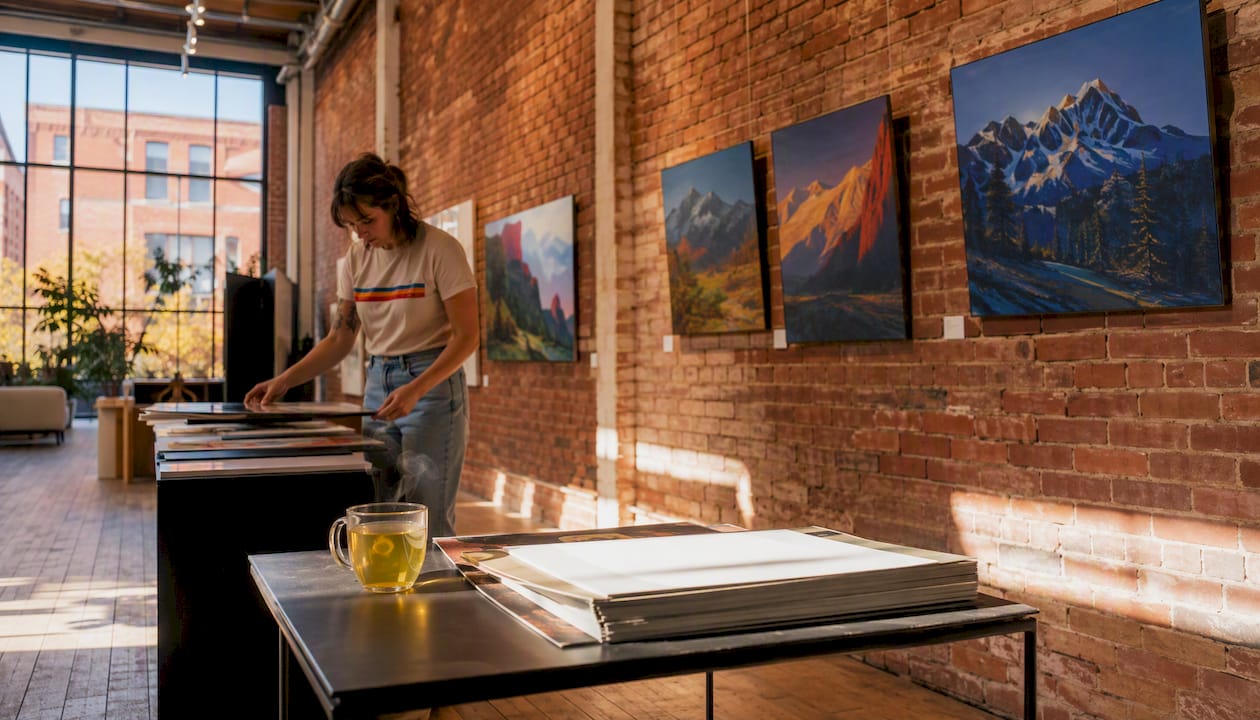
Pro Tip: The Denver Art Museum offers free admission on the first Saturday of each month for Colorado residents. Pair that with a walk down 13th Avenue to catch whatever is showing at smaller galleries the same afternoon.
The contrast between the DAM's institutional permanence and the grassroots gallery scene is not a tension. It is a feature. The institutional venues attract visitors and generate cultural tourism dollars; the grassroots spaces keep working artists in the neighborhood and feed the pipeline of new work that eventually reaches those larger institutions.
What makes Capitol Hill's music scene different from the rest of Denver?
The short answer: history and density. Venues here did not appear because a developer decided a neighborhood needed nightlife. They grew because the neighborhood already had the people, the foot traffic, and the tolerance for noise.
The Fillmore Auditorium at 1510 Clarkson Street is the neighborhood's largest music venue, a converted 1907 auditorium that has hosted everyone from the Grateful Dead to contemporary touring acts. Its capacity and booking history make it a genuine regional anchor for live music.
The Ogden Theatre at 935 East Colfax Avenue is a 1917 venue that seats around 1,600 and books mid-size national and international acts. Its location directly on Colfax makes it a natural stop on any nightlife circuit through the neighborhood.
The Bluebird Theater at 3317 East Colfax Avenue sits slightly east of the core Capitol Hill blocks but functions as part of the same cultural corridor. Smaller than the Ogden, it books emerging and mid-career artists and has a reputation for intimate shows that feel nothing like arena concerts.
The Esquire Theatre, as noted above, is closed. Its absence is felt. Independent cinemas and small performance spaces that close rarely get replaced by something equivalent, and the Esquire's closure is a reminder of how fragile the independent cultural infrastructure can be.
Colfax Avenue's music corridor is not just a collection of venues. It is a living record of every subculture that passed through Denver since the 1950s, from beatniks to punks to indie kids, each leaving something behind in the bars, the record shops, and the walls.
13th Avenue's record shops deserve specific mention. Physical record stores have survived here longer than in most American cities, sustained by a customer base that treats vinyl as both a hobby and a cultural statement. These shops are where local musicians sell their work, where touring bands stop, and where the neighborhood's musical memory gets preserved in physical form.
Pro Tip: Show up early for Ogden or Bluebird shows. The blocks around each venue have bars and restaurants worth an hour before the doors open, and the pre-show street scene is part of the experience.
How do Capitol Hill's parks and annual events shape neighborhood life?
Two parks do most of the work, and they do it differently.
Civic Center Park sits between the State Capitol and the Denver City and County Building, making it the most politically charged public space in Colorado. It hosts the city's largest annual festivals, including Cinco de Mayo celebrations, PrideFest, and the Greek Festival. The park's central location means events here draw citywide and regional audiences, not just Capitol Hill residents.
Cheesman Park, a few blocks east, operates at a different register. Named for Walter Scott Cheesman and developed in the early 1900s on the site of a former cemetery, it is a neighborhood park in the truest sense: a place for morning runs, weekend picnics, and informal community gathering. It also has a documented history as a gathering space for Denver's LGBTQ+ community, particularly during the decades when public visibility was harder to find elsewhere.
The People's Fair, organized by Capitol Hill United Neighborhoods (CHUN), is the neighborhood's signature annual event. Held at Civic Center Park each June, it draws artists, vendors, musicians, and community organizations from across Denver. CHUN has returned over $660,000 to the community through the People's Fair grants program, funding local nonprofits and arts projects over the fair's history.
| Event | Location | Typical timing | Scale |
|---|---|---|---|
| People's Fair | Civic Center Park | June | Citywide, hundreds of thousands |
| PrideFest | Civic Center Park | June | Citywide and regional |
| Cinco de Mayo | Civic Center Park | May | One of the largest in the US |
| Cheesman Park events | Cheesman Park | Year-round | Neighborhood to citywide |
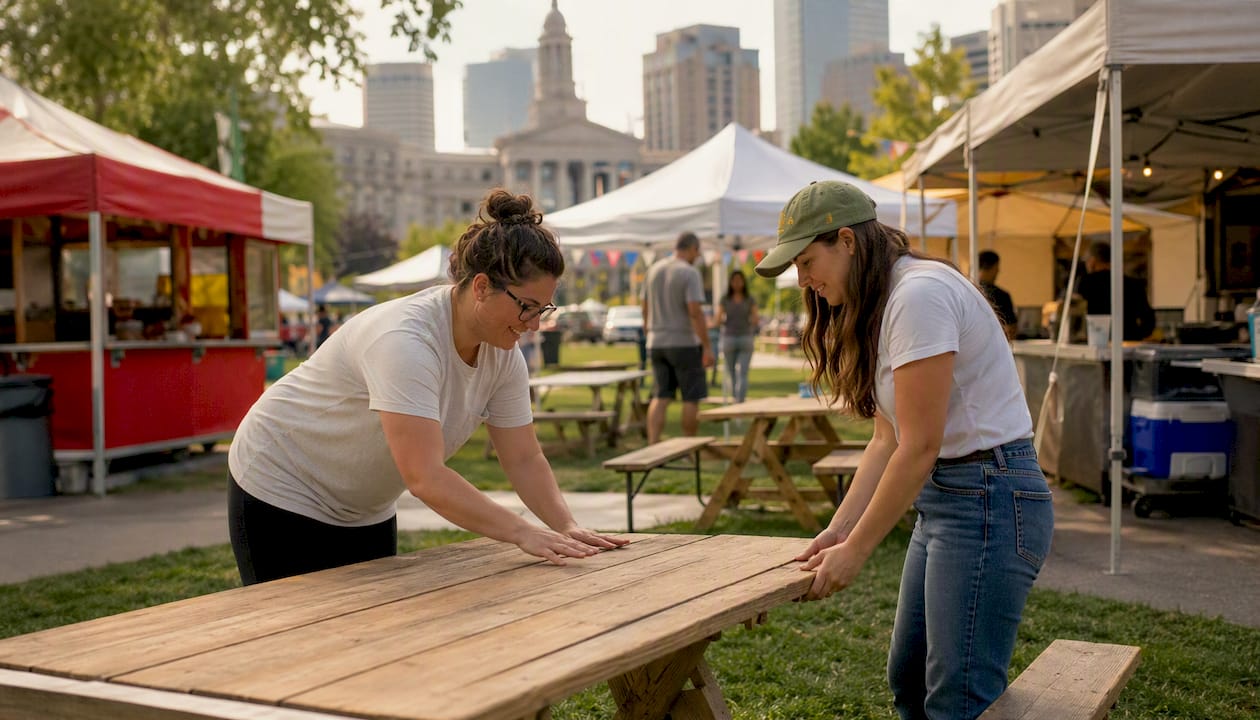
Pro Tip: During major Civic Center Park festivals, parking within Capitol Hill fills fast. The light rail stops at the Capitol station on the E, F, and H lines, which drops you directly at the park's edge.
How does community organizing shape what Capitol Hill becomes?
Capitol Hill United Neighborhoods, known as CHUN, is the organizational spine of the neighborhood's civic life. Founded decades ago, CHUN coordinates between residents, businesses, and city government on issues ranging from zoning and liquor-license applications to historic preservation campaigns and neighborhood grants.
The People's Fair is CHUN's most visible contribution, but the organization's day-to-day work is less glamorous and arguably more consequential. When a developer proposes converting a historic mansion into condominiums, CHUN is typically the body that organizes resident input and presents it to the city. When a new bar applies for a liquor license on a residential block, CHUN facilitates the community review process.
Preservation flashpoints in Capitol Hill tend to follow a predictable pattern: a historic building faces conversion or demolition, residents mobilize through CHUN and neighborhood meetings, and the outcome depends on whether the building has formal landmark status. Buildings with Denver Landmark designation have legal protection; those without it depend on community pressure and developer goodwill.
Capitol Hill's preservation battles are not just about old buildings. They are about whether the neighborhood's physical character, the thing that makes it feel like Capitol Hill rather than any other Denver neighborhood, survives long enough for the next generation of artists and residents to inherit it.
The tension between preservation and development is not going away. Rising land values make Capitol Hill attractive to developers, and the neighborhood's aging housing stock requires investment that not all owners can provide. CHUN's role is to ensure that investment happens in ways that do not erase the neighborhood's identity.
Pro Tip: CHUN holds regular public meetings open to anyone who lives, works, or owns property in Capitol Hill. Attending one is the fastest way to understand what the neighborhood is actually debating right now.
Who does Capitol Hill attract, and why does that matter for Denver?
The neighborhood draws a specific mix that you do not find in the same concentration anywhere else in Denver: artists and musicians who need walkable density and affordable studios, young professionals who want urban texture without the sterility of newer developments, long-term residents who have watched the neighborhood change and stayed anyway, and a substantial LGBTQ+ community with deep roots in the area.
Capitol Hill's queer history is not incidental. For decades, the neighborhood was one of the few places in Denver where LGBTQ+ residents could live openly, find community spaces, and organize politically. That history is embedded in the bars, the parks, and the annual events that still define the neighborhood's calendar. Cheesman Park's role as a gathering space for the LGBTQ+ community predates PrideFest by decades.
The density that makes all of this possible traces directly back to the post-1893 apartment construction described earlier. Capitol Hill's approximately 0.6 square miles pack in more residents per block than almost any other Denver neighborhood, and that compression creates the street-level activity that sustains small businesses, venues, and community spaces. A neighborhood where everyone drives everywhere cannot support a record shop or a small gallery. Capitol Hill can, because enough people walk past every day.
Gentrification has raised rents and displaced some long-term residents, but the apartment stock has proven more durable than in neighborhoods with more single-family housing. The sheer number of units keeps some price diversity in the market, even if that diversity is narrowing.
- Dense, walkable streets sustain foot traffic for small businesses and venues.
- Mixed housing types keep some price diversity even under gentrification pressure.
- LGBTQ+ community history gives the neighborhood a civic identity that extends beyond demographics.
- Artist and student populations create demand for the independent cultural infrastructure that defines the neighborhood.
How Capitol Hill fuels local creative businesses and brands
The neighborhood's visual and cultural inventory is unusually rich for a place covering less than a square mile. Historic facades, neon signs from mid-century diners, the geometry of the State Capitol dome, the street typography on Colfax, the record-shop window displays on 13th Avenue: these are not just scenery. They are raw material for designers, photographers, illustrators, and apparel makers who draw on Denver's specific visual history.
Denver's art scene has a direct line to apparel design, and Capitol Hill is where that line runs most clearly. The neighborhood's layered history, from Gilded Age grandeur to punk-era grit, produces the kind of era-specific visual contrast that translates well into graphic design and clothing. A hoodie that references a specific Colfax diner or a 13th Avenue record shop carries cultural information that a generic "Denver" design cannot.
For creatives who want to work with this material ethically, the approach matters. Photographing buildings and street scenes for reference is standard practice. Engaging with neighborhood organizations like CHUN before using community spaces for commercial shoots is respectful and often opens doors. Crediting the specific places and histories that inspire a design, rather than vaguely invoking "Denver nostalgia," builds the kind of authenticity that local audiences recognize immediately.
Pro Tip: If you are a designer or apparel maker drawing on Capitol Hill's visual history, attend a CHUN meeting or a People's Fair planning session. The connections you make there will improve your work and root it in something real.
- Capitol Hill's architectural variety gives designers a wider visual range than most Denver neighborhoods.
- Era-specific details (signage, facades, building types) translate directly into graphic motifs.
- Community engagement with CHUN and local institutions builds credibility for creative projects.
- Local history translates into apparel narratives that resonate with people who have personal connections to specific places.
A practical walking guide to Capitol Hill's cultural highlights
The neighborhood is compact enough that a single afternoon covers most of the major sites. Here is a loop that hits the cultural high points without backtracking.
- Start at the Colorado State Capitol. Walk the grounds, check the elevation marker on the west steps, and orient yourself to the civic core.
- Cross to Civic Center Park. Walk through the park toward the Denver Art Museum. If timing allows, step inside the DAM; if not, the exterior architecture is worth a few minutes on its own.
- Head north on Bannock to Colfax Avenue. Turn east and walk the Colfax corridor past the Ogden Theatre. Note the mix of bars, diners, and independent shops that make this stretch feel unlike any other Denver street.
- Turn south on Clarkson to reach the Fillmore Auditorium. Check the marquee for upcoming shows.
- Continue south to 13th Avenue. Turn east and walk the record-shop and gallery corridor. This is the quieter, more residential version of Capitol Hill's cultural scene.
- Continue east to Cheesman Park. Walk the perimeter or cut through the park to get a sense of its scale and neighborhood function.
- Return west via 8th or 9th Avenue through the residential blocks to see surviving mansions and apartment buildings from the Gilded Age and post-1893 eras.
- End at the Molly Brown House Museum on Pennsylvania Street. Tours run most days; check current hours before you go.
Practical notes:
- Light rail (E, F, H lines) stops at the Capitol station, making car-free access straightforward.
- Street parking exists but fills during festivals and evening shows. Weekday mornings are the easiest time to park.
- Most music venues on Colfax have shows Thursday through Saturday; check venue websites for current schedules.
- Small galleries on 13th Avenue typically open late afternoon and close by 9 PM on weeknights.
Pro Tip: Buy something at a small venue or record shop when you visit. Cover charges and merchandise sales are how these places stay open. A $20 purchase at a local record shop does more for Capitol Hill's cultural ecosystem than a five-star review.
How do students and universities shape Capitol Hill's culture?
No single large university sits inside Capitol Hill's boundaries, but the neighborhood sits within easy reach of several Denver institutions, including the University of Denver, Metropolitan State University of Denver, and Community College of Denver. That proximity has a measurable effect on the neighborhood's energy and economy.
Student populations sustain the kinds of businesses that Capitol Hill does best: cheap eats, late-night bars, record shops, used bookstores, and small music venues. The demand for affordable, walkable housing also keeps the apartment market active and pushes back against the full conversion of the neighborhood to higher-income demographics.
Beyond economics, students bring a recurring influx of people encountering Capitol Hill's cultural history for the first time. A 20-year-old discovering the Ogden Theatre or a Colfax diner for the first time in 2026 is having the same experience that previous generations had, and that continuity of discovery is part of what keeps the neighborhood's cultural identity alive. The neighborhood does not just preserve its history; it keeps introducing it to new people.
Graduate students and young faculty from nearby institutions also contribute to the gallery scene and the literary culture. Capitol Hill has a higher concentration of independent bookstores and reading series than most Denver neighborhoods, and that is not coincidental.
What to eat in Capitol Hill: the neighborhood's food culture
Capitol Hill's food scene reflects its demographic mix: affordable, eclectic, and resistant to the kind of homogenization that has flattened dining in some other Denver neighborhoods.
Breakfast and brunch culture is strong here. Diners along Colfax have served the neighborhood's night-shift workers, musicians, and late-night crowd for decades. The format, counter seating, large portions, reasonable prices, fits the neighborhood's working-class and bohemian history better than the farm-to-table restaurants that have appeared in newer Denver developments.
The neighborhood also has a notable concentration of international cuisine, reflecting the diversity of its resident population. Ethiopian, Mexican, Vietnamese, and Middle Eastern restaurants operate alongside the classic American diners, and the price points are generally accessible. This is not a neighborhood where you need a reservation two weeks out to eat well.
Late-night food options matter in Capitol Hill in a way they do not in neighborhoods that shut down at 10 PM. The venues on Colfax generate foot traffic until 2 AM on weekends, and the restaurants and food trucks that serve that crowd are part of the cultural ecosystem, not just a convenience.
A few Capitol Hill food institutions have achieved genuine landmark status in the local consciousness. Dozens of Denver residents can tell you exactly which Colfax diner they went to after their first show at the Ogden, or which 13th Avenue coffee shop they wrote their thesis in. That kind of specific, personal attachment to specific places is what makes a neighborhood's food culture culturally significant rather than just commercially successful.
What Capitol Hill actually means for the people who make things here
The blocks between Colfax and 7th Avenue have a specific quality that is hard to describe without sounding precious, but I will try. The density means you are never more than a few minutes from something unexpected: a gallery opening you did not know about, a band you have never heard playing through a bar door, a building facade that looks like it belongs in a different decade. That randomness is not accidental. It is the product of a neighborhood that has never fully committed to being one thing.
What strikes me most, working on projects rooted in Denver's visual history, is how much Capitol Hill resists the cleanup that other neighborhoods have accepted. The neon signs that should have been replaced years ago are still there. The record shops that should have been replaced by something more profitable are still open. The apartment buildings that should have been converted to condos are still renting to artists and students. That resistance is not nostalgia. It is a live argument about what a city is for.
Visitors who walk Colfax with their eyes open will see the same thing: a street that has absorbed a century of economic pressure and cultural change without losing its specific character. The Capitol dome at one end, the Bluebird at the other, and everything in between.
Bring a piece of Capitol Hill home with you
Capitol Hill's visual history, from the geometry of the State Capitol dome to the neon-lit storefronts of Colfax, has been inspiring Denver designers and artists for generations. Native303apparel translates that specific visual and cultural memory into apparel and accessories you can actually wear: t-shirts, hoodies, tote bags, and hats featuring exclusive designs drawn from Denver's iconic eateries, clubs, and landmarks.
If you want a memento that goes beyond a generic souvenir, browse the Native303apparel store for designs rooted in the Denver neighborhoods and venues that shaped the city's identity. Not sure about sizing? The size guide covers every item in the collection. For readers who want to dig deeper into how Denver's streetwear influences connect to neighborhood culture, the blog has the full story.
Sources
These are the primary sources worth bookmarking if you want to go deeper on Capitol Hill's history, plan a visit, or follow preservation news.
- Denver's Capitol Hill: Where the Mile High City Keeps Its Soul - Denvers Best
- Capitol Hill, Denver — Wikipedia
- Neighborhood Ties: Capitol Hill - Go Play Denver
- Denver Art Museum — official site