
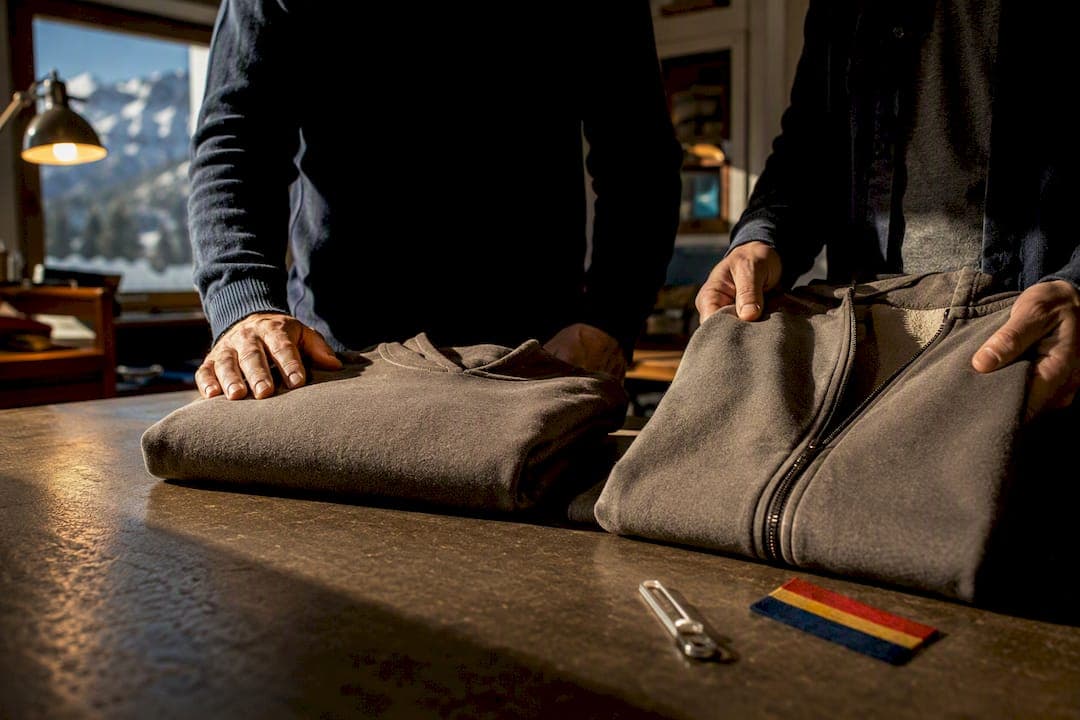
Pick a pullover when warmth and a clean front matter most; pick a zip-up when temperature control and easy on/off matter more. Warmth, layering needs, and how often you're adjusting for temperature swings decide this, not personal style alone. The rest comes down to fabric weight, pocket layout, and how you actually plan to wear it.
TL;DR:
- A pullover hoodie offers better insulation at the same fabric weight because it eliminates drafts around the front opening, but fabric weight and stitching are often more influential on warmth.
- Zip-up hoodies provide easier venting, quick temperature adjustments, and better layering options, making them ideal for fluctuating conditions and transitional weather.
- Pouch pockets on pullovers are usually larger and better for warming hands, while split side pockets on zip-ups offer easier access to small items like phones and keys.
- Heavier fleece or dense stitching can make a lightweight zip-up warmer than a thin pullover, so fabric quality often outweighs closure type for insulation.
- For durability, check zipper quality and stitching, and wash both styles inside out in cold water to prolong their lifespan; fabric weight and fit are crucial for longevity and comfort.
Table of Contents
- Pullover Vs Zip Hoodie: Key Differences At A Glance
- Warmth And Construction: Why Closure Alone Isn't The Whole Story
- Pockets, Hood, And Utility: How Layout Affects Daily Use
- Layering And Styling: Wearing Hoodies In Outfits And Under Coats
- Ease Of Use And Convenience: On/Off, Venting, And Activity Fit
- Durability And Care: What To Check And How To Prolong Life
- How To Choose: A Simple Decision Checklist
- Material And Fabric Differences: Cotton, Fleece, And Blends
- Weather Suitability: Best Conditions For Each Style
- Style And Fashion Trends: Casual Vs Sporty Looks
- Cost Comparison And Value
- Native303's Take On Pullovers, Zip-Ups, And What Actually Holds Up
- Shop Native303 Hoodies Or Start A Custom Design
- Sources
- FAQ
Pullover Vs Zip Hoodie: Key Differences At A Glance
The core distinction is simple: a pullover hoodie has no front opening and goes on over your head, while a zip-up hoodie has a full-length zipper you can leave open, half closed, or zipped to the chin. Everything else branches from that one design choice.
- Closure: Sealed front (pullover) vs adjustable zipper (zip-up)
- Pockets: Single kangaroo pouch (pullover) vs two split pockets divided by the zipper track
- Warmth: Pullovers trap heat better at equal fabric weight because there's no seam to leak draft
- Convenience: Zip-ups win for quick venting and layering; pullovers win for a cleaner, distraction-free front
Both count as hoodies in American usage. "Pullover hoodie" just specifies the zipperless version when the distinction matters.
Warmth And Construction: Why Closure Alone Isn't The Whole Story
A zipper creates a thin channel where air can sneak through, even zipped all the way. A pullover's sealed front closes that gap entirely, which is why buying guides consistently note pullovers feel warmer at the same fabric weight.
But the zipper is only part of the equation. Fabric weight, knit density, and stitching technique often move the needle more than closure type. One garment-construction study found that switching stitching methods, specifically a spacer-stitching technique versus conventional stitching, boosted thermal resistance by 43% in insulated garments. That research covered technical outerwear, not casual cotton hoodies, so treat it as a principle rather than a direct swap. Still, the lesson holds: a heavyweight zip-up with dense fleece can easily out-warm a thin pullover. Don't judge warmth by the front opening alone.
Pockets, Hood, And Utility: How Layout Affects Daily Use
Pullover hoodies typically carry one large kangaroo pocket stretching across the belly. It's roomy enough for both hands at once, which is why it's the default for anyone who wants warm hands and zero fuss. The tradeoff: reaching your phone means digging past whatever else is already in there.
Zip-up hoodies usually split that same real estate into two separate pockets, one on each side of the zipper. You get cleaner separation, easier phone access on one side and keys on the other, but less total capacity and no shared warm pocket for both hands at once.

Pocket layout also affects what's underneath. A zip-up worn open over a jacket with its own pockets rarely conflicts. A kangaroo pouch stacked over a jacket pocket can trap fabric and make both harder to use.
Layering And Styling: Wearing Hoodies In Outfits And Under Coats
Zip-ups shine when you want to show a collar or graphic tee underneath, since you can leave the top few inches open, a design feature well illustrated by the SVBSUIT Flow Drop-Shoulder Zip Hoodie – SVBFLOR. That makes them a natural fit for commuting or transitional weather, where you're adding and shedding layers throughout the day. Pair one with a layered nostalgic tee for a look that reads intentional rather than thrown together.
Pullovers give you a cleaner, uninterrupted front, which matters more than most people expect under a structured jacket. A zipper track can create a visible ridge or extra bulk at the chest; a pullover lies flat. If you're going for a minimal, no-hardware look, the pullover wins outright.
Here's the part fashion advice usually skips: fit and color affect how "put together" you look far more than the closure does. A boxy, faded pullover looks sloppier than a well-fitted zip-up, and vice versa. Closure type is a functional decision first, a style decision second.
Ease Of Use And Convenience: On/Off, Venting, And Activity Fit
Zip-ups let you vent heat in seconds without touching your hair or knocking your hood askew, which matters more than it sounds during a workout or a warm commute. You can crack it open at the chest, cool down for a minute, then zip back up without ever fully removing it.
Pullovers skip the zipper hardware entirely, so there's nothing to catch on a hoodie string or snag your shirt collar. The catch is that cooling down means pulling the whole thing off over your head, which isn't always practical mid-activity or mid-meeting.
If your day swings between hot and cold, in and out of buildings, gym to street, a zip-up earns its keep. If your temperature stays fairly steady, that convenience matters less, and a pullover's warmth and simplicity take over as the better call.
Durability And Care: What To Check And How To Prolong Life
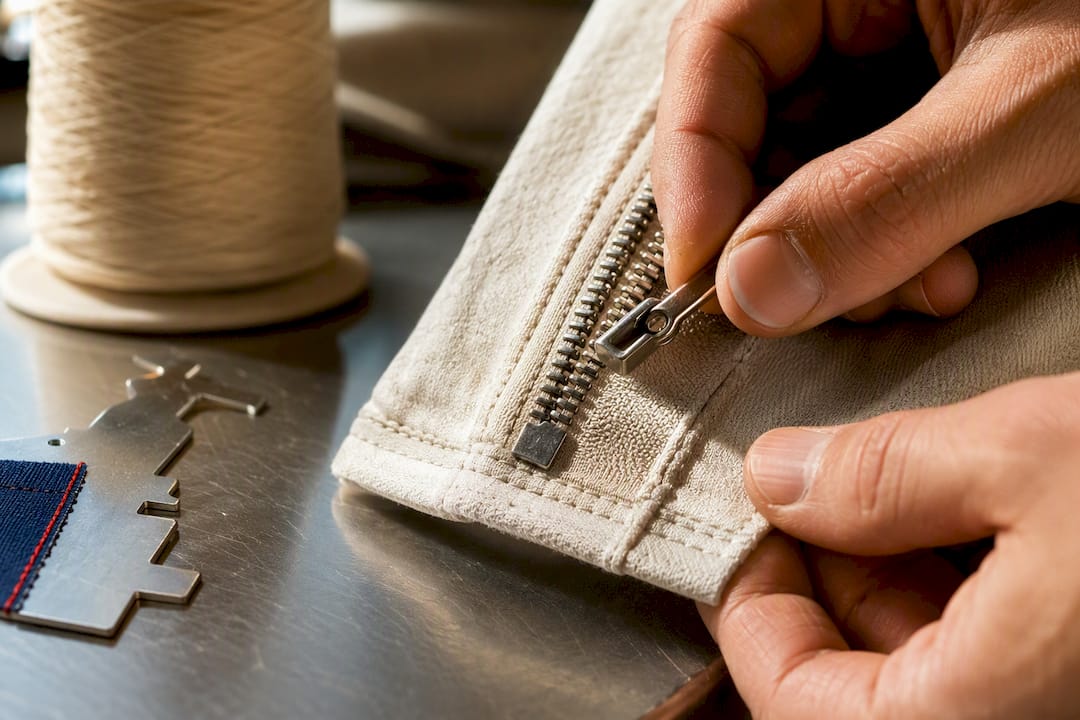
A zipper is a mechanical part, and mechanical parts fail. Before you buy or after months of wear, run the zipper up and down slowly. It should glide without catching, lie flat against the fabric, and the pull tab should feel sturdy rather than loose. Check that the tape is backed by reinforced stitching, since that's usually where a cheap zipper fails first, at the top or bottom stop.
Pullovers have their own wear points. Check the neck opening for stretched-out elastic, look at the cuffs for fraying, and inspect the hem for loose threads. None of these are dealbreakers on their own, but they're the first signs a hoodie is aging out.
Wash both types inside out in cold water and skip the high-heat dryer setting, which is what actually shrinks kangaroo pockets and warps zipper tape over time.
Pro Tip: If your drawstring pulls loose or frays at the eyelet, don't toss the hoodie. A five-minute fix with a bit of tape and patience can save it, and it's the same repair we walk through in our drawstring repair guide.
How To Choose: A Simple Decision Checklist
Run through this before you add anything to cart:
- Decide your primary use. If you need it as an outer layer for warmth, lean pullover. If you're layering under a jacket or need quick temperature adjustments, lean zip-up.
- Check the fabric weight. Heavier fleece (typically 300 GSM or more) runs warmer regardless of closure.
- Inspect the zipper description, if applicable. Look for reinforced stitching and a metal or heavy-duty plastic pull.
- Compare finished measurements, not just size labels. A zip-up meant to layer over a shirt needs extra room, generally an inch or two beyond your base layer's chest width.
- Confirm the return policy before buying online, since fit issues are the most common return reason for both styles.
Skipping step 4 is the single most common online-shopping mistake. "Medium" varies wildly between brands; finished measurements don't.
Material And Fabric Differences: Cotton, Fleece, And Blends
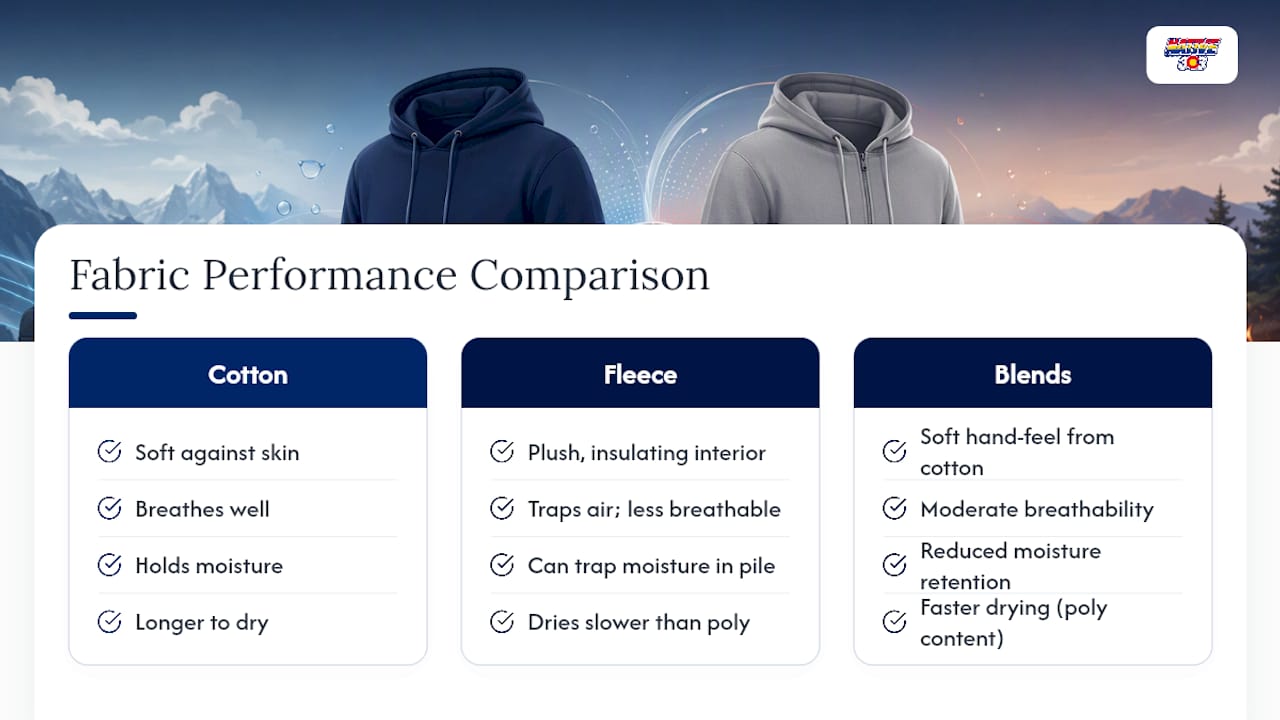
The closure gets most of the attention, but fabric composition changes how a hoodie feels and performs just as much. Pure cotton hoodies breathe well and feel soft against skin, but they hold moisture and take longer to dry, which matters if you sweat in one or get caught in light rain.
Fleece-lined interiors, common in both pullovers and zip-ups, trap air in a way woven cotton alone can't. That's why a fleece-lined zip-up can genuinely out-warm a lightweight cotton pullover, circling back to the point that fabric often beats closure type for actual insulation.
Cotton-polyester blends split the difference. Poly content adds durability and faster drying, while cotton keeps the hand-feel soft. Most everyday hoodies land somewhere around a 70/30 or 80/20 cotton-poly mix, though ratios vary by brand and aren't always listed on product pages.
For pure warmth with minimal bulk, a heavier fleece blend beats a lightweight all-cotton pullover almost every time. For softness and breathability in mild weather, cotton-heavy blends still win. Check the fabric content on the tag or product listing before assuming closure type tells you anything about warmth. It doesn't, not reliably.
Weather Suitability: Best Conditions For Each Style
Pullovers do their best work in steady cold. Once you've got one on, there's no fiddling required, no zipper to manage in gloves, no gap to seal against wind. That makes them a strong pick for consistently cold days where you're outside for a while and don't need to adjust.
Zip-ups earn their place in fluctuating conditions. Cool mornings that warm up by noon, indoor and outdoor transitions, or windy days where you want to seal the front tight but still need quick relief, all favor a zipper's adjustability. Wind is actually where the zip-up's supposed weakness (that thin gap along the seam) matters least, since a good zipper pull tightens flush against the body.
Neither style is built for genuine wet-weather protection. Standard cotton and fleece hoodies aren't waterproof, and a soaked hoodie loses most of its insulating value regardless of closure. If rain is a regular factor, both styles function better as a mid-layer under a real shell than as your outer layer.
Style And Fashion Trends: Casual Vs Sporty Looks
Pullovers lean casual by default. The clean, sealed front reads relaxed, streetwear, and nostalgic, which is exactly why so many graphic hoodie designs put their boldest print across the chest of a pullover. There's no zipper track breaking up the artwork, so the whole front becomes one uninterrupted canvas.
Zip-ups trend more athletic and put-together. They show up constantly in gym wardrobes, athleisure lines, and commuter outfits because the zipper visually signals function over lounging. Worn open over a plain tee, a zip-up reads more "errands and gym" than "couch." Worn zipped to the collar, it can pass for smart-casual outerwear in a way a pullover rarely does.
Neither trend is fixed. A well-fitted pullover in a muted color looks sharp layered under a denim or bomber jacket, and a bold zip-up with a chest logo can look just as loud as any pullover graphic. If you're picking based on custom apparel, pullovers give designers a larger uninterrupted print area, while zip-ups tend to push logos and smaller graphics toward the chest since the zipper splits the canvas down the middle.
Cost Comparison And Value
Zip-ups generally cost more than pullovers at a similar fabric weight and brand tier, mostly because of the added zipper hardware, extra pocket construction, and additional sewing steps. That price gap isn't universal, but it's common enough across mainstream retailers that it's worth expecting going in.
Value, though, isn't just the price tag. A pullover with a flimsy neckline or thin cuffs won't outlast a well-made zip-up, even if it costs less upfront. The better question is cost per wear: a $60 hoodie you wear twice a week for three years beats a $30 hoodie that stretches out and gets shelved after one season.
If you're buying for versatility, a zip-up's extra utility (venting, layering, easy on/off) can justify the higher price for someone who wears it daily across varied conditions. If you mainly want a warm, low-maintenance layer for consistently cold settings, a well-made pullover delivers strong value without the added zipper cost.
Either way, check the fabric weight and construction details before comparing prices side by side. A cheap zip-up and an expensive pullover aren't actually comparable if one is thin cotton and the other is heavyweight fleece.
Native303's Take On Pullovers, Zip-Ups, And What Actually Holds Up
We've spent enough time around apparel construction, drawstring repairs included, to know that closure type gets more credit and more blame than it deserves. Fabric weight and stitching quality decide longevity far more than whether there's a zipper. For our own graphic designs, we lean pullover when a piece is built around a bold, uninterrupted chest print, and zip-up when the goal is a wearable, everyday layer. If you're building a seasonal wardrobe, our seasonal layering guide walks through how both styles fit into a rotation without overbuying.
— Rob
Shop Native303 Hoodies Or Start A Custom Design
Both pullover and zip-up hoodies are commonly available, so you're not stuck picking a style before you've even seen the fabric weight or fit. Before you buy, check the same details this guide covers: fabric weight, finished measurements (not just size labels), zipper construction if it's a full-zip, and the return window in case fit isn't right the first time.
Browse the current lineup at the Native303 store, or use the size guide to compare finished measurements before you check out. Want something built around your own memory of a Denver spot that's gone but not forgotten? Submit a request through our custom design service and we'll work with you on the details, from print placement to closure style.
Sources
- MDPI article on garment thermal construction (2025)
- Hoodie - Wikipedia
- Pullover vs Zip-Up Hoodie: Which One Should You Get? – ComfyThreads
- HOODIE definition in American English | Collins English Dictionary
- Pullover Vs Zip-Up Hoodies: Outerwear Guide | USA Teamwear
FAQ
What Are The Key Differences Between Pullover And Zip-Up Hoodies?
A pullover has no front opening and goes on over your head, while a zip-up has a full-length front zipper you can leave open or closed. Pullovers usually have one kangaroo pocket, and zip-ups usually have two split pockets, plus zip-ups offer easier venting and on/off convenience.
What Is The Difference Between A Pullover And A Hoodie?
A hoodie is any hooded sweatshirt, whether it has a zipper or not. "Pullover" specifically describes the version with a sealed front and no zipper, so a pullover hoodie is one type of hoodie, not a separate garment category.
What Do Americans Call A Pullover?
In American English, "pullover" describes any garment without a front opening that you pull over your head, hoodies included. It's used alongside "hoodie" specifically when someone wants to distinguish the zipperless style from a zip-up.
What Is A Pullover With A Zipper Called?
That's simply a zip-up hoodie or full-zip hoodie, since a true pullover by definition has no front opening. If it has a zipper, even a short one at the neck, it's classified as a zip-up rather than a pullover.
Which Is Better For Everyday Wear, A Pullover Or A Zip-Up?
Neither wins universally. A pullover feels warmer at equal fabric weight and suits steady cold conditions, while a zip-up handles temperature swings and layering better. Native303 carries both styles, so the better everyday choice depends on your climate and how often your temperature needs change through the day.