
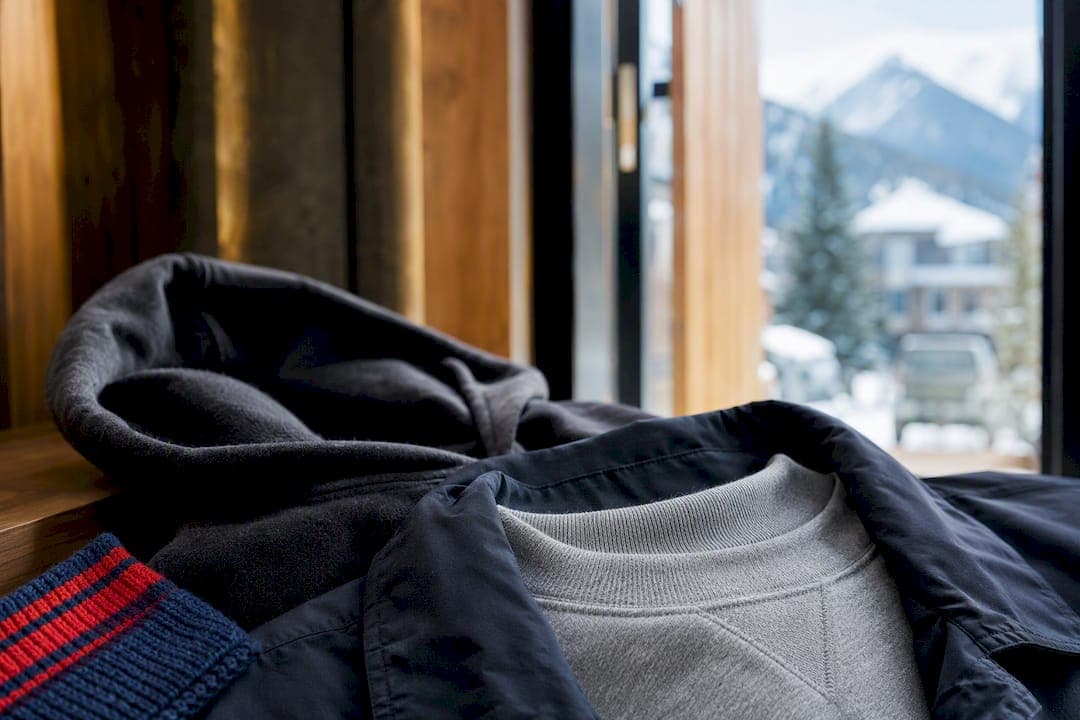
A hoodie is simply a sweatshirt with a hood attached, which is the single feature that defines the category, according to the Wikipedia entry on hoodies. Everyday usage of "sweatshirt" usually means the hoodless crewneck version. That hood changes more than the silhouette. It affects how the garment insulates, how it layers under a coat, and how casual or polished it reads on you.
TL;DR:
- Fabric weight significantly influences warmth, with heavyweight fleece providing better insulation for cold weather while lightweight fabrics suit milder conditions.
- Hooded styles add wind and rain protection but do not substantially increase core warmth, making layering and fabric choice more important than the hoodie itself.
- Crewnecks and zip-up hoodies are better options for layered outfits and more polished looks, particularly under blazers or in business casual settings.
- Hoodies tend to be more casual and pricier due to additional features like zippers and pockets, while crewnecks offer cleaner, more versatile surfaces for printing and branding.
- Proper care, including washing inside-out with cold water and avoiding high heat drying, is essential for preserving prints and maintaining garment shape over time.
Table of Contents
- Hoodie vs Sweatshirt: Sorting Out the Terms
- Fabrics and Construction That Shape Warmth and Feel
- Hoodie vs Crewneck: Comparing the Features
- Which Is Warmer: Hoodie or Sweatshirt?
- Styling and Use Cases: When to Wear Each
- How to Choose Between a Hoodie and a Sweatshirt
- Washing and Care to Protect Prints and Shape
- Why Native303apparel Designs Around Both Silhouettes
- Find Your Fit at Native303apparel
- Sources
Hoodie vs Sweatshirt: Sorting Out the Terms
Shoppers throw around "sweatshirt," "hoodie," "crewneck," and "pullover" like they're interchangeable, and that's where confusion starts. Sweatshirt is the umbrella term. Every hoodie is technically a sweatshirt, but not every sweatshirt has a hood. When someone says "sweatshirt" without qualifying it, they almost always mean the round-neck, hoodless version, which is why "crewneck" and "sweatshirt" get used as synonyms in casual conversation.
Hoodies split into two camps: pullover (no front closure, just a kangaroo pocket and drawstring hood) and zip-up (full front zipper, more like a soft jacket). The style breakdown from The Manual backs this up: strip away the hood, and every other feature (pockets, zippers, cut) is really just a variation on that same base garment.
A quick glossary helps when you're reading product tags:
- Crewneck: round collar, no hood, the classic sweatshirt shape.
- French terry: looped, lightweight knit, smoother than fleece.
- Fleece: brushed, insulating fabric with a soft nap on one or both sides.
- G/m²: grams per square meter, the standard way to measure fabric weight.
Fabrics and Construction That Shape Warmth and Feel
The fabric matters more than the silhouette when it comes to real warmth. Cotton and cotton-poly blends are the backbone of both hoodies and sweatshirts, but how that yarn gets knitted and finished determines everything else. French terry has a looped interior that stays lightweight and breathable, which is why it shows up in warmer-weather sweatshirts and joggers. Fleece and polar fleece get brushed on the inside, raising a soft nap that traps air and boosts insulation, a mechanical effect confirmed by the Wikipedia entry on polar fleece. Jersey knit, meanwhile, is thinner and drapes closer to the body, which is common in lighter sweatshirts and tees, per the Wikipedia page on jersey fabric.
Weight matters as much as fiber type:
- Lightweight (around 180 to 240 g/m²): French terry, good for layering or mild climates.
- Midweight (around 280 to 340 g/m²): standard cotton fleece, the workhorse range for everyday hoodies and crewnecks.
- Heavyweight (360 g/m² and up): brushed fleece or double-knit, built for cold-weather wear.
Statistic Callout: Fabric weight in a range typical for most retail hoodies and sweatshirts, and brushed interiors in that range trap noticeably more warm air than an unbrushed one at the same weight, according to guidance from The North Face.
Hoodie vs Crewneck: Comparing the Features
Once you strip away branding, the feature list is what actually separates these garments in daily use. Hoodies typically carry a hood, a drawstring, a kangaroo pocket, and sometimes a front zipper. Sweatshirts, especially crewnecks, skip all of that for a plain neckline and an unbroken front panel.
- Hood and drawstring: extra wind and rain protection, adjustable coverage around the face.
- Kangaroo pocket: built-in hand storage, useful for phones, keys, or cold hands.
- Zip-up front: easier to put on and take off without disturbing your hair or glasses.
- Crewneck collar: flat, clean front with no seams interrupting a large graphic.
- Raglan or set-in sleeves: affects fit through the shoulder and how a design wraps around the arm.
These features carry real consequences beyond looks. A kangaroo pocket eats into the flat print area on the front, which is why print-on-demand guides often flag hoodies as pricier and more limited canvases than crewnecks. A crewneck's clean chest also reads more polished, which matters if you're deciding what to wear to something slightly dressier than a coffee run.
Which Is Warmer: Hoodie or Sweatshirt?
The honest answer is that the hood barely changes core body warmth. It adds coverage around your head and neck, which matters a lot in wind or light rain, but the bulk of your insulation comes from the fabric itself, not the hood. The North Face guide on hoodies and sweatshirts makes this point directly: fabric weight and brushed interiors predict warmth far more reliably than whether a hood exists.
Where the hood does work against you is layering. A hood bunches up under a jacket collar and adds bulky fabric right at your neckline, which is annoying if you're wearing a shell or peacoat over it. A crewneck sits flatter and slides under a collar without a fight.
Pro Tip: If you layer under outerwear often, keep a midweight brushed-fleece crewneck in rotation and save the hoodie for days you're not wearing a jacket over it. The hood becomes dead weight the moment it's tucked under a collar.
For genuinely cold, exposed conditions (hiking, tailgating, waiting on a train platform), a heavyweight brushed fleece hoodie earns its bulk. The hood becomes functional gear, not just a style detail.
Styling and Use Cases: When to Wear Each
Picking between a hoodie and a sweatshirt often comes down to how put-together you need to look, not just the temperature outside.
- Under a blazer or denim jacket: a crewneck sweatshirt is the move. The flat collar disappears under a jacket, and it reads more intentional than casual.
- Weekend errands with joggers or jeans: a pullover hoodie is the default here, and for good reason. It's comfortable, forgiving, and pairs easily with sneakers.
- Cardigan replacement over a tee: a zip-up hoodie works like a soft jacket you can throw on and off without messing up your hair, something Printful's style guide points out as a reason zip-ups read slightly more polished than pullovers.
- Team or brand merch for a customer-facing role: crewnecks win, since they photograph cleaner and avoid the "streetwear" association some hoodies carry.
Don't lean too hard on the stereotype that hoodies are only streetwear and sweatshirts are only preppy. An oversized graphic crewneck can look just as casual as a hoodie, and a slim-fit neutral hoodie in a heavier fabric can look nearly as clean as a crewneck. Fit and color do more work than the garment category itself. For more on pairing graphic pieces into a full outfit, the guide on mixing Denver tees into streetwear looks has practical combinations worth stealing.
How to Choose Between a Hoodie and a Sweatshirt
Run through this before you buy, whether you're shopping for yourself or ordering merch for a team:
- Intended use: outdoor and exposed conditions favor a hood; indoor or layered settings favor a crewneck.
- Layering needs: if you wear jackets over it often, skip the hood's bulk.
- Print or branding placement: crewnecks give a full flat canvas; hoodies split that space around the pocket and hood seams.
- Silhouette and formality: slim crewnecks read dressier; relaxed hoodies read more casual.
- Budget and construction: hoodies typically cost more due to extra fabric and hardware, a pattern Ecommerce Fastlane notes across print-on-demand pricing.
A daily commuter who layers under a coat should lean crewneck. A gym-goer who wants a hood for outdoor warmups should lean hoodie. A brand ordering customer-facing merch should lean crewneck for a cleaner look, while an outdoor or active team benefits more from the hood and pocket, a distinction Arklavo's team apparel guide lays out clearly. Red flag to watch for: unbrushed lightweight fabric marketed as "warm" fleece. Check the fabric description, not just the product photo.
Washing and Care to Protect Prints and Shape
Printed hoodies and sweatshirts shrink and crack faster when they're mistreated in the wash, and it's an easy problem to avoid.
- Wash inside-out on cold with a gentle cycle to protect any printed or embroidered design.
- Skip high-heat drying entirely, or use low heat and pull the garment out while slightly damp.
- Brushed fleece holds heat and moisture longer than French terry, so give fleece pieces extra drying time on low rather than cranking the heat.
- Always defer to the garment's care label over general advice. Fiber blends vary, and some react differently to heat and agitation.
For a deeper walkthrough on keeping graphic prints intact over dozens of washes, the guide on washing graphic tees for longevity applies the same core principles to hoodies and sweatshirts.
Why Native303apparel Designs Around Both Silhouettes
Nostalgia-driven graphics need the right canvas, and that's exactly why the hood matters as a design decision, not just a comfort one. A crewneck gives a Denver diner logo or a shuttered club marquee a full, uninterrupted surface to breathe on. A hoodie trades some of that space for a pocket and drawstring, which fits pieces meant for everyday wear rather than a display piece. Neither silhouette beats the other. They just serve different memories differently. For pairing ideas, the piece on Denver streetwear influences digs into how local style shapes those choices.
— Rob
Find Your Fit at Native303apparel
Once you know whether you want a hood or a clean crewneck front, the next step is picking a design that actually means something to you. The hoodies and sweatshirts carry graphics inspired by Denver's old eateries, clubs, and shops, so you're not just choosing a silhouette, you're choosing a piece of the city's history to wear.
If you're torn between a heavyweight fleece hoodie for cold commutes or a crewneck for layering under a jacket, browse the current lineup at the Native303apparel storefront and check the size guide before you check out to avoid an awkward fit. If you want a real-world look at what a well-made hoodie can be, Ocean Theatre Co.'s hoodie page is worth a glance for comparison. Either way, pick the silhouette that fits how you'll actually wear it, then let the design do the rest.
Sources
- Hoodie - Wikipedia
- The style showdown: Hoodies vs. sweatshirts — The Manual
- Hoodie vs sweatshirt guide — The North Face