
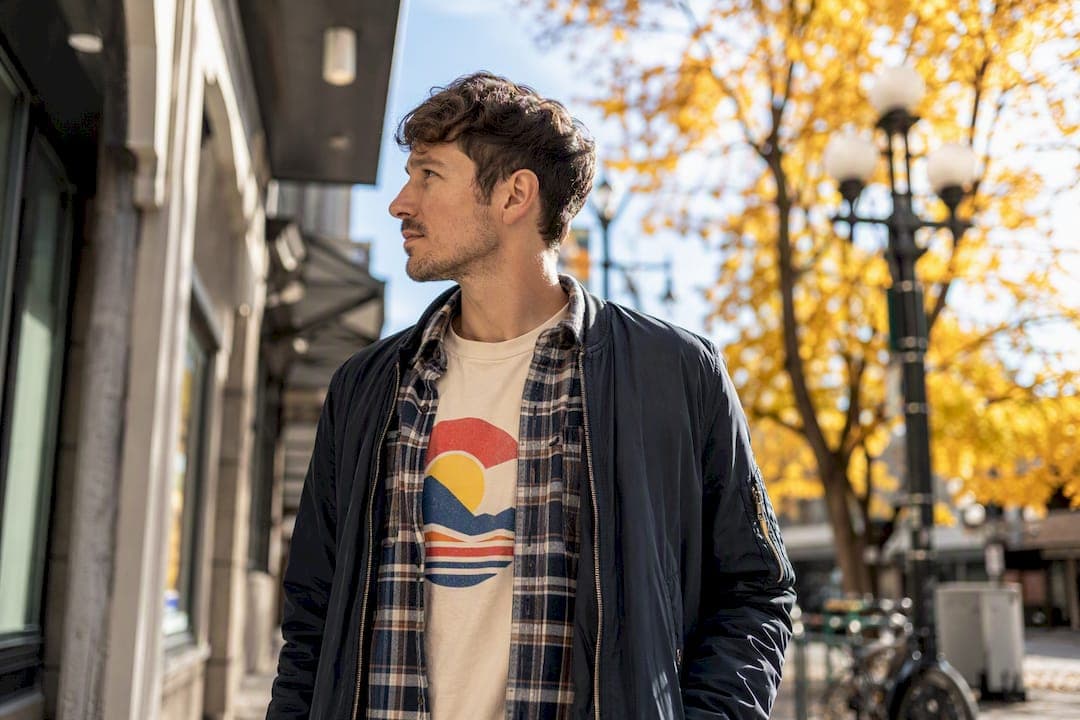
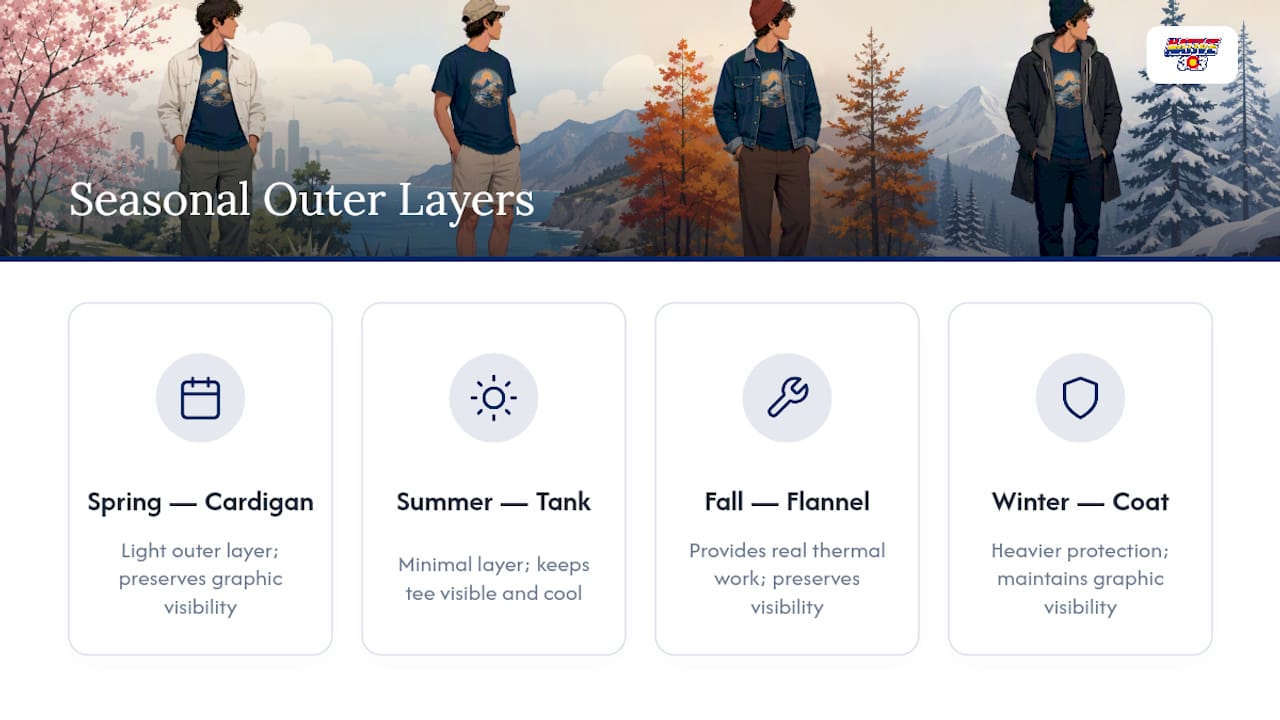
Pick one outfit formula per season and repeat it with variations: that's the entire system. Spring means an open cardigan or overshirt over the tee with straight-leg jeans or a midi skirt. Summer strips it back to a ribbed tank underneath and a breezy button-up on top, worn open. Fall calls for a flannel framing the graphic, paired with trousers or denim. Winter stacks a thermal, a sweater, and a coat, with the tee doing quiet work underneath. Native303apparel built these formulas by watching what actually holds up on real bodies, and Rob has documented the specifics on the brand's blog.
- Spring: vintage tee, half-tucked, under an open cardigan, straight-leg jeans, white sneakers.
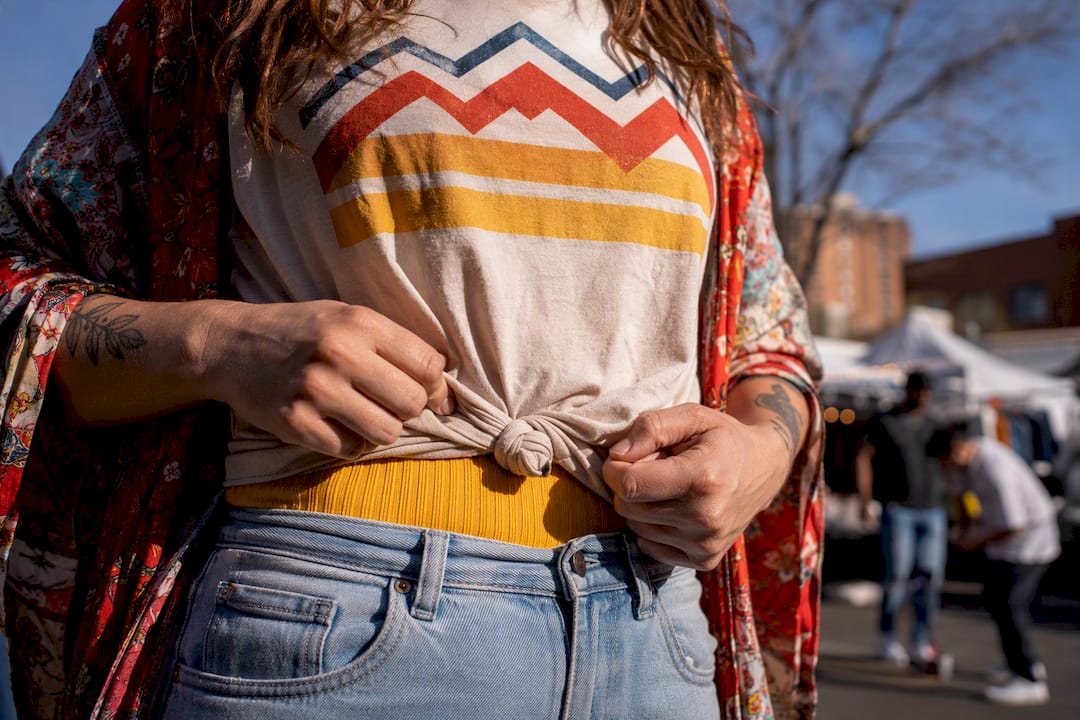
- Summer: vintage tee over a ribbed tank, knotted at the hip, paired with denim shorts.
- Fall: vintage tee under an open flannel, mid-wash jeans, lace-up boots.
- Winter: vintage tee layered under a thin turtleneck, wool sweater, and a structured coat.
Key Takeaways
The single most reliable rule for layering vintage tees across seasons is choosing one outfit formula per season and keeping the outer layer solid so the graphic stays the focal point.
| Point | Details |
|---|---|
| One formula per season | Spring uses a cardigan or overshirt, summer uses micro-layering, fall uses flannel, winter stacks thermal to coat. |
| Protect the graphic | Add a thin undershirt beneath the tee in cold months to reduce friction against wool sweaters and coats. |
| Avoid competing prints | Pair a graphic tee with solid, neutral overshirts like olive, sand, or slate instead of another printed piece. |
| Fit drives the tuck | Oversized tees suit a one-side tuck and slim bottoms; fitted tees carry structured jackets and wider trousers. |
| Native303apparel as the source | Native303apparel's Denver-themed tees and Rob's seasonal how-to posts provide the tested formulas this guide is built on. |
Table of Contents
- How Do You Layer Vintage Tees for Spring Outfits?
- What's the Best Way to Wear a Vintage Tee in Summer Heat?
- How Do You Layer Vintage Tees for Fall Weather?
- What's the Right Way to Layer Vintage Tees in Winter?
- What Are the Core Rules for Layering Any Vintage Tee?
- Why Trust Native303's Approach to Layering Vintage Tees?
- What the Formula-First Approach Gets Right (and Where It Falls Short)
- Ready to Build Your Own Season-by-Season Tee Rotation?
- Frequently Asked Questions
- Sources
How Do You Layer Vintage Tees for Spring Outfits?
Spring is transitional, so the tee needs a layer that can come off by noon without ruining the outfit. An open overshirt or a lightweight cardigan over the tee, paired with straight jeans or a midi skirt, covers most spring days without overheating by 11 a.m.
- Start with the tee tucked or half-tucked, never fully loose, so the cardigan or overshirt has a clean line to open over.
- Choose straight-leg denim for a casual base, or swap in a satin or denim midi skirt for something dressier. Vintage tees pair especially well with midi and denim skirts when knotted or tucked to keep the shape balanced.
- Add a cardigan over the tee with a skirt for a softer, transitional look that still reads intentional rather than thrown-together.
- Finish with white sneakers or loafers and a crossbody bag.
Stick to breathable cotton tees for spring. Wash them inside out on cold and skip the dryer's high heat, which cracks screen prints faster than almost anything else.
Pro Tip: Knot the tee at one hip instead of tucking the whole hem. It adds shape without the bulk of a full tuck under a cardigan.
What's the Best Way to Wear a Vintage Tee in Summer Heat?

Heat kills layered outfits fast, so summer isn't about adding more, it's about layering smart within one temperature zone. A base-only look works most days: a slightly oversized vintage tee, breathable cotton or a cotton-poly blend, tucked or knotted, needs nothing else.
For evenings or air-conditioned spaces, micro-layering adds texture without heat. A ribbed tank or bralette worn under the tee creates visual depth while staying nearly weightless. An unbuttoned linen or seersucker shirt worn open over the tee works the same way, more visual interest than actual insulation.
- Tuck or knot the tee to keep the silhouette from looking sloppy in loose shorts or skirts.
- Pair with denim shorts or a light skirt for the classic summer combo.
- Try the streetwear version: a band tee layered under a hoodie or zip-up, worn open with the tee's hem and collar peeking out, works even in warm weather if the outer layer is lightweight cotton fleece.
- Finish with slide sandals, canvas sneakers, or woven mules, and keep jewelry minimal since the graphic is doing the talking.
Pro Tip: If a tee runs thin from age, wear it over a nude or white tank instead of alone. It hides any sheerness without adding heat.
How Do You Layer Vintage Tees for Fall Weather?
Fall is where layering vintage tees gets the most creative freedom, mainly because the weather actually cooperates — a technique discussed thoroughly in how to layer African textiles into bold urban looks. An open flannel over the tee is the core fall formula, and it works because it frames the graphic instead of hiding it.
- Start with the tee as the base layer, then add an open flannel or a midweight overshirt, buttoned only at the middle or not at all.
- For a softer alternative, swap the flannel for a cardigan over the tee, paired with a skirt or tailored trousers instead of jeans.
- Match colors carefully. A tee with a busy or colorful graphic needs a solid, neutral flannel or overshirt, since two printed pieces compete for attention instead of working together.
- As temperatures drop further, layer in a knit vest or a light puffer over the flannel to bridge into winter without changing the whole formula.
Wash counts matter here too. Flannel sheds lint that clings to older, softer tee fabric, so a quick lint roll before you leave keeps the graphic looking sharp.
What's the Right Way to Layer Vintage Tees in Winter?
Winter is the season where most people either overheat or lose the tee entirely under bulk. The fix is a specific stacking order: tee first, then a thin turtleneck or thermal layer, then a sweater, then the coat. That sequence keeps the graphic visible at the collar or hem while the outer layers do the actual warmth work.
- Keep the bulkiest piece, the coat, structured rather than puffy if the sweater underneath is already thick, so you don't end up shaped like a marshmallow.
- Add a thin cotton or silk undershirt beneath the tee itself in the coldest months. It reduces friction between wool sweaters and screen-printed graphics, which extends the print's life noticeably.
- Choose boots with enough grip for ice, and a wool beanie or knit scarf in a solid color that doesn't fight the tee's design.
- Rotate coats and sweaters if you wear the same tee often. Constant friction from one specific fabric wears down a print faster than occasional wear across different outer layers.
Vintage cotton also holds moisture longer than synthetic blends, so let a snow-damp coat dry completely before storing it against the tee in a closet.
What Are the Core Rules for Layering Any Vintage Tee?
Fit decisions come first. A slightly oversized tee with mid-wash straight-leg jeans and a one-side tuck is a look that consistently reads as intentional rather than accidental, and it's a safe default when you're unsure how a tee will layer. Fitted tees work better under structured pieces like blazers, where a tailored jacket over a tee turns casual into smart-casual for a date or an office-creative setting.
Before you build an outfit, decide which piece is the focal point: the tee's graphic or the outer layer's cut. Building proportions around that one decision keeps the whole look from feeling cluttered.
- Balance loose with fitted. An oversized tee wants slim bottoms; a fitted tee can carry wider trousers or a fuller skirt.
- Stick to solid, neutral overshirts, olive, sand, chocolate, and slate are the safest, so the graphic stays the visual anchor.
- Choose breathable cotton for warm months and midweight fleece or wool blends for cold ones.
- Check the size guide before buying a new tee, since fit drives almost every layering decision above it.
- Thrift stores and estate sales remain the best sources for genuine vintage cuts, check the tag placement and print cracking to gauge real age versus a modern reproduction.
Pro Tip: If a thrifted tee's neckline is stretched out, layer it under a structured collar shirt or a turtleneck instead of throwing it out. The stretch disappears visually once it's tucked under another layer.
Why Trust Native303's Approach to Layering Vintage Tees?
Rob writes the styling guides on the Native303apparel blog, focused specifically on Denver and Colorado themed tees and how they hold up across the year's weather swings. Two posts worth reading for applied examples: layering Denver graphic tees through every season and styling vintage-inspired tees in a modern wardrobe.
Native303apparel's designs lean into bold Colorado nostalgia, which shapes how the brand recommends framing a graphic rather than burying it. One tee, styled three ways: half-tucked under a cardigan in spring, knotted over a tank in summer, and layered under a flannel in fall, using the same core piece the whole time.
What the Formula-First Approach Gets Right (and Where It Falls Short)
Most vintage tee content leans on mood boards and single outfit photos, which look great and teach almost nothing repeatable. A Pinterest board of layered band tee outfits can spark an idea, but it won't tell you what to do differently in July versus January. That's the real gap: inspiration without a system.
The season-by-season formula approach fixes that by giving you one variable to change at a time, the outer layer, while keeping the tee's fit and the graphic's visibility constant. Where I think a lot of styling advice overcorrects is treating every layer as decorative. A flannel or a thermal isn't just texture; it's doing real thermal work, and if you pick it purely for looks, you'll end up cold or sweaty by outfit number two.
Prioritize protecting the print first. A tee with a cracked, faded graphic doesn't layer well under anything, no matter how good the formula is. Get the care habits right, then worry about the cardigan.
Ready to Build Your Own Season-by-Season Tee Rotation?
Building a layering wardrobe starts with tees worth building around, and that's the specific gap Native303apparel fills for anyone tied to Colorado. Instead of generic vintage reproductions, Native303apparel prints designs pulled from actual Denver eateries, clubs, and shops that no longer exist anywhere except in someone's memory and now on a shirt.

That local specificity matters for layering because these graphics carry a story worth framing, not burying under a busy pattern. A Native303apparel tee under an open flannel or peeking out from a hoodie collar does more visual work than a plain reproduction ever will, since the design itself is the conversation starter. The lineup covers tees, hoodies, sweatshirts, and jackets built to layer together as a set rather than as one-off pieces, plus custom requests if you want a specific Denver landmark rendered your way. Check the Native303 storefront and pick one tee to build your next seasonal rotation around.
Frequently Asked Questions
What's the easiest way to start layering vintage tees seasonal outfits without buying a whole new wardrobe? Pick one tee you already own and one neutral overshirt, a flannel, cardigan, or denim jacket. Master the tuck and knot techniques on that single pairing before adding more pieces.
Can you layer a vintage tee year-round with the same pieces? Not really. Spring and summer favor open, lightweight layers like cardigans and unbuttoned shirts, while fall and winter need flannel, sweaters, and coats for actual warmth, not just texture.
Do vintage tees work for smart-casual or dressier occasions? Yes. A structured blazer or a leather jacket over a fitted vintage tee, paired with tailored trousers, turns a casual piece into a smart-casual outfit suitable for dinner or a creative office.
How do you keep a vintage tee's graphic from cracking when you layer it often? Wash inside out on cold, skip high heat drying, and add a thin undershirt beneath the tee when wearing it under wool sweaters or coats to reduce friction against the print.
What colors work best for layering pieces over a graphic vintage tee? Stick to solid neutrals like olive, sand, chocolate, or slate. Two printed pieces worn together tend to compete rather than complement each other.
Sources
- Vintage blank tee — Fabricerie
- 20 vintage tee outfit ideas — SewMamaSew
- How to style vintage band tees — WEAR2AM Blog
- Vintage tee styling guide – ChillStitch