
The rule is simpler than most shoppers expect: vintage means genuinely old, generally at least 20 years old but less than 100 years old, antique means 100 years or older, and retro describes a look, not an age. A retro jacket can be brand new. A vintage jacket is an authentic older piece.
TL;DR:
- Vintage items are at least 20 years old but less than 100 years, while antiques are 100 years or older, influencing their market value.
- Authentic age can be verified through construction details, labels, hardware, and provenance, with close-up photos preferred for online purchases.
- Price varies based on provenance, condition, and scarcity, with designer and limited-run retro pieces often valued higher than common vintage items.
- Proper care involves inspecting for damage, avoiding DIY repairs, and understanding material-specific maintenance to preserve value.
- Retro is a style inspired by past decades, not necessarily old, and offers a lower-cost, more reliable option for everyday wear compared to authentic vintage or antique pieces.
Table of Contents
- Vintage vs. Retro Meaning: Age Ranges, Eras, and Where the Lines Blur
- How to Tell If Something Is Vintage, Retro, or Antique
- Does Age Actually Drive the Price? Collectability Explained
- Buying and Caring for Vintage, Retro, and Antique Finds
- Choosing Retro or Vintage: It Depends on Why You're Buying
- How Native303apparel Thinks About Vintage-Inspired vs. Retro Design
- The Misconceptions That Trip Up Most Shoppers
- A Quick Rule for Deciding What to Buy
- Want the Retro Look Without the Vintage Hunt?
- Sources
Vintage vs. Retro Meaning: Age Ranges, Eras, and Where the Lines Blur
Age is the whole game with two of these three words, and style is the whole game with the third. Vintage applies to an object at least 20 years old but under a century, a boundary Apartment Therapy traces to how collectors and appraisers generally use the term. Antique starts at the 100-year mark and has stayed remarkably stable as a category. Retro carries no specific minimum age. It describes a design language borrowed from an earlier decade, most often the 1950s through the 1980s, describing style regardless of whether the item was made recently or decades ago, a distinction Wikipedia's overview of retro style lays out clearly.
Here's how that plays out with real objects:
- A hand sewn 1968 shift dress with a union label is vintage, full stop, because of its actual age.
- A new dress cut from a 1970s floral print, sold this year, is retro. Same decade's aesthetic, zero vintage credentials.
- A 1920s beaded flapper gown is antique, since it clears the 100 year threshold.
- A diner style chrome toaster made today, styled after 1950s kitchens, is retro.
The messiest zone right now is Y2K fashion from the early 2000s is nearing about 20 years old, so some pieces may now be considered vintage in certain fashion contexts, a shift Vogue has flagged as the category keeps moving forward with the calendar. Designer archival pieces are distinct since they come from brand archives but may not qualify as vintage without sufficient age, even though it feels historically significant.
How to Tell If Something Is Vintage, Retro, or Antique
Dating an item yourself takes about five minutes if you know where to look. Here's the sequence experienced buyers actually follow:
- Check the construction first. Hand stitching, irregular seam widths, and metal zippers instead of plastic point toward genuine age. Mass-produced retro pieces almost always use consistent, machine-perfect stitching.
- Read the labels and tags. Union labels, care tag wording ("Made in [Country]" formatting changed over decades), and font styles on maker marks all narrow down a timeframe. A tag reading "RN" number format from the 1960s looks nothing like a modern one.
- Examine hardware and materials. Old zippers, snaps, and buttons carry maker stamps that changed across eras. Real Bakelite feels warm and dense compared to modern plastic imitations.
- Distinguish patina from fake distressing. Authentic wear is uneven: fading concentrates where light and friction actually hit. Manufactured "vintage" distressing repeats in patterns, which is the fastest tell of a reproduction.
- Ask the seller for provenance. A receipt, a family history, or documented restoration work adds real confidence. Vague answers or stock photos with no close-up detail shots are a warning sign, a caution The Spruce raises repeatedly in its buying guidance.
Pro Tip: Photograph any tag or maker mark under bright, indirect light before you buy online. Blurry or cropped tag photos are the single most common trick sellers use to disguise a modern reproduction as an authentic piece.
Red flags worth memorizing: modern adhesive residue on furniture joints, faux-crackle finishes that repeat in identical patterns, and listing photos that show the whole item but never a close-up of hardware or labels.
Does Age Actually Drive the Price? Collectability Explained
Generally, yes, but not in a straight line. Antiques often command higher prices due to rarity and demand; vintage items generally have moderate value; retro items typically sell for less than authentic vintage unless from notable designers, unless a specific retro piece is a limited run from a notable designer.
Three factors decide where any single item lands on that spectrum:
- Provenance and maker. A dealer-verified designer piece from a known workshop often out-prices an unmarked item of the same age, since collectors weigh the maker's name as heavily as the calendar.
- Condition grading. Original finish, intact hardware, and no structural repairs push value up. Amateur restoration, mismatched replacement parts, or over-cleaning usually pushes it down.
- Scarcity within the category. A common 1970s mass-produced lamp won't command what a hand-thrown studio pottery piece from the same year will.
The exception that trips up new buyers: a retro item from a limited production run by a recognized designer can out value an ordinary vintage piece from the same decade. Age alone never tells the whole story.
Buying and Caring for Vintage, Retro, and Antique Finds
Before you hand over money, run through this checklist:
- Smell and inspect fabric closely. Mildew odor, yellow underarm staining, and moth holes are common in textiles and often permanent.
- Test functionality on anything mechanical. Zippers, drawer slides, clock movements, and appliance switches should work before you buy, not after.
- Ask when and how the seller acquired it. A dealer who can answer this without hesitation is generally more trustworthy than one who can't.
- Ask about restoration history directly. Refinished wood, replaced upholstery, or rewired lamps aren't dealbreakers, but they should factor into the price you're willing to pay, a point The Spruce makes clear for both furniture and apparel buyers.
- Handle care by material. Hand wash vintage textiles in cold water, avoid twisting them dry, and store folded rather than hung to prevent stretching. Wood needs gentle oil-based polish, never harsh solvents. Vintage electronics need a qualified technician to check wiring before you ever plug them in.
When damage looks structural, whether it's a cracked antique chair leg or frayed wiring inside a mid-century lamp, a professional conservator is worth the fee. DIY fixes on genuinely old pieces tend to destroy resale value faster than the original damage ever would.
Choosing Retro or Vintage: It Depends on Why You're Buying
Match the purchase to your actual goal. If you're building a collection or chasing investment value, authentic vintage or antique pieces are the better route, since age and provenance are what create scarcity. If you just want the look for everyday wear, retro is usually the smarter, lower-friction choice: consistent sizing, no guessing about wear, and a normal return policy if it doesn't fit.
- Collecting: prioritize vintage or antique with documented provenance.
- Everyday wardrobe: retro pieces or well-vetted vintage in wearable condition.
- Budget styling: retro wins on cost and consistency almost every time.
- Mixing both: pair one statement vintage piece with retro basics rather than going all one way. Our style guide for pairing vintage-inspired tees walks through that balance in more detail.
Pro Tip: Anchor an outfit with one true vintage piece, then build the rest retro. It reads as intentional instead of costume-y.
How Native303apparel Thinks About Vintage-Inspired vs. Retro Design
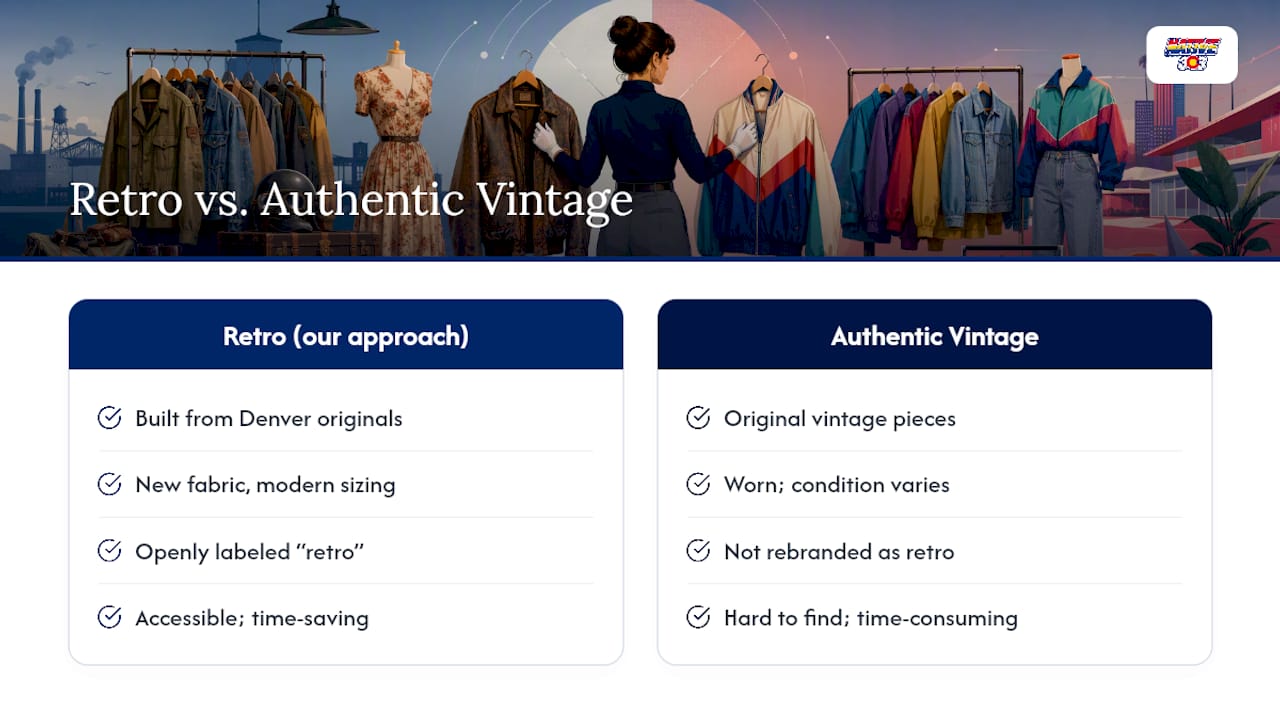
We build every design around what actually defined Denver's old eateries, clubs, and shops, then translate that into new fabric with modern sizing. That's retro by definition, and we're upfront about it. For readers who want to go deeper on the design side, our breakdown of throwback design elements that define retro style covers the visual cues we pull from. We make retro apparel accessible precisely because hunting down authentic vintage pieces in wearable condition takes time most people don't have.
The Misconceptions That Trip Up Most Shoppers
"Retro means old" is the most common mix-up, and it's backwards. Retro describes a style borrowed from the past, and the overwhelming majority of retro merchandise on shelves right now was manufactured within the last few years. Age has nothing to do with the label.
"Vintage automatically means valuable" causes the opposite problem. Plenty of vintage items, a plain 1980s department store sweater, for instance, carry no real collector value despite qualifying as genuinely vintage by age. Value comes from condition, provenance, maker reputation, and scarcity, not from the calendar alone.
A third misconception worth flagging: people assume "antique" is just a fancier synonym for "old" or "vintage." It isn't. Antique is a specific age threshold, 100 years or more, that most vintage items will never reach in your lifetime.
Last one: buyers often think retro can't be well-made because it's not "real" vintage. That's a style judgment, not a construction fact. A retro piece built from quality modern materials can outlast a poorly preserved genuine vintage item with structural wear the original owner never disclosed.
Getting these three terms straight changes how you shop. It tells you what to expect on price, what questions to ask a seller, and whether you're paying for history or paying for a look.
A Quick Rule for Deciding What to Buy
If you're collecting, go vintage or antique and verify provenance before you pay. If you just want the look for daily wear, retro or a well-vetted vintage piece both work fine, and retro removes most of the guesswork on fit. Run anything uncertain through the checklist above before you commit. For more on styling either direction, our internal guides and product pages walk through specifics in more depth than any single article can.
— Rob
Want the Retro Look Without the Vintage Hunt?
If you've read this far, you already know authentic vintage sourcing means digging through estate sales, cross-checking maker marks, and hoping a size actually fits once it arrives, a process explained well by this Trusted Used Clothing Exporter Worldwide | Buy Bulk Now! page. Apparel inspired by Denver and Colorado history, reflecting eateries, clubs, and shops that defined the metro area, can be found with consistent modern sizing and normal return policies. It's not a substitute for a real antique or a documented vintage find. It's the faster route to the same feeling, without the gamble on fit or condition.

Check our size guide before you order locking in the right fit, then browse the full collection at Native303apparel and see which piece of Denver's history fits your wardrobe best.
Sources
- How to Define 'Vintage,' 'Antique,' and 'Old' When Shopping Secondhand | Apartment Therapy
- Vintage vs. Antique vs. Retro: What’s the Difference? | The Spruce
- Retro vs vintage vs antique: what do they mean and what’s the difference | Homes & Gardens