
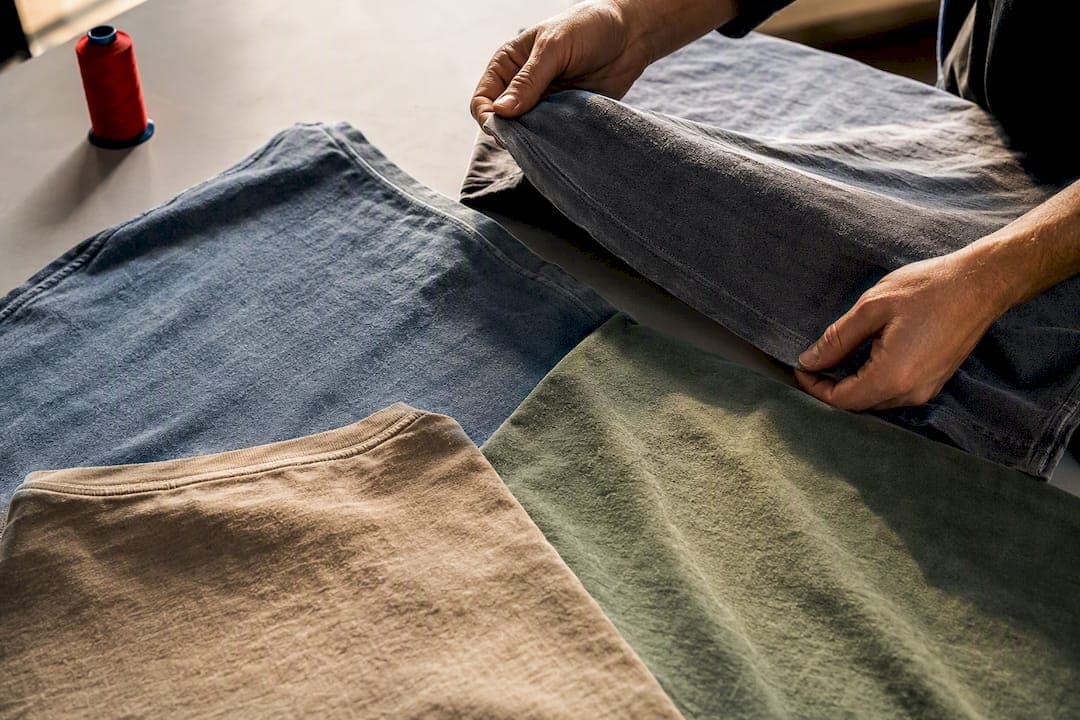
If you want a soft, vintage-feel tee, start with the ComfortWash by Hanes GDH100 for reliable garment-dyed softness at a low price. Grab the GDH150 pocket tee for casual styling, or step up to the heavier GDH200 or GDH250 long-sleeve for cooler weather and more structure. All four use the same enzyme finish that makes cotton feel already broken in, straight off the rack.
TL;DR:
- The ComfortWash tees are garment-dyed and enzyme-treated, ensuring a soft, worn-in feel that lasts through multiple washes if cared for properly.
- Heavier long-sleeve options provide better shape retention and durability for cooler weather, with the GDH250 also including a pocket for added style.
- To preserve softness and color, wash these shirts in cold water, turn them inside out, and avoid bleach or optical brighteners, with air-drying preferred.
- Genuine enzyme-washed tees typically name the process explicitly, while marketing phrases like "buttery soft" may not involve enzyme treatment at all.
- Enzyme washing breaks down surface cellulose fibers, producing a subtle fade and softness without physical abrasion, using controlled processes that are more eco-friendly than stone washing.
Table of Contents
- What Makes Enzyme Wash T-Shirts Different?
- How Do the Four ComfortWash Styles Compare?
- How Do You Choose the Right Enzyme-Washed Tee?
- What Does Enzyme Washing Actually Do to Cotton?
- How Should You Wash and Store an Enzyme-Washed Tee?
- How Do You Spot a Real Enzyme Wash Versus Marketing Hype?
- Native303's Take on Enzyme-Washed Tees
- Get a Vintage-Soft Tee Built Around Your Own Denver Memory
- Sources
- FAQ
What Makes Enzyme Wash T-Shirts Different?
Enzyme wash t-shirts get their soft, lived-in feel from cellulase enzymes that eat away at the tiny fibers sticking up off the cotton surface. That process, sometimes called bio-washing, smooths the fabric hand and knocks down the fuzz that makes new cotton feel stiff. The result reads as a subtle, worn-in fade rather than the blasted, uneven look of stone-washed denim.
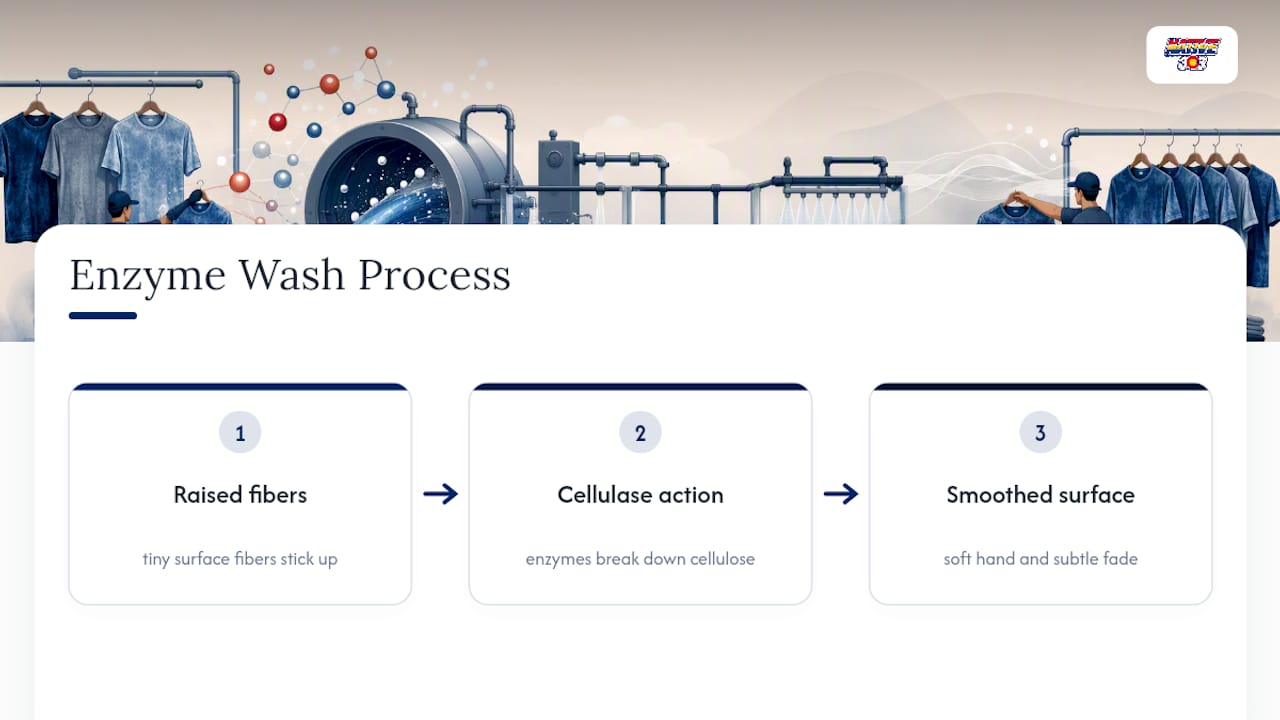
Cotton responds to enzyme treatment because it's a cellulose-based fiber, and cellulase enzymes are built specifically to break down cellulose. That's also why the finish shows up so consistently on garment-dyed tees like the Hanes ComfortWash line. Manufacturers dye the finished garment rather than the fabric, then run the enzyme process, so the softness and the slightly faded tone land together in one step.
You'll also see this called a "soft wash" or an "enzyme finish" on retail tags. It's the same treatment, just marketing language doing its job. Whatever the label says, the underlying chemistry is the same enzyme washing process that's been standard in the garment industry for decades.
How Do the Four ComfortWash Styles Compare?
Each of these four shirts uses the same enzyme-treated, garment-dyed construction, but weight and cut change what they're actually good for.
A few things stand out once you line them up side by side:
- The GDH100 is the entry point. It's a men's fit tee built for everyday rotation, not a statement piece.
- The GDH150 pocket tee runs unisex sizing, which makes it the easier pick if you're buying across a mixed group of sizes.
- Both long-sleeve options (GDH200 and GDH250) carry more fabric weight, so they hold their shape better through fall and winter layering.
- The GDH250 is the only style in this shortlist that combines the heavier long-sleeve build with a pocket, if that detail matters to your look.
You'll find all four widely stocked through major apparel retailers and the Hanes ComfortWash line directly, which keeps pricing competitive and makes size exchanges straightforward if a garment-dyed cut runs differently than you expect, similar to how the Men's Marvel Grunge Fwip T-Shirt – Wonderly Wear offers vintage-styled, washed tees for casual wear.
How Do You Choose the Right Enzyme-Washed Tee?
Fabric weight tells you more about how a shirt will actually feel than almost anything else on the label. Tees in a lightweight to midweight range drape light and feel breathable, closer to a broken-in undershirt. Heavier long-sleeve styles offer more structure, better print durability, and fabrics that hold up to repeated washing without going see-through.
Knit and yarn type matter almost as much. Ringspun cotton produces a finer, smoother yarn that takes enzyme treatment evenly and prints crisper graphics. Carded cotton is coarser and cheaper, and it can shrink less predictably. If you're buying a tee specifically to keep a printed design looking sharp for years, checking ringspun versus carded cotton before you buy saves you a return later.
Before you check out, run through this short list on the product page:
- Confirm the listing actually says "prewashed" or "enzyme-treated," not just "soft" or "vintage style."
- Check the GSM number, not just a vague weight description like "midweight."
- Read the care label for wash temperature and dryer instructions.
- Confirm the return policy in case the garment-dyed fit runs small, which happens more often than with standard tees.
Pro Tip: Order one size up if you're between sizes on a garment-dyed tee. The dyeing and enzyme process happens after the shirt is sewn, so fit can run slightly tighter than a standard printed tee in the same size.
What Does Enzyme Washing Actually Do to Cotton?
Cellulase enzymes target the surface cellulose microfibers on cotton, breaking them down enough to remove fuzz and release a small amount of dye. That's what produces both the soft hand and the subtle faded look, without any physical abrasion.
Manufacturers choose between two enzyme types depending on the finish they want:
- Neutral cellulases work at a balanced pH and produce cleaner contrast with lower risk of dye redepositing onto lighter areas of the fabric, called back-staining.
- Acid cellulases act faster and create a stronger fade, but they carry a higher back-staining risk that requires extra rinsing to control.
Enzyme washing is also the more resource-conscious option compared to stone washing. It skips pumice stones entirely and relies on controlled enzymatic activity instead of physical abrasion, which typically means less water and energy per batch. Factories also run a required inactivation step, using heat and alkaline pH to stop the enzyme reaction once the desired softness is reached. Skip that step and the cellulase keeps eating cotton fiber, weakening the fabric over time.
How Should You Wash and Store an Enzyme-Washed Tee?
The enzyme finish is already baked into the fabric, but how you wash it at home decides how long that softness and color stay intact.
- Wash cold or lukewarm, at or below 86°F (30°C), on a gentle cycle with mild detergent.
- Turn the tee inside out before washing to protect any printed graphic and reduce surface friction.
- Skip bleach and optical brighteners. They react badly with the enzyme-treated surface and can dull the garment-dyed color faster than normal wear.
- Air-dry when you can, or tumble dry on low. Expect a small amount of shrinkage on the first wash or two, so follow the manufacturer's size guide rather than sizing based on the tag alone.
Some pilling is normal after repeated washing, especially on lighter-weight cotton. A fabric shaver handles it in under a minute. If you notice faint color redepositing near seams or pockets, that's mild back-staining from the original enzyme bath. It usually fades further with a wash or two and isn't a sign of a defect.
Pro Tip: Wash enzyme-treated tees separately from dark, non-colorfast garments for the first three washes. Any leftover loose dye from the finishing process is most likely to transfer during that window.
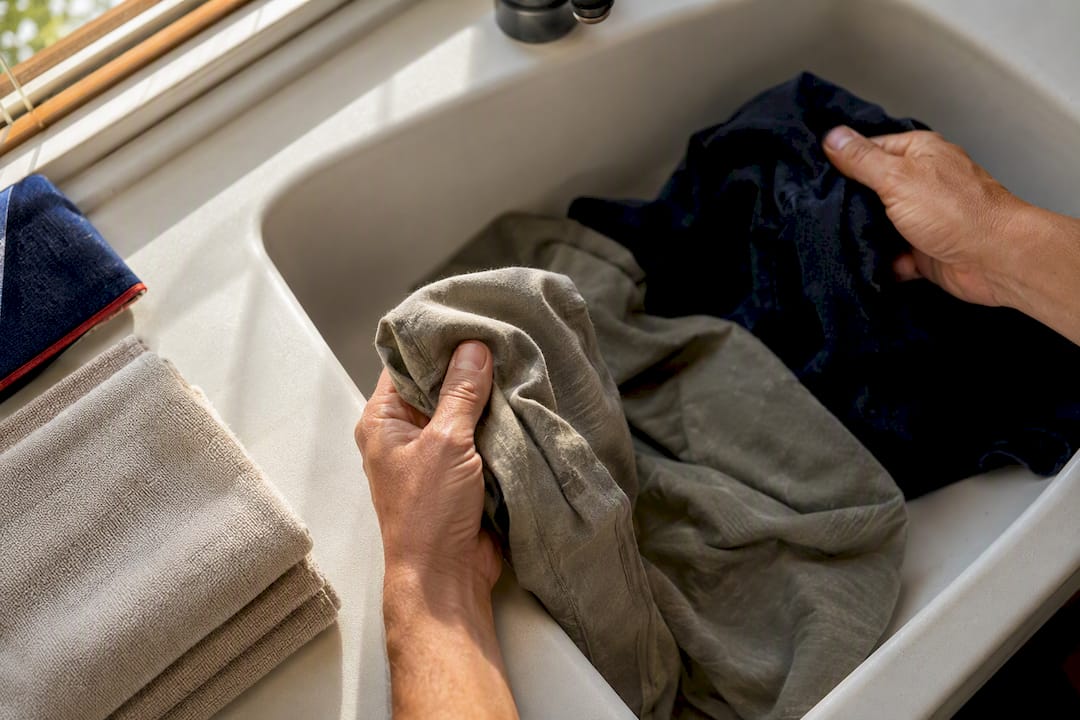
For printed vintage graphics specifically, the wash routine matters even more. A dedicated care approach for graphic tees can meaningfully extend how many washes a printed design survives before it starts to crack or fade.
How Do You Spot a Real Enzyme Wash Versus Marketing Hype?
"Soft wash," "vintage wash," and "enzyme finish" get used loosely on product pages, and not every tag backs up the claim. The most reliable signal is a listing that names the actual process, not just the resulting feel. A page that says "garment-dyed and enzyme-washed for a broken-in feel" is telling you something specific. A page that just says "buttery soft" or "vintage vibes" is selling an adjective.
Check whether the fabric is cotton or a cotton-heavy blend. Enzyme treatment works because cellulase breaks down cellulose fibers, and it does essentially nothing to protein-based fibers like silk or wool. A "vintage soft" tee made from a poly-heavy blend is almost certainly relying on a mechanical or chemical softening finish, not enzyme treatment. That's not automatically a bad shirt, but it's a different process producing a different feel.
Fit consistency is another tell. Real enzyme-washed, garment-dyed tees typically show a bit of pre-shrinkage baked in, since the process happens after the garment is sewn. If a "vintage wash" tee fits identically to a standard printed tee in the same size with zero softness difference out of the bag, the enzyme claim is probably doing more marketing work than fabric work. Bio-washed fabric is genuinely common on premium T-shirts and branded apparel, but the label should reflect that, not just imply it.
Native303's Take on Enzyme-Washed Tees
Nostalgia works better on fabric that already feels lived-in. A design pulling up a memory of a closed-down Denver diner or a long-gone record shop lands harder on a tee that already has that soft, worn hand, instead of on stiff new cotton that feels like it just came off a warehouse shelf.
That's part of why we lean toward garment-dyed, enzyme-finished blanks for our own prints. It matches the story we're telling. If you're building a wardrobe around designs like ours, pair the fabric knowledge here with our notes on garment-dyed versus pigment-dyed finishes before you commit to a heavier print run.
— Rob
Get a Vintage-Soft Tee Built Around Your Own Denver Memory
Native303apparel takes the enzyme-washed comfort covered above and puts it behind original designs pulled straight from metro Denver's shuttered diners, dive bars, and corner shops, not generic vintage graphics you'd find on any rack.

Beyond ready-made tees, sweatshirts, hoodies, tote bags, hats, and pint glasses, Native303apparel runs a custom design request service for anyone who wants a specific closed venue, block, or memory turned into a wearable design. Weight and fit questions get covered on the product pages, and you can browse past work on the showcase before deciding what to request. If a soft, faded tee tied to your own Denver story sounds better than a generic vintage print, start with the shop or submit a design request and describe the place you want brought back.
Sources
- Enzyme washing - Wikipedia
- Enzyme Wash (Wet Wash) - Textile Tech Insight
- CUSTOM Garment Washes BY PRIME BLANKS
- Bio-Wash Fabric for Custom Apparel: Enzyme Treatment - TrendyDice
FAQ
What Is an Enzyme-Washed T-Shirt?
It's a cotton tee treated with cellulase enzymes after dyeing or garment assembly to remove surface fuzz and soften the fabric hand. The process also produces a light, even fade rather than the harsh contrast you'd get from stone washing.
What Is an Enzyme Wash for Clothing?
An enzyme wash is a finishing step where cellulase enzymes break down cellulose fibers on the surface of cotton fabric. It softens the hand feel and reduces pilling, which is why it's common on premium T-shirts and other cotton apparel.
What Is Enzyme Washing Fabric?
Enzyme washing fabric means treating cotton or cotton-blend textile with cellulase enzymes, either during garment processing or as a standalone fabric treatment. Manufacturers control the reaction with an inactivation step, using heat and pH changes to stop the enzymes before they weaken the fiber.
How Do You Enzyme Wash Clothes at Home?
You can't replicate true enzyme washing at home since it requires controlled cellulase treatment and an inactivation step manufacturers handle in production. What you can do at home is preserve an existing enzyme finish by washing cold, skipping bleach, and drying on low heat.
Do the ComfortWash Tees Actually Use an Enzyme Finish?
Yes. The GDH100, GDH150, GDH200, and GDH250 are all garment-dyed and enzyme-treated, which is why they arrive with a soft, already-broken-in feel rather than the stiffness of a standard new tee.
Does Native303apparel Sell Enzyme-Washed Tees?
The shop features garment-dyed apparel with a soft, vintage hand, alongside sweatshirts, hoodies, and accessories. Current prices are listed on the Native303apparel store.