
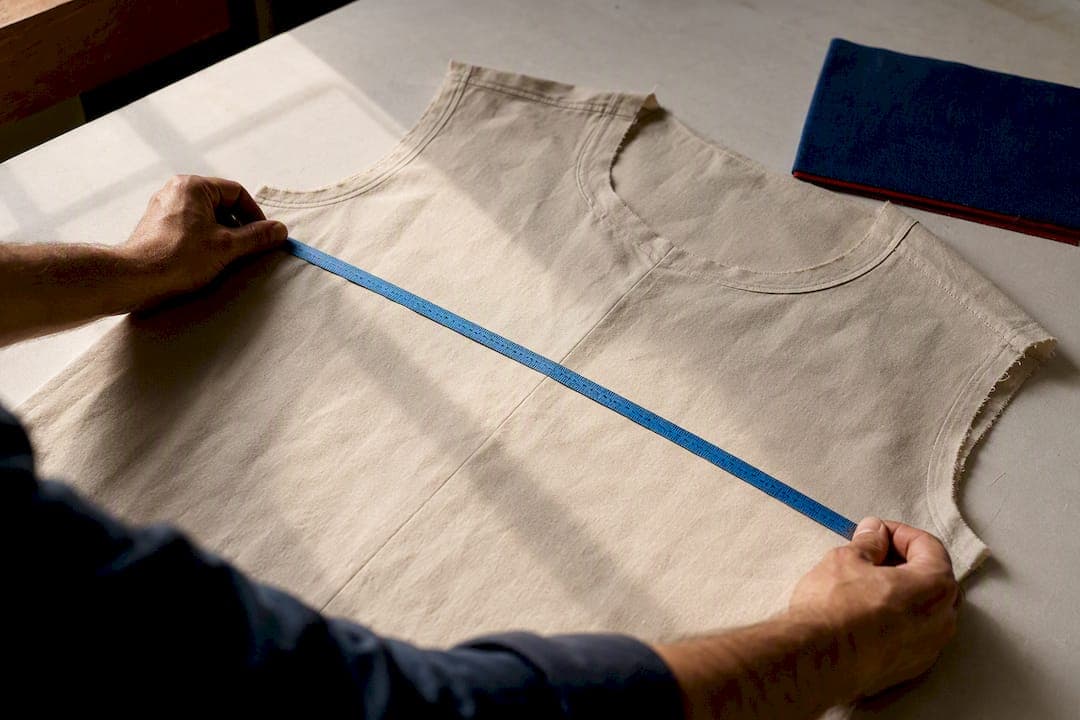
Pick classic fit when you want a straight, traditional silhouette that skims the body with about 4 to 6 inches of ease at the chest. Pick relaxed fit when you want extra room through the chest, seat, and thighs, usually 6 inches of ease or more. The rest comes down to how each fit behaves on your frame, in your favorite garments, and under the specific way you plan to wear it. The measurement checks below tell you exactly what to verify before you buy.
TL;DR:
- Classic fit works best for those who want a tidy silhouette with 4 to 6 inches of chest ease and should sit properly at the shoulder and hem.
- Relaxed fit provides 6 or more inches of ease and features a dropped shoulder seam with a boxier, looser shape for comfort and casual styles.
- Fabric choices align with fit: classic fit uses lighter, structured fabrics, while relaxed fit often employs heavier, draping textiles like fleece or heavyweight cotton.
- Accurate measurements of finished garment dimensions are critical, as brand size labels may not reflect actual fit, especially across different companies.
- Fit impacts activity comfort: relaxed fit enhances movement and layering, whereas classic fit is more suited for structured, versatile styling and refined layering.
Table of Contents
- Classic Fit vs Relaxed Fit at a Glance
- What Does Classic Fit Actually Mean?
- What Does Relaxed Fit Actually Mean?
- How Do You Choose Between Classic and Relaxed Fit?
- How Does Fit Change Across Shirts, Jackets, Jeans, and Tees?
- Styling Classic and Relaxed Fits the Native303apparel Way
- Your Pre-Purchase Measurement Checklist
- Where Did Classic Fit and Relaxed Fit Come From?
- Do Classic and Relaxed Fit Use Different Fabrics?
- How Does Fit Affect Comfort and Movement?
- Does "Classic Fit" Mean the Same Thing at Every Brand?
- Do Classic and Relaxed Fit Need Different Care?
- Balancing Silhouette, Comfort, and Longevity
- Shop the Fit That Matches Your Look at Native303apparel
- Sources
- FAQ
Classic Fit vs Relaxed Fit at a Glance
Before digging into the details, here's how the two fits stack up side by side across the numbers that actually matter when you're standing in a fitting room or scrolling a size chart online.
- Silhouette: Classic fit follows the body's natural lines with a straight torso and moderate room. Relaxed fit sits away from the body on purpose, with a looser drape through the shoulders, chest, and hips.
- Typical ease range: Classic fit runs about 4 to 6 inches of ease at the chest for shirts and tees. Relaxed fit runs 6 to 8 inches or more, depending on the brand and garment.
- Jeans and pants: Classic fit means a straighter leg with a roomy but not baggy seat. Relaxed fit adds noticeably more room through the thigh and seat, with a straight-to-wide leg opening.
- Best for: Classic fit suits anyone who wants a tidy, adaptable look that layers well under jackets or blazers. Relaxed fit suits anyone prioritizing comfort, movement, or a looser vintage and streetwear feel.
Neither fit is objectively "correct." A regular or classic cut works for the widest range of body types because it splits the difference between fitted and loose. Relaxed fit trades some of that universality for comfort and a distinct silhouette that reads more casual, even in dressier fabrics.
What Does Classic Fit Actually Mean?
Classic fit, sometimes called regular fit, is a straight-torso cut that adds moderate room without changing the garment's overall shape. On a dress shirt or tee, that translates to roughly 4 to 6 inches of ease across the chest, meaning a 40-inch chest measurement typically lands you in a shirt with a 44 to 46 inch finished chest width. On jeans, classic fit keeps a straight leg from hip to hem with enough room in the seat to sit and move comfortably, but without extra fabric pooling at the ankle.
Three checks tell you whether a garment is genuinely classic fit rather than just poorly sized. First, the shoulder seam should sit right at the edge of your shoulder bone, not sliding down your arm and not pulling toward your neck. Second, sleeve width should taper slightly from bicep to wrist rather than hanging like a tube. Third, the hem should sit at or just below the hip without excess fabric bunching at the sides when you stand naturally.
Classic fit earns its keep when you're layering under a blazer or jacket, when you want a silhouette that looks intentional in both casual and slightly dressed-up settings, or when you simply want comfort without looking oversized. That last point matters because classic fit can go wrong fast: if the shoulder seam droops past your actual shoulder or the fabric bags at the lower back, you're not wearing a "classic cut." You're wearing the wrong size.
What Does Relaxed Fit Actually Mean?
Relaxed fit takes the classic silhouette and adds meaningfully more room everywhere, typically 6 to 8 inches of ease or more through the chest, plus a wider cut through the seat and thigh on pants and jeans. A 40 inch chest in a relaxed tee might land at a 46 to 48 inch finished measurement, sometimes higher depending on the brand's specific pattern.
The tell for a genuine relaxed cut isn't just extra fabric. It's where that fabric shows up. Relaxed and boxy garments are built with a dropped shoulder seam that sits past the natural shoulder point, a straighter body panel with less shaping at the waist, and a hem that often falls squarer across the bottom rather than curving. That's a deliberate pattern choice, not a size mistake. If you take a regular-fit shirt and buy it a size up, you get more chest room, but the shoulder seam, sleeve proportions, and hem still follow the original pattern's shape. It won't drape the way a purpose-built relaxed piece does.
Relaxed fit makes the most sense for casual, comfort-first wear: think weekend errands, travel days, or any outfit where you want to move without feeling the fabric. It also tends to suit larger or broader frames better than a classic cut, since the extra room through the shoulders and torso avoids the pulling that a snugger pattern can create. Common relaxed-cut pieces include vintage-style graphic tees, oversized hoodies, wide-leg or "dad" jeans, and overshirts meant to be worn open over another layer.
How Do You Choose Between Classic and Relaxed Fit?
Most fit disappointments trace back to one mistake: shoppers pick a size before they pick a fit type. The better approach flips that order. Decide on the silhouette you want first, then find the labeled size within that fit category that matches your actual body measurements. Trying the same chest or waist measurement across a classic cut and a relaxed cut shows you exactly how much the ease changes the silhouette, without ever touching the labeled size.
Once you know which fit type you want, four measurements do most of the work:
- Chest ease. Compare the garment's finished chest measurement to your actual chest, and expect roughly 4 to 6 inches for classic, 6 or more for relaxed.
- Shoulder seam position. A classic cut sits at your shoulder bone; a relaxed or boxy cut sits noticeably past it.
- Sleeve length and taper. Classic sleeves taper toward the wrist; relaxed sleeves often stay straighter and can run slightly longer.
- Rise and thigh room (for pants and jeans). Classic fit keeps a straighter leg with moderate seat room; relaxed fit adds visible width through the thigh and often a slightly higher or roomier rise.
Before you check out, run through this shopping checklist: does the product page list finished garment measurements, not just size labels? Does it note model height and the size the model is wearing? Is there a return policy that lets you size-swap without a fee if the fit doesn't match your expectations?
Pro Tip: Brand size charts and finished garment measurements are not always the same thing. A size chart usually reflects body measurements the brand assumes you have; finished measurements tell you the actual dimensions of the garment itself. When the two seem to conflict, trust the finished measurement, and when a product page doesn't list one, ask for it before you buy rather than guessing and hoping the return window saves you.
How Does Fit Change Across Shirts, Jackets, Jeans, and Tees?
The classic-versus-relaxed decision doesn't play out the same way on every garment. Each category has its own fit checkpoints.
Shirts live and die by three details: shoulder seam placement, chest ease, and how the sleeve falls at the wrist. A classic dress shirt or button-up keeps the seam at the shoulder bone and a moderate taper through the body. A relaxed shirt drops the shoulder seam and squares off the body panel, giving it that slightly boxier, untucked-friendly look.
Jackets and suits use "classic" to mean a structured cut with a defined waist taper and a fairly close armhole, built for a traditional silhouette. "Relaxed" suiting loosens that taper and often opens up the armhole and shoulder, trading structure for ease of movement, which is part of why relaxed-cut blazers have become common in casual workwear.
Jeans and pants shift the whole conversation to seat, thigh, and rise rather than chest ease. Classic fit jeans hold a straight leg with a modest seat. Relaxed fit jeans widen noticeably through the thigh and often carry a straight-to-wide leg opening below the knee.
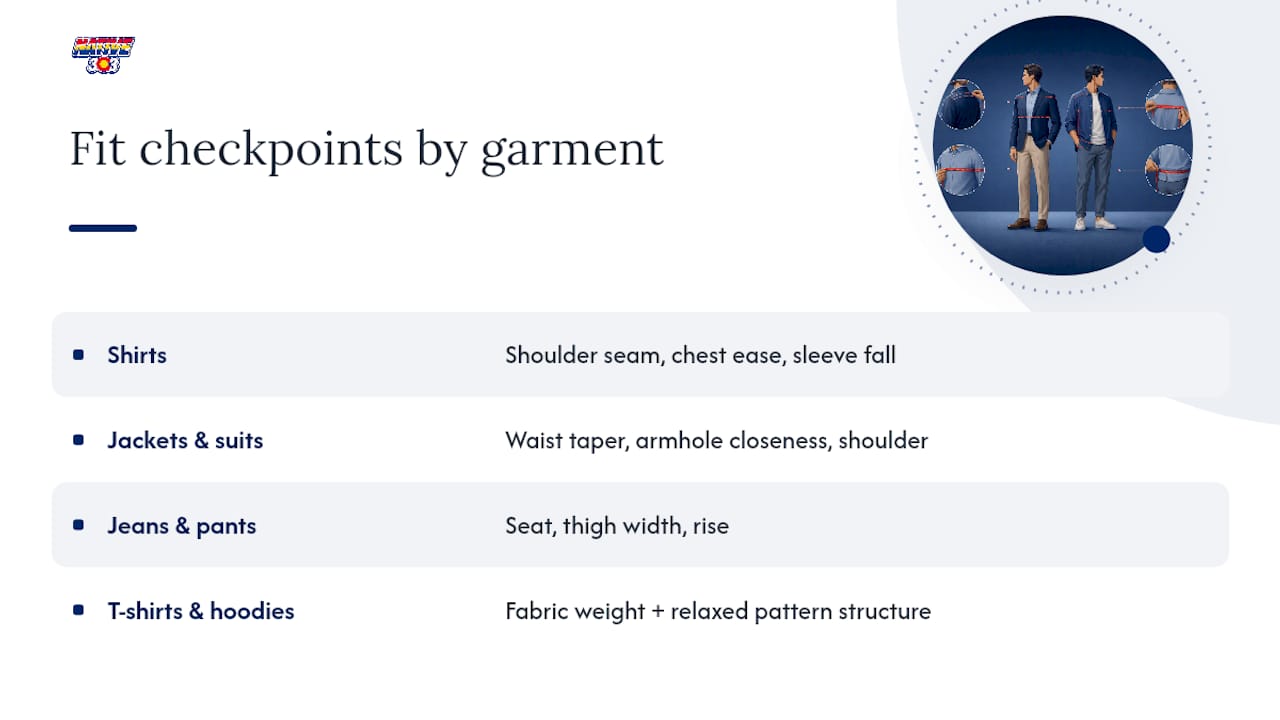
T-shirts and hoodies add a fabric-weight variable on top of the pattern itself. A heavyweight cotton tee in a relaxed cut holds its shape and drapes with more structure, while the same relaxed pattern in a lightweight tee can look thinner and less intentional. Midweight fabrics tend to split the difference, which is part of why so many casual brands default to midweight cotton for their relaxed-fit graphic tees.
Styling Classic and Relaxed Fits the Native303apparel Way
At Native303apparel, most of our nostalgia-themed tees and sweatshirts are built around that classic-to-relaxed spectrum, so the styling choice usually comes down to the look you're after rather than the size on the tag.
A few combinations we come back to often:
- A classic-fit tee layered under an open flannel or blazer keeps the silhouette clean, which works well if you're pairing a Denver eatery graphic with a slightly dressed-up outfit.
- A relaxed-fit vintage tee paired with an overshirt or a lightweight hoodie leans into the worn-in, nostalgic feel that a lot of our club and shop designs are built for.
- Sweatshirts and hoodies generally read best in relaxed proportions since the extra room supports layering over a tee without feeling tight across the shoulders, while our tees split between both fits depending on the design.
If you're choosing between our tee and hoodie lines and you're not sure which cut fits your frame, our size guide lists finished measurements for each category, and our post on measuring chest and length for extended sizes walks through the same checks covered above. For more layering ideas built specifically around nostalgic prints, our guide to layering tees in cool weather covers seasonal combinations in more depth.
Your Pre-Purchase Measurement Checklist
Confirming fit before you buy takes about five minutes with a tape measure and a garment you already own that fits the way you want.
- Measure your chest at the fullest point, keeping the tape level under your arms.
- Measure shoulder to shoulder across the back, from one shoulder seam edge to the other.
- Measure sleeve length from the shoulder seam to where you want the cuff to end.
- Measure waist, hip, and thigh for pants, taking the thigh measurement at the widest point.
- Compare your numbers to the product's finished measurements, not the size label alone.
- Try the garment on and move: raise your arms, sit down, and layer it over another piece to see how it behaves under real conditions.
Online buyers without a fitting room should request finished measurements directly if the product page skips them, and pay attention to any model-fit notes ("model is 6'0" wearing a size L") since they often reveal more than the size chart itself.
Where Did Classic Fit and Relaxed Fit Come From?
Classic fit traces back to mid-20th-century tailoring standards, when off-the-rack shirts and suits were cut with enough room to accommodate a range of builds without requiring alterations. That straight, moderate-ease silhouette became the default because it worked across the widest range of body types, and it stayed the industry baseline for decades in both formal wear and everyday shirting.
Relaxed fit has a very different lineage. It grew out of workwear and casual sportswear in the mid-to-late 20th century, where extra room mattered more than a tailored line: think denim built for manual labor, and later, skate and hip-hop fashion in the 1980s and 1990s that intentionally sized up silhouettes for comfort and visual statement. That aesthetic carried into streetwear and vintage-inspired apparel, where a boxier, drop-shouldered cut became its own recognizable style rather than a byproduct of borrowing someone else's clothes.
The two fits essentially represent two different eras of what "normal" clothing was supposed to do. Classic fit answers to tailoring traditions built around structure and versatility. Relaxed fit answers to a looser, comfort-first sensibility that treats extra room as a design feature, not an accident. Modern nostalgia and vintage-graphic apparel tend to lean relaxed precisely because that boxier silhouette echoes the worn-in, decades-old tees the designs are referencing in the first place.
Do Classic and Relaxed Fit Use Different Fabrics?
Fabric choice tends to track with fit type, though it's not an absolute rule. Classic fit garments, especially shirts and jackets, more often use mid-weight woven fabrics like cotton poplin, twill, or wool blends that hold a defined shape without excess drape. That structure supports the straighter, more tailored silhouette classic fit is going for.
Relaxed fit leans toward fabrics that either drape more loosely or hold enough weight to keep a boxier shape from looking flimsy. Heavyweight cotton, French terry, and fleece show up constantly in relaxed hoodies and sweatshirts because the added structure keeps a wider cut from collapsing into something that just looks oversized rather than intentionally relaxed. On the tee side, a heavyweight cotton in the 200 to 254 GSM range holds a relaxed silhouette with visible structure, while a lightweight tee in the same cut can look thinner and less deliberate.
Denim splits differently depending on the fit. Classic straight-leg jeans commonly use a mid-weight rigid or slightly stretch denim that holds its line. Relaxed jeans often use a slightly heavier, less stretchy denim since the wider cut needs the fabric's own structure to keep from sagging or losing shape after a few wears. None of this is a hard rule; you'll find lightweight relaxed tees and heavyweight classic shirts too. But when a brand pairs relaxed cuts with heavier fabric, it's usually deliberate.
How Does Fit Affect Comfort and Movement?
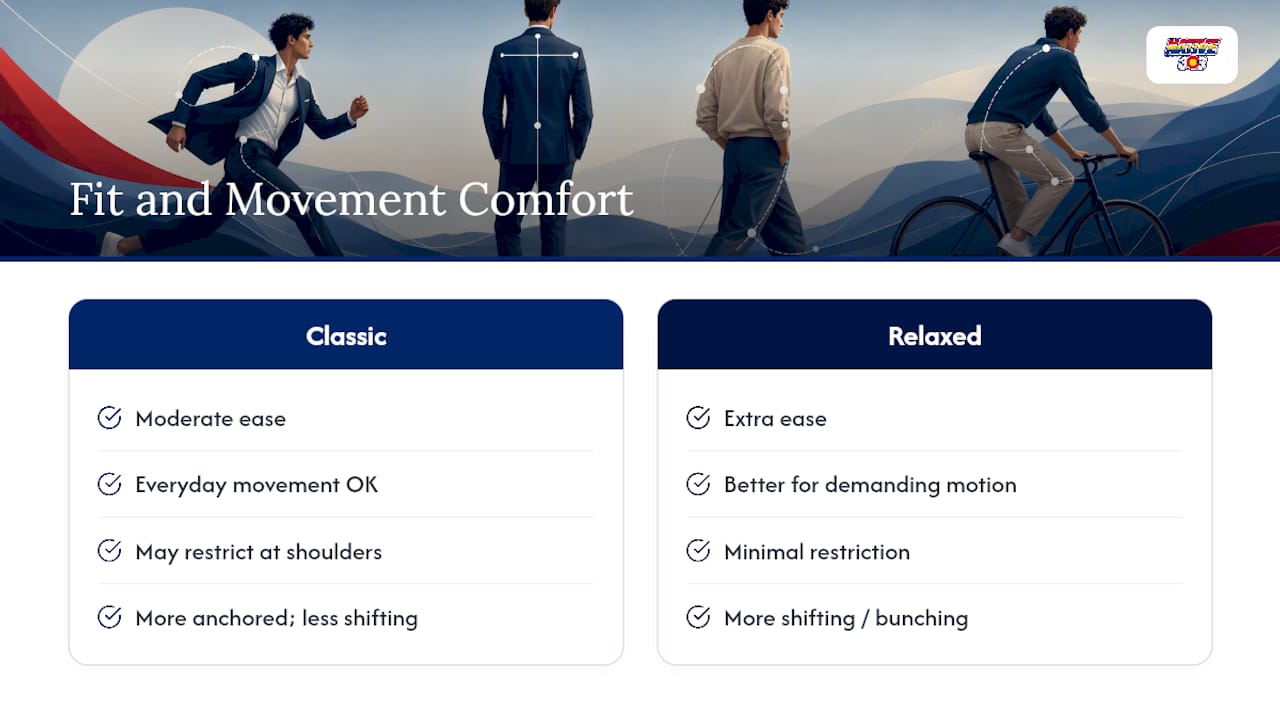
Fit changes how a garment behaves the moment you stop standing still, and the difference shows up fastest during physical activity or extended wear. Classic fit's moderate ease means it moves with you reasonably well for everyday activity, sitting, walking, reaching overhead, but it can start to restrict at the shoulder or underarm during more demanding movement, like reaching far overhead or bending deeply.
Relaxed fit's extra room removes most of that restriction. That's exactly why relaxed cuts dominate categories built around movement or extended comfort: workwear, loungewear, travel clothing, and casual streetwear. The tradeoff is that relaxed garments can shift or bunch during activity that involves a lot of directional movement, since there's more fabric that isn't anchored close to the body.
Context matters more than a blanket rule here. Sitting for long stretches, whether at a desk or on a flight, tends to favor relaxed fit through the seat and thigh simply because there's less pulling at the hips. Layering favors relaxed fit too, since a classic-fit base layer under a jacket can feel restrictive once you add bulk on top. On the other hand, activities where loose fabric becomes a liability, like anything involving machinery, tight spaces, or fast movement, tend to favor classic fit's closer profile. Neither fit is more "comfortable" in every scenario. Comfort depends on matching the ease to what your body is actually doing in the garment, not just how it looks standing still.
Does "Classic Fit" Mean the Same Thing at Every Brand?
Not even close, and this is where a lot of online shoppers get burned. One brand's "classic fit" chest ease might sit at 4 inches, while another brand's "classic fit" runs closer to 5.5 or 6 inches, even though both use the identical label. The same inconsistency shows up with relaxed fit, where one company's "relaxed" looks close to what another company calls "regular."
Regional and category differences add another layer. American workwear brands often use "relaxed fit" to describe jeans with substantial room through the thigh and seat, closely tied to that mid-century labor-wear lineage. Streetwear and fashion brands sometimes use "relaxed" more loosely to mean anything looser than their slimmest cut, even if the actual ease is closer to a classic fit by another brand's standard. European sizing conventions can also run slightly narrower across the board, which means a "classic fit" import might fit closer to a slim fit by American standards.
The practical fix is the same one that solves most fit problems: stop trusting the label and start comparing finished measurements. A size chart tells you what a brand assumes your body measures. A finished garment measurement tells you what the actual product measures, which is the number that determines whether a "classic fit" shirt from one brand fits like a "relaxed fit" shirt from another. When a product page doesn't list finished measurements, that's worth asking about directly before you commit to a size based on the label alone.
Do Classic and Relaxed Fit Need Different Care?
Fit type itself doesn't change how you wash a garment, but the fabrics commonly paired with each fit often do carry different care needs. Heavyweight cottons and fleece fabrics common in relaxed hoodies and sweatshirts tend to hold their shape well through washing, but they can shrink more noticeably if dried on high heat, since denser fabric has more fiber to contract. Lighter classic-fit shirting fabrics, especially poplin and thinner cotton blends, are more prone to wrinkling but usually shrink less dramatically.
Denim is the clearest example of fit-linked care differences. Relaxed jeans in heavier, less processed denim benefit from cold washes and air drying to preserve the fit you bought, since high heat can pull in the extra room that made the cut relaxed in the first place. Classic straight-leg jeans in a more finished, pre-shrunk denim tend to hold their shape more predictably wash after wash. If shrinkage is a concern with any cotton-heavy piece, checking whether the fabric is ring-spun or carded before washing gives you a better sense of how much movement to expect.
One more practical note: relaxed garments with dropped shoulders and boxier hems can look noticeably different after a few washes if they shrink unevenly, since the pattern relies on specific proportions to read as intentional rather than sloppy. Following the care label closely matters more on a relaxed cut than on a classic one, where a little shrinkage is less likely to throw off the silhouette.
Balancing Silhouette, Comfort, and Longevity
Classic fit tends to age better in a wardrobe because its silhouette doesn't chase a trend. A straight, moderately eased shirt or tee from ten years ago still looks intentional today, which is the real argument for building a wardrobe core around classic cuts. Relaxed fit earns its place for a different reason: comfort, movement, and a specific vintage or streetwear look that classic fit simply can't replicate no matter how you style it.
If you're genuinely unsure which one fits your habits, buy one of each in a brand you trust and compare them side by side rather than guessing from a size chart. Sticking with a single brand for a while also helps, since that at least keeps ease measurements consistent while you figure out your preference.
— Rob
Shop the Fit That Matches Your Look at Native303apparel
Once you know whether you want a straight, classic silhouette or a roomier, relaxed drape, Native303apparel gives you both without forcing a compromise on the nostalgia-driven graphics you actually want to wear. Our tees, sweatshirts, hoodies, and accessories cover Denver's vanished eateries, clubs, and shops in designs you won't find recreated anywhere else, and every category is built with the classic-versus-relaxed choice in mind rather than a single one-size silhouette.

For a neat, tucked-in silhouette that layers easily, go classic fit on our tees. If you want that worn-in, vintage feel with room to layer an overshirt or hoodie on top, go relaxed. Check our size guide for finished measurements before you order, and if you want a design tied to a specific memory or venue that isn't in our current lineup, our custom design service lets you build that piece from scratch.
Sources
- Slim Fit vs Regular Fit vs Relaxed Fit: What Each One Means
- Boxy Fit Meaning: Boxy vs Regular T-Shirts (2026) — 1abel
- What Is a Boxy Fit? Boxy vs Oversized vs Regular Explained – Phrase Studios
FAQ
Is Classic Fit Tighter Than Regular Fit?
No. Classic fit and regular fit typically describe the same silhouette, a straight-torso cut with about 4 to 6 inches of chest ease, so the two terms are usually interchangeable rather than one being tighter than the other.
Who Should Wear Relaxed Fit Jeans?
Relaxed fit jeans suit anyone who wants extra room through the thigh and seat for comfort or movement, and they tend to fit broader frames more evenly than a classic or slim cut.
Is Relaxed Fit Looser Than Regular Fit?
Yes. Relaxed fit runs looser than regular or classic fit, adding roughly 6 to 8 inches of ease or more compared to the 4 to 6 inches typical of a regular cut.
Should I Get Classic or Straight Fit?
Classic and straight fit are close cousins, both offering a moderate, body-following silhouette, so the better question is whether you want that traditional shape (classic or straight) or the extra room of a relaxed cut. If you want a clean, versatile look that layers well, classic or straight fit is the safer pick.
Does Native303apparel Offer Both Classic and Relaxed Fits?
Yes. Native303apparel's tee, sweatshirt, and hoodie lines include both classic and relaxed cuts, and the size guide lists finished measurements for each so you can match the fit to your body before ordering.