
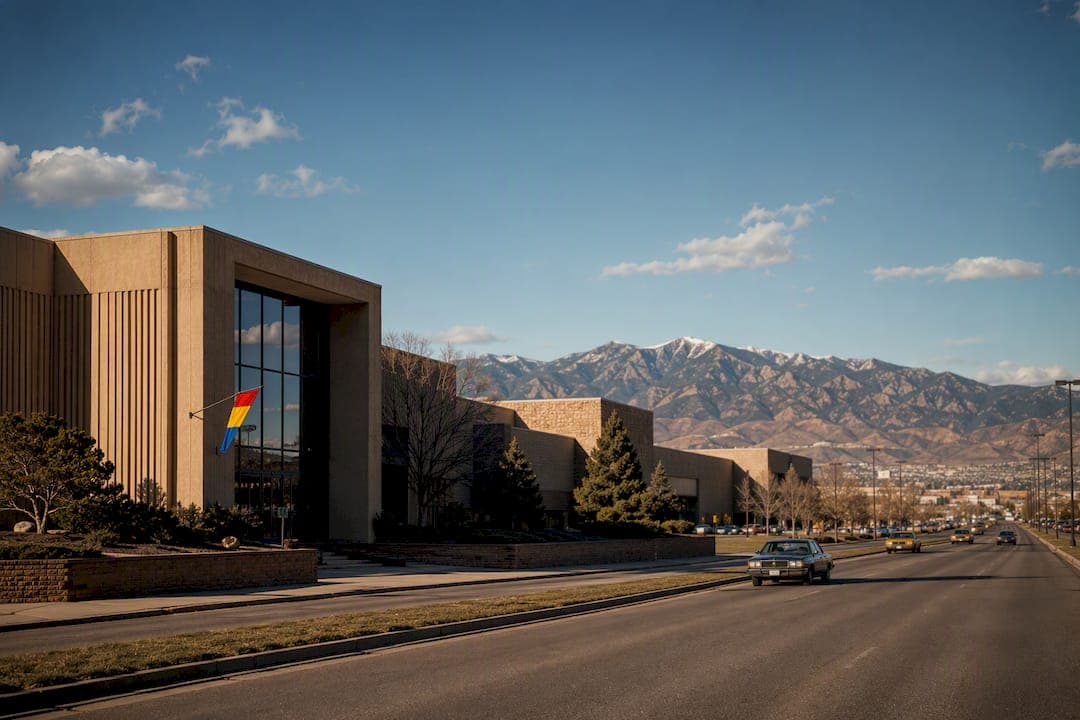
Westminster Mall opened in 1977 as a 30-store enclosed shopping center anchored by Joslins, and by the 1990s it had grown into a 1.2-million-square-foot regional hub with six department stores and two movie theaters. Anchor losses through the 2000s gutted it, the City of Westminster bought the property in 2011, and demolition crews began tearing it down that same year. The site is now slated for a mixed-use downtown redevelopment.
TL;DR:
- Westminster Mall's decline was driven by the closure of its anchors between 2001 and 2012, including Montgomery Ward, Mervyn's, Macy's, Dillard's, and Sears.
- The city of Westminster purchased the property in 2011 and began phased demolition, finishing by mid-2012, to replace it with a mixed-use downtown development.
- The original mall, opened in 1977, grew rapidly in the 1980s to become a regional hub with six department stores, two theaters, and extensive social spaces.
- The new development plan focuses on creating walkable streets, public parks, and gathering spaces to recapture community vitality lost with the mall's closure.
- Westminster Mall was a cultural landmark for generations, serving as a social hub, first job site, and weekend gathering place for local youth, with nostalgia preserved in local apparel designs.
Table of Contents
- The Origins of Westminster Mall's History
- Westminster Mall's Peak Years and Social Scene
- Why Westminster Mall Declined and Eventually Closed
- Westminster Mall Demolition and the Redevelopment Plan
- What Westminster Mall Meant to the Community
- A Local History Writer's Take on What Redevelopment Erases and Preserves
- Wear a Piece of Denver's Retail History
- Sources
- FAQ
The Origins of Westminster Mall's History
Colorado's Front Range suburbs were exploding with new housing in the mid-1970s, and Westminster, sitting between Denver and Boulder, needed a retail anchor to match its growth. Developers picked a site along U.S. Highway 36, banking on the corridor's easy access for shoppers from Broomfield, Arvada, and Northglenn.
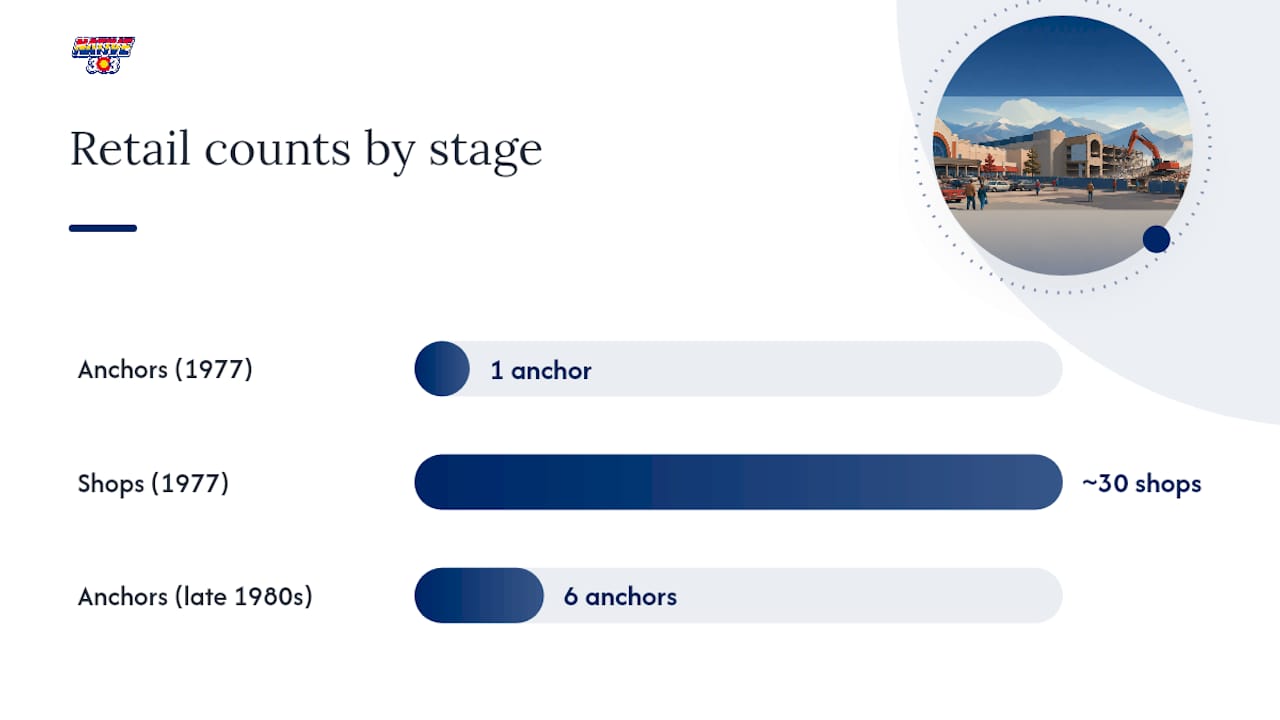
The mall opened its doors in 1977 with Joslins as its founding anchor) and about thirty smaller shops filling the corridors around it. That first version of the mall was modest by later standards, a single enclosed structure built around one big department store, but it gave the northwest metro area something it hadn't had before: a real indoor shopping destination that didn't require a drive into downtown Denver.
Growth came fast through the 1980s. The mall added:
- May D&F (later rebranded Foley's)
- Mervyn's
- Broadway Southwest
- JCPenney, added in 1987
- Montgomery Ward
Each addition pushed the property further from a single-anchor center toward a full regional mall. That expansion phase mattered because it set the ceiling for everything the mall would become. Suburban Denver in the 1980s was still filling in with new subdivisions, and Westminster Mall became the commercial center of gravity for a wide ring of neighborhoods that hadn't existed a decade earlier. By the time the last of the 1980s anchors settled in, the mall had shifted from a neighborhood convenience into a regional destination that attracted shoppers from nearby suburbs..
Westminster Mall's Peak Years and Social Scene
By its high point, Westminster Mall covered about 1,200,000 square feet and carried six department stores at various points in its run, a scale that put it among the larger enclosed malls on Colorado's Front Range. The anchor lineup shifted over time: Joslins eventually became Dillard's, Foley's later became Macy's after a corporate rebrand, and JCPenney rounded out the mix alongside Mervyn's and Montgomery Ward.
What made the mall a destination wasn't just square footage. A few things kept people coming back:
- A full food court that served as an informal meeting spot for teenagers and families alike.
- Two movie theaters, which turned weekend trips into full afternoons rather than quick errands.
- Six anchor stores, which meant a single visit could cover clothing, appliances, and gifts without leaving the building.
Locals who grew up nearby remember it as the place where a Friday night started, not ended. One firsthand account of the mall's 1980s heyday describes cruising the corridors, ducking into the record store, and catching a movie before curfew. That kind of casual, repeated presence is what separated a regional mall from a strip center. It wasn't just a shopping trip. It was where a lot of Westminster kids' social lives happened.
Why Westminster Mall Declined and Eventually Closed
Retail was already shifting nationally by the early 2000s, and Westminster Mall took hit after hit as its anchors closed one by one.
- Montgomery Ward closed in 2001, part of the chain's total liquidation that year.
- Mervyn's shuttered around 2005 to 2006 as the chain scaled back its Colorado footprint.
- Macy's (the former Foley's location) closed in 2009.
- Dillard's, the mall's original anchor under the Joslins name, closed between 2011 and 2012.
- Sears closed in June 2012 after its parcel sold that January.
Each closure left a bigger hole in the mall's traffic, and empty anchor boxes are hard to fill even in good economic conditions. E-commerce was pulling shoppers away from enclosed malls generally, and Westminster Mall had no walkable downtown or mixed-use draw to fall back on once the department stores left.
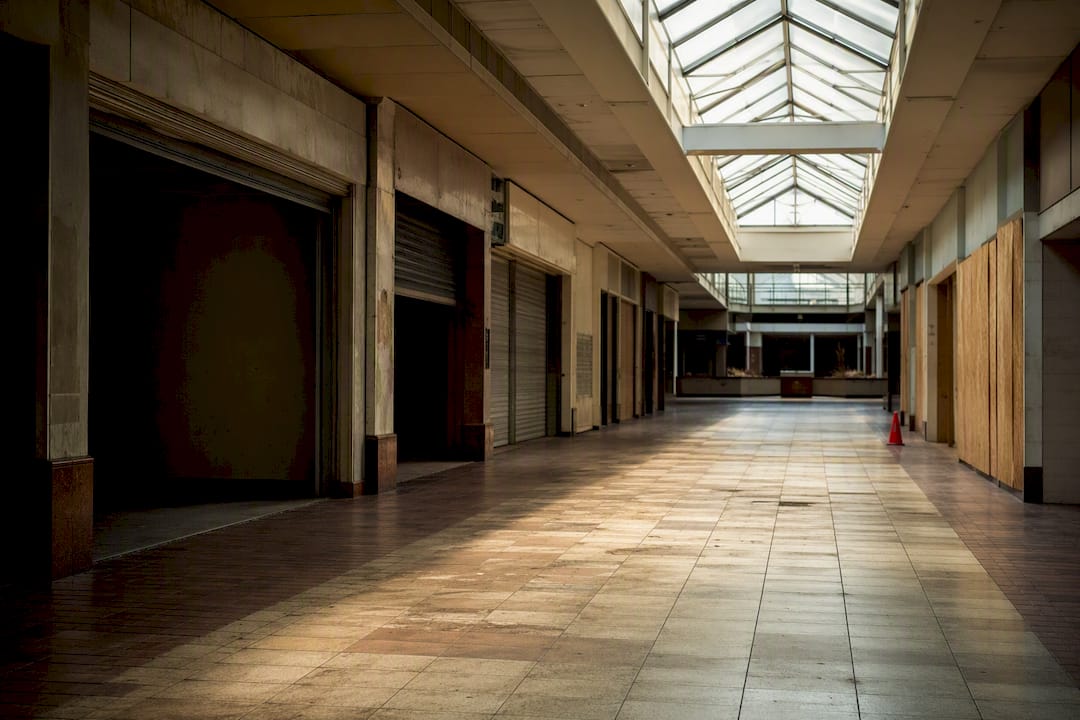
By 2011, the City of Westminster had purchased the mall property outright for redevelopment, a move that effectively ended its life as a functioning shopping center. Local news coverage from that period also documented the property's rapid decline after closure, with vandalism and repeated police calls turning the empty structure into a public nuisance rather than a landmark.
Westminster Mall Demolition and the Redevelopment Plan
Demolition began on June 23, 2011, and the process ran in stages rather than as a single teardown. Crews worked through the anchor stores and connecting corridors over the following months, with the Sears building coming down last after that parcel sold in January 2012 and the store itself closed that June.
The sequence looked roughly like this:
- 2011: City acquisition finalized; demolition begins on the main mall structure and connecting corridors.
- 2012: Sears parcel sold in January; Sears store closes in June; remaining structures cleared.
- Post 2012: Site held for redevelopment planning under city ownership.
| Phase | Year | Key event |
|---|---|---|
| Acquisition | 2011 | City of Westminster purchases the mall site |
| Demolition start | 2011 | Crews begin tearing down the main structure |
| Sears closure | 2012 | Final anchor parcel sold and store shuttered |
The City of Westminster's vision for the site centers on a new downtown built around mixed-use buildings, public gathering spaces, and walkable streets, replacing the enclosed single-purpose mall model entirely.
One clarification matters here: a much larger, unrelated project called Bolsa Pacific has drawn national headlines for a $2.5 billion redevelopment covering 83 acres. That project involves a different Westminster Mall entirely, located in California and developed by Shopoff Realty Investments. If you're researching Colorado's redevelopment specifically, city planning materials from Westminster, Colorado, are the source to trust, not California coverage.
What Westminster Mall Meant to the Community
For a couple of generations of Front Range kids, Westminster Mall wasn't just a shopping center. It was a first job, a first date, a place parents dropped teenagers off for a few hours of freedom. Local recollections describe it as the social hub of the northwest suburbs long before smartphones gave teenagers anywhere else to gather.
"It was one of the eighties' places," one longtime local recalled of the mall's role in shaping weekend routines for an entire generation of Westminster and Arvada kids.
City officials involved in redevelopment projects like this one have consistently framed demolition as an opportunity to rebuild a genuine community hub rather than simply erase one. The new downtown plan for the site leans on that same idea: public parks, walkable blocks, and gathering spaces meant to replace what the food court and movie theaters once provided.
Pro Tip: If you want to trace your own memories of the mall, local historical societies and city archives often hold photo collections that never made it online. A quick call to the Westminster city clerk's office can turn up more than a Google search will.
A Local History Writer's Take on What Redevelopment Erases and Preserves
I've spent enough time writing about vanished Denver-area landmarks, including Lakeside Amusement Park's long run, to notice a pattern: cities are good at building new things and bad at remembering why the old ones mattered. Westminster Mall wasn't architecturally special. What it did was give an entire generation a shared physical space to grow up in.
Redevelopment plans talk about "community hubs" constantly, but a plaza with a fountain isn't the same as a food court where you had your first job. Documenting places like this matters because the buildings disappear a lot faster than the memories do.
— Rob
Wear a Piece of Denver's Retail History
If you spent your teenage years at Westminster Mall, or any of Denver's other vanished spots, Native303 offers apparel inspired by these memories. They sell apparel featuring designs inspired by eateries, clubs, and shops from the metro area, including suburban landmarks that no longer exist.
Browse the full lineup of tees, sweatshirts, and hoodies built around Colorado nostalgia, or skip straight to something personal. If Westminster Mall isn't already one of our designs, our custom design service lets you describe exactly what you remember, whether that's the food court sign or a specific store logo, and we build it from there. Check the size guide before you order so your first piece fits right the first time.
Sources
- Construction crews begin demolishing Westminster Mall — CBS Los Angeles
- Demolition of abandoned Westminster Mall begins as new development breaks ground — NBC Los Angeles
- Shopoff Realty Investments breaks grounds on Bolsa Pacific — Orange County Business Journal
- One of the Eighties’ Places: The Story of Colorado’s Westminster Mall — Ron Baxendale II
FAQ
Why Did Westminster Mall Get Abandoned?
A wave of anchor closures between 2001 and 2012, including Montgomery Ward, Mervyn's, Macy's, Dillard's, and Sears, drained the mall of foot traffic until it could no longer sustain itself. National shifts toward e-commerce and retail bankruptcies accelerated the decline, and the City of Westminster eventually purchased the property for redevelopment rather than let it sit vacant indefinitely.
When Did the Westminster Mall Close in Colorado?
The mall lost its last major anchor, Sears, in June 2012, after the city had already purchased the property in 2011. Demolition of the main structure began on June 23, 2011, meaning the closure and demolition process overlapped rather than happening as separate events.
What Is the History of Westminster Mall?
Westminster Mall opened in 1977 with Joslins as its anchor and about 30 stores, expanding through the 1980s to roughly 1,200,000 square feet with six department stores. It served as a regional shopping and entertainment hub for the northwest Denver suburbs before anchor losses in the 2000s led to its closure and demolition starting in 2011.
Is the Colorado Westminster Mall the Same as the California Project?
No. The Colorado mall, which opened in 1977 and was demolished starting in 2011, is a separate property from the Westminster Mall in California, which is the site of the unrelated $2.5 billion Bolsa Pacific redevelopment. News about Bolsa Pacific refers exclusively to the California location.
What Is the Oldest Mall in Colorado?
Westminster Mall, which opened in 1977, was one of the older enclosed regional malls in the Denver metro area, though it wasn't the very first shopping center built along the Front Range. Several older strip and department-store centers predate it, but few grew to its scale of six anchors and 1.2 million square feet.