
For one-off pieces, personalization, and photo-like art, heat-transfer methods (HTV, DTF, sublimation) usually win. For large identical runs and maximum durability, screen printing usually wins. The crossover typically falls somewhere between 12 and 48 pieces, depending on how many ink colors your design uses and how a given shop prices setup.
TL;DR:
- Screen printing is most cost-effective for orders exceeding 12 to 48 pieces, with durability surpassing 50 washes for well-cured prints.
- Heat transfer methods excel for small runs, quick turnaround, and complex, multi-color designs without high setup costs.
- Fabric choice greatly influences method suitability; polyester favors sublimation and DTF, while cotton supports screen printing for softness and ink longevity.
- A hybrid approach combining DTF and screen printing can optimize cost, durability, and detail, especially for mixed fabric orders or variable designs.
- Always request quotes for both methods, considering color complexity, fabric type, and personalization needs, as the break-even point varies widely.
Table of Contents
- Screen Print vs Heat Press: How Screen Printing Actually Works
- How Heat Press and Heat Transfer Printing Work
- What Actually Differs Between the Two Methods
- Cost and Break-Even: When Each Method Actually Wins
- Fabric Compatibility and When Specialty Effects Matter
- How to Choose: A Four-Step Checklist Before You Order
- Native303 Practical Notes: Print Area, Layering, and Care
- Why a Hybrid Approach Often Makes Sense
- Skip the Quote Chase With Native303's Custom Design Route
- The Hybrid Bet Most Small Brands Get Backwards
- Sources
- FAQ
Screen Print vs Heat Press: How Screen Printing Actually Works
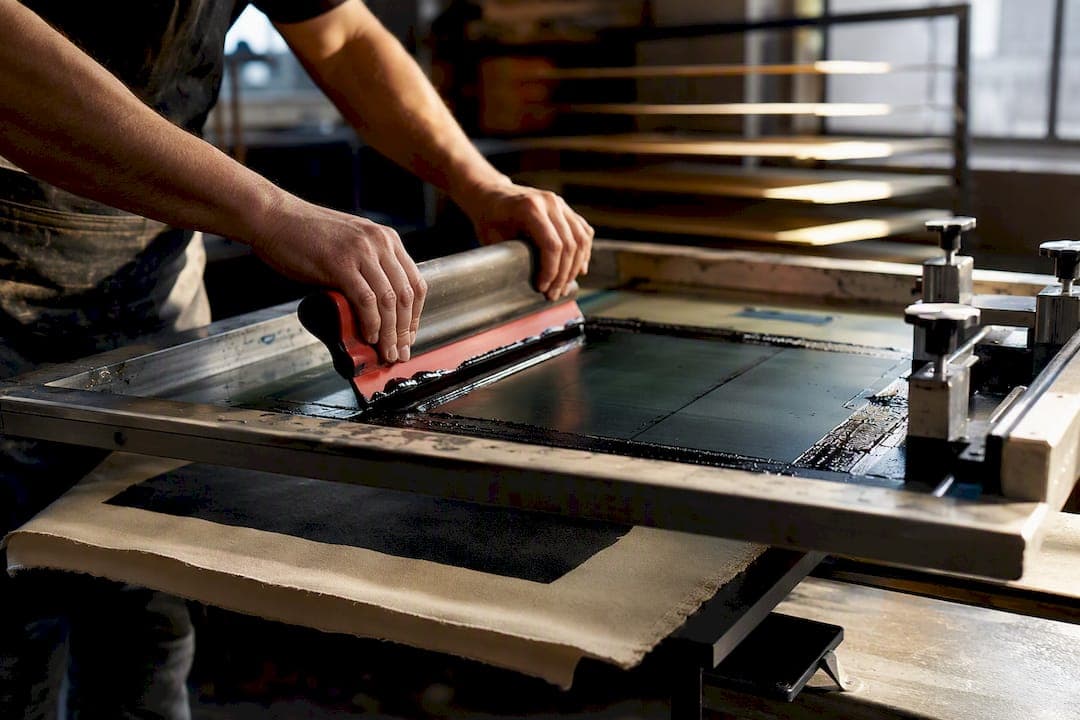
Screen printing pushes ink through a mesh screen, one screen per color, directly into the fabric. The workflow runs in a fixed sequence: a design gets output to film, the film burns an image onto a screen, colors get registered so multiple screens line up, ink gets pulled across with a squeegee, and the print cures under heat to bond permanently.
That per-color screen requirement is why screen printing rewards volume and punishes complexity. A two-color logo needs two screens; a six-color photo-style design needs six, each one costing setup time and money regardless of how many shirts you print.
Ink choice matters too:
- Plastisol sits on top of the fibers, holds bold color well, and cures at a specific temperature that shops must hit consistently.
- Water-based ink soaks into the fabric for a softer hand, popular for 100% cotton and darker garments.
- Discharge ink removes the garment's original dye before depositing color, producing an ultra-soft, almost vintage feel.
Because the ink actually bonds into the fibers rather than sitting as a separate layer, a properly cured screen print tends to move with the fabric instead of against it.
How Heat Press and Heat Transfer Printing Work
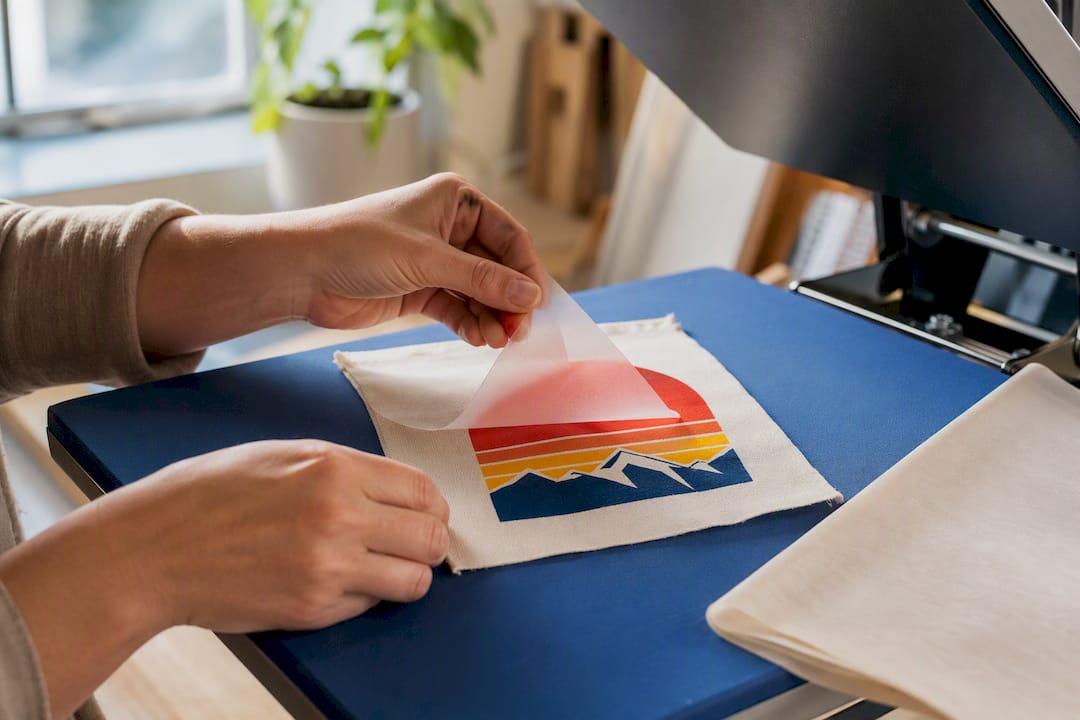
Heat transfer covers several distinct techniques, and lumping them together is where a lot of buyers get confused. HTV (heat transfer vinyl) is cut from colored vinyl sheets and pressed on, layer by layer, for multi-color designs. Digital transfers print a full-color image onto a special paper or film, which then presses onto the garment as one sheet. Sublimation turns ink into gas that permanently dyes polyester fibers, and DTF (direct-to-film) prints designs onto film with an adhesive powder, then heat-presses them onto almost any fabric.
What all four share is the final step: a heat press applies temperature and pressure for a set time to bond the transfer to the shirt.
- Transfers handle photorealistic images and unlimited colors with no added setup cost per color, unlike screen printing's per-screen fees.
- Press types vary by product: flat presses for shirts, cap presses for curved surfaces, mug presses for drinkware.
- Some transfer materials release fumes when pressed, so shops should be transparent about materials and ventilation.
What Actually Differs Between the Two Methods
The practical differences come down to four things you can feel and pay for.
- Hand and feel. Screen ink sinks into the weave for a softer, breathable finish; transfers sit as a thin film or adhesive layer on top, which some wearers notice on stretch fabrics.
- Durability. Well-cured screen prints often survive well past 50 washes, and quality DTF can now match that range, though transfer edges sometimes crack sooner on high-friction spots like elbows.
- Multi-color cost. Every screen-printed color adds a setup fee no matter the order size, while a heat transfer costs roughly the same per piece whether it has one color or fifty.
- Personalization. Names, numbers, and one-off variations within a single order are simple for heat press and painful for screen printing, since you'd need new screens for every variation.
Cost and Break-Even: When Each Method Actually Wins
Screen printing carries fixed setup costs, mainly the screens themselves, that get spread across however many shirts you print. Heat transfer skips most of that setup and charges closer to a flat rate per piece. That structure is exactly why small orders favor transfers and large orders favor screens.
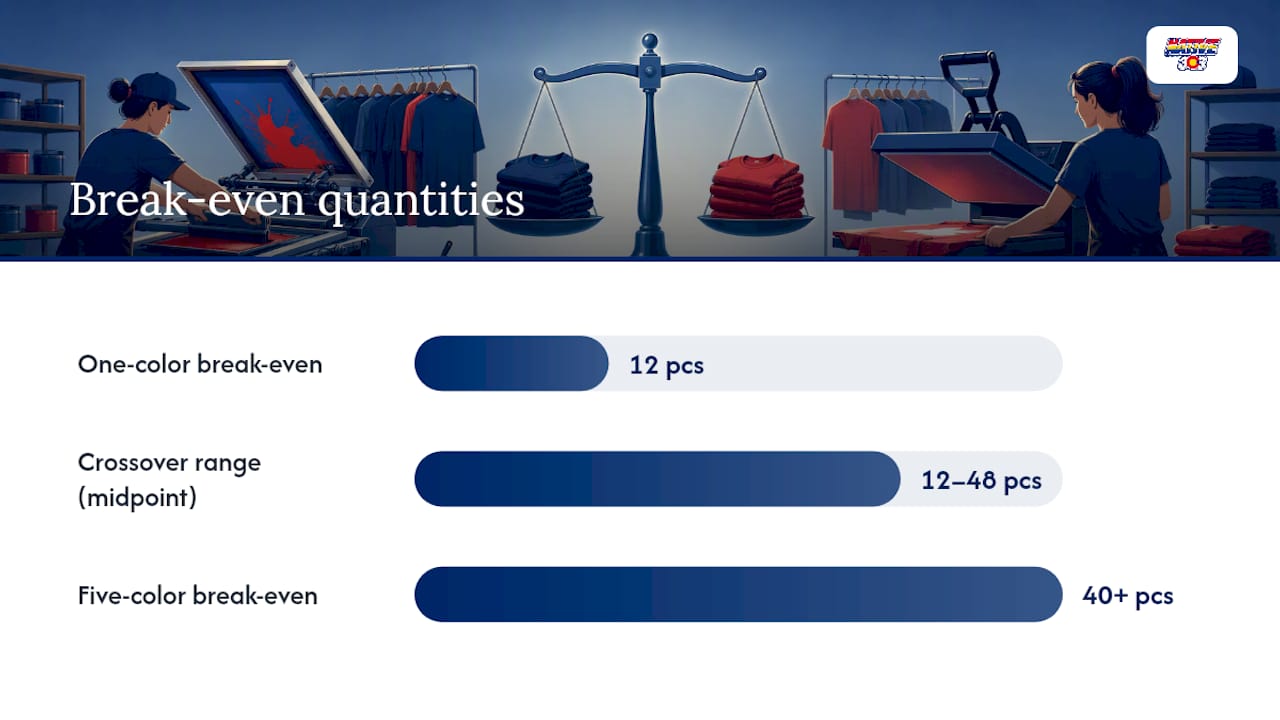
Shops commonly cite a crossover somewhere between 12 and 48 pieces before screen printing becomes the cheaper option, and that range shifts with color count. A one-color logo might break even at 12 shirts; a five-color design might not break even until 40 or more.
At higher volumes, screen printing's per-piece savings become significant once setup costs are absorbed across enough units, which is why bulk event and team orders almost always default to screens once quantities climb past the break-even point. For a deeper look at exactly where that line sits for small Denver-area orders, run-size guidance on screen print versus DTG covers it in more detail.
Fabric Compatibility and When Specialty Effects Matter
Fabric often decides the method before cost even enters the conversation. Polyester and performance blends resist plastisol adhesion and are prone to dye migration, a bleed-through effect that ruins light-colored prints over time. That's why sublimation and DTF are the safer bet on polyester-heavy garments and mixed-material orders, while cotton still favors screen printing for softness and ink bond.
A few fabric-specific rules worth knowing:
- Request low-bleed or dye-blocking inks when printing light designs on 50/50 blends or dark polyester.
- Metallic inks, puff ink, and high-opacity white underbases on dark cotton are screen-printing exclusives that transfers can't fully replicate.
- Mixed-garment orders (tees, hoodies, and totes in one batch) often run smoother with DTF, since one transfer process adapts across fabric types without new setup.
How to Choose: A Four-Step Checklist Before You Order
Work through four variables before you request a single quote:
- Quantity. Under roughly a dozen pieces, lean transfer. Past 48, lean screen. In between, get quotes for both.
- Color and detail. Simple one or two-color logos favor screen printing's durability; photo-style or gradient art favors heat transfer's unlimited color range.
- Fabric mix. All-cotton bulk orders favor screen printing; polyester, blends, or mixed products favor DTF or sublimation.
- Personalization and turnaround. Names, numbers, or rush timelines favor heat press, since transfers can often ship the same day, while screen printing typically needs several business days plus setup.
When you contact a shop, ask these exact questions: What's the setup fee per color? What's your order minimum? What ink type do you use, and at what temperature does it cure? Do you offer a sample or wash-test before full production? What's your lead time?
Pro Tip: Treat vague answers as a warning sign. A shop that can't tell you its curing temperature or won't offer a wash-tested sample often can't guarantee the print will survive more than a few washes.
Native303 Practical Notes: Print Area, Layering, and Care
Print placement changes by garment. A tee's chest print area typically runs smaller than a hoodie's, where pouch pockets and drawstrings shift where a design reads best. Curing matters just as much as placement. Under-cured ink cracks and peels fast, while properly cured prints, washed cold and turned inside out, can hold their color and shape for 50 to 100 washes. Skip the dryer's high heat when you can, and a print outlasts most of the garment around it.
Why a Hybrid Approach Often Makes Sense
Industry experts increasingly treat DTF and screen printing as complementary, not competing, methods. A screen-printed back logo paired with a full-color DTF front graphic is a common combination that plays to each method's strength. Some shops run DTF samples for approval, then switch to screen printing once the design and quantity are locked. If your order mixes a small run with heavy detail, ask any shop for a hybrid quote before assuming you have to pick one method.
Skip the Quote Chase With Native303's Custom Design Route
Getting matching quotes from multiple print shops eats up time most makers and small brands don't have. Native303apparel offers a different path: ready-made tees, sweatshirts, hoodies, tote bags, hats, and frosted pint glasses alongside a custom design service built around Denver and Colorado nostalgia, where the design and print decisions happen together instead of you translating specs between shops.
Working with Native303apparel means describing the piece of Colorado history you want on a shirt and getting design input in return, not just a print estimate. Check the size guide before you order, then browse the current lineup at the Native303apparel store or start a custom request directly.
The Hybrid Bet Most Small Brands Get Backwards
Most makers treat this as a permanent choice: pick screen printing or pick heat press and stick with it. That's the wrong frame. The shops doing this well aren't loyal to a method, they're loyal to whatever wins on a given order, and they quote both before committing.
The bigger mistake is chasing screen printing's durability reputation for orders that will never see the volume needed to justify it. If you're printing eight shirts for a pop-up event, a DTF transfer that lasts 50 washes is plenty of life for a shirt that gets worn a few dozen times before it's retired or replaced anyway. Durability only matters up to the point where the garment's actual lifespan catches up with it.
Where I'd push back on conventional advice: don't let a shop's default method decide your print method. Ask for both quotes, every time, even when you're sure you know which one wins. The break-even math moves too much with color count and fabric to guess reliably.
— Rob
Sources
- Heat Press vs Screen Printing: Which Wins for Your Order? – Arklavo
- Heat Press vs. Screen Print: Which Is Right for Your Business? (Shopify)
- DTF vs Screen Printing: Why both technologies will shape the future - Screen Print Magazine
- Screen Printing vs DTF Badger Screen Printing | Logan, Utah
FAQ
What Lasts Longer, Heat Press or Screen Print?
A well-cured screen print typically outlasts most heat-transfer methods over time, with quality prints surviving 50 to 100 washes. Modern DTF has closed much of that gap and can also reach 50-plus washes, though it may show edge wear sooner on high-friction areas like elbows or waistbands.
Which Is Cheaper, Screen Printing or Heat Transfer?
It depends entirely on quantity. Heat transfer is cheaper for small orders since it has little to no setup cost, while screen printing becomes cheaper once you cross roughly 12 to 48 pieces, depending on how many colors your design uses.
What Are the Disadvantages of Screen Printing?
Screen printing requires a separate screen and setup fee for every color, which makes small orders and highly detailed or photorealistic designs expensive. It also has a slower turnaround, commonly several business days, compared to heat transfer's same-day or next-day capability.
Can I Use a Heat Press for Screen Printing?
No, a heat press and a screen press are different tools for different processes. A heat press applies heat and pressure to bond a pre-made transfer (HTV, DTF, sublimation) to fabric, while screen printing pushes wet ink through a mesh screen directly onto the garment, which then requires its own curing step, sometimes using a heat press for smaller shops without a conveyor dryer.