
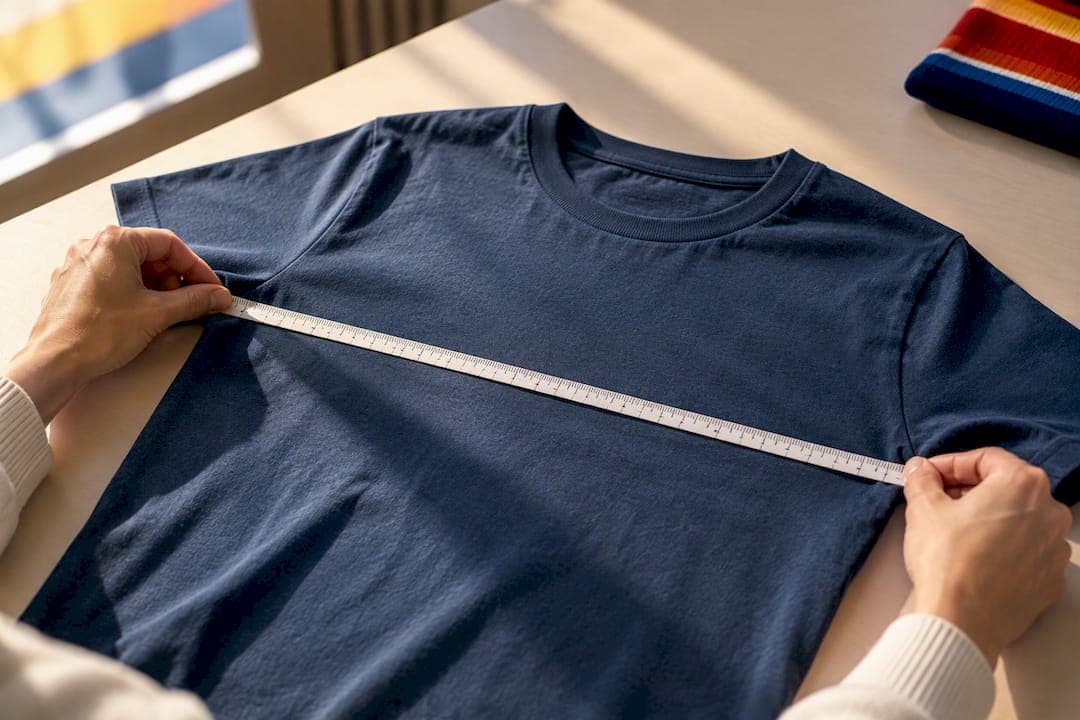
Measure a fitted T-shirt laid flat across the chest, pit to pit, or wrap a flexible tape around the fullest point of your chest. Double the flat width only when the brand's chart lists flat width instead of full circumference. Both methods work, but they answer different questions, and mixing them up is the fastest way to order the wrong size.
TL;DR:
- Measure your chest at the fullest point with a flexible tape, ensuring the tape is snug but not compressing your body.
- Always clarify whether the brand's size chart lists flat width or full circumference to avoid miscalculations.
- Double your flat chest measurement only if the size chart specifies it as chest circumference; do not double if it already lists circumference.
- For online orders, consider fabric shrinkage and fit preferences, especially for natural fibers like cotton.
- When in doubt, compare your body measurement to a well-fitting shirt and use the brand's size guide for accurate sizing.
Table of Contents
- What you need before you measure
- Measure a T-shirt laid flat: pit to pit, step by step
- Measure your body chest circumference, step by step
- How to read a size chart once you have your number
- Common measurement mistakes and a quick verification checklist
- Extra considerations for online orders and tailoring
- Publisher perspective: notes from measuring printed tees
- Check your size before you shop Native303
- Sources
- FAQ
What you need before you measure
Grab a flexible fabric measuring tape, the kind used for sewing, not a rigid metal one. A rigid tape can't curve around your body or lie flat against a shirt without buckling, and that throws the number off.
Work on a flat, rigid surface such as a table or bed with a firm mattress. If you're measuring your own chest, ask someone to help or use a mirror to keep the tape level. Have your phone nearby to log the number right away, since it's easy to forget once the tape comes off.
- Use a flexible fabric tape, not a metal or rigid one.
- Measure over a thin base layer or bare skin, never over a bulky sweater.
- Stand tall, breathe normally, and take the reading mid exhale for consistency.
Measure a T-shirt laid flat: pit to pit, step by step
This is the quickest method when you already own a shirt that fits well and want to buy the same style in a different brand or color.
- Lay the shirt flat on a table or other rigid surface, front side up, and smooth out any wrinkles without stretching the fabric.
- Line up the tape straight across the shirt, about one inch below the armhole seam, and measure from one side to the other.
- Write down this flat chest width, then check the brand's size chart to see whether it lists flat width or full circumference.
- Double the flat number only if the chart calls for circumference; if it already lists flat width, use your number as is.
This "about one inch below the armpit seam" placement comes straight from how manufacturers measure chest width on a garment, and it's the same spot most finished-garment charts reference.
Pit-to-pit is often labeled "half chest" on spec sheets, and that phrase is your clue that doubling the number gets you closer to full circumference, though you should always confirm the chart's own terms before doing the math.
Measure twice and flip the shirt over to check the back side lines up with the front. If the two readings disagree by more than a quarter inch, you probably let the tape sag or stretched the seam while smoothing it.
Pro Tip: Snap a photo of the tape resting on the shirt before you record the number, so you can double-check your read later without remeasuring.
Measure your body chest circumference, step by step
If you don't have a reference shirt, or you're ordering from a brand you've never tried, measure your body directly.
- Wrap the flexible tape around the fullest part of your chest, running it under your arms and across your shoulder blades.
- Keep the tape parallel to the floor all the way around, not angled up or down in the back.
- Pull it snug against your body without compressing your chest, you should be able to slide two fingers underneath.
- Round up to the nearest half inch if your reading falls between two sizes, and note the number.
According to standard body measurement guidance, chest circumference should be taken parallel to the floor, under the arms, and over the fullest part of the chest while standing erect, which is exactly the technique above.
If you're between two chest sizes, let your preferred body length and the fabric weight tip the decision. A heavier cotton tee with less stretch tends to fit closer to your true measurement, so sizing up can feel more comfortable without looking baggy.
How to read a size chart once you have your number
Once you have a measurement, the next question is what to do with it, and that depends entirely on what the chart in front of you is measuring.
Flat width is the shirt laid flat, pit to pit. Garment circumference is that number doubled, an estimate of the shirt's total width around. Body measurement is your actual chest wrapped in a tape. A chart that lists "chest" without specifying which one is the most common source of sizing mistakes, so look for a note or a small diagram before you buy.
A typical set of chest ranges looks like this, based on commonly published shirt measurement charts:
Most brands build in a few inches of ease between your body measurement and the finished garment so the shirt doesn't sit skin tight. That's normal and expected, not a sizing error.
- Match flat width to flat width, and circumference to circumference, never mix the two.
- If you land between two sizes, favor the size that matches your preferred torso length.
- Check the brand's fabric notes, since heavier cotton knits behave differently after washing than lightweight blends.
Common measurement mistakes and a quick verification checklist
A few habits account for most bad-fit returns. Holding the tape too tight compresses the chest and shrinks your number. Measuring too high or too low, above or below the fullest point, skews the reading either way. A twisted tape gives an inaccurate loop, and measuring over a hoodie or heavy sweater adds inches that aren't really there. Confusing flat width with full circumference, then doubling a number that was already circumference, is probably the single most common error.
- Keep the tape flat against your skin or a thin shirt, never twisted or angled.
- Measure at the fullest point of the chest, not higher at the shoulders or lower at the ribs.
- Skip the doubling step if the chart already lists full circumference.
Before you commit to a size, re-measure twice, compare against a second shirt or the brand's own chart, and check body length as your tiebreaker.
Pro Tip: If you're measuring alone, mark the tape's zero point with a piece of tape on your shoulder blade so it stays put while you bring the ends together in front.

Extra considerations for online orders and tailoring
Online shopping removes the chance to try before you buy, so confirm whether the retailer's chart uses flat width or full circumference before you match your number to a size.
Fabric behavior matters too. Some fits run closer to your body measurement, while others add extra ease on top of the standard chart. Check the retailer's shrinkage and wash notes if the shirt is cotton, since natural fibers can shrink after the first few washes and that changes how a borderline size will fit.
- Bring both your body measurement and a well-fitting reference garment when visiting a tailor.
- Ask whether the knit fabric allows for taking in or letting out the chest, since stretch knits behave differently than woven shirts.
- Decide in advance whether you want a closer or looser chest before any pins go in.
Choosing between a classic and relaxed fit often comes down to how much ease you want beyond your raw chest number, not just the size label.
Publisher perspective: notes from measuring printed tees
Printed graphic tees hold their shape and print best when the fit is right from the first order, which is why measuring a favorite tee before buying a new one saves a return almost every time. For readers ordering extended sizes in graphic tees, matching flat width to flat width matters even more, since the margin for error shrinks as sizes get larger.
— Rob
Check your size before you shop Native303
Knowing your exact chest number means you're not guessing between a Medium and a Large when you're ready to order.

Native303 built a size guide specifically so you can match your pit-to-pit or body measurement to the right fit before checkout. Measure a tee you already love, compare it against the chart, and you'll know exactly what to order.
- Browse Tees, Sweatshirts, Hoodies and more once you have your number.
- Need a fit outside the standard chart? Send a custom design request and we'll work with your measurements directly.
Sources
- ASTM D6240/D6240M — Standard Tables of Body Measurements for Adult Male
- How to measure chest for shirt — TailorSizeGuide
- Sizing
- How to measure a t-shirt: A complete guide for online sellers — Printful
FAQ
What chest size should I use for a t-shirt?
Use your actual chest circumference, measured with a flexible tape at the fullest point under your arms, then match it to the brand's chart. If the chart lists flat width instead, compare your flat pit-to-pit measurement directly rather than doubling your body number.
What does a 24 inch chest mean?
A 24 inch reading is unusually small for an adult chest and most often reflects a flat garment measurement on a child's or extra-small shirt rather than a full body circumference. Always check whether the chart you're reading lists flat width or full circumference before assuming what a number like this represents.
Is a 36 inch chest big for a man?
A 36 inch chest typically falls in the small to medium range on most adult men's shirt charts, not large. Fit still depends on the brand's ease and whether the shirt is cut slim or relaxed.
What shirt size is a 42 inch chest?
A 42 inch chest circumference generally lands in the large range on standard adult charts, based on common shirt measurement ranges. If you're between large and extra large, body length and preferred fit should decide.