
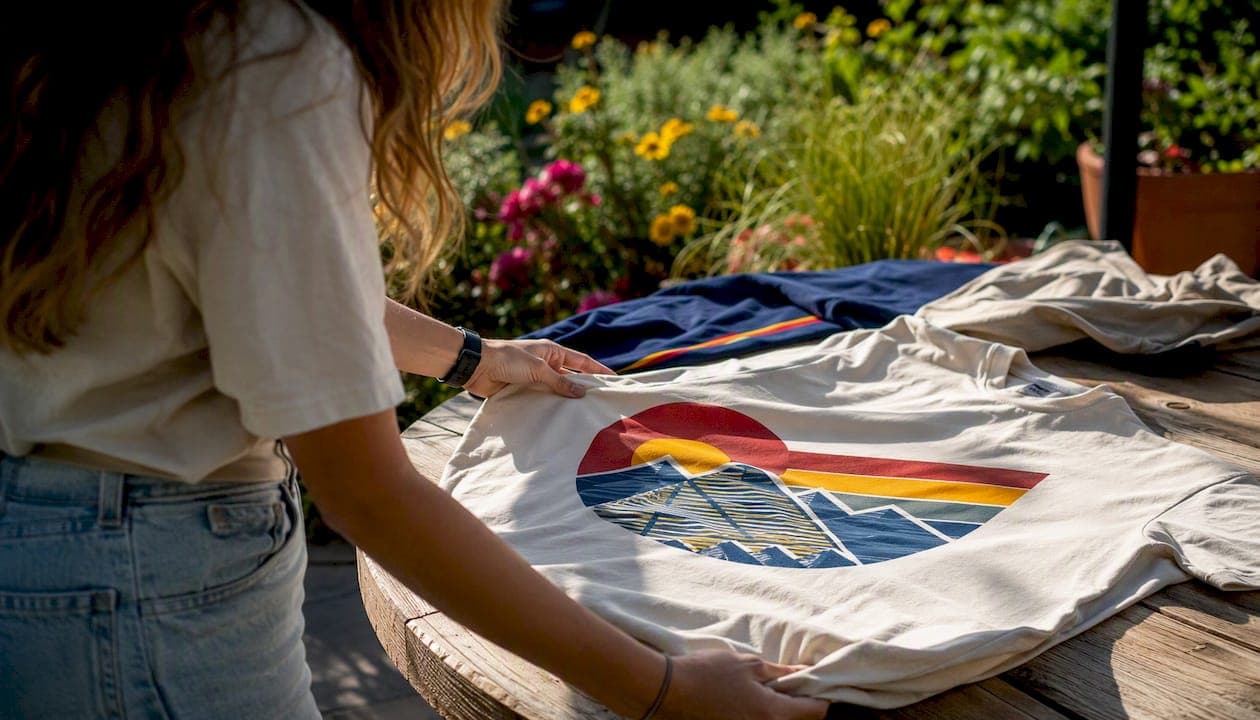
The line that actually separates an independent brand from a mass-market one isn't price or how "cool" the logo looks. It's control: who owns the decisions, how many units get made, and who touches the product between the idea and your closet. Independent brands run small, keep ownership tight, and sell direct or through curated shelves. Mass-market brands run huge, spread ownership across shareholders or private equity, and chase every big-box aisle and marketplace listing they can win.
That single split cascades into everything else. Pricing, production timelines, and even how "authentic" a shirt feels to the person buying it all trace back to scale and control. Research on the "indie" premium found independent firms are consistently rated as warmer and more authentic than larger competitors in categories like apparel. Industry reporting on 2026 fashion trends shows that gap is widening as digital tools make small-batch production viable. Native303apparel, which prints Denver nostalgia designs in limited runs, sits squarely on the indie side of that divide.
Key Takeaways
Independent brands win on authenticity and control, while mass-market brands win on price and reach, and neither model beats the other in every category.
| Point | Details |
|---|---|
| Control is the core divide | Independent brands keep decision-making small; mass-market brands spread it across large organizations. |
| Indie premium is category-specific | Authenticity perception boosts pricing power mainly in hedonic categories like apparel and fragrance. |
| Symbiosis, not pure rivalry | Mass retailers often adopt indie-driven trends within six to eighteen months. |
| Acquisition carries authenticity risk | Independence loss can reduce perceived craftsmanship, especially under foreign ownership. |
| Scaling requires deliberate tradeoffs | Growing wholesale or retail reach almost always means sacrificing margin or control, or both. |
Table of Contents
- What Counts as an Independent Brand?
- What Mass Market Actually Means
- Independent Brand vs Mass Market: Key Differences
- How Indie Brands and Mass Retailers Actually Interact
- Why Consumers Pay More for Indie Brands
- Should a Brand Stay Indie or Scale Up?
- Real-World Patterns: Indie Brands Meeting Mass Retail
- What Native303apparel Has Learned About Indie Apparel
- How the Indie vs Mass Market Divide Developed
- Digital Transformation Changed Both Models
- Sustainability as a Dividing Line
- Why Scaling Is Harder for Indie Brands Than It Looks
- Independent Brand vs Mass Market Explained: What to Know
- Sources
What Counts as an Independent Brand?
An independent brand is one where the founder or a small team still makes the calls, production stays intentionally limited, and the supply chain is short enough to trace. There's no universal SKU cutoff, but the pattern is consistent: fewer products, smaller runs, and a direct line between the person who designed the piece and the person wearing it.
A few signals separate a genuinely independent brand from one just borrowing the aesthetic:
- Catalog size. Indie apparel labels typically run 20 to 200 SKUs a year, not thousands.
- Production runs. Batches often land in the 50 to 500 unit range per design, sometimes smaller for limited drops.
- Founder visibility. You can usually find a name, a face, or a specific story behind the brand, not a faceless "team."
- Distribution focus. Sales run mostly direct-to-consumer or through curated boutiques, not national chains.
- Supply chain transparency. Independent labels tend to disclose where garments are printed or sewn, often locally.
Two quick checks work on almost any site: look for a disclosed production run size, and see if the "About" page names an actual person. Native303apparel's own about page is built around exactly that kind of transparency. For a deeper look at what qualifies, our breakdown of independent streetwear covers the finer distinctions between "indie" and "indie-washed."
What Mass Market Actually Means
Mass-market brands compete on volume and reach, not scarcity. The model depends on producing enough units, fast enough, to fill shelves in hundreds or thousands of locations at once. That means fast-fashion players often run thousands to tens of thousands of SKUs a year, with individual production runs of 5,000 to 50,000 units per style.
Three things make that scale possible:
- Distribution breadth. Big-box retailers, national chains, and large marketplaces carry the product simultaneously across regions.
- Speed to shelf. New styles move from concept to store in as little as two to four weeks, compared to three to six months for small-batch labels.
- Cost structure. Per-unit costs drop sharply at high volume, letting mass brands compete on price rather than exclusivity.
That speed is the whole game. Mass-market brands don't need every design to be original. They need enough new product moving through stores that customers keep coming back, and enough volume that a thin margin per unit still adds up to real profit.
Independent Brand vs Mass Market: Key Differences
Scale changes almost every business decision downstream of it. A brand that makes 200 units of a design faces different math, different risk, and a different relationship with its customer than one making 20,000.
| Dimension | Independent Brand | Mass Market Brand |
|---|---|---|
| Scale / distribution reach | Local, regional, or niche online audience | National or global shelf and marketplace presence |
| Pricing and margins | Higher per-unit price; margins protected via DTC | Lower per-unit price; margins depend on volume |
| Distribution channels | DTC sites, pop-ups, boutique wholesale | Big-box retail, national chains, large marketplaces |
| Branding and marketing | Founder storytelling, community-driven | Broad advertising, mass media campaigns |
| Product innovation / risk | High risk tolerance, frequent experimentation | Lower risk per SKU, relies on proven trends |
| Supply chain / production | Short runs, often local or domestic | Long runs, often offshore, optimized for volume |
| Consumer perception | Perceived as authentic, "warmer" | Perceived as reliable, convenient, consistent |
| Exit paths | Stay independent, license designs, get acquired | Already scaled; growth via new lines or markets |
A few of these dimensions carry more weight than others depending on what you're evaluating. Distribution channel access, for instance, largely determines pricing power: a brand selling direct can charge more per unit because there's no wholesale markup eating the margin. Risk tolerance matters too. Indie labels can test a weird design idea on 100 units without much downside; a mass retailer betting on the wrong trend at 20,000 units eats real losses.
Pro Tip: When a brand markets itself as "small-batch" or "independent," check whether it discloses actual run sizes or supplier names. Vague language like "limited edition" without numbers is often marketing dressed up as scarcity.
How Indie Brands and Mass Retailers Actually Interact
These two models aren't purely adversarial. They feed each other in a cycle that's been documented across the apparel industry for years.
Independent brands function as a testing ground. They take risks mass retailers won't, and when something resonates, the bigger players notice. Industry analysis of brand and media dynamics describes this as a symbiotic relationship, with mass-market brands typically adopting successful indie-driven trends within a six to eighteen month window.
That interaction shows up in a few recurring patterns:
- Exclusive drops. Retailers partner with indie labels on limited collections to add credibility to their assortment without becoming indie themselves.
- Trend scouting. Buyers and merchandisers track small labels specifically to catch what might scale next season.
- Acquisitions. Larger companies buy successful indie brands outright to absorb their design language and customer base.
- Authenticity risk after acquisition. Research on independence loss found that when a firm gets acquired, especially by a foreign multinational, perceived craftsmanship and warmth tend to decline.
That last point matters more than it might seem. The reason a mass retailer wants an indie label in the first place is the authenticity it carries. Squeeze that label into a corporate production system too fast, and the very thing that made it valuable starts to erode.
Why Consumers Pay More for Indie Brands
The "indie premium" is a real, measurable effect, and it explains why two nearly identical t-shirts can command very different prices. Consumers consistently rate independent brands as warmer and more authentic than comparable mass-market products, but that effect isn't universal.
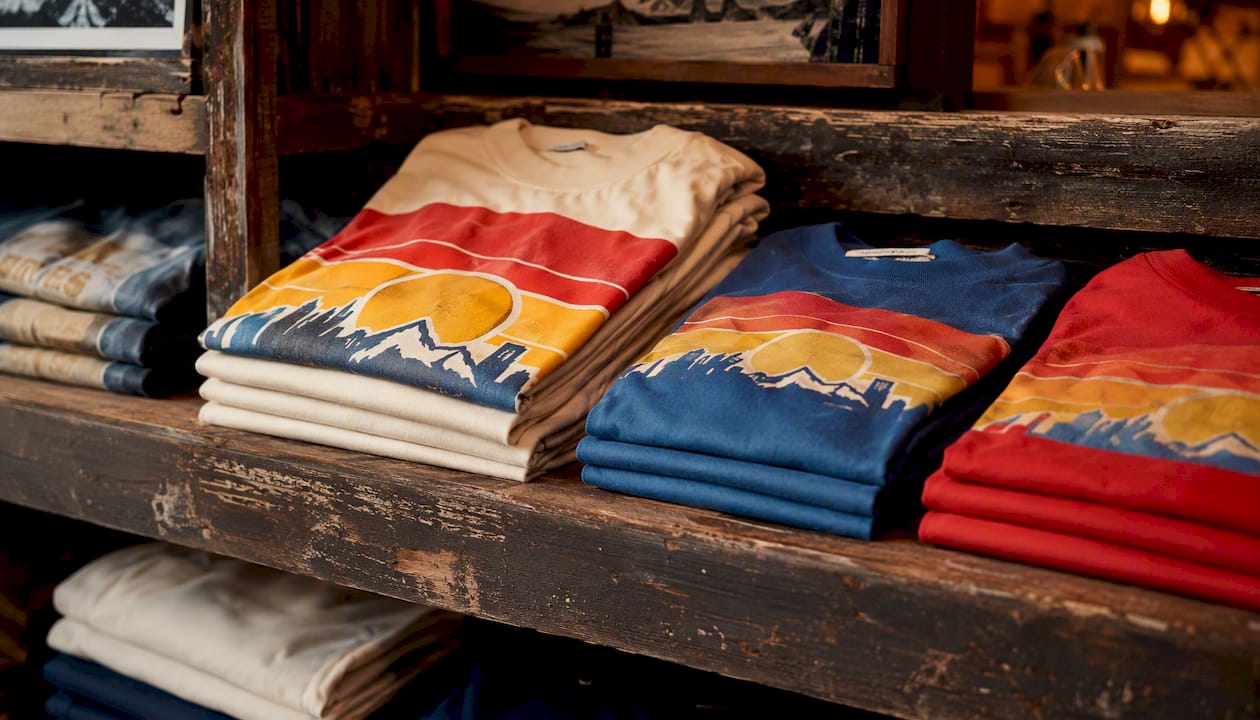
The research is specific about where it applies. Experimental studies conducted across multiple countries with a sample size over one thousand participants found the indie premium is strongest for hedonic categories, things people buy for identity and pleasure, like apparel, fragrance, and design objects. It's much weaker for purely functional goods where a customer just wants the product to work.
That distinction plays out in real purchasing decisions:
- Fashion and fragrance buyers often pay more for a brand they perceive as independently owned.
- The effect strengthens when the brand discloses a specific founder or origin story.
- It weakens sharply for categories like batteries or basic hardware, where craft and identity aren't part of the purchase decision.
Independent fragrance houses are a clean example: brands built on transparency and direct supplier relationships routinely out-loyalty larger competitors despite charging more per bottle.
Should a Brand Stay Indie or Scale Up?
There's no universally right answer here. The decision depends on capital, mission, and how much control a founder is willing to trade for reach. Working through these questions in order tends to clarify things fast:
- What's the mission? If the brand's value is built on scarcity and story, mass distribution can dilute the exact thing customers pay a premium for.
- How much capital is available? Scaling production, inventory, and fulfillment requires real cash. Staying lean requires almost none.
- What do the channel economics look like? Wholesale and big-box distribution mean thinner margins per unit in exchange for volume. DTC keeps margins higher but caps total reach.
- What's the operational capacity? A two-person team can run a 200-unit drop. A 20,000-unit national rollout needs warehousing, logistics, and customer service infrastructure most indie teams don't have yet.
- Who is the target customer, and how many of them exist? Some niches are genuinely small. Forcing mass distribution onto a niche audience just creates excess inventory.
Brands that choose to stay independent typically double down on capsule collections, community-first marketing, and diversified small channels rather than chasing wholesale accounts. Brands that pursue scale usually start with a single retail partnership or a licensing deal before committing to full national distribution, testing the relationship before giving up control entirely.
Real-World Patterns: Indie Brands Meeting Mass Retail
Three patterns show up again and again when independent apparel brands cross paths with larger retail structures, and each carries a different lesson.
- The exclusive drop. An indie label partners with a mass retailer on a limited capsule collection. The retailer gets an authenticity boost; the indie brand gets exposure without giving up its core identity. Lesson: exclusives work best when the partnership stays time-limited and small in volume.
- The full acquisition. A larger company buys an indie brand outright to absorb its customer base and design language. Production often shifts to the parent company's supply chain, and craftsmanship perception frequently declines as a result. Lesson: acquisition can fund growth, but it rarely preserves the original brand's authenticity intact.
- Selective scaling. A brand grows its wholesale footprint carefully while keeping its own site as the primary channel. Margins stay healthier, and the founder retains control over new product decisions. Lesson: scaling doesn't require abandoning independence if the DTC channel stays dominant.
Each pattern maps directly back to the tradeoffs in the comparison table above: control, margin, and perceived authenticity move together far more often than most founders expect going in.
What Native303apparel Has Learned About Indie Apparel
Curating designs around specific Denver landmarks, defunct clubs, and old-school eateries means constantly testing whether a story actually resonates before committing to a print run. That's the core discipline of running an independent apparel brand: nothing gets a large production commitment until small-batch demand proves it out.
A few operational habits matter more than most new apparel founders expect:
- Inventory discipline. Print small, sell out, and let demand dictate the next run rather than guessing at volume upfront.
- Community-first marketing. A design tied to a real, specific place (a shuttered diner, a neighborhood dive bar) earns organic sharing that generic streetwear graphics rarely get.
- Platform choice matters. Social discovery and direct-to-consumer tools have made it possible to reach a genuinely engaged audience without the ad budgets mass brands rely on.
Pro Tip: If you're evaluating whether a local or niche apparel brand is legitimately independent, check whether their storytelling ties to something specific and verifiable, a real address, a real closing date, a real name. Vague nostalgia without specifics is a red flag. You can see this approach applied directly in our piece on community-inspired clothing.
How the Indie vs Mass Market Divide Developed
The split between independent and mass-market apparel isn't new, but the terms of the divide have shifted a few times. Mass production took over the clothing industry through the twentieth century as factories, standardized sizing, and national retail chains made cheap, consistent apparel available at massive scale. That system rewarded volume above almost everything else.
Independent labels existed the whole time, but they were harder to access. Before the internet, an indie brand's reach was capped by geography: a boutique in one neighborhood, a market stall, maybe a regional wholesale account if things went well. Discovery depended on foot traffic or word of mouth, which put a natural ceiling on how far a small brand could grow without giving up control to a bigger distributor.
That ceiling started cracking in the 2000s as e-commerce made it possible to sell nationally from a single small operation. It cracked further once social platforms turned discovery into something a brand could earn directly, without a retail buyer as gatekeeper. What changed wasn't the appeal of independent brands. It was the infrastructure that let them reach people at all. The indie premium in consumer perception has likely always existed in some form; it just used to be inaccessible outside a handful of local markets.
Digital Transformation Changed Both Models
E-commerce didn't just help independent brands. It restructured how both models compete for attention and shelf space.
For indie brands, platform infrastructure and on-demand manufacturing lowered the barrier to launching a new design to nearly zero upfront risk. A founder can now test a design with a small print run, sell through a Shopify storefront, and gauge demand before committing to anything bigger. Social platforms replaced the retail buyer as the primary discovery mechanism, which means a well-told story can outperform a large ad budget entirely.
Mass-market brands adapted differently. Rather than shrinking batch sizes, most leaned into speed, using digital trend data to compress the design-to-shelf timeline even further and using e-commerce to test new SKUs online before committing to physical shelf space. The result is a strange convergence: both models now use digital tools to reduce risk before committing capital, just at wildly different scales.
The practical effect for shoppers is more choice earlier in a trend's life cycle. A design that would have taken years to reach a national audience through traditional wholesale can now go from a single founder's idea to thousands of customers in a matter of months, all before a mass retailer ever notices it.
Sustainability as a Dividing Line
Sustainability claims show up on both sides of this divide, but the operational reality behind them tends to differ sharply. Independent brands' smaller batch sizes create a structurally different waste profile than mass production, simply because overproduction is less financially devastating at a scale of 50 to 500 units than at a scale of tens of thousands.
That doesn't mean every indie brand is automatically more ethical. Small scale makes certain sustainable practices easier to execute, printing to order, sourcing from a single known supplier, avoiding excess inventory, but it doesn't guarantee a brand follows through. Mass-market brands, meanwhile, have started investing in sustainability initiatives too, though the sheer volume of production means even modest per-unit waste adds up fast across millions of units.
The clearest differentiator isn't the sustainability claim itself; it's whether a brand can actually show its supply chain. Independent labels often can name the specific printer, the specific supplier, or the specific city where a garment was made because there are fewer links in that chain to obscure. Mass-market supply chains, by contrast, often span multiple countries and subcontractors, which makes full transparency structurally harder even when a brand genuinely wants it.
Why Scaling Is Harder for Indie Brands Than It Looks
Funding is the first wall most independent apparel founders hit. Mass-market brands scale with access to institutional capital, credit lines, and established relationships with manufacturers who can absorb large orders. Indie founders usually don't have that. Growth has to be funded out of margin, which caps how fast inventory and product lines can expand without taking on debt or outside investors.

Operational capacity is the second wall. A founder running a 200-unit drop can personally handle fulfillment, customer service, and quality control. Scale that to 5,000 units and suddenly you need warehousing, a fulfillment partner, and a support team, infrastructure most indie brands haven't built and can't build overnight.
Manufacturing relationships compound both problems. Large factories are optimized for volume orders and often won't take on small runs at competitive per-unit rates, which pushes indie brands toward smaller domestic printers or on-demand services that carry higher costs per piece. That's part of why the indie premium in pricing isn't just marketing. It reflects real, unavoidable cost differences at small scale.
The brands that navigate this well tend to grow deliberately: expanding one channel at a time, testing wholesale in small quantities before committing, and resisting the pressure to match a mass competitor's SKU count instead of playing to the strengths that made them independent in the first place.
Independent Brand vs Mass Market Explained: What to Know
The conventional wisdom treats "indie" as a purity test, as if the moment a small brand takes a wholesale deal or licenses a design, it's sold out. That framing misses what the research actually shows: the indie premium isn't about staying tiny forever. It's about maintaining traceable control and a real story, which a brand can often preserve even while growing selectively.
Where most guides get this wrong is treating scale as the enemy. Scale isn't the problem. Losing the ability to explain who made something and why is the problem. A brand can add a wholesale account or a licensing deal and keep every bit of its authenticity, provided the founder still controls the story and the product decisions.
If you're evaluating a brand as a shopper, prioritize verification over vibe: check for a named founder, a disclosed production process, and a specific story you can fact-check. If you're a founder weighing whether to scale, protect the story before you protect the SKU count. Volume is replaceable. A real, specific origin story isn't.
Sources
- The “Indie” Premium: How Independent Firms Create Product Value across Cultures
- The Rise of Independent Fashion: Why Brands Are Winning in 2026
- Why Small-Batch Independent Apparel Matters — The Economics of Indie B – Curated Sense
- Why Independent Fragrance Brands Are Winning Right Now – MAIR