
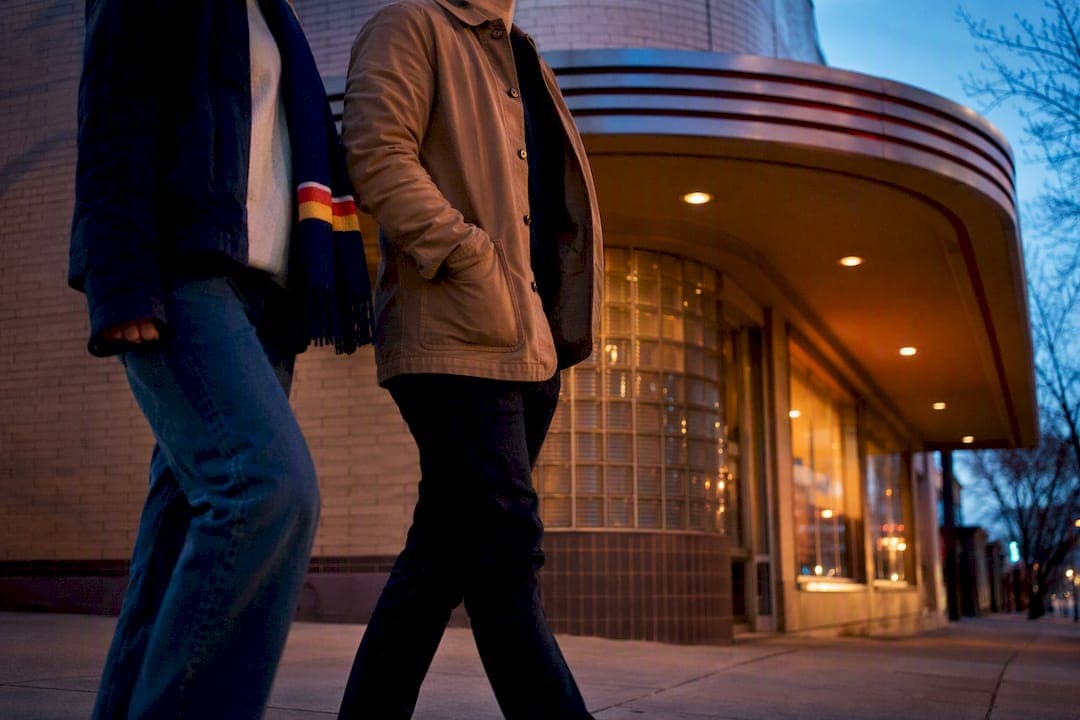
The best route to authentic historic Denver eateries apparel is buying retro-styled, locally minded pieces from specialists like Native303apparel instead of generic vintage retailers. Look for understated tees, hoodies, and small collectibles built around real Denver landmarks. Three things separate the good stuff from novelty junk: design authenticity, wearable silhouettes, and quality production that holds up after twenty washes.
TL;DR:
- Authentic Denver-inspired apparel should feature design cues like neighborhood nicknames, map outlines, and era-specific typography that only locals recognize.
- Quality matters, with a focus on fabric weight and crisp prints that withstand multiple washes, especially for limited-run, provenance-documented pieces.
- Apparel formats should match the venue type: simple tees for diners, bolder graphics for drive-ins, and minimalist designs for milestone venues, to maintain authenticity.
- Buying from sellers like Native303apparel with clear provenance details, accurate sizing, and limited editions enhances the product’s meaningfulness and resale value.
- Nostalgia apparel resonates mainly because it signals local memory and history, functioning as a subtle social badge for Denver residents of all ages.
Table of Contents
- Top Styles and Formats: What to Buy and Who They Suit
- How to Spot Genuinely Denver-Inspired Designs
- Styling and Gifting Ideas for Denver Nostalgia Apparel
- Why Nostalgia Apparel Resonates So Deeply With Denver Natives
- Denver's Lost Eateries That Still Shape Local Identity
- A Quick Timeline of Denver's Culinary History for Design Inspiration
- What the Architecture and Culture of Old Denver Eateries Bring to Design
- Matching Apparel Styles to Different Eatery Themes
- Where to Buy: Shopping Native303apparel's Denver Collection
- Why These Pieces Matter: An Editorial Take
- Sources
- FAQ
Top Styles and Formats: What to Buy and Who They Suit
Not every format fits every buyer, and that matters more than most shoppers realize. A grandparent who remembers eating at a since-closed downtown diner wants something different from a granddaughter buying a gift for that same grandparent.
Here's how the main product categories break down for Denver natives shopping this category:
- Short-sleeve tees: The easiest entry point and the easiest gift. Look for soft-hand cotton blends that don't feel stiff or plasticky against the skin, since a scratchy print kills repeat wear fast.
- Hoodies and crewneck sweatshirts: A cooler-season staple, especially popular with collectors and older natives who want something they'll actually reach for in October. Midweight fleece with a subtle, restrained print reads as a real wardrobe piece instead of a costume.
- Hats and caps: A lower-price way to start a collection. Embroidered logos or woven labels are the tell for better construction; a flat screen-printed patch on a cheap cap usually peels within a season.
- Totes, pint glasses, and small collectibles: Better suited to home display or event gifting than daily wear. These formats work well for limited-run or commemorative designs tied to a specific closed venue, since buyers treat them more like keepsakes than clothing.
Fabric weight and print resolution matter more than most shoppers think to check before buying. A design that looks crisp on a screen can turn muddy on fabric if the printer skips a proper pre-treatment step, and a limited-run piece loses its whole point if the ink cracks after a few washes.
How to Spot Genuinely Denver-Inspired Designs
A lot of "vintage Denver" apparel floating around online has nothing to do with Denver beyond the word printed on the shirt. Here's a checklist that separates the real thing from a dropship template with a city name slapped on it.
- Check the design cues first. Trust minimalist line art, real neighborhood nicknames, map outlines, coordinates, and era-specific typography. The best pieces include a discreet detail only someone who grew up here would catch.
- Look for production provenance. A limited run or numbered edition, a short designer's note about the actual venue that inspired the design, and clear fabric and print specs on the product page all signal a seller who did real homework.
- Read the service details. A transparent sizing chart, a clear shipping and return policy, and reviews written by other Colorado buyers (not generic five-star fluff) tell you the seller has sold to people like you before.
- Watch for red flags. Vague "vintage" language with zero specific Denver references, blurry or pixelated prints, and missing sizing information are the three fastest ways to spot a mass-produced knockoff.
Retro-styled pieces work because they connect present-day wear to a genuinely remembered past. Research on retro-styling finds that consumers rate an object as more authentic when it carries real prior personal relevance, not just a generic old-timey look. A shirt referencing an actual defunct Denver venue works precisely because it means something specific to the wearer.
Pro Tip: If a product page can't tell you which specific building, block, or era inspired the design, assume it's a template. Real provenance is usually one sentence, but sellers who did the research always include it.
Styling and Gifting Ideas for Denver Nostalgia Apparel
Nostalgia apparel earns its closet space when it fits real occasions instead of sitting folded in a drawer. A few ways to actually wear and gift this stuff:
- Everyday styling: Pair a subtle vintage tee with dark denim or layer it under an open blazer for something that reads put-together rather than costume-y, no matter your age.
- Seasonal swaps: Reach for hoodies and sweatshirts once Colorado's cold months hit, and switch to lighter tees for summer patio hangs or a Washington Park meetup.
- Gift occasions: Family reunions, anniversaries, neighborhood block parties, and holidays all call for different formats. A hat works for a casual cousin; a numbered limited-run hoodie fits a milestone gift for a parent or grandparent who actually remembers the place on the shirt.
- Care matters for print longevity: Wash inside out on cold, skip the high-heat dryer cycle in favor of low heat or air drying, and fold limited-run pieces carefully rather than jamming them in a drawer to protect the print over years of wear.
Sizing gets easier with a real chart in hand instead of guessing off a generic S/M/L label, especially when buying for someone else.
Why Nostalgia Apparel Resonates So Deeply With Denver Natives
Nostalgia isn't just sentimentality. Researchers describe it as functioning through social connectedness, and it measurably raises how people evaluate a product once that product carries genuine past relevance to them, according to a scholarly review of nostalgia and consumer behavior. That's a fancy way of saying: a shirt referencing a restaurant you used to eat at as a kid does something a plain shirt never will.
For Denver natives specifically, the pull runs deeper than fashion. This city has changed fast. Neighborhoods have been rebuilt, family-run spots have closed, and skylines have shifted enough that longtime residents sometimes drive past a block and can't picture what used to be there. Wearing a design tied to a place that no longer exists is a small act of memory-keeping.
It also works socially. Locals report that nostalgia shirts function as icebreakers, sparking recognition and conversation with strangers who clock the reference instantly, based on apparel resale market analysis. That's a different kind of value than most clothing offers. A generic graphic tee says nothing about you. A shirt referencing a diner that closed in the 1980s tells a specific stranger, instantly, that you're from here, and probably from a particular era of here.
That combination, personal memory plus social signal, is why this category keeps growing well past younger demographics into buyers in their 60s, 70s, and beyond.
Denver's Lost Eateries That Still Shape Local Identity
Denver's history is full of restaurants, diners, and drive-ins that shaped the city's identity long after they shut their doors. Old neighborhood diners with counter service and regulars who came in daily. Drive-in spots that defined a whole generation's Friday nights. Downtown institutions that hosted anniversaries, graduations, and family Sunday dinners for decades before closing.
These aren't obscure references. They're the kind of place where three generations of one family might have eaten, where a first date happened, or where a grandfather worked a summer job as a teenager. That layered history is exactly why design cues referencing them land differently than a generic "Colorado" or "Denver" graphic. A restrained two-color design combined with a real map coordinate and a short tagline tends to perform best for wearability across the full range of ages who might buy it, from a 35-year-old transplant's kid to a 90-year-old who remembers the original storefront.
The specifics matter more than the sentiment. A design built around one particular vanished venue, its neighborhood, its era, and maybe a signature dish or detail, carries far more weight than a broad "old Denver" theme. That specificity is also what separates a seller who researched the city's food history from one who bought a template and swapped the city name.
A Quick Timeline of Denver's Culinary History for Design Inspiration
Understanding when things happened helps explain why certain design eras and typography choices feel more authentic than others.
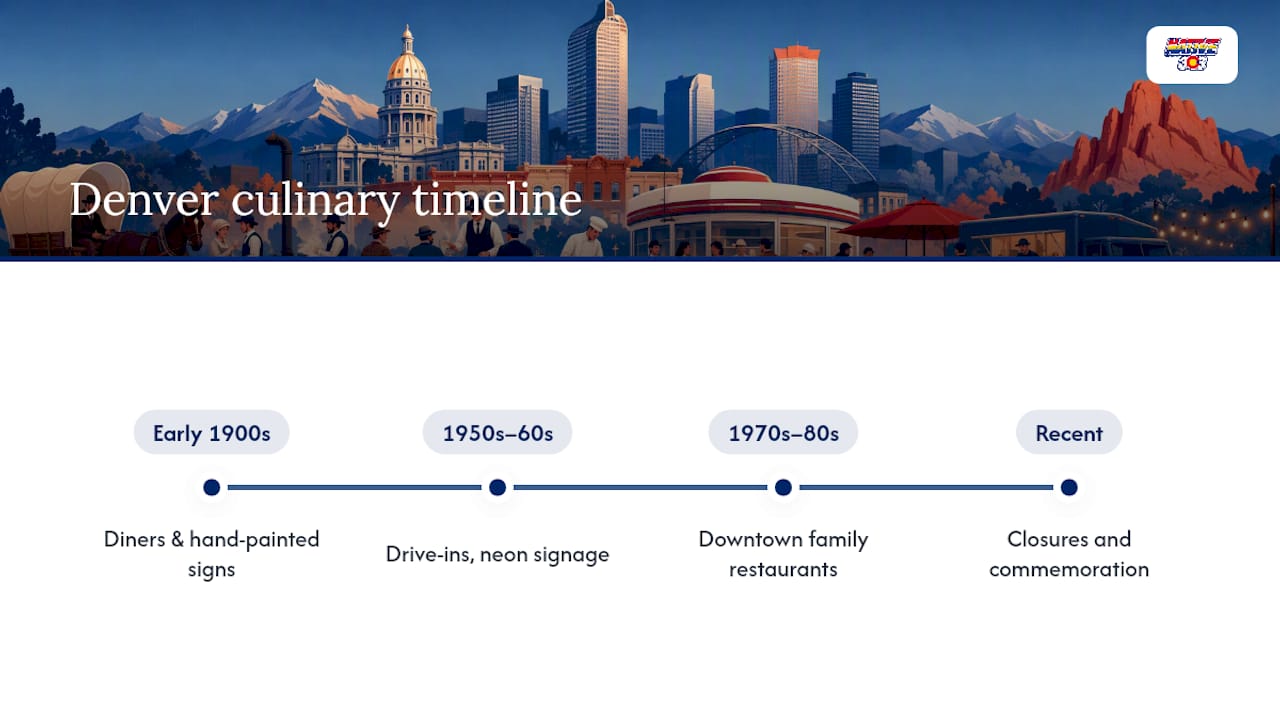
Early to mid-20th century brought the first wave of Denver's neighborhood diners, soda fountains, and family-run cafes, many clustered around what were then streetcar routes and downtown commercial blocks. Typography from this stretch leaned toward hand-painted signage and simple block lettering, which shows up now in apparel as bold serif or vintage script fonts.
The postwar boom years through the 1950s and '60s brought the drive-in era: car culture, neon signage, and roadside eateries that became teenage hangout spots across the metro area. This is the period most associated with bright, graphic-heavy design, the kind of look people picture when they say "retro."
The 1970s and '80s saw a wave of downtown institutions and family restaurants that became anchors for milestone events, the places where people held graduation dinners and retirement parties. Design references from this era tend toward warmer, earthier palettes and simpler wordmarks.
More recent decades have brought a steady stream of closures as rent, redevelopment, and changing tastes reshaped Denver's dining map. Each closure adds another chapter locals want commemorated, which is part of why this apparel category keeps expanding rather than running out of material.
What the Architecture and Culture of Old Denver Eateries Bring to Design
The physical character of these lost venues, not just their names, is where a lot of the best design details come from. Neon signage, mid-century diner architecture, hand-painted window lettering, and roadside marquee typography all carry a distinct visual language that translates cleanly onto fabric.
Cultural rituals mattered just as much as buildings. Sunday family dinners, post-game burger runs, counter service where the same waitress knew your order by heart. These routines are what people are actually remembering when they see a design referencing the physical place. Effective neighborhood-nostalgia merchandise translates those cultural cues, local food habits, weekend routines, specific landmarks, into subtle design elements like coordinates and minimal line art rather than literal illustrations, according to a design guide on regional nostalgia merchandise.
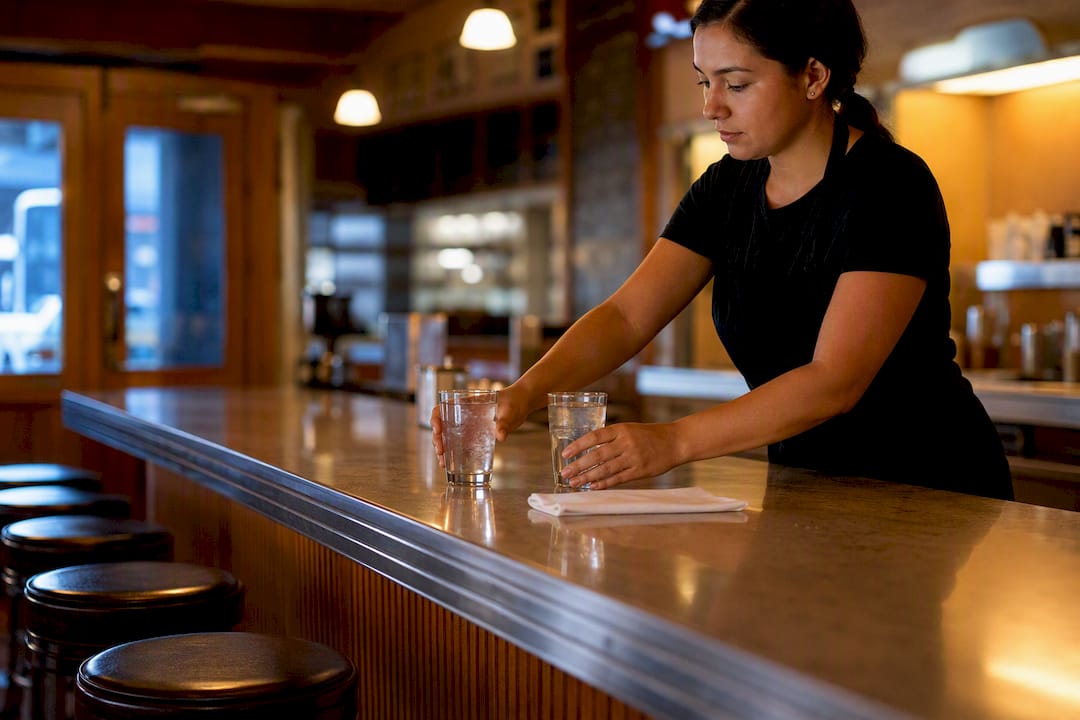
That's also why insiders tend to prefer understated aesthetics over loud, cartoonish graphics. Simple line art and coordinates read as something you'd actually wear out in public, not a novelty item you'd feel self-conscious in at a family dinner. A look at design preferences in regional nostalgia apparel backs this up: restraint sells better long-term than maximalism in this specific category.
Architectural details, a distinctive roofline, a marquee font, a specific neon color, often carry more emotional weight in a design than the restaurant's actual name spelled out in big letters.
Matching Apparel Styles to Different Eatery Themes
Different types of historic venues call for different design and product treatments, and mismatching them is a common mistake among sellers who haven't shopped this category as a local.
Diners and coffee shops pair well with simple typographic tees, often just a wordmark and a small icon, in soft cotton blends suited to daily wear. These were everyday places, so the apparel should feel everyday too.
Drive-ins and roadside spots suit bolder graphic treatments, brighter palettes, and hoodie or jacket formats that can carry a slightly bigger design without looking busy. The era itself leaned graphic, so the apparel can lean into it a little more.
Formal or milestone-event restaurants, the places that hosted anniversaries and graduations, work best as minimalist line art on premium fabric, maybe a numbered limited-run piece rather than a mass tee. The emotional weight of these venues calls for a quieter, more collectible treatment.
Neighborhood taverns and family-run spots fit tote bags, pint glasses, and casual caps well, since these were community gathering places rather than special-occasion destinations. The format should feel as unpretentious as the original venue was.
Matching the format to the memory is really the whole trick. A loud graphic on a shirt honoring a quiet family diner feels off. A minimal line drawing for a rowdy drive-in misses the point too.
Where to Buy: Shopping Native303apparel's Denver Collection
Some apparel sellers build their catalog around turning lost Denver venues, restaurants, clubs, and shops alike, into wearable pieces that actually get worn instead of displayed once and forgotten. Collections often include tees, hoodies, hats, totes, and pint glasses, plus may offer custom requests for specific designs, colors, or sizes when something isn't already in stock.
The buying process is straightforward, but a couple of steps save you a return. Check the size guide before ordering, since fit runs differently across tee, hoodie, and jacket styles. Read the product story on each listing. Some sellers include a short note on the venue that inspired the design, which is the kind of provenance detail this guide recommends looking for anywhere you shop. Note whether a piece is part of a limited run, since numbered editions referencing specific closed venues tend to hold their meaning, and their value, better than open-ended reprints.
The category itself is bigger than a niche hobby. The global resale and nostalgia apparel market topped $204 billion in 2024, proof that retro-styled, personally meaningful clothing is a mainstream buying pattern, not a fringe one. If you're ready to browse, start with the full Native303apparel collection and pull up the size guide before you check out.
Why These Pieces Matter: An Editorial Take
The design cues that work best in this category aren't loud. A coordinate, a discreet wordmark, a typography choice that only clicks if you actually remember the place. That's not an accident. It's the whole point.
I think of a well-designed Denver nostalgia shirt as a kind of bat signal. Most people walking past have no idea what it means. But the person who used to eat lunch at that counter every Tuesday sees it across a grocery store and does a double take. That reaction is worth more to the wearer than the shirt's price tag, and it's also the reason generic "Colorado" merchandise will never carry the same weight as something built around a specific, real, vanished place.
Native303apparel's catalog leans into that specificity rather than away from it, which is the right call in a category where vague sentiment sells worse than sharp, local memory.
— Rob
Sources
For more on the research behind nostalgia-driven buying, see the retro appeal study from Emory's Goizueta Business School and Native303apparel's own blog for deeper looks at specific Denver design stories.
- The Vintage Boom: Giving Consumers the Nostalgia They Crave | Working Knowledge
- Review: nostalgia and consumer behavior (PubMed)
FAQ
How Do I Find My Right Size in Nostalgia Apparel?
Check the Native303apparel size guide before ordering, since fit varies across tee, hoodie, and jacket cuts, and sizing up is common for a relaxed, everyday fit.
How Can I Tell if a Design Is Genuinely Denver-Inspired?
Look for specific local references, minimalist line art, real coordinates, era-appropriate typography, and a short provenance note about the actual venue, rather than vague "vintage Denver" language with no concrete details.
What Product Format Makes the Best Gift?
Hoodies work well for cooler-season gifts to older relatives, while hats and totes make lower-cost options for casual gifting; limited-run pieces suit milestone occasions like anniversaries or reunions.
Are Limited-Run Designs Worth the Higher Price?
Numbered or limited editions tied to a specific closed venue tend to hold meaning and resale value better than open reprints, especially when the listing includes a provenance note about the venue.