
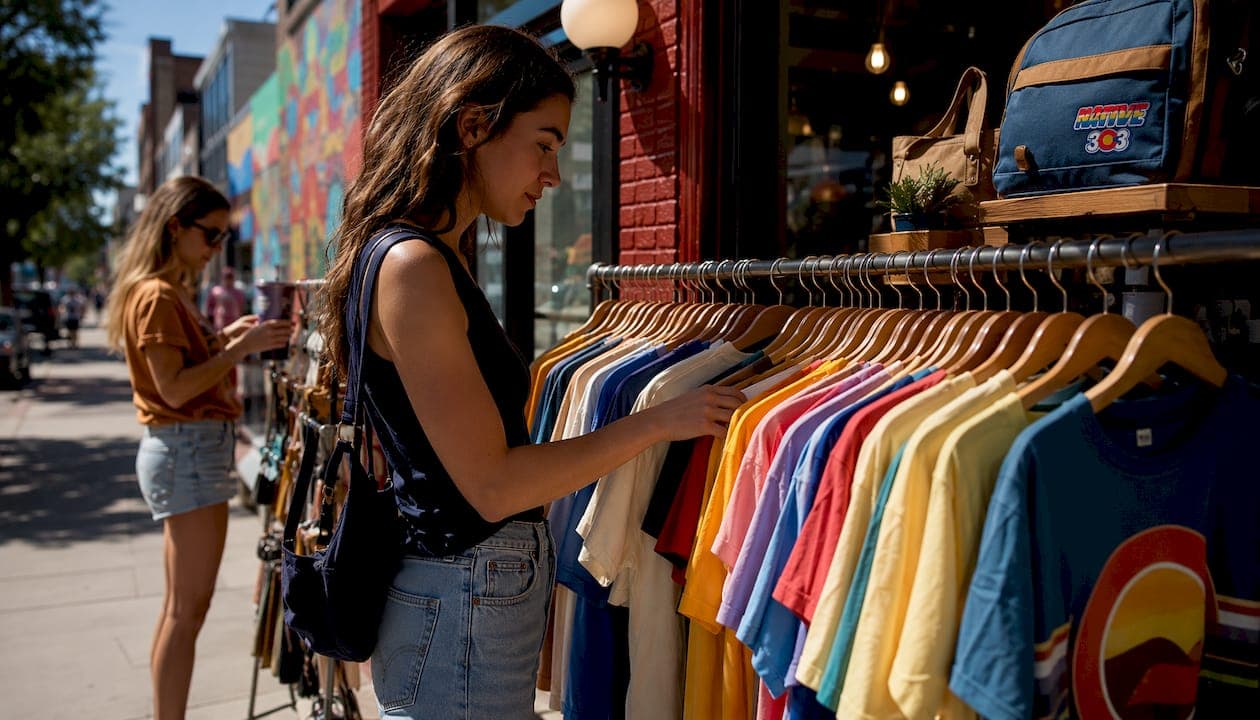
The best place to find iconic Denver eatery apparel is through local brands that specialize in culturally grounded design, with Native303apparel leading that space. These pieces go beyond generic city pride. They pull from real Denver history, specific restaurant memories, and the visual language of Colorado itself. Here's where to start:
- Search for brands built around Denver's culinary and cultural heritage, not just its skyline
- Look for apparel referencing specific eateries like the Denver Drumstick, a beloved local chain famous for fried chicken and its ceiling-mounted toy train
- Check both local retail spots and authentic online stores using on-demand production to reduce overproduction
- Read brand blog content to gauge how deep the cultural knowledge actually runs
- Prioritize pieces with genuine Denver visual motifs over generic "Colorado" text prints
Table of Contents
- What makes authentic Denver eatery apparel look different?
- How Denver's history shapes the designs you see on these shirts
- How to spot and choose genuine Denver-inspired eatery clothing
- Which Denver eateries have inspired apparel collaborations?
- Where to buy authentic Denver eatery apparel
- What style trends define Denver eatery apparel right now?
- What should you expect to pay for Denver eatery apparel?
- Native303apparel brings Denver's eatery culture to your wardrobe
- Key Takeaways
What makes authentic Denver eatery apparel look different?
Genuine Denver eatery-inspired clothing carries construction details you can feel and design choices you can trace back to real places. On the fabric side, look for midweight 100% cotton with tubular knit construction, reinforced ribbed collars, and side-seamed builds that hold their shape after repeated washing. These aren't decorative specs. They reflect the active, outdoor lifestyle Denver locals actually live.
The design language matters just as much. Authentic pieces use the bold primary colors of the Colorado and Denver flags, creating instant visual recognition without relying on text. Architectural silhouettes and heritage patterns do the cultural work that words can't, communicating identity across generations and language backgrounds. Retro varsity styling ties the whole look together, connecting Denver's founding era to its current energy.
- Bold flag-derived color palette: red, yellow, and blue
- Non-linguistic motifs: building silhouettes, geometric heritage patterns
- Ring-spun cotton for crisp, lasting print quality
- Side-seamed construction for a better fit than tubular alternatives
- Retro varsity aesthetic that reads as both nostalgic and wearable today
Pro Tip: Check the neck label. Tear-away labels and Oeko-Tex certification are reliable signals that a brand invested in quality materials, not just a good-looking graphic.
How Denver's history shapes the designs you see on these shirts
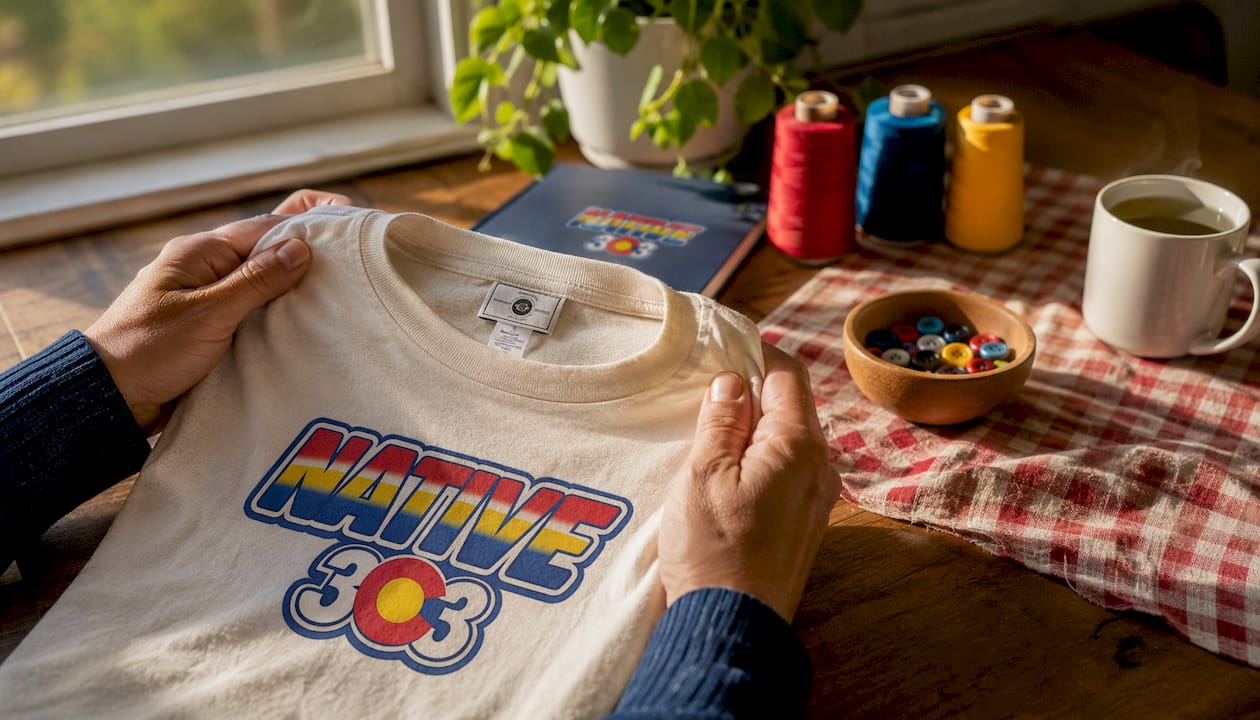
Denver's founding in 1858 at the confluence of Cherry Creek and the South Platte River gave the city a specific origin story that still shows up in retro apparel design. The "Mile High, Est. 1858" framing appears across dozens of graphic tees because it anchors local pride to something concrete and verifiable. That specificity is what separates Denver heritage apparel from generic mountain-state merchandise.
Restaurant culture adds another layer. The Denver Drumstick, with its fried chicken and the toy trains running along ceiling tracks, is exactly the kind of local institution that translates into apparel with genuine emotional weight. Design cues from the Denver 1976 Olympic bid materials, created by the firm Unimark, brought bold typography and geometric motifs into Denver's visual vocabulary decades before they became fashionable again. That lineage runs directly into today's retro eatery apparel.
- Denver's 1858 founding at Cherry Creek and South Platte River
- Denver Drumstick restaurant as a cultural design reference
- Denver 76 Olympic bid graphics: Helvetica, simplified geometry, striking color
- Colorado and Denver flag colors as the primary design palette
- The intersection of Rocky Mountain outdoor culture with Denver's tech economy
How to spot and choose genuine Denver-inspired eatery clothing
Authentic pieces reference real, traceable Denver history rather than vague "mountain vibes." A shirt that names a specific neighborhood, eatery, or founding date is a stronger cultural artifact than one that just says "Colorado." The Native303apparel blog breaks down exactly what construction and design details to look for when evaluating authenticity.
On-demand production is another marker worth understanding. When a brand makes each item after purchase rather than holding bulk inventory, it signals commitment to quality over volume. Delivery takes a bit longer, but the tradeoff is a piece made specifically for you with no warehouse overstock cutting corners.
- Verify specific cultural references: named eateries, founding dates, real neighborhoods
- Check fabric specs: ring-spun cotton, side-seamed construction, reinforced collars
- Confirm on-demand or small-batch production methods
- Avoid designs that swap Denver specifics for generic mountain or outdoor imagery
- Use the size guide before ordering to get the right fit on the first try
Which Denver eateries have inspired apparel collaborations?
The Denver Drumstick stands out as the most documented example, a fried chicken chain whose ceiling train tracks made it genuinely unforgettable. Pieces referencing it appear across multiple apparel brands because the restaurant left a strong enough cultural impression to outlast its physical locations. LoDo's historic Larimer Square district and the RiNo Art District have also inspired neighborhood-specific graphic tees that function more as wearable local history than simple souvenirs. Denver's culinary scene, from its early frontier-era saloons to its mid-century diners, gives designers a rich archive to pull from.
Where to buy authentic Denver eatery apparel
Online is the most reliable channel for finding culturally specific pieces. Native303apparel's store at native303apparel.store focuses entirely on Denver eatery and cultural heritage designs, with on-demand production ensuring each piece is made to order. For shoppers who want to browse in person, local Denver boutiques in neighborhoods like RiNo, Capitol Hill, and Highland carry independent apparel brands with genuine local roots. Avoid large chain retailers for this category. Their Denver merchandise tends toward generic skyline prints with no connection to actual local history.
What style trends define Denver eatery apparel right now?
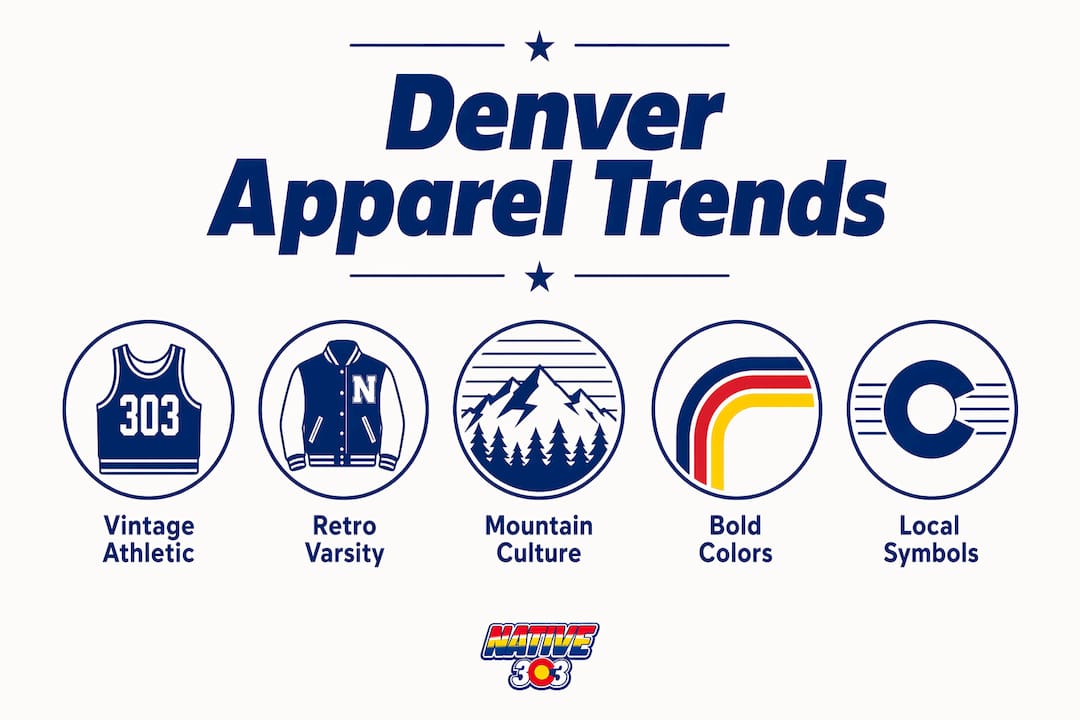
Retro varsity and vintage athletic aesthetics dominate the current category, blending Denver's founding-era identity with the active lifestyle the city is known for. Clean geometric forms are replacing cluttered graphic designs, reflecting the same Colorado Lifestyle aesthetic that shapes Denver's broader design culture. Earthy tones occasionally appear, but the flag-derived primary palette of red, yellow, and blue remains the most recognizable and culturally grounded choice. Neighborhood-specific designs, pieces tied to Capitol Hill, Whittier, or LoDo rather than just "Denver," are gaining ground as shoppers look for more personal cultural connections. The Denver eatery fashion conversation has shifted from nostalgia alone toward wearable cultural documentation.
What should you expect to pay for Denver eatery apparel?
Quality Denver eatery-inspired tees typically run in a moderate price range, with premium ring-spun cotton pieces and licensed or artist-designed graphics costing more. Sweatshirts and heavier pieces are generally priced higher than tees. On-demand production adds a few days to delivery but keeps prices honest since there's no bulk inventory markup passed to the buyer. A $35 shirt made to order from a brand with genuine local expertise is a better value than a $20 generic print with no cultural grounding.
Native303apparel brings Denver's eatery culture to your wardrobe
Native303apparel was built specifically for shoppers who want Denver apparel with real cultural depth, not just a city name on a chest. Every design pulls from the memories of metro Denver's iconic eateries, clubs, and shops, rendered in the bold red, yellow, and blue palette that ties directly to Colorado and Denver's visual identity. The brand uses on-demand, sustainable production so each piece is made after you order it, with quality materials that hold up to Denver's active lifestyle. Browse the full collection at native303apparel.store and find the design that connects to your Denver.
Key Takeaways
Authentic Denver eatery apparel combines traceable local history, quality construction, and the bold flag-derived color palette that defines Colorado's visual identity.
| Point | Details |
|---|---|
| Design authenticity markers | Look for named eateries, founding dates, and flag-derived colors rather than generic mountain imagery. |
| Construction quality | Ring-spun cotton, side-seamed builds, and reinforced collars signal genuine craftsmanship. |
| Cultural depth | Denver's 1858 founding, the Denver Drumstick, and the 1976 Olympic bid graphics are the real design sources. |
| On-demand production | Made-to-order pieces take longer to ship but reflect a commitment to quality over bulk inventory. |
| Native303apparel | Specializes in Denver eatery and cultural heritage designs with on-demand production and authentic local inspiration. |