
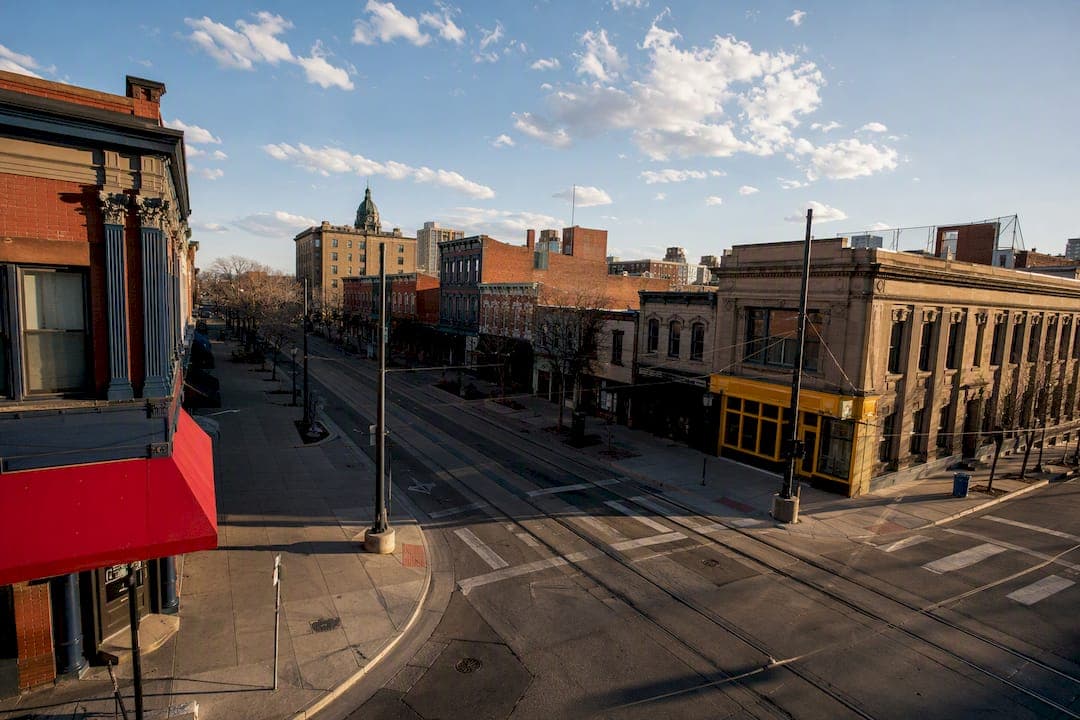
The chapters below trace how it got that name, why it declined, and how Denver is working to keep its legacy alive today.
TL;DR:
- Over 90% of Denver's Black population resided in Five Points and Whittier by the 1920s, due to segregation, redlining, and proximity to rail employment.
- The neighborhood's jazz scene thrived during its Golden Age, with famous venues hosting legends like Duke Ellington and Miles Davis, fostering a vibrant cultural hub.
- Civic institutions such as the Rossonian Hotel and the Black American West Museum played crucial roles in supporting Black residents' social, civic, and economic life.
- Contemporary revival faces gentrification pressures, but community-led protections aim to preserve Five Points’ cultural legacy through historic designations and local programming.
Table of Contents
- The Origins of Five Points History and Its Name
- Why Denver's Black Population Concentrated in Five Points
- The Golden Age: Jazz, Nightlife, and the "Harlem of the West"
- The Institutions That Anchored Five Points
- The Decline and Revival of a Historic Neighborhood
- Experiencing Five Points Heritage Today
- Early Industry and the Working Backbone of Five Points
- Community Leaders Who Shaped Five Points
- How Five Points' Population Has Changed Over Time
- Railroads, Transit, and the Making of a Neighborhood
- Why This History Still Matters to Denver
- Native303apparel and the Streets That Shaped Denver
- Where to Dig Deeper Into Five Points History
- Sources
The Origins of Five Points History and Its Name
The name has nothing to do with romance or symbolism. Five Points got its name from a literal five-way street intersection where Denver's early horse and street railroads met, at the junction of 27th Street, Welton Street, Washington Street, and 26th Avenue. Streetcar operators used the crossing as a hub stop, and the surrounding blocks took the name from that transit point. Some older Denver Public Library records also refer to the area as the "Welton Center," a name tied to the commercial strip that grew along Welton Street once the rail lines connected the area to downtown.
Denver was growing fast in the 1880s and 1890s, and the city's rapid expansion left a lot of undeveloped land ripe for subdivision. Historical analysis describes Denver at that time as something close to an "instant city," where transportation lines dictated which neighborhoods filled in first and who filled them. Five Points sat close enough to downtown for a short streetcar commute, yet far enough out that land stayed affordable. That combination made it a magnet for the working-class families, immigrants, and eventually Black Denverites who found fewer doors open to them elsewhere in the city.
Early Five Points was not a single-purpose neighborhood. It mixed small factories, warehouses, modest homes, and boarding houses in the same blocks. Residents historically described the area's rough boundaries as running from roughly Downing Street on the east to the railyards near the South Platte River on the west, and from around 20th Street on the south up past 38th Street on the north, though the exact edges shifted depending on who was drawing the map and when.
What set Five Points apart from other streetcar suburbs was who eventually settled there and why:
- Transit access. The streetcar connection made commuting to downtown jobs practical for working families without cars.
- Affordable land. Lower property values compared to Denver's wealthier districts opened the door to first-generation homeowners.
- Open housing stock. Unlike some neighborhoods that restricted sales through covenants, Five Points had fewer such barriers in its earliest years.
- Proximity to rail work. The nearby rail yards created a steady stream of jobs that shaped who moved in.
That last point matters more than it might seem at first glance, and it sets up the demographic story that follows.
Why Denver's Black Population Concentrated in Five Points
By the 1920s, the vast majority of Denver's African American residents lived within the boundaries of Five Points and the adjacent Whittier neighborhood, according to Denver Public Library archival research. That is not a rough estimate. It reflects a level of concentration rarely seen outside major East Coast cities, and it did not happen by accident.
By the numbers: Over 90% of Denver's Black population lived in Five Points and Whittier by the 1920s, out of a city of several hundred thousand residents at the time.
Three forces pushed that concentration:
- De facto segregation. Restrictive covenants and informal real estate steering kept Black homebuyers and renters out of most other Denver neighborhoods, whether or not city law explicitly required it.
- Redlining practices. Lending institutions marked Five Points and similar areas as high-risk zones on residential security maps, which limited investment elsewhere and, perversely, made the neighborhood one of the few places Black families could secure a mortgage at all.
- Employment geography. Jobs on the railroads, in Pullman porter positions, and in downtown service industries clustered near the rail yards and streetcar lines running through Five Points, so living close to work made practical sense.
The UC Denver historical analysis of the neighborhood's rise ties this housing and employment squeeze directly to the civic organizing that followed. Denver's NAACP chapter, active from the early 20th century onward, used Five Points as its organizing base, pushing back against discriminatory hiring and housing practices well before the national civil rights movement reached its peak in the 1950s and 1960s. Local churches, fraternal lodges, and business associations doubled as informal civil-rights infrastructure, hosting meetings and mutual aid efforts that gave residents leverage they could not find in Denver's broader political system.
That concentration of population, talent, and grievance is exactly what turned Five Points from a working-class transit suburb into something culturally singular. Restriction bred density, and density bred a music scene strong enough to earn a nickname borrowed from Manhattan.
The Golden Age: Jazz, Nightlife, and the "Harlem of the West"
From the 1920s through the 1950s, Five Points became the epicenter of Black culture and jazz in Denver, a run of decades locals and historians alike call the neighborhood's Golden Age. Welton Street carried the weight of that reputation, lined with clubs, restaurants, and after-hours spots that turned a few blocks of Denver into a nightly destination for musicians touring the country.
The venues did the heavy lifting:
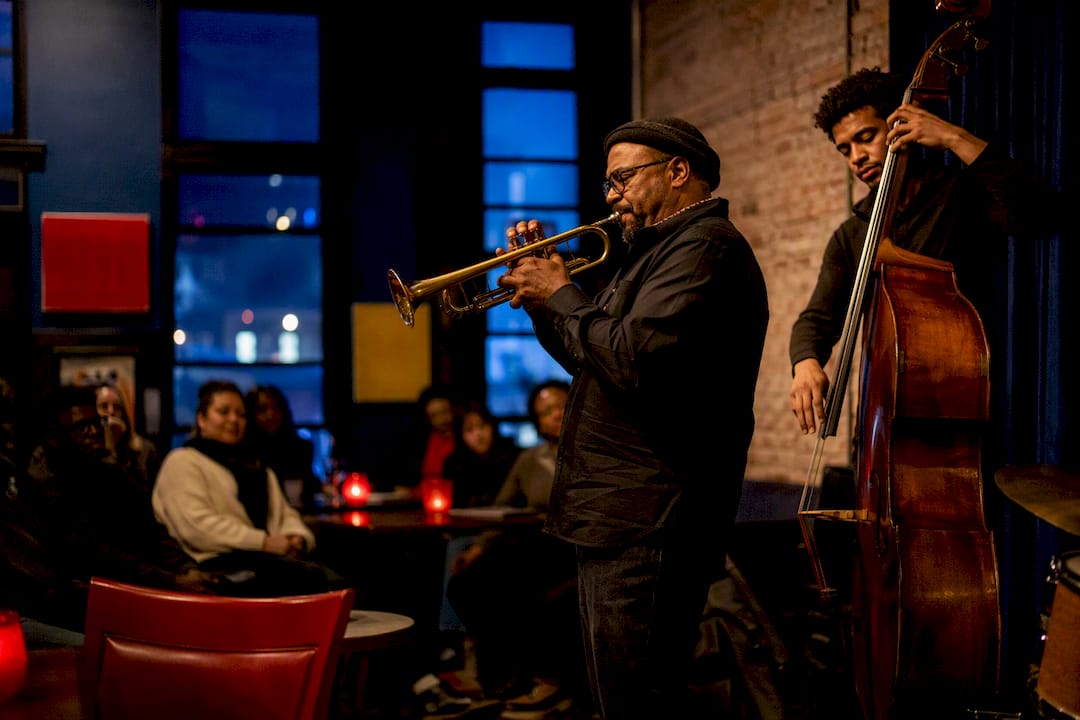
- The Rossonian Hotel and Lounge, at 26th and Welton, was the crown jewel. Its lounge hosted nationally known performers including Duke Ellington, Billie Holiday, and Miles Davis when their touring schedules brought them through Denver.
- The Rainbow Ballroom hosted large dances and bigger touring acts that needed more floor space than the intimate lounges could offer.
- The Casino Ballroom filled a similar role, drawing crowds for weekend dances that ran well past midnight.
- Rice's Tap Room kept the after-hours culture alive once the official venues closed, feeding the jam sessions that made Five Points famous among working musicians.
That after-hours culture was not just about extra music. Segregation barred Black touring musicians from staying in most downtown Denver hotels, so Five Points residents boarded them in private homes and rooming houses along Welton and the surrounding streets. That arrangement, described in UC Denver's historical research on the neighborhood, created something closer to a musician's ecosystem than a strip of nightclubs. Artists played their contracted shows, then walked a block or two to sit in on jam sessions with local players, and the informal networking that resulted helped shape jazz styles that later spread nationally.
Pro Tip: If you want to picture the scene accurately, don't imagine a single famous club. Imagine a five-block stretch where a musician could finish a paid gig at the Rossonian, walk to Rice's Tap Room for an unpaid jam session, and end up boarding for the week at a house two doors down.
The music fed civic life well beyond the clubs themselves. Parades, church socials, and neighborhood celebrations drew on the same talent pool, and that overlap between performance and community gathering is part of why the Five Points Jazz Festival, launched decades later, felt like a natural revival rather than an invented tradition. The nickname "Harlem of the West" stuck because the comparison held up: a concentrated Black population, a walkable entertainment corridor, and a music scene that punched well above the size of the neighborhood producing it.
The Institutions That Anchored Five Points
Music alone did not sustain a neighborhood for decades. Five Points held together because of civic institutions that gave residents places to organize, learn, and do business outside the entertainment corridor.
- The Rossonian Hotel doubled as both a nightlife landmark and one of the few hotels in Denver that would accommodate Black travelers and touring performers, making it a rare combination of business, hospitality, and cultural anchor. It has sat vacant for long stretches since its closure, though renovation plans approved in 2024 aim to bring it back into active use.
- The Glenarm YMCA, built in 1924, functioned as an unofficial town hall. It housed a pool, gymnasium, library branch, and dormitory space, and Denver Public Library records describe it as one of the neighborhood's most heavily used gathering spots for education and recreation alike.
- The Blair-Caldwell African American Research Library now serves as one of the principal repositories for Five Points history, holding photographs, oral histories, and archival documents that trace the neighborhood from its earliest years to the present.
- The Black American West Museum, housed in the former home of Dr. Justina Ford, Colorado's first licensed Black woman physician, preserves artifacts and stories tied to Black pioneers across the broader American West, with Five Points as a central chapter.
- Fire Station No. 3, staffed historically by Black firefighters when the department itself was segregated, stands as one of the neighborhood's quieter but symbolically important markers.
Beyond these anchor buildings, Five Points supported its own newspapers, Black-owned banks and insurance companies, and social clubs that gave residents financial and civic tools largely unavailable to them downtown. That combination of institutions, described in BlackPast's history of the neighborhood, is what separated Five Points from a neighborhood that simply happened to be segregated. It functioned as a self-sustaining Black business and civic district, not just a residential enclave.
The Decline and Revival of a Historic Neighborhood
Five Points' Golden Age did not last forever. Postwar suburbanization pulled residents and businesses toward newer housing outside the urban core, and federal highway construction cut through parts of the neighborhood, displacing families and severing old walking routes between blocks. Discriminatory lending that had once forced Black homebuyers into Five Points began, ironically, to ease elsewhere in Denver by the 1960s and 1970s, and many families who could afford to leave did.
BlackPast's coverage of the neighborhood's history documents the economic slide that followed: storefronts along Welton Street sat vacant, crime rates climbed as disinvestment deepened, and the jazz venues that once drew national performers closed one by one through the 1960s and 1970s. Local accounts also point to organized intimidation from Ku Klux Klan sympathizers active in Denver's political scene decades earlier as part of the deeper pattern of hostility that shaped the neighborhood's boundaries and its residents' limited options.
By the late 20th century, decades of disinvestment had left much of Welton Street's once-thriving commercial strip vacant, a stark contrast to its Golden Age peak.
Preservation efforts eventually caught up with the neighborhood's history. Denver designated Five Points a cultural historic district in 2002, a status that formally recognized the area's significance and opened doors to grants and tax incentives for restoring historic buildings. The Rossonian's 2024 renovation approval is the most visible recent example, and it has become a bellwether for how the neighborhood balances new investment against its cultural legacy.
That balance is not simple. Rising property values and new development have brought real gentrification pressure, and longtime Five Points residents and business owners have voiced concern about being priced out of the very neighborhood their families helped build. Local strategies to manage that tension include:
- Historic district protections that limit demolition of culturally significant buildings.
- Community input requirements built into major redevelopment approvals, including the Rossonian project.
- Continued support for Black-owned businesses along Welton Street through targeted grants and small-business programs.
- Public programming, including the Five Points Jazz Festival, designed to keep cultural memory visible even as the physical neighborhood changes.
None of these measures fully resolve the tension between investment and displacement, but they represent Denver's attempt to prevent Five Points' revival from erasing the history that makes the neighborhood worth reviving in the first place.
Experiencing Five Points Heritage Today
The neighborhood's history is not locked away in archives. It shows up every year at the Five Points Jazz Festival, and it is on permanent display at two institutions built specifically to preserve it.
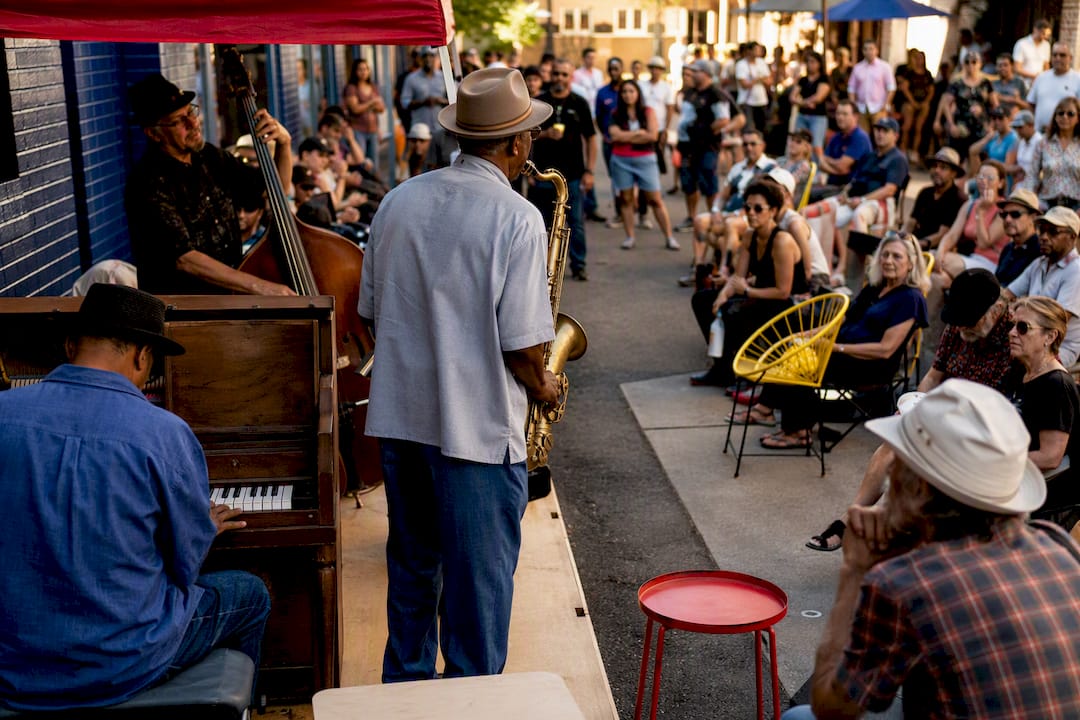
The Five Points Jazz Festival began in 2004 as a modest community event and has since grown into a multi-stage annual festival along Welton Street, drawing large crowds for a day of live jazz, food vendors, and local art. Denver Arts & Venues has backed its expansion over the years, and CPR's reporting frames the festival as both a heritage celebration and a genuine economic driver for the businesses that remain along the corridor.
If you want to go beyond the festival, here is where to start:
- Visit the Blair-Caldwell African American Research Library first. Its permanent exhibits and archival collections give you the historical backbone before you explore the rest of the neighborhood.
- Tour the Black American West Museum. Set in Dr. Justina Ford's former home, it connects Five Points to the wider story of Black pioneers across Colorado and the American West.
- Walk Welton Street with the jazz history in mind. Knowing which corner held the Rossonian or where Rice's Tap Room once ran the late-night jam sessions changes how the street reads.
- Time a visit around the Jazz Festival if you can. It is the one day of the year when the neighborhood's musical past and present overlap most visibly.
- Ask before assuming. Five Points is a living neighborhood with residents whose families trace back generations here, not an open-air museum. Treat businesses and public spaces with the same respect you would show any neighborhood you're visiting for the first time.
Early Industry and the Working Backbone of Five Points
Before the jazz clubs made Five Points famous, it was a working neighborhood built on more ordinary trades. Its proximity to the South Platte River rail yards meant that many early residents worked directly for the railroads, as porters, mechanics, laborers, and freight handlers. Small manufacturing operations and warehouses filled in blocks near the tracks, taking advantage of the same rail access that brought workers to the area.
Along Welton Street, a Black business corridor grew up around the daily needs of residents who had limited options elsewhere in Denver. Grocers, tailors, barbershops, funeral homes, and Black-owned insurance companies and banks gave the neighborhood financial infrastructure that downtown Denver often denied Black entrepreneurs. Newspapers serving the Black community operated out of Five Points storefronts, covering local news that the city's mainstream papers ignored.
This economic self-sufficiency mattered as much as the entertainment district that came later. It meant Five Points residents could bank, insure their homes, buy groceries, and get their hair cut without leaving the neighborhood, at a time when doing those things elsewhere in Denver often meant facing discrimination. The jazz clubs got the national attention, but the corner grocers and Black-owned banks kept the neighborhood functioning day to day.
Community Leaders Who Shaped Five Points
Five Points' development owes as much to its civic leaders as to its musicians. Dr. Justina Ford, Colorado's first licensed Black woman physician, practiced medicine from her Five Points home for decades, delivering thousands of babies at a time when many Denver hospitals refused to treat Black patients. Her former residence now houses the Black American West Museum, a fitting continuation of her role as a community anchor.
Denver's early NAACP organizers used Five Points as their base of operations, coordinating pushback against discriminatory housing and hiring practices well before the national civil rights movement reached its height. Local church leaders, fraternal lodge officers, and business owners along Welton Street functioned as an informal leadership class, running mutual aid societies and civic groups that gave residents a voice in a city government that largely ignored them.
Musicians themselves became community leaders in their own right. Club owners and bandleaders who built the Golden Age venues were not just entertainers. They employed neighborhood residents, mentored younger musicians, and gave Five Points an economic engine that outlasted any single performer's career. That layered leadership, spanning medicine, civil rights, business, and music, is what let Five Points punch above its size for the better part of a century.
How Five Points' Population Has Changed Over Time
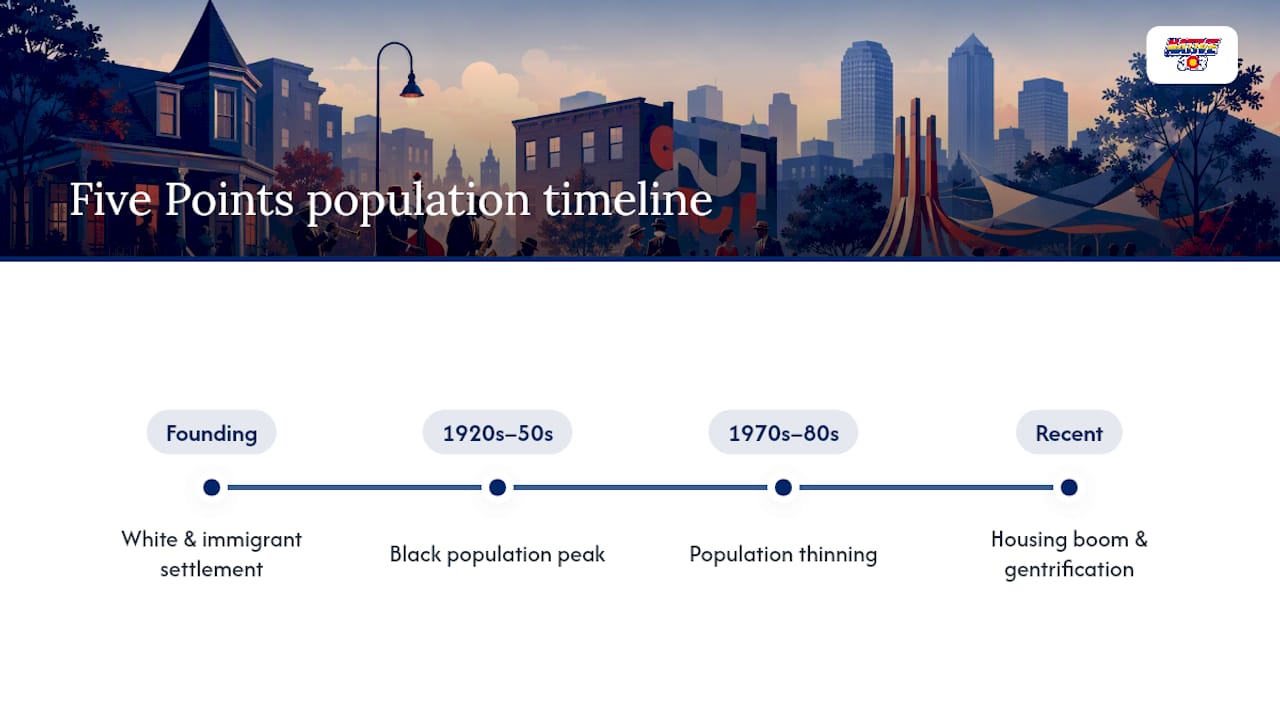
The story of Five Points is not only a Black history story, though that is its defining chapter. The neighborhood's population has shifted several times since its 19th-century founding, and those shifts track closely with Denver's broader growth.
Before the concentration of Black residents that defined the 1920s through the 1950s, Five Points drew a mix of working-class white families and immigrant groups, including Jewish and Italian residents who settled near the streetcar lines in the neighborhood's earliest decades. As those groups moved to other parts of Denver and Black families faced fewer housing options elsewhere, the neighborhood's demographic makeup shifted toward the concentration documented in the 1920s.
That pattern reversed again in the second half of the 20th century. Suburbanization pulled both white and Black families toward newer housing stock outside the urban core, and Five Points' population thinned out considerably by the 1970s and 1980s. More recently, Denver's broader housing boom has brought a new wave of residents into Five Points, many with no personal or family connection to its Black history, driving property values up and reshaping the neighborhood's demographics once again. That most recent shift is at the heart of the gentrification tensions playing out in the neighborhood today.
Railroads, Transit, and the Making of a Neighborhood
Transportation built Five Points twice over, first with the streetcar and then with the freight rail yards that followed. The streetcar line that gave the neighborhood its name made the area commutable to downtown Denver, which is what attracted the earliest wave of working-class settlement in the 1880s and 1890s.
The rail yards near the South Platte River added a second layer. Freight and passenger rail operations created steady employment, particularly in porter and service positions that were among the few skilled jobs open to Black workers nationally during the early 20th century. That job access is a major reason Black families settled in Five Points specifically rather than other affordable Denver neighborhoods without the same rail employment nearby.
Transit access cut both ways over the decades. The same rail infrastructure that built the neighborhood up eventually became a liability, as postwar highway construction sliced through parts of Five Points, displacing residents and cutting off pedestrian routes that had connected the community for generations. The neighborhood's transportation history is a reminder that the infrastructure decisions Denver made in the 1880s and again in the mid-20th century shaped who lived in Five Points and how connected they stayed to the rest of the city.
Why This History Still Matters to Denver
Five Points' history is not a museum piece. It is proof that a neighborhood built by exclusion can produce something the rest of the city eventually claims as a point of pride. That is worth sitting with, because it complicates the easy version of the story people like to tell about how neighborhoods "revive."
What gets underestimated most is how deliberate the community-building was. Five Points did not become a jazz capital by accident, and it did not survive decades of disinvestment by luck. Residents built banks, newspapers, and mutual aid societies because the rest of Denver gave them no other choice, and that infrastructure is what let the music scene flourish in the first place.
Engaging with this history respectfully means learning it from the neighborhood's own institutions, not just repeating the jazz-era highlights. Visit the Blair-Caldwell library. Walk Welton Street with its full history in mind, the working-class origins as much as the Golden Age glamour. Wearing that history on a T-shirt is a small gesture, but choosing designs that name the actual landmarks and eras, rather than generic Denver iconography, is one way to keep that memory circulating instead of flattening it.
— Rob
Native303apparel and the Streets That Shaped Denver
Native303apparel exists for exactly this kind of history: the Rossonian marquee, the Welton Street jazz corridor, the landmarks that shaped a neighborhood rather than a generic skyline silhouette. Every design starts with a real place and a real story, not a stock Denver graphic pulled off a template.

Our team researches the specific eras and buildings behind each print, then works with local printers to put that history on shirts, hoodies, and totes that hold up to daily wear. If you're not sure which fit works best for your build, the size guide walks through measurements before you order. We also take custom requests if there's a Five Points landmark or Denver landmark you want rendered that we haven't designed yet. Browse the full collection to see current Five Points and Denver neighborhood designs, and check sizing before you check out so your first order fits right the first time.
Where to Dig Deeper Into Five Points History
A handful of sources carry the weight of Five Points research, and each one offers something the others don't.
- Denver Public Library's Five Points-Whittier neighborhood history guide holds the deepest archive of maps, photographs, and boundary records tracing the neighborhood's earliest decades.
- UC Denver's "A Look Over the Mountain" research paper offers the most detailed academic analysis of the neighborhood's rise, its jazz-era peak, and the social forces behind both.
- BlackPast.org's Five Points entry gives a concise, well-sourced overview of the neighborhood's full arc, from founding through decline to preservation.
- CPR's reporting on the "Harlem of the West" connects the historical record to present-day festival culture and ongoing preservation debates.
- KDVR's local history coverage adds firsthand venue detail and performer anecdotes that bring the Golden Age clubs to life.
Original photographs, oral histories, and property records tied to specific addresses live in the Denver Public Library's Western History and Genealogy collections, which remain the best starting point for anyone researching a specific building or family history in the neighborhood.
Sources
- Five Points-Whittier Neighborhood History | Denver Public Library Special Collections and Archives
- “A Look Over the Mountain”: The Triumph of Denver's Five Points Neighborhood (UC Denver / NHDC PDF)
- Blackpast
- How Five Points came to be the 'Harlem of the West' | CPR
- Denver history: How jazz music formed the 'Harlem of the West' in Five Points | KDVR