
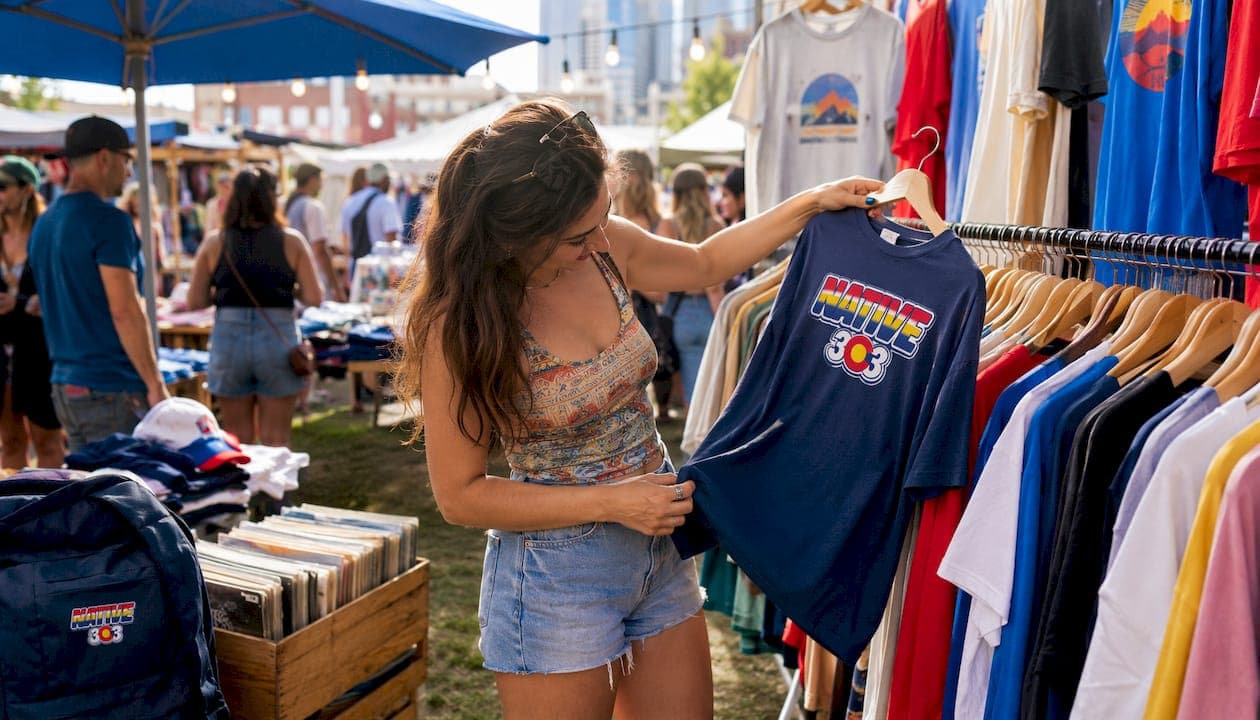
Exclusive graphic tee culture is a small-batch, story-first approach to T-shirt design that uses scarcity, local storytelling, and curated drops to create community signal value. Where mass-market shirts are printed by the thousands, exclusive tees live or die on intentional scarcity: a small numbered run, an artist-signed drop that never restocks, a design tied to a Denver neighborhood bar that closed in 2003. The New York Times once described the slogan T-shirt as "the medium for the message," and that framing holds today. Mid-2026 fashion commentary frames the graphic-tee resurgence as a direct reaction against polished, algorithm-friendly aesthetics. This guide covers what makes a tee exclusive, the aesthetic lanes shaping the market, where to find Denver-rooted pieces, and how to buy and care for them with intention.
Table of Contents
- What does 'exclusive' actually mean in graphic tee culture?
- Which aesthetic lanes define the market right now?
- How do graphic tees function as membership signals and protest tools?
- How do you spot an authentic Denver or retro-mountain exclusive tee?
- Where do you actually find exclusive Denver-themed tees?
- What should you expect to pay and when do drops happen?
- How do you care for exclusive tees and build a collection that lasts?
- Key Takeaways
- Why this matters more than most people realize
- Native303apparel makes Denver nostalgia wearable
- Sources used in this guide
What does 'exclusive' actually mean in graphic tee culture?
Exclusivity in graphic tees comes down to three levers: limited production, verifiable artist credit, and a story that can't be replicated. Brands and creators pull those levers in specific ways:
- Numbered limited editions. A run of 30 or 75 shirts, each tagged with its edition number, creates a hard ceiling on supply.
- Artist-signed runs. The creator's signature on the tag or garment ties the piece to a specific person and moment.
- Collabs and capsule drops. Two creators or a creator and a venue produce a one-time design. Once it's gone, it's gone.
- Pop-up and IRL-only releases. Shirts sold only at a specific event or location carry the "I was there" weight that band merch established in the 1970s.
- No-restock promises. Underground creators often use plain packaging with a handwritten note to signal that this is a one-time thing. Small-batch, no-brand drops increase symbolic value in local scenes precisely because the scarcity is visible.
Secondary value follows naturally from these tactics. A tee from a 30-piece run tied to a specific Denver venue carries more weight than a 5,000-piece run from a national brand, even if the print quality is identical. For a deeper look at how limited edition releases are structured, the mechanics matter more than the marketing.
**Pro Tip: Ask the seller for the production number and a link to the artist's page or social account. If they can't provide either, treat the "limited run" claim skeptically.
Which aesthetic lanes define the market right now?
The 2026 graphic tee market splits into four distinct aesthetic lanes. Each one attracts a different kind of collector and maps differently onto Denver's retro-mountain identity.
| Aesthetic Lane | Core Visual Markers | Why Collectors Value It | Denver/Mountain Fit | Wear Occasions |
|---|---|---|---|---|
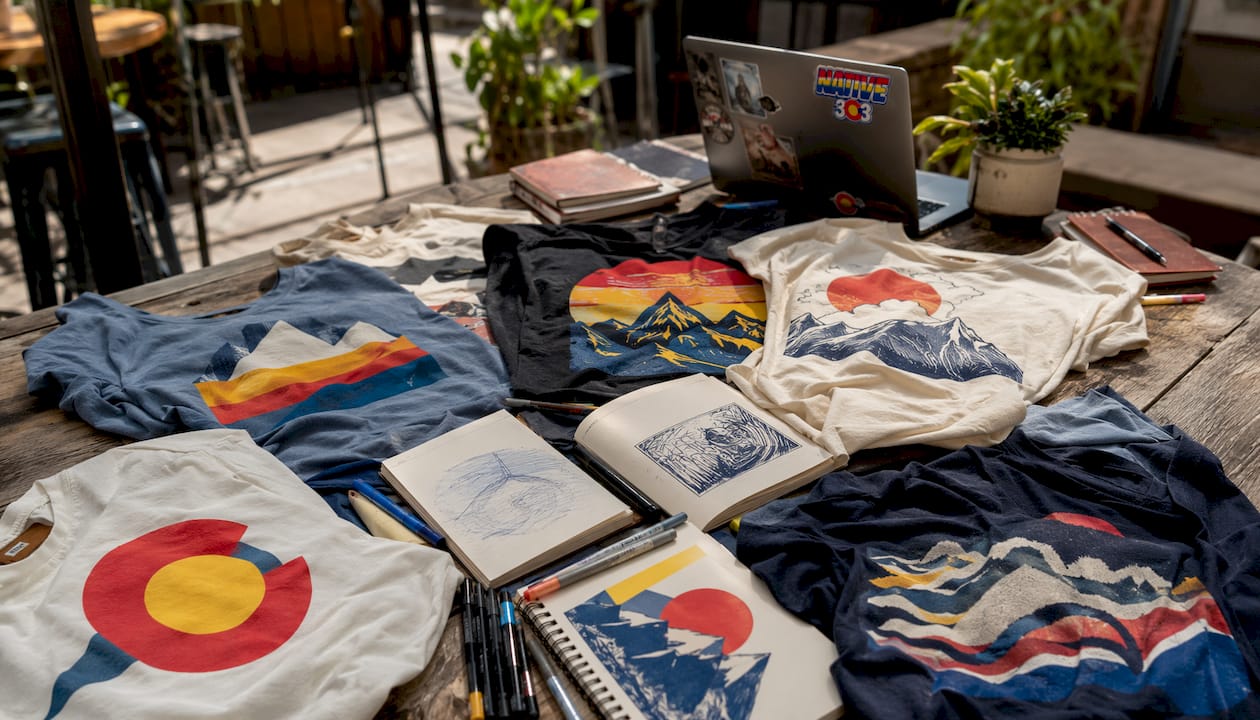
| Vintage-revival / bootleg | Warped graphics, DIY typography, faded color | Raw authenticity; bootleg aesthetic as intentional subcultural art | Strong — echoes vintage Colorado ski resort and venue graphics | Layered over flannels, paired with retro denim |
| Y2K maximalism | Oversized prints, chrome text, loud color blocks | Nostalgia for early-2000s aesthetics | Moderate — works for Denver music and festival scenes | Concerts, street-style days out |
| Hand-drawn underground | Rough linework, zine-style illustration, local references | Scarcity plus craft; feels personal | Very strong — local artist collaborations, neighborhood nods | Everyday wear, local bar nights |
| Minimalist single-placement | Small chest or sleeve graphic, muted palette | Versatility; quiet signal to those who know | Moderate — clean mountain silhouettes, elevation markers | Hiking layers, coffee shop, travel |
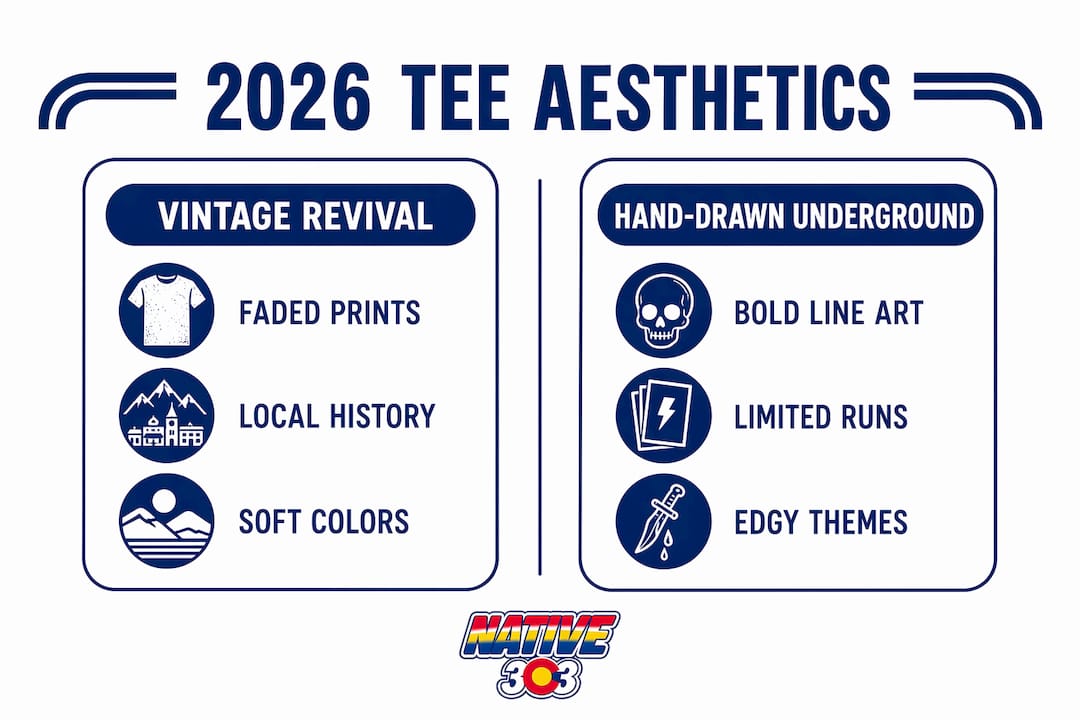
For Denver collectors, the vintage-revival and hand-drawn underground lanes are the most fertile ground. A faded graphic referencing a Capitol Hill record shop or a hand-drawn map of the Platte River trail reads immediately to locals and invisibly to everyone else. That dual legibility is the whole point. Styling notes: vintage-revival pieces layer well over a heavyweight flannel for a mountain-town look; hand-drawn underground tees pair cleanly with straight-leg jeans and worn-in boots. Check the style guide for vintage-inspired tees for more layering ideas across seasons.
How do graphic tees function as membership signals and protest tools?
A graphic tee is never just a shirt. It's a public declaration, a membership card, and sometimes a provocation. Scholarly analysis frames this as "semiotic guerrilla warfare": the act of wearing a graphic resignifies everyday space and challenges mainstream narratives without requiring a single spoken word.
The historical anchor is the 1970s, when the New York Times called slogan tees "the medium for the message." That observation captured something structural: a shirt with a message on it is the most direct form of wearable communication available. No metaphor, no interpretation required.
Band merch solidified this function in the 1970s. A Ramones shirt wasn't just clothing; it was tribal affiliation. Every limited-edition graphic tee since operates on the same principle. For Denver, that principle plays out hyperlocally. A tee referencing a specific LoDo venue or a long-closed Colfax diner functions as an in-group signal for people who lived that era. Stylist Tabitha Sanchez notes that while graphics can signal cultural conversations, purchase decisions are often aesthetic too — sometimes it's simply a design that resonates. Joanie Muller adds that underground scene tees often embrace controversy intentionally, acting as public declarations that mainstream platforms might silence. Fashion's role in cultural representation runs deeper than aesthetics; it's how communities make themselves visible.
How do you spot an authentic Denver or retro-mountain exclusive tee?
Artist credit plus verifiable provenance is the single most reliable authenticity signal. Everything else is secondary.
- Artist or label credit. The creator's name should appear on the tag, the packaging, or the product listing. Anonymous tees with vague "limited run" claims are a red flag.
- Edition number. Look for a handwritten or printed number (e.g., "14/50") on the tag or inside the collar.
- Print technique. Screen printing on quality blanks holds up over time; direct-to-garment printing on thin stock fades fast. Feel the ink — a quality screen print has slight texture.
- Material and stitch quality. Heavyweight cotton (typically 6.0 oz or above) with clean, even stitching signals a production run that took the garment seriously.
- Packaging and handwritten notes. Underground creators often fold shirts with a note. That detail is hard to fake at scale.
- Community references. Does the design reference a real Denver venue, neighborhood, or event? Local specificity is hard to counterfeit.
- Seller history. Check reviews, prior drops, and community mentions. A seller with no trail is a risk.
Common red flags: inconsistent artwork that looks digitally stretched, missing artist credit, a price dramatically below what a small-batch run would cost to produce, and no returns policy.
Pro Tip: Request close-up photos of the back-of-neck tag, the print texture, and any edition numbering. A legitimate seller will send them without hesitation.
Where do you actually find exclusive Denver-themed tees?
Local creators and curated drops are the highest-yield channels for Denver and retro-mountain exclusives. Start there, then expand outward.
Follow Denver-based artists and collectives on Instagram and TikTok, and turn on post notifications for creators whose work you want. Join their mailing lists — most small-batch drops are announced by email before they hit social. Attend local pop-ups, art markets, and venue shows; the Denver neighborhood culture scene surfaces tees you won't find anywhere online. Artist DMs are underused: if you see a piece you want and the drop has passed, ask directly whether any units remain or whether a future run is planned.
For offline discovery, thrift shops in Capitol Hill and the Highlands occasionally surface vintage local tees. Venue merch tables at smaller music spots, flea markets near RiNo, and artist tables at First Friday events are all worth a regular circuit. If your goal is resale rather than wear, prioritize drops with numbered editions and documented artist credit — those are the pieces that hold secondary value.
What should you expect to pay and when do drops happen?
Small-batch exclusive tees from independent creators typically run higher than mass-market graphic tees, reflecting genuine production costs and intentional scarcity. Entry-level collector pieces from emerging local artists tend to sit in a lower price range; work from established Denver creators with documented runs commands more. Investment-grade pieces — numbered editions, artist-signed, tied to a closed venue or a significant local event — can reach multiples of their original price on the secondary market.
Release timelines follow a recognizable pattern:
- Announcement. Creator posts a preview, often 48–72 hours before the drop.
- Drop window. Sales open at a set time, often for 24–48 hours or until sold out.
- Preorder period. Some creators run a short preorder to gauge demand before going to print.
- Fulfillment. Small-batch production takes longer than mass manufacturing; expect 2–4 weeks for shipping.
- Restock policy. Most exclusive drops have none. If a creator announces a restock, the original run's exclusivity drops accordingly.
Pro Tip: Sign up for drop alerts before you need them. Decide your buy/no-buy threshold in advance — price ceiling, edition size, artist reputation — so you're not making the call in a 10-minute drop window.
How do you care for exclusive tees and build a collection that lasts?
The single best care rule: cold gentle wash, flat dry, and store folded in acid-free tissue for any piece you consider collectible.
- Wash inside-out on a cold, gentle cycle. Hot water degrades screen-print ink faster than anything else.
- Skip the dryer entirely for limited-run pieces. Heat shrinks blanks and cracks prints.
- If a screen print develops hairline cracks, hand-wash only going forward. Cracks spread with machine agitation.
- Store folded, not hung. Hanging stretches the collar over time. Acid-free tissue between folds prevents dye transfer.
- Keep the original packaging, tags, and any handwritten notes. These are provenance documents.
For collection practices: photograph each piece on receipt, capturing the tag, edition number, and print detail. Keep a simple catalog — a shared photo album or a spreadsheet with drop date, artist, edition number, and purchase price works fine. Tees treated as personal archives hold both sentimental and secondary-market value when provenance is documented.
Pro Tip: Document condition with photos the day the tee arrives. If you ever sell, that timestamped record is worth more than any description you write later.
Key Takeaways
Exclusive graphic tee culture rewards buyers who verify provenance, understand the aesthetic lane they're shopping, and care for pieces with the same intention they bought them.
| Point | Details |
|---|---|
| Exclusivity has mechanics | Limited runs, artist credit, and no-restock promises are the core signals — ask for edition numbers before buying. |
| Aesthetic lane shapes value | Vintage-revival and hand-drawn underground lanes align most strongly with Denver's retro-mountain identity. |
| Provenance is everything | Keep tags, packaging, artist notes, and drop receipts — they determine secondary-market value. |
| Drops follow a pattern | Announcement to fulfillment typically spans 2–4 weeks; set alerts and decide your budget before the window opens. |
| Native303apparel | Native303apparel produces Denver-rooted limited-run tees built on local storytelling and intentional scarcity. |
Why this matters more than most people realize
The conventional take on graphic tees is that they're casual wear with a fun print. That framing misses almost everything interesting about them. The pieces that hold value — culturally and financially — are the ones tied to a specific place, moment, or community that can't be reconstructed. A tee referencing a Denver club that closed in 2008 isn't just nostalgic. It's a primary source. It documents that the place existed, that people cared about it, and that someone thought it was worth commemorating in cotton and ink.
What gets overlooked is how much of this value is created at the point of purchase, not after. Buying intentionally — knowing the artist, understanding the run size, keeping the provenance — is what separates a collector from someone who just owns a lot of shirts. The care and documentation habits that feel like extra work are actually the whole practice.
Native303apparel makes Denver nostalgia wearable
Native303apparel designs limited-run graphic tees rooted in the real history of metro Denver: the eateries, clubs, and neighborhood shops that shaped the city's identity. Each piece is built on local storytelling and small-batch production, so you're not buying a generic retro aesthetic — you're buying a specific memory made wearable. Browse the Native303apparel shop to see current drops and find your size using the size guide. Sign up for the newsletter to get drop alerts and pop-up announcements before they go public.
Sources used in this guide
The claims in this guide draw on trend reporting, cultural scholarship, and practitioner analysis. Each source is listed alongside what it supports.
| Source | What it supports |
|---|---|
| Who What Wear — graphic tees summer 2026 | Mid-2026 trend framing: resurgence as reaction against algorithm aesthetics |
| WEAR2AM — graphic tee trends 2026 | Aesthetic lane segmentation (vintage-revival, Y2K, hand-drawn, minimalist) |
| WEAR2AM — why graphic tees never die | Band merch origins, membership signaling, and the IRL-only release model |
| eScholarship — UC Berkeley cultural analysis | Semiotic guerrilla warfare framework; protest and identity function of tees |
| The Conversation — history of slogan tees | NYT "medium for the message" historical note; protest tee timeline |
| Band Up Store — underground tee practices | Scarcity signaling, no-brand packaging, small-batch symbolic value |
| Substack — From Band Merch to Balenciaga | Bootleg aesthetic as intentional subcultural art form |
| Harper's Bazaar — why graphic tees satisfy | Personal-archive value; tees as wearable memory objects |
| Afro Urban Apparel — cultural representation | Fashion's role in cultural representation and community visibility |