
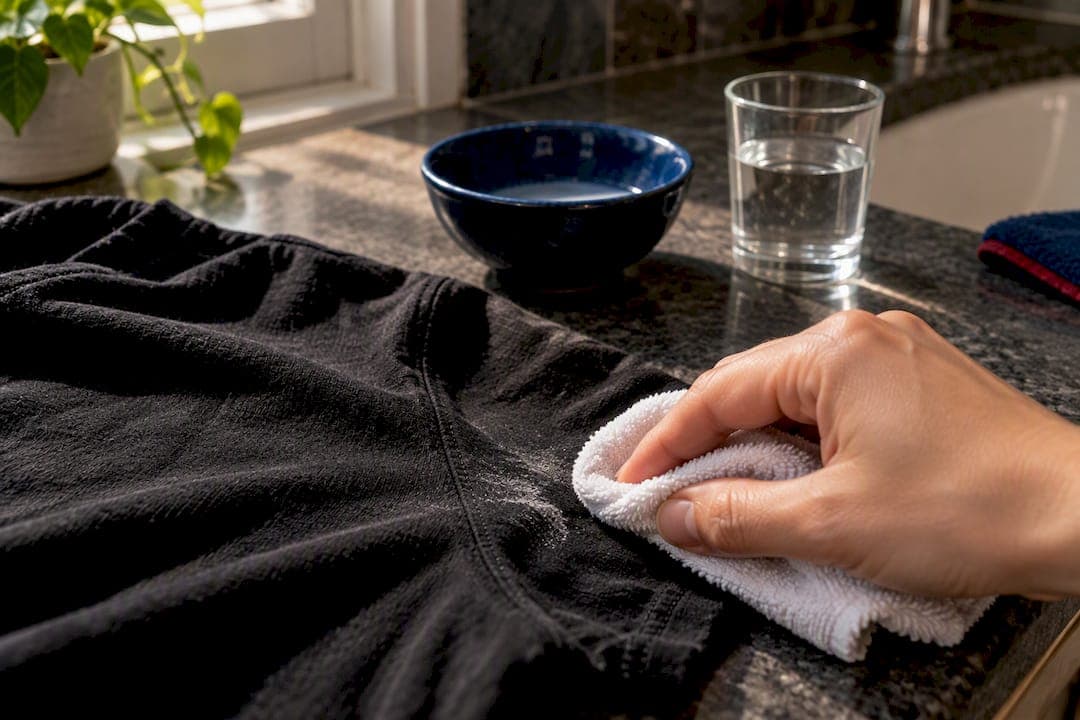
For fresh white marks, rub the spot with nylon hosiery or a dry cloth and launder as usual; for advice on testing sprays on fabric before applying, see how to spray skin vs clothes. For set-in armpit buildup, soak the shirt, pretreat with a baking soda paste or enzyme detergent, wash at the hottest safe temperature on the care label, then air-dry and recheck before it ever sees a dryer. Spot-test any product first and never apply heat until the stain is fully gone.
TL;DR:
- Applying a gentle rub with nylon hosiery or a soft cloth can often lift fresh deodorant marks without washing unless residual shadow or stiffness remains.
- For set-in deodorant buildup, soaking the shirt in warm water followed by baking soda paste or enzyme detergent pretreatment and washing on the hottest safe setting is most effective.
- Testing stain removers like vinegar, baking soda, or oxygen-based products on hidden areas before full application minimizes the risk of fabric damage or color loss.
- Delicate fabrics such as silk or dry-clean-only garments require careful testing and professional cleaning instead of full-strength home pretreatments.
- Patience and gentle, repeated treatments are essential for lifting dark fabric stains, as rushing or using harsh chemicals can cause long-term damage to black or printed shirts.
Table of Contents
- Quick fixes for fresh white deodorant marks on black shirts
- How to remove set-in armpit deodorant buildup: soak, pretreat, wash, repeat
- Method-by-method recipes for stubborn stains
- Delicate and specialty fabrics: when home methods risk damage
- Prevention and regular care to protect black shirts
- Caring for printed and garment-dyed tees
- Why patience beats harsh chemicals on dark fabric
- Buying a replacement when the stain won't budge
- Sources
- FAQ
Quick fixes for fresh white deodorant marks on black shirts
A deodorant mark you just noticed is usually surface transfer, not a set-in stain, so you can often fix it without a wash.
- Rub the mark gently with a piece of nylon hosiery. The fine texture lifts the waxy residue off the fabric surface.
- No hosiery on hand? A dry, soft cloth or even rubbing the fabric against itself works in a pinch, according to home-care guidance on lifting fresh marks.
- If a faint mark remains, turn the shirt inside out and rinse the area with cold water from the back, pushing the residue out rather than deeper in.
- Dab a small amount of liquid detergent onto any lingering residue and rub gently before rinsing again.
Whether that's enough or you need a full wash depends on what's left over:
- If the fabric looks clean after dry-lifting, you're done: no wash needed.
- If a shadow or stiffness remains, treat it as a light stain and launder per the care label.
- If the mark has any yellow tint, skip ahead to the set-in stain steps below.
Pro Tip: Keep a spare pair of old nylon hosiery in your laundry area just for this. It's more effective than a paper towel and won't leave lint on black fabric.
How to remove set-in armpit deodorant buildup: soak, pretreat, wash, repeat
Once deodorant buildup has dried into the fibers, dry-lifting won't touch it. You need to loosen it first, then pretreat, then wash, and sometimes repeat the whole cycle.
- Soak the underarm area in warm water for several hours or longer for heavier buildup. Soaking softens the residue so it releases from the fibers instead of just sitting on top.
- Make a paste and apply it directly to the stain, letting it sit for a suitable time before washing.
- Wash on the hottest water setting your care label allows, leaving the pretreatment on the fabric during the cycle when the product label permits it.
- Air-dry the shirt and inspect the spot in good light before deciding whether it needs another round.
Two pretreatment options work well for most cotton shirts:
- Baking soda paste: mix baking soda with a small amount of water into a spreadable paste and let it sit, using a soft brush to work it in gently.
- Enzyme detergent: apply directly to the stain and let the enzymes break down the protein-based residue before washing.
Whirlpool's tested method uses a half-cup of baking soda mixed with a half-cup of water, applied for a 20-minute minimum, with longer soaks of 30 to 60 minutes, or up to two hours, recommended for more severe buildup.
Don't rush to the dryer. If the stain is still visible after washing, repeat the soak-and-pretreat cycle rather than reaching for a stronger chemical. Laundry experts consulted by Today recommend this same sequence, soak, pretreat, wash, air-dry, repeat, over jumping straight to harsher products.

Method-by-method recipes for stubborn stains
Different stains respond to different chemistry, and dark fabric changes what's safe to use. Here's what actually works, and where to be careful.
- Vinegar soak: mix white vinegar and water in equal parts, spray or soak the stained area, let it sit for 10 to 60 minutes depending on severity, then scrub gently and rinse.
- Baking soda paste: combine baking soda with just enough water to form a spreadable paste, let it dwell for at least 20 minutes, and work it in with a soft brush rather than scrubbing hard.
- Oxygen-based products: follow the label exactly rather than guessing at ratios, since formulas vary by brand.
- Hydrogen peroxide and dish soap: peroxide can lighten dark dyes even as it brightens white stains, and dish soap like Dawn can help cut oily residue but carries the same risk on color.
Tide's method for oxygen-based cleaners calls for a measured paste applied per the product's own instructions, always tested on a hidden area first, and never paired with chlorine bleach on dark clothing.
Oxygen-based cleaners can help lift deodorant buildup, but only when used exactly as labeled and tested on a hidden seam first, since ratios differ between products and a stronger mix isn't automatically better.
Pro Tip: Test any new stain remover on the inside hem or a hidden seam and wait a few minutes before checking for color change. If the fabric looks fine there, it's safe to use on the visible stain.

Delicate and specialty fabrics: when home methods risk damage
Not every black shirt can handle a baking soda scrub or a vinegar soak. Fabrics like silk, wool, velvet, and anything labeled dry-clean-only, along with structured garments that use interfacing, can react badly to full-strength pretreatments.
- Always test in a hidden seam or inside hem first, checking for color change within a few minutes.
- If the fabric shifts color, stops there and skips the treatment entirely.
- SheaMoisture's guidance on delicate garments notes that even water alone can cause unstable dyes to fade on some fabrics.
- When in doubt, or when the garment is dry-clean-only, professional cleaning is the safer route.
Prevention and regular care to protect black shirts
Stopping stains before they start saves you the whole soak-and-pretreat routine.
- Apply deodorant sparingly and let it dry fully before dressing, since damp product transfers straight onto fabric.
- Clear or invisible formulas leave less residue behind than white paste sticks.
- Wash shirts inside-out in cold water with a color-safe detergent made for dark fabrics.
- Air-dry when possible, since tumble drying sets any residue that wasn't fully rinsed out.
- For shirts you wear often, a light pretreat on the underarm area every wash or two keeps buildup from ever reaching the set-in stage.
ACI's guidance on keeping dark clothes from fading points to the same combination: cold water, inside-out washing, and detergents formulated for black fabric.
Pro Tip: Rotate two or three go-to shirts instead of wearing the same one daily. Less frequent wear means less deodorant buildup between washes.
Caring for printed and garment-dyed tees
Printed graphics and garment-dyed fabric need a gentler touch than a plain cotton tee. Full-strength pastes and long dwell times that are fine on solid black cotton can crack a print or pull color unevenly out of a garment-dyed shirt.
- Spot-test any pretreatment on an inside seam, never directly on or near a printed design.
- Keep dwell times on the shorter end of the range and check often rather than leaving a paste on for the maximum time.
- Wash inside-out on a gentle cycle to protect the print from friction.
- Air-dry rather than tumble dry to help the design and color hold up over repeated washes.
For a fuller breakdown of wash habits that help printed tees last, see how to preserve graphic tees for 50 to 100 washes, and for how enzyme washes interact with stain buildup on heavier fabric, this guide to enzyme-wash tees covers the mechanics in more detail.
Why patience beats harsh chemicals on dark fabric
The biggest mistake people make with deodorant stains on black shirts is rushing the treatment process. Most guidance, including the fabric-care sources behind this article, agrees on the same order: loosen the stain with a soak, pretreat gently, wash, air-dry, and repeat if needed. Reaching straight for bleach or a hot dryer skips the step that actually matters most: checking your work before you commit to heat.
Conventional advice tends to treat all fabric the same, but black shirts need extra caution that a lot of generic stain guides skip over. A pretreatment strong enough for white cotton can quietly fade a black tee, especially one with a print or garment dye. If you take one thing from this: test small, dwell short, and check in good light before you ever touch a dryer button. The stain that takes two gentle rounds to lift will look better long-term than the shirt that got one aggressive treatment and came out patchy.
— Rob
Buying a replacement when the stain won't budge
Sometimes a stain has set so deep, or a print has already taken damage from a past attempt, that the most practical move is a fresh shirt rather than another round of soaking. Some garment-dyed cotton designs are meant to hold up to inside-out, cold-water washing, which can help protect dark tees from fading. If your current shirt is past saving, our full catalog of tees, sweatshirts, hoodies, and more covers Denver-inspired designs across sizes, and our size guide makes it easy to get the fit right the first time. For a shirt tied to a specific memory or venue, our custom design service lets you work with us directly to bring that piece to life. Browse the catalog or start a custom request when you're ready.
Sources
This guide draws on stain-care guidance from the American Cleaning Institute, product instructions from Tide and Whirlpool, and expert tips from SheaMoisture and Today. Always follow your garment's care label and the product's own directions over general advice, including this article's.
- How to get deodorant stains out of shirts | Whirlpool
- How to Remove Deodorant Stains - Stain Removal | Tide
- Simple Steps to Remove Deodorant Stains | SheaMoisture
FAQ
How do you get armpit stains out of black shirts?
Soak the area in warm water, apply a baking soda paste or enzyme detergent, and let it dwell for at least 20 minutes before washing on the hottest safe setting per the Whirlpool method. Air-dry and check the stain in good light, repeating the process if any residue remains rather than moving to a dryer.
Does OxiClean get rid of deodorant stains?
Oxygen-based cleaners can help lift deodorant buildup when used exactly as the product label directs, according to Tide's stain guidance. Always test a hidden area first on black fabric, since ratios and safety vary by product and chlorine bleach should never be used on dark clothing.
How can I remove yellow deodorant stains from clothes?
Yellow stains usually mean buildup has set into the fibers, so a soak followed by a baking soda or enzyme pretreatment works better than a quick surface wipe. Follow with a wash at the hottest safe temperature on the care label, then air-dry and inspect before repeating if needed, per ACI's stain removal guidance.
Will Dawn remove deodorant stains from clothes?
Dish soap like Dawn can help cut through the oily component of deodorant residue, but it should be spot-tested on black fabric first since it can affect color. Pair it with a soak and a gentle rinse rather than scrubbing directly on a printed or dyed area.
What's the difference between a deodorant stain and a sweat stain?
Deodorant stains often show as a white, waxy buildup or a yellowed residue concentrated right at the underarm seam, while sweat stains tend to look like a general yellow discoloration spread across a wider area. Both respond to the same soak-and-pretreat approach, though sweat stains may need an enzyme detergent to break down the protein content more fully.