
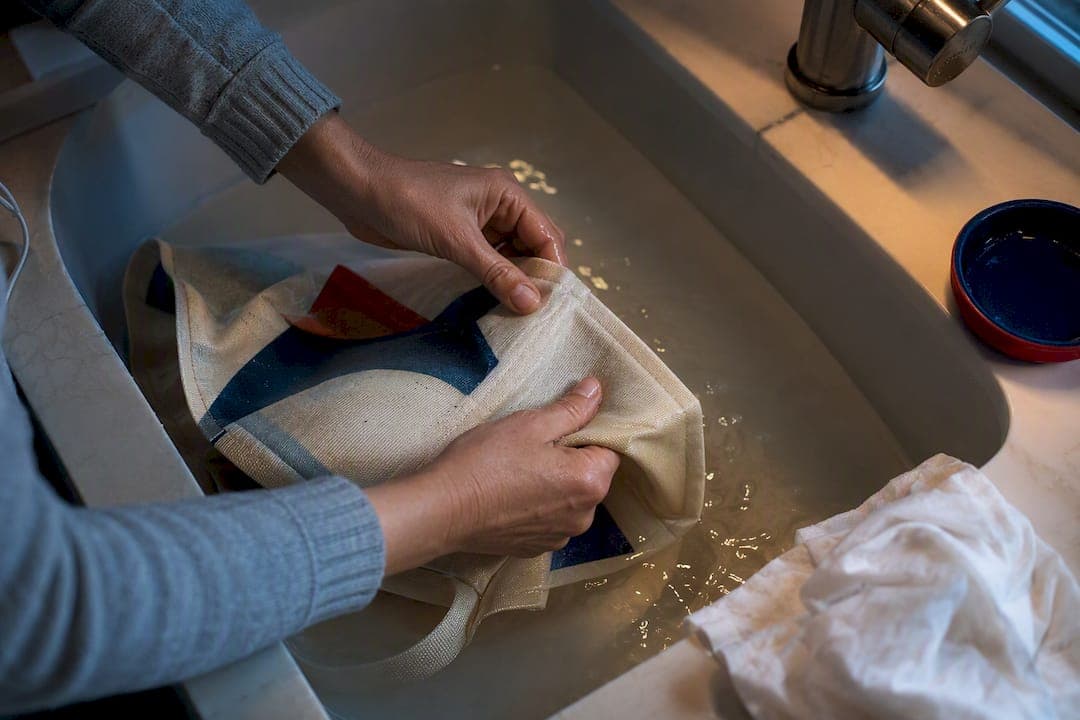
Spot-clean first. Save a full wash for stains that won't budge, and when you do wash, use cold water, a mild detergent, and air-dry flat. Skip the bleach and skip the dryer. Leather straps, jute fibers, and hand-painted details need extra caution: those get spot treatment only, never a soak.
TL;DR:
- Only spot-clean canvas bags and reserve full washes for stubborn stains to prevent fiber fatigue and preserve delicate details.
- Hand-washing in cold water with a gentle detergent is safest for printed, embroidered, or trimmed totes, avoiding machine agitation whenever possible.
- Never soak leather straps or trim, and always air-dry flat to prevent shrinking, cracking, or delaminating heat-transfer designs.
- Protect printed designs by turning totes inside out, washing gently in cold water, and avoiding overloading to maintain artwork durability.
- Regular maintenance such as weekly brushing, monthly seam checks, and using a breathable storage bag extends bag lifespan, especially for limited-edition designs.
Table of Contents
- Canvas Tote Care: A Quick Checklist to Keep on Hand
- Should You Spot-Clean, Hand-Wash, or Machine-Wash?
- How to Hand-Wash a Canvas Tote Step by Step
- Can You Put a Canvas Tote in the Washing Machine?
- How Do You Get Common Stains Out of a Canvas Tote?
- The Right Way to Dry, Reshape, and Store a Canvas Tote
- Keeping Prints, Heat Transfers, and Leather Trim Looking New
- Small Habits That Keep a Tote Going for Years
- Notes on Protecting Printed Totes
- Why Small-Batch Totes Deserve Bigger Care
- Sources
Canvas Tote Care: A Quick Checklist to Keep on Hand
You don't need much to keep a canvas tote looking sharp for years. Stock these basics:
- A soft-bristle brush for lifting dried dirt before it grinds into the weave.
- Mild liquid detergent (dye-free, unscented) for both spot treatment and full washes.
- White vinegar for mildew and musty odors.
- A clean white cloth for blotting and colorfastness checks.
The rule for spills: blot immediately, never rub. Rubbing pushes liquid deeper into the fibers and spreads the stain. Test your cleaner on a hidden seam first, then spot-clean the affected area. If you carry the bag daily, a quick brush-off once a week and a spot-clean as needed will outlast a monthly deep wash. Occasional-use totes can go months between cleanings; just check them before storing.
Should You Spot-Clean, Hand-Wash, or Machine-Wash?
Start by checking the care label, if there is one, and identifying what you're actually dealing with. Cotton canvas, poly-blend canvas, and jute behave differently in water. Cotton tolerates a gentle wash. Poly resists staining but can trap heat damage from a dryer. Jute should almost never get wet beyond light spot-blotting, since it weakens and can mildew when saturated.
Use this decision path: small, fresh stains get spot-cleaning, which brand guides consistently recommend as the first move since full washes accelerate fiber fatigue over time. Bags with delicate prints, embroidery, or leather trim get hand-washed, never machine-washed. Plain, pre-shrunk cotton canvas with no hardware and no trim is the only candidate for a machine cycle.

Before doing anything with water, run a colorfastness test. Press a damp white cloth against a hidden interior seam or the bottom corner, hold for ten seconds, and check the cloth for color transfer. If dye bleeds onto the cloth, hand-wash only, in cold water, and skip the machine entirely.
How to Hand-Wash a Canvas Tote Step by Step
Hand-washing is the safest method for almost any printed or trimmed tote, and it takes about 15 minutes.
- Empty every pocket, shake out crumbs and debris, and remove detachable straps or accessories.
- Run the colorfastness test described above if you haven't already.
- Fill a basin with cold water and mix in a small amount of mild detergent until it's just sudsy.
- Spot-treat any visible stains first with a diluted drop of detergent and a soft cloth.
- Submerge the bag and swish gently by hand for two to three minutes. Don't wring or twist.
- Drain the soapy water and rinse thoroughly in clean cold water until no suds remain.
- Press (don't wring) excess water out between two towels.
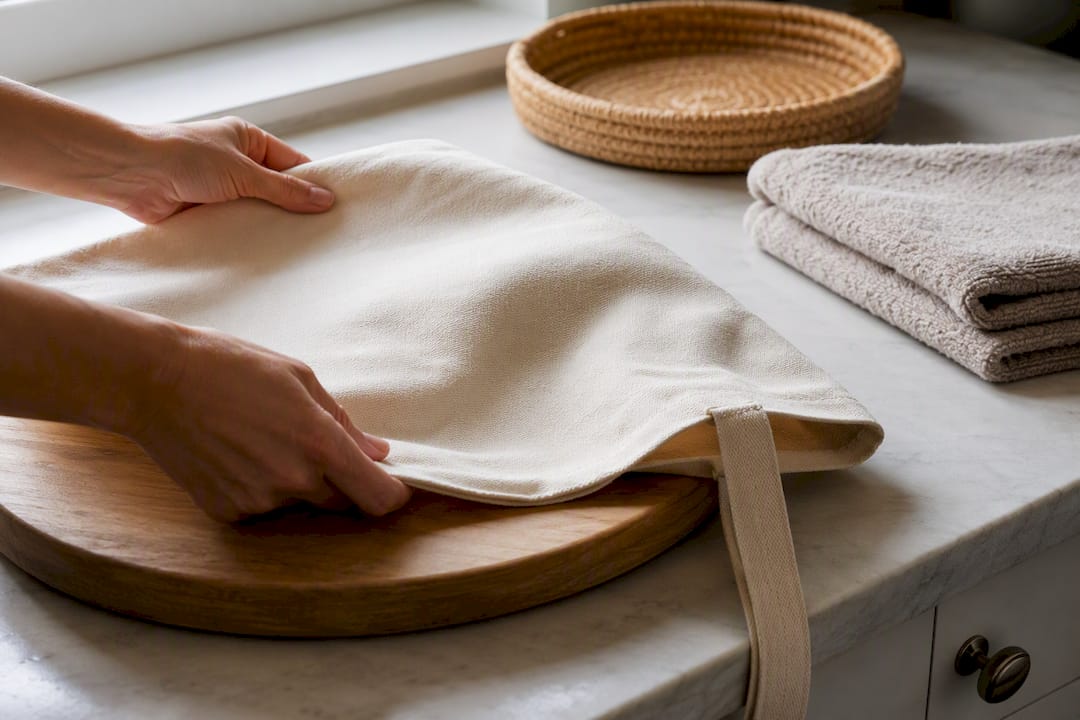
- Reshape the bag while it's still damp, then lay it flat or hang it to air-dry.
Cold water and gentle handling prevent most of the shrinkage and print cracking that hot water and machine agitation cause.
Pro Tip: Stuff the bag with a dry towel while it dries. This holds its shape and speeds up drying time without heat.
Can You Put a Canvas Tote in the Washing Machine?
Machine washing is fine for plain cotton or poly canvas totes with no leather, embroidery, or metal hardware attached. If your bag fits that description, turn it inside out, place it in a mesh laundry bag, and run it on a cold, delicate or hand-wash cycle with a low spin speed. Wash it alone or with similarly colored items so nothing bleeds onto it.
Manufacturer guides agree that this delicate setting is the ceiling, not the norm, for machine care. Never use bleach, and never put a canvas tote in the tumble dryer. Heat shrinks the fibers and can peel or crack heat-transfer prints. Pull it out damp and air-dry it flat instead, the same way you would after a hand-wash.
How Do You Get Common Stains Out of a Canvas Tote?
Different stains call for different fixes, and matching the method to the mess matters more than scrubbing harder.
- Ink: Blot (never rub) with a cotton swab dipped in rubbing alcohol, working from the outside of the stain in. Lift the loosened ink onto a paper towel underneath, and test the alcohol on a hidden spot first since it can affect some dyes.
- Oil or grease: Work a small amount of dish soap directly into the spot as a degreaser, then let a baking soda poultice sit on it for 15 minutes before brushing off. A baking-soda paste also works well on scuff marks when you want to skip harsher chemicals.
- Coffee or food: Soak the area in cool water with a drop of mild detergent, then blot and rinse.
- Mildew or musty odor: Apply a one-to-one white vinegar and water solution to the affected spot, then air-dry completely. If mildew keeps coming back, oxygen bleach or a professional cleaner is worth considering, especially for jute or heavily soiled canvas.
The Right Way to Dry, Reshape, and Store a Canvas Tote
Air-dry flat or draped over a rounded support, never on a hanger that stretches the handles. Reshape the bag while it's still damp, since canvas holds a crease once it fully dries. Keep it out of direct sun and away from radiators or heat vents. Sunlight fades prints, and tumble-dryer heat is the fastest way to shrink canvas or delaminate a heat-transfer design.
For storage, use a breathable dust bag rather than plastic, which traps moisture and invites mildew. Stuff the bag lightly with tissue or a soft cloth to hold its shape, and drop in a silica gel packet for anything stored longer than a season. Once a month, check seams, handle stitching, and corners for fraying. A loose thread caught early is a five-minute fix with a needle; ignored, it becomes a torn seam.
Keeping Prints, Heat Transfers, and Leather Trim Looking New
Screen prints, water-based inks, and heat transfers all react differently to washing, so treat the decoration as the most fragile part of the bag. Always wash prints inside out, in cold water, with gentle hand motion rather than scrubbing. Plastisol and water-based inks have different heat tolerances, and repeated machine agitation shortens print life faster than occasional hand-washing does, which is one more reason to default to hand care for anything decorated. If you're curious how ink type affects durability before you even buy, our breakdown of water-based versus plastisol printing covers the differences.
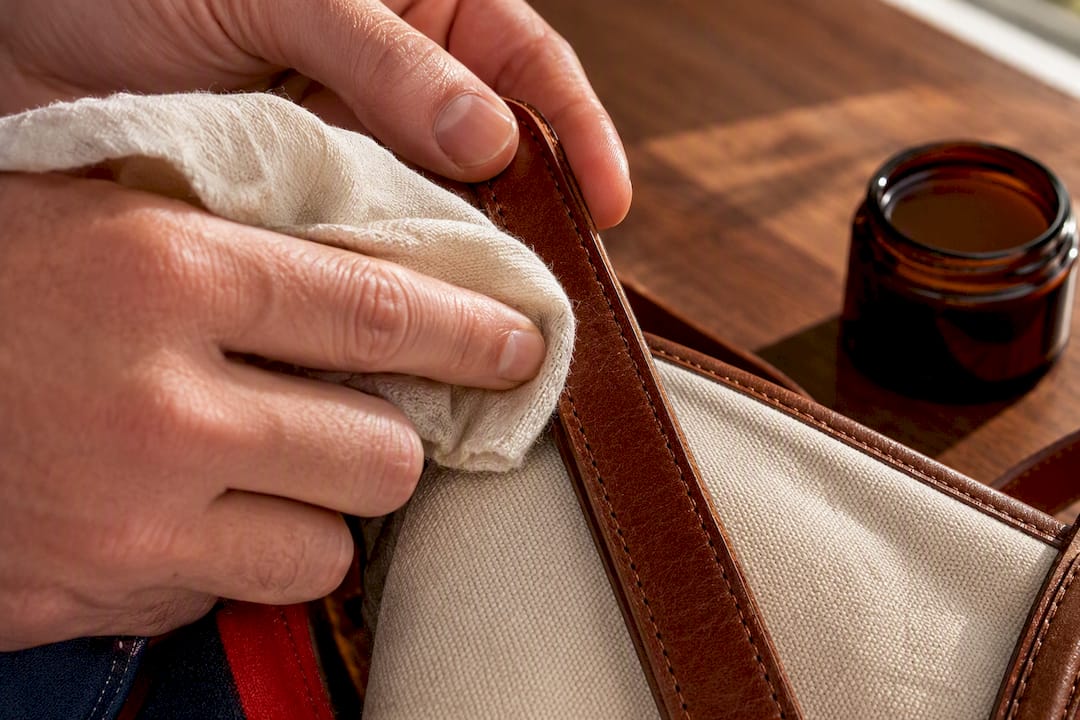
Leather straps or trim should never be soaked. Wipe them down with a damp cloth and condition occasionally with a leather-safe product made for the material.
If you use a fabric protector spray, test it on a hidden corner first. Some sprays darken or stiffen natural canvas, so reapply sparingly, roughly once a season for a bag in frequent rotation.
Pro Tip: Turn printed totes inside out before every wash, even a quick hand-rinse. It's a five-second habit that saves the artwork.
Small Habits That Keep a Tote Going for Years
Rotate between two or three bags instead of running one into the ground daily. Avoid overloading past what the straps and seams were built for. A weekly shake-out or brush-off, plus a monthly seam check, catches wear before it becomes a repair. Reinforcing a loose stitch with a needle and thread takes minutes; once a handle fully separates from the body, retiring the bag is usually cheaper than fixing it. Daily-carry totes need more frequent attention than occasional event or merch totes, which can go weeks between checks.
Notes on Protecting Printed Totes
Printed merch totes can be harder to replace than plain canvas bags. Once a limited design is gone, it's gone, so the print is what you're really protecting, not just the fabric. One expert's advice: treat every wash like it's the last one that design gets. Turn it inside out, keep it cold, keep it gentle.
Our guide to preserving graphic prints through dozens of washes covers the same inside-out, cold-water logic that applies to totes. And if overloading is a habit, check our tote sizing breakdown before you stuff one past its limit.
Why Small-Batch Totes Deserve Bigger Care
A mass-produced tote is replaceable. A small-batch design tied to a shop or venue that might not exist in five years isn't. That's the difference that actually matters here: care isn't about vanity, it's about not losing something you can't buy again.
If there's one habit worth adopting, it's turning the bag inside out before every wash, no exceptions. It's the cheapest insurance a printed tote gets. For anyone building a collection of designs like the ones at Native303, that habit is what makes them last.
— Rob
Sources
- Canvas Care Guide | Leatherology
- How to Wash a Canvas Tote Bag: A Complete Care Guide – TBF Bags
- How To Wash a Cotton Canvas Tote Bag – MapTote
- Canvas tote bag care guide (industry overview) – Beaburn / AussieBulk Supplies