
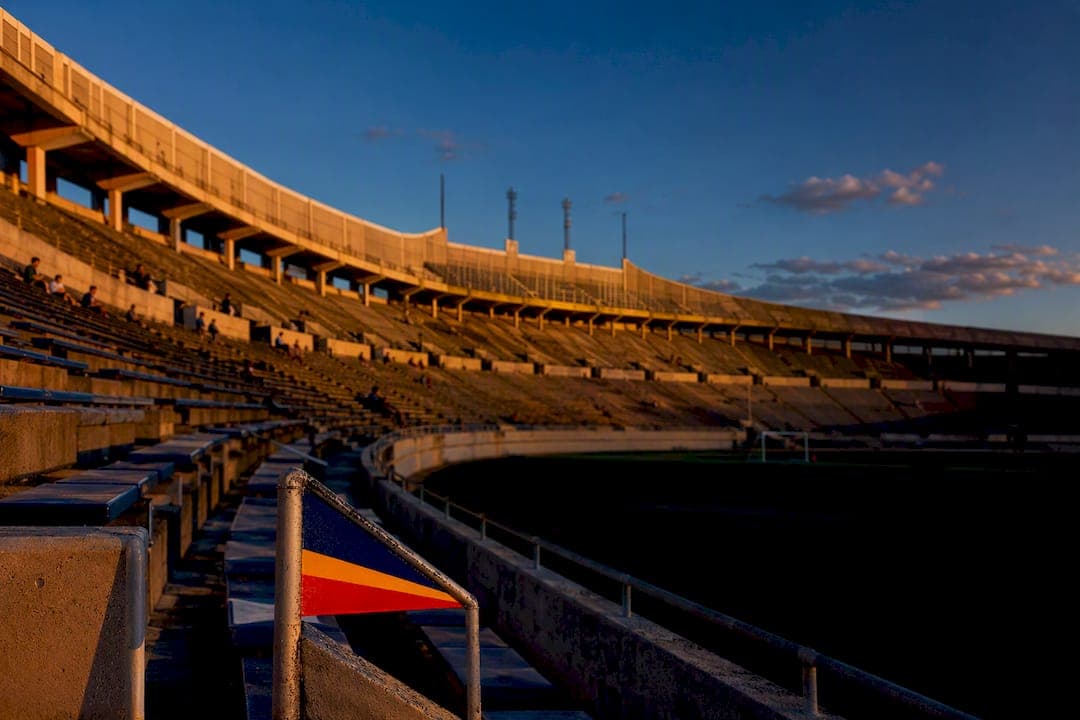
Mile High Stadium was Denver's outdoor multi-purpose venue from 1948 until it closed in 2001, with demolition finished in 2002. It began as Bears Stadium for minor-league baseball, grew into the longtime home of the Denver Broncos, hosted the Colorado Rockies for two record-setting seasons, and became the backdrop for some of the city's biggest civic gatherings.
TL;DR:
- Mile High Stadium was built on a former landfill and expanded multiple times, including a movable grandstand that could shift for baseball and football.
- The Colorado Rockies used Mile High Stadium for their first two seasons, drawing an MLB record attendance of approximately 4.48 million in 1993 before moving to Coors Field in 1995.
- Major civic events, such as Pope John Paul II's appearance in 1993, often exceeded the stadium’s original sports-focused capacity and infrastructure limits.
- The stadium was demolished in 2002 after the Broncos and other tenants moved to the new Empower Field at Mile High, while Mile High's legacy endures through memories and apparel inspired by its history.
Table of Contents
- Origins and early years: Bears Stadium, 1948 to 1959
- Expansions and engineering: the 1960s and 1970s transformations
- The Broncos era and Mile High fan culture, 1960 to 2000
- The Rockies and Denver's brief run as an MLB town at Mile High
- Major events, concerts, and Mile High's civic role
- Decline, replacement, and demolition, 1999 to 2002
- Legacy and what followed: successor venues and redevelopment plans
- Local perspective: Rob and Native303's connection to Mile High memories
- Why Mile High still matters more than the box scores suggest
- Bring a piece of Mile High home
- Sources
- FAQ
Origins and early years: Bears Stadium, 1948 to 1959
Denver businessman Bob Howsam built Bears Stadium in 1948 on a patch of land that had previously served as a city landfill, a detail that still surprises people who assume the site started as pristine parkland. He built it for his own team, the Denver Bears, a minor-league baseball club that quickly became one of the city's most popular civic institutions.
The original stadium was modest by later standards, but attendance for Bears games ran strong enough to convince city leaders that Denver could support something bigger. That early success planted the idea that eventually reshaped the entire venue.
- Built in 1948 on a former landfill site by Bob Howsam
- Designed initially as a baseball-only park for the Denver Bears
- Strong minor-league attendance created pressure for expansion
- Early growth set the stage for the stadium's multi-decade transformation
Expansions and engineering: the 1960s and 1970s transformations
Bears Stadium changed shape repeatedly as Denver's ambitions grew. Temporary east stands went up in 1960, and by 1968 the venue expanded to 50,657 seats to satisfy merger requirements tied to professional football. The most dramatic change came between 1975 and 1977, when engineers added a triple-deck grandstand on the east side that could physically move on rails, sliding into position for baseball and shifting for football.
That movable grandstand pushed capacity to 75,103 and let one facility serve two very different sports. It also weighed millions of pounds and needed constant mechanical attention, a tradeoff that defined the multi-purpose stadium era across the country.
- 1960: temporary east stands added to boost capacity
- 1968: expansion to 50,657 seats
- 1975 to 1977: movable triple-deck east grandstand raised capacity to 75,103
Pro Tip: If you want to picture the engineering, imagine a section of bleachers the size of a city block riding on rails between games.
The Broncos era and Mile High fan culture, 1960 to 2000
The Denver Broncos played at the stadium from their founding season through 2000, a run that turned the venue into one of the loudest, most feared road environments in professional football. Fans in the south stands developed a foot-stomping ritual that shook the structure itself, and the Denver Post's retrospective coverage ties the stadium's "House of Horrors" reputation directly to that noise combined with Denver's altitude.
Barrel Man became a fixture of the sideline experience, and the Broncos rewarded the crowd with a run of sellouts that lasted for decades.
- The Broncos anchored the stadium from the AFL's early years through the 2000 season.
- Fan traditions like foot-stomping and Barrel Man became inseparable from the Mile High identity.
- Playoff runs during the Elway era produced some of the most memorable moments in the stadium's history.
The Rockies and Denver's brief run as an MLB town at Mile High
The Colorado Rockies used Mile High Stadium as a temporary home for their first two seasons while Coors Field was under construction downtown. Opening Day on April 9, 1993 drew one of the largest crowds in baseball history, part of a season that pushed total attendance to roughly 4.48 million, a single-season MLB record at the time.
The Rockies drew about 4.48 million fans in 1993, a figure the MLB.com timeline attributes to temporary outfield bleachers and a fan base starved for its own team.
The football-shaped field forced odd power alleys that inflated scoring, and once Coors Field opened in 1995 the Rockies moved permanently, giving Denver a dedicated ballpark instead of a shared stadium built for a different sport.

Major events, concerts, and Mile High's civic role
Mile High Stadium wasn't only a sports venue. Its size made it Denver's default gathering place whenever a crowd needed room, and few events matched the scale of Pope John Paul II's appearance during World Youth Day.
- World Youth Day in August 1993 drew a crowd estimated in the tens of thousands for the papal event.
- Major concerts and festivals used the stadium's open field and tiered seating for large-scale productions.
- These civic moments often stretched the stadium's capacity and infrastructure past what its sports-focused design anticipated.
Those events shaped local memory as much as any football game, cementing the stadium as a shared civic space rather than a single-purpose venue.
Decline, replacement, and demolition, 1999 to 2002
By the late 1990s, Denver had already committed to a new stadium next door, and Mile High's final years played out as a slow handoff rather than an abrupt ending. The Broncos closed out their tenancy in 2000, and the Colorado Rapids soccer club held on as the last professional tenant before the new facility opened.
- The Broncos played their final games at Mile High during the 2000 season.
- The Colorado Rapids became the last professional team to call the stadium home.
- The replacement stadium, later known as Empower Field at Mile High, opened in 2001 and absorbed the remaining tenants.
- Demolition ran from January through April 2002, closing out more than five decades of use.
Local coverage at the time captured a mix of relief and mourning, with longtime fans treating the demolition as the end of a shared civic chapter.
Legacy and what followed: successor venues and redevelopment plans
Mile High's legacy split in two directions. Football tradition carried forward into Empower Field at Mile High, which inherited the name and much of the fan culture, while baseball found a permanent home at Coors Field downtown, a move that helped reshape LoDo into the entertainment district it is today.
- Empower Field at Mile High carried the Broncos' name and fan traditions into a new building.
- Coors Field gave the Rockies a permanent, baseball-specific home and reshaped downtown Denver.
- Memorabilia, photographs, and oral histories keep Mile High's memory active among longtime Denver residents.
- The Broncos are now pursuing a new stadium at Burnham Yard, targeting an opening in the early 2030s pending rezoning and site remediation.
The Burnham Yard conversation shows that Denver's stadium story never really stopped moving. It just changed addresses.
Local perspective: Rob and Native303's connection to Mile High memories
Native303 is inspired by Denver spaces that no longer exist, with Mile High Stadium being one of the prominent examples. Rob's ongoing coverage of Denver's sports culture and apparel history traces how stadium traditions, from South Stands stomping to Broncomania chants, end up printed on shirts decades later.
These stories influence the design approach to create apparel that serves as wearable memories for people connected to these experiences.
Why Mile High still matters more than the box scores suggest
The instinct with stadium history is to reduce it to dates and capacity figures, but that misses what actually stuck with Denver. The engineering story, that odd movable grandstand groaning between configurations, matters less than the fact that three generations of fans built rituals around a building that no longer exists.

What gets underrated is how much the Rockies' brief stay mattered. Two seasons at a converted football field, awkward power alleys and all, proved Denver could support baseball and gave the city the leverage to build Coors Field. That's a bigger legacy than most fans give it credit for.
If you take one thing from this history, it's that Denver's stadiums have always been about more than the games played inside them. They're where a city recognizes itself, which is exactly why a shirt referencing the South Stands or Broncomania still means something decades later.
— Rob
Bring a piece of Mile High home
Native303 turns those exact memories, the stomping South Stands, Broncomania, the papal crowd of 1993, into apparel that carries real Colorado history instead of generic vintage design. Every piece draws from specific eras and specific places, which is why longtime Denver residents recognize the reference the moment they see it.
Browse the current Tees, Sweatshirts, Hoodies and more inspired by Denver's disappeared landmarks, or work directly with our team through the custom design request page if you want a piece built around your own Mile High memory. Check the size guide before you order getting the right fit the first time.
Sources
The Wikipedia entry on Mile High Stadium covers construction and demolition dates. Denver Post retrospectives capture fan voice and civic events, while the Colorado Encyclopedia and MLB.com timelines document the Rockies era, and ENR tracks the Burnham Yard planning process.
- Mile High Stadium — Wikipedia
- DenverPost.com - Mile High Memories
- Mlb
- Colorado Rockies — Colorado Encyclopedia
- ENR — Denver Broncos stadium plan advances at Burnham Yard with 2031 target
FAQ
What happened to the original Mile High Stadium?
The original stadium closed in 2001 after the Broncos and Rapids moved to the new facility next door, and demolition ran from January through April 2002. The site later became part of the new stadium's surrounding footprint.
Did the Colorado Rockies ever play at Mile High Stadium?
Yes, the Rockies played their first two seasons there, from 1993 to 1994, while Coors Field was under construction. The 1993 season drew roughly 4.48 million fans, a single-season MLB attendance record at the time.
What is the actual altitude of Mile High Stadium?
The stadium's name refers to Denver's general elevation near one mile above sea level rather than a precise on-site measurement tied to the stadium itself. Fans and broadcasters used the nickname loosely to describe the thin-air home-field effect described in contemporary coverage of Broncos games.
What will happen to Empower Field at Mile High?
Empower Field remains the Broncos' current home, but the team is pursuing a new stadium at Burnham Yard with a target opening of 2031. The project still needs rezoning approval and site remediation before construction can move forward.