
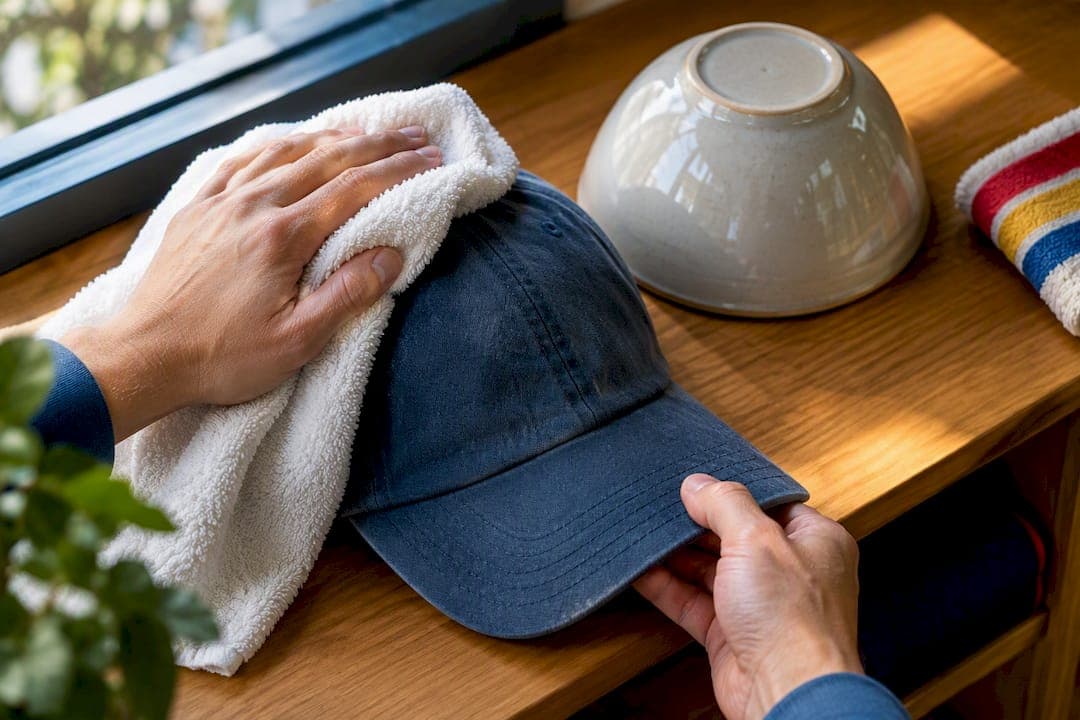
Hand-washing is the safest way to clean a baseball cap, and it should be your default. Reach for a hat cage and a cold, gentle machine cycle only when the cap is modern cotton or polyester with no cardboard parts. Never use chlorine bleach or a dishwasher. Once clean, actively reshape the crown and brim while damp and let it air-dry, since that step decides whether the hat still fits right tomorrow.
TL;DR:
- Hand-washing with cool water and mild detergent is the safest method for most baseball caps, especially vintage or fabric with cardboard brims.
- Machine washing is acceptable only for caps made from cotton or polyester with a stitched brim, using a hat cage and a gentle cycle at cold temperatures.
- Avoid bleach, fabric softeners, or dishwashers, as these can damage fabric, fade colors, or warp the shape of the cap.
- Dry caps by reshaping and air-drying in a shaded area, avoiding heat sources or dryers to prevent shrinking or cracking.
- Regular maintenance like wiping sweatbands and proper storage can extend the lifespan of caps, with full washes recommended about once a month for daily wear.
Table of Contents
- What You Need Before You Wash a Baseball Cap
- How Do You Hand Wash a Baseball Cap?
- Can You Machine Wash a Baseball Cap?
- How Do You Remove Specific Stains From a Cap?
- How Long Does It Take a Baseball Cap to Air Dry?
- How Often Should You Wash a Baseball Cap?
- Why Fit and Fabric Choice Matter Before You Ever Wash a Cap
- A Straight Answer on Convenience Versus Care
- Sources
- FAQ
What You Need Before You Wash a Baseball Cap
Before any water touches your cap, spend two minutes checking it. Look at the care label first. If there isn't one, or it's worn off, flick the underside of the brim with your finger. A hollow "thwack" means plastic, which tolerates water fine; a dull thud or a brim that stays bent after flicking usually means cardboard, which turns to mush if soaked. Vintage caps from before the early 1980s almost always have cardboard brims, so treat anything older as spot-clean-only.

Run a quick colorfastness test too. Dab a damp white cloth with a little detergent on an inside seam and check for dye transfer before you commit to a full soak.
Gather these before you start:
- Mild detergent (dish soap or a gentle laundry detergent works)
- A soft toothbrush or cloth for logos and embroidery
- A mesh laundry bag or a hat cage
- Oxygen bleach or hydrogen peroxide for white or light-colored caps
- White vinegar for salt and mineral stains
- Clean towels and a bowl or hat form for drying
How Do You Hand Wash a Baseball Cap?
Hand-washing avoids the mechanical stress and heat that cause shrinkage and warping, which is why it's the method most textile-care guides recommend over machine or dishwasher cleaning. Here's the full sequence:
- Fill a sink or basin with cool water and a small amount of mild detergent. Skip hot water entirely; heat is what sets stains and shrinks fabric.
- Submerge the cap and let it soak for 10 to 20 minutes. This loosens dirt and oils without you having to scrub hard.
- Scrub gently with a soft toothbrush, focusing on the sweatband and any visible stains. Use light circular motions on logos and embroidered areas so you don't fade the print or snag the threading.
- Rinse thoroughly under cool running water until no suds remain.
- Press out excess water with a towel. Do not wring or twist the cap. Twisting is the single fastest way to warp a brim permanently.
- Stuff the crown with a hand towel or set the cap over a bowl, and gently reshape the brim with your hands before it dries.
If the cap is white or light-colored and has yellowed at the sweatband, this is the point to add oxygen bleach or hydrogen peroxide to the soak instead of plain detergent. Dissolve it per the package directions, then let the cap soak, checking every 20 minutes. Always spot-test on an inside seam first, since some dyes react even to oxygen-based cleaners.
Pro Tip: Skip chlorine bleach entirely on sweat stains. It reacts with the protein residue in sweat and can turn a yellow stain a darker, harder-to-remove brown instead of lifting it.
Can You Machine Wash a Baseball Cap?
Machine washing works, but only under specific conditions. Modern caps made from cotton twill or polyester with a stitched (not cardboard) brim generally survive a gentle cycle. Wool, suede, silk, straw, and any vintage cap with a cardboard brim should never go anywhere near a washing machine, since the agitation and moisture will distort or destroy the structure.
If your cap qualifies, here's what actually protects it:
- Use a dedicated hat cage, which costs around $10 to $15 and locks the crown in a fixed shape during the wash.
- If you don't have a cage, a mesh laundry bag is a distant second option, though it offers less structural protection.
- Make sure the cage fits snugly. A loose cage lets the hat rattle around and deform anyway, defeating the purpose.
- Set the machine to a cold, gentle or delicate cycle with a small amount of mild detergent.
- Skip fabric softener and bleach completely.
- Wash it alone or with a small, soft load. Don't toss it in with jeans or towels that will bang against it.
Set a timer so you remember to pull the cap out the moment the cycle ends. Letting it sit damp inside the machine invites mildew and lets the crown lose its shape as it dries flat. Reshape it immediately, the same way you would after hand-washing.
How Do You Remove Specific Stains From a Cap?
Different stains need different fixes, and using the wrong one can make things worse. Salt rings from sweat, common on caps worn for running or outdoor work, respond well to a diluted white vinegar solution. Mix equal parts vinegar and water, dab it onto the ring, and scrub gently with a soft brush before rinsing.

Yellow, oxidized sweat stains on white or light caps call for oxygen-based cleaners rather than chlorine bleach. OxiClean, dissolved and used as a soak for 20 minutes up to a few hours, lifts this kind of discoloration effectively on washable fabrics, though the brand itself warns against using it on wool, straw, leather, or dry-clean-only materials.
Grease and makeup stains are a different animal. Dish soap or shampoo worked directly into the sweatband breaks down oil-based residue better than standard laundry detergent. Enzyme cleaners are worth keeping around too, since they target the protein and oil compounds in sweat and makeup that regular detergent struggles with.
- Salt or mineral rings: white vinegar and water, 1:1 ratio
- Yellow sweat stains (whites): oxygen bleach or hydrogen peroxide, tested first
- Grease or makeup: dish soap or shampoo on the sweatband
- Protein-based stains: enzyme cleaner, never chlorine bleach
Regular light maintenance matters more than most people think. Sweat stains oxidize over time, and a stain that would rinse out easily after one wear can take repeated treatments to shift after a month of sitting untreated.
How Long Does It Take a Baseball Cap to Air Dry?
Drying isn't passive. It's the step where you actually shape the hat back into the fit you bought it for, and rushing it with heat undoes everything the wash accomplished.
Start by pressing out water with a clean towel, without wringing. Stuff the crown firmly with a hand towel or set it over an upside-down bowl sized close to your head, then mold the brim into its natural curve while it's still damp and pliable. Set it somewhere out of direct sunlight and away from any heat source, including radiators and car dashboards, since both can fade color and warp brims. A full air-dry typically takes 12 to 24 hours depending on humidity and fabric thickness.
If the brim still looks slightly off once dry, a light pass of steam from a distance, followed by hand reshaping, can correct minor warping. A hat form is worth the small investment if you own several caps and want consistent results every time.

Pro Tip: Never use a hair dryer, clothes dryer, or oven to speed things up. Heat is the fastest way to shrink the crown or crack a printed logo permanently.
How Often Should You Wash a Baseball Cap?
A cap you wear daily needs a real wash about once a month. One you wear a few times a season can go several months, or even a full year, between full washes. What matters more than the calendar is what happens between washes.
Wipe down the sweatband with a damp cloth after heavy sweating, and let the cap air out fully before you store it or wear it again the next day. A light, unscented fabric deodorizer used sparingly can handle odor between washes without you needing to soak the whole thing.
Storage habits matter too:
- Keep caps on a shelf, in a hat box, or on hooks rather than crushed in a drawer.
- Avoid stacking anything heavy on top of a stored cap.
- Keep them out of direct sunlight, which fades printed logos and weakens fabric over time.
Why Fit and Fabric Choice Matter Before You Ever Wash a Cap
The easiest way to keep a cap clean and in shape long-term starts before the first wash. Some hats are built to hold their shape through normal wear, but any cap fits better and stays cleaner longer when you get the sizing right the first time. A cap that's too tight stretches the sweatband and traps more sweat against your skin, which speeds up staining. Check the size guide before you buy to avoid that problem entirely.
Print quality plays a role too. How a logo is applied affects how much scrubbing it can survive, something covered in more depth in Native303apparel's comparison of water-based and plastisol printing. If you're weighing a trucker hat against a structured baseball cap for durability and breathability, the trucker hat vs. baseball cap checklist breaks down how each style holds up to regular cleaning.
A Straight Answer on Convenience Versus Care
If it's a $15 cap you grabbed at a gas station, don't overthink it. Toss it in a hat cage on a gentle cycle and move on with your life. Nobody needs to hand-wash a hat they'd replace without a second thought.
But if it's a favorite, a vintage find, or anything with sentimental weight, hand-washing is worth the twenty extra minutes. The difference between a cap that lasts five years and one that's warped by winter is almost always the drying step, not the washing step.
For most people, the realistic routine looks like this: wipe the sweatband after heavy wear, let it air out overnight, and do a full hand wash once a month. That alone prevents most of the yellowing and salt staining that eventually ruins a cap for good.
— Rob
Sources
The guidance above draws on practical cleaning breakdowns and product instructions rather than guesswork. Worth bookmarking if you want more detail on a specific step:
- How to wash a baseball cap
- How to wash a baseball cap
- How Do You Clean A Baseball Cap - Great Research
- How to clean a baseball cap
- Cleaning hats with OxiClean
When in doubt about a specific cap, check the manufacturer's care label before applying any of these methods.
FAQ
How Can I Wash My Baseball Cap Without Ruining It?
Hand-wash it in cool water with mild detergent, scrub gently with a soft toothbrush, and reshape the crown and brim while it's still damp. This avoids the heat and agitation that cause most shrinkage and warping.
Can I Put My Baseball Cap in a Washing Machine?
Yes, but only if it's a modern cotton or polyester cap without a cardboard brim. Use a dedicated hat cage on a cold, gentle cycle, and skip bleach and fabric softener.
Is It Better to Wash Baseball Caps in the Dishwasher or Washer?
Neither beats hand-washing, but between the two, the washer is safer. Dishwashers use high heat and harsh detergents that can damage fibers, fade dyes, and warp brims, so skip that shortcut entirely.
Can You Use Dawn Dish Soap to Clean Baseball Hats?
Yes, dish soap works well on grease and body-oil stains, especially around the sweatband. Use a small amount, work it in gently with a soft brush, and rinse thoroughly before air-drying.