
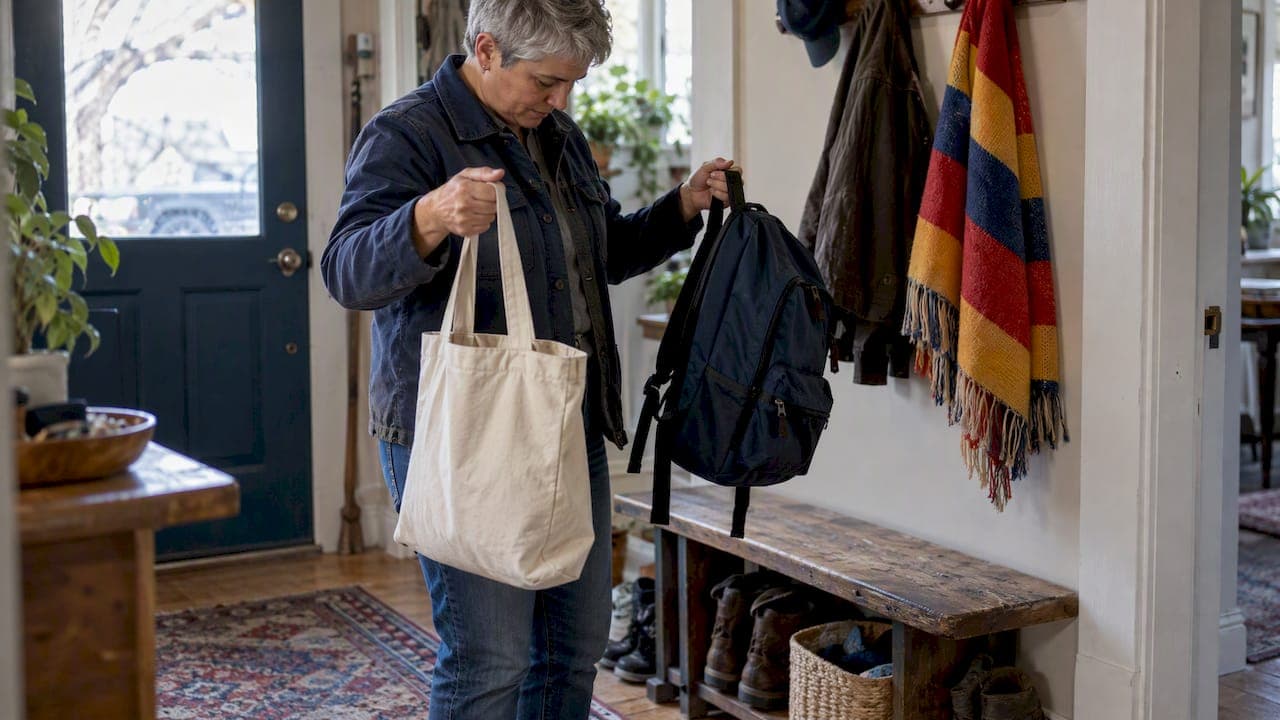
For most people hauling a laptop, lunch, gym clothes or anything heavy, a backpack is the more comfortable daily choice because it spreads weight across both shoulders. A tote wins for short errands, quick commutes and outfits where style matters more than capacity. The one rule worth remembering either way: try to keep what you carry near or below 10% of your body weight, and pick your bag, including a canvas tote, around that number.
TL;DR:
- Carrying loads over 10% of your body weight, especially with a tote, increases the risk of back pain and discomfort.
- A backpack with support straps and compartments effectively distributes weight and reduces strain compared to a single-strap tote or handbag.
- Using padded straps, adjusting for proper fit, and balancing weight across both shoulders minimize postural issues regardless of bag type.
- Durability and environmental impact vary: canvas totes are sustainable but less protective, while nylon backpacks resist rain and wear longer.
- Match your bag to your routine, opting for a backpack for heavier or longer loads and a tote for quick errands and style-oriented, light carries.
Table of Contents
- Backpacks vs totes at a glance
- What the research says about strain and comfort
- How much each bag actually holds
- Materials, durability and how to care for each bag
- Which bag fits your routine
- Simple adjustments that reduce strain today
- What each bag costs and what that buys you
- Materials and their environmental footprint
- A publisher's take on style versus function
- Where to find a Native303 tote that fits your routine
- Sources
- FAQ
Backpacks vs totes at a glance
Each bag type has a clear lane. Backpacks handle weight and bulk well; totes handle speed and style.
- Backpacks: two-strap support, multiple compartments, better for laptops, books or gym gear, but bulkier and less dressy.
- Totes: fast in-and-out access, pairs with most outfits, great for light loads, but strains one shoulder when overloaded.
- Backpacks struggle with quick grab-and-go errands where you only need a wallet and phone.
- Totes struggle once you add a water bottle, a laptop and a change of clothes.
The ergonomics data backs this up directly: loads above about 10% of body weight are linked to a higher likelihood of back pain, and that threshold matters more for a single-strap tote than for a weight-distributing backpack.
A grocery run with two bags of produce favors a backpack or a structured tote with reinforced handles. A trip to grab coffee and a book favors a light tote every time.
What the research says about strain and comfort
Biomechanics researchers have spent real time comparing how bags load the spine, and the pattern is consistent: asymmetrical carrying, the kind you get with a single-strap tote, puts more stress on the back than a well-worn backpack carrying the same weight.
Higher odds of back pain were found among students carrying backpacks above about 10% of their body weight, according to a University of Puerto Rico study on backpack loads. That threshold is a useful anchor whether you are packing a school bag or a daily commuter pack.
Separate modeling work found that handbags and totes generate more paraspinal muscle force and disc stress than a backpack carrying the same weight, because the load pulls unevenly on one side of the body. Strap length matters too: longer backpack straps are tied to reduced pain thresholds in the upper trapezius and less favorable neck posture compared with shorter straps.
A few habits reduce the risk regardless of which bag you use:
- Weigh your loaded bag occasionally so 10% of body weight stays a real reference point, not a guess.
- Adjust backpack straps so the load sits high and close to your back.
- Alternate shoulders constantly when carrying a tote, never just favor one side.
- Choose padded straps on a backpack when the daily load includes a laptop or textbooks.
Pro Tip: If your tote regularly holds more than a water bottle, a book and a wallet, it is doing a backpack's job without a backpack's support.
How much each bag actually holds
A laptop, charger and lunch fit fine in either bag, but gym clothes, a change of shoes and a water bottle push the scale toward a backpack with dedicated compartments. Groceries, likewise, are easier to balance across two shoulders than one.
Totes can still work for heavier days with the right additions:
- A padded laptop sleeve keeps electronics protected inside a soft tote.
- An internal pouch or organizer keeps keys, cards and cables from sinking to the bottom.
- A backpack with external bottle pockets and a dedicated laptop compartment keeps weight closer to the back, which matters more than the pockets themselves.
If your daily carry regularly exceeds a laptop plus a small lunch, let capacity decide the bag, not style. Reviewing common tote dimensions before buying helps match the bag to what you actually carry each day.
Materials, durability and how to care for each bag
Canvas totes are light, breathable and easy to print on, which is why they dominate casual and nostalgia-driven designs, but they compress poorly for air travel and show stains more easily than technical nylon. Leather totes last longer and resist weather better, though they weigh more and need occasional conditioning. Technical nylon backpacks compress well for overhead bins and hold up to rain, which stowage guidance notes matters for fitting personal items under an airline seat or in overhead storage.
Care routines differ by material:
- Hand wash canvas totes briefly and air dry to protect prints and shape, a technique covered in this canvas tote care guide.
- Spot clean leather rather than soaking it, and condition it occasionally to prevent cracking.
- Wipe down technical nylon backpacks with a damp cloth since most resist stains on their own.
Which bag fits your routine
Match the bag to what your day actually looks like rather than what looks best on a hanger.
- Daily commuter with a laptop: backpack, because sternum straps and back panels keep weight stable on transit or a bike.
- Parent on a short school run: tote, light and fast, unless you are also carrying a diaper bag's worth of gear, in which case a structured tote with an internal organizer works.
- Grocery shopper: backpack or a reinforced tote with sturdy handles, since loose canvas handles strain under heavy produce.
- Traveler: backpack, since it compresses better for overhead storage and keeps both hands free through security.
- Style-first city errands: tote, where a light canvas design doubles as an outfit statement.
When your routine splits across these categories, a small daypack or a structured tote with internal pockets covers both the style and function gap without forcing a choice.
Pro Tip: Keep a lightweight backpack as backup for the days your tote plans turn into grocery runs.
Simple adjustments that reduce strain today
Small fit changes make a bigger difference than switching bags entirely.
- Set backpack straps so the pack sits near your mid-back, not low on your hips.
- Use the sternum strap and hip belt if your pack has them, especially for heavier loads.
- Shorten tote handles where adjustable, and swap shoulders every few minutes rather than favoring one side all day.
- Split heavy items like water bottles and books between two bags when a single tote starts pulling your posture off balance.
Pro Tip: Do a quick mirror check: if one shoulder sits visibly lower than the other after loading your bag, redistribute the weight before you leave the house.
What each bag costs and what that buys you
Totes are generally the cheaper entry point into either category, since a basic canvas design requires less hardware, fewer compartments and simpler stitching than a backpack built with padded straps and multiple zippers. Backpacks with reinforced harnesses, padded panels and organized compartments tend to cost more because that construction is what makes heavier loads bearable in the first place.
Value depends on fit to your routine more than price alone. A $20 tote that you use daily for a light commute delivers more value than a $100 backpack that sits unused because it is overbuilt for your actual carry. Conversely, a cheap backpack with thin, unpadded straps can cost you comfort fast if you are hauling a laptop five days a week, which makes the research on strap design and harness quality worth weighing against a lower price tag.
Native303 does not publish fixed pricing for its tote bags, so checking current pricing directly on the store page is the most reliable way to compare value against other totes or backpacks you are considering.

Materials and their environmental footprint
Canvas, typically cotton-based, is biodegradable and often more sustainable to produce than synthetic alternatives, though cotton farming itself carries a water footprint worth knowing about. Leather lasts for years when cared for properly, which extends its usable life, but tanning processes vary widely in their environmental impact depending on the producer. Technical nylon backpacks resist wear for a long time, which reduces how often they need replacing, though the material itself is petroleum-based and does not biodegrade easily.
The most sustainable bag, in practical terms, is often the one you already own and keep using. A well-cared-for canvas tote that lasts several years through proper hand washing beats replacing a cheaper bag annually, regardless of which material technically scores better on paper. Buying fewer, better-made bags and maintaining them tends to matter more than chasing a single "greenest" material.

A publisher's take on style versus function
Simple canvas totes stay popular for city errands because they do one thing well: they look good and grab fast. A backpack still wins for me the moment a laptop or anything over a few pounds enters the picture, because the research on strap length and load distribution lines up with what strain actually feels like after a long day.
Native303's approach to place-based design leans into that tension: a tote tied to a specific memory or neighborhood earns its spot in a daily rotation even when it is not the most practical bag in the closet.
— Rob
Where to find a Native303 tote that fits your routine
Native303 sells printed canvas tote bags with designs inspired by Denver and Colorado nostalgia, the kind of design that makes a light daily carry feel personal rather than generic. If your routine leans toward short errands, style-forward outfits or a lightweight daily carry, a Native303 tote fits that lane well.

- Browse current tote designs and the rest of the lineup on the Native303 store.
- Check the size guide before buying to match dimensions to your daily load.
- Request a one-of-a-kind look through the custom design service if you want a tote tied to your own Denver memory.
For comparison, a minimalist cotton tote like the one on Left 4 Left shows how a plain design handles the same job without the local story built in.
Sources
- Effects of Excessive Back Loads from Student’s Backpacks of the University of Puerto Rico Medical Sciences Campus
- The Biomechanical Effects of Different Bag‐Carrying Styles on Lumbar Spine and Paraspinal Muscles
FAQ
Is it better to wear a backpack or a tote bag?
A backpack is generally better for anything beyond a light daily load because it distributes weight across both shoulders instead of one. A tote works fine for short errands or light items, but switching shoulders often helps reduce strain.
What are the disadvantages of tote bags?
Totes put weight on a single shoulder, which biomechanical modeling links to higher paraspinal muscle force and disc stress than a backpack carrying the same load. They also lack the internal organization and compression that make backpacks easier to pack for travel.
Which is better for travel, a backpack or a tote bag?
Backpacks are usually the better travel choice because they compress more easily for overhead bins and keep both hands free through security, a point echoed in airline stowage guidance. A structured tote can work for very short trips with minimal packing needs.
Can I wear a tote bag as a backpack?
Some totes come with adjustable or convertible straps that allow backpack-style wear, but most standard totes are not built for that distribution of weight. If you need both options regularly, a hybrid bag with two straps is a more reliable fit than converting a standard tote.