
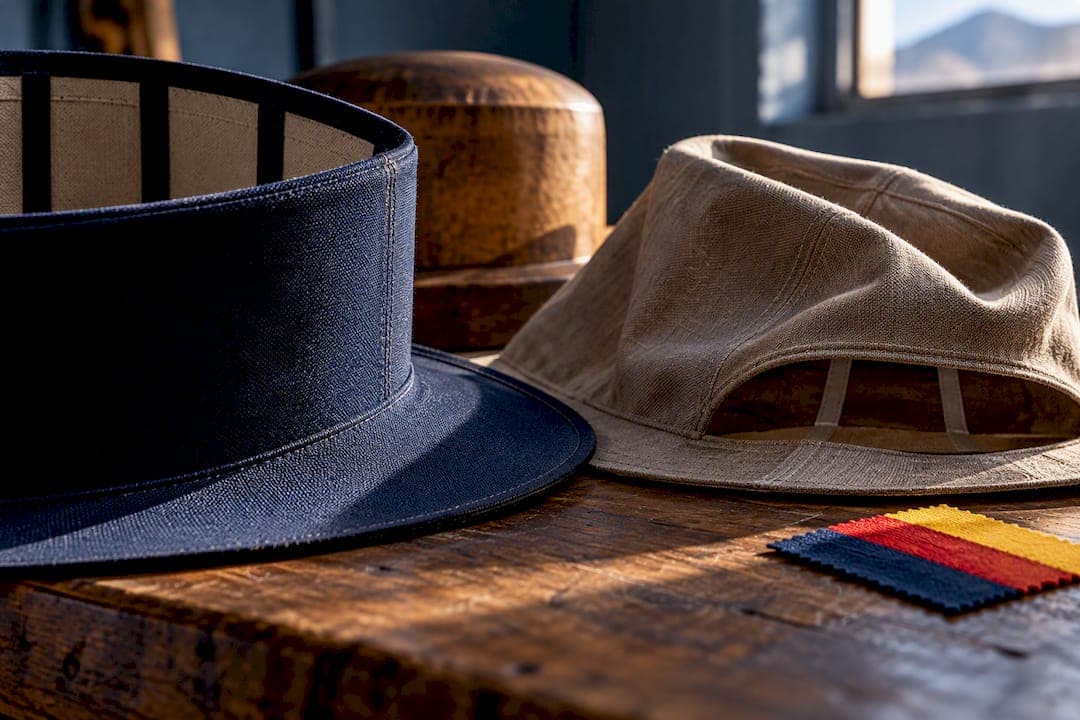
Choose structured for a consistent, sharp silhouette and cleaner branding; choose unstructured for comfort and packability. The difference comes down to one thing: whether there's stiffening material inside the crown. Semi-structured options split the middle with lighter buckram, and plenty of people just end up owning both.
TL;DR:
- Structured hats are ideal for detailed embroidery and professional branding due to their firm, crisp shape that maintains support even when not worn.
- Unstructured hats offer a low-profile, moldable crown that conforms to the wearer’s head and is best suited for casual, travel, or everyday use.
- Semi-structured options using lighter buckram provide a middle ground with some shape retention without the stiffness of full structured crowns.
- The choice depends on intended use: structured for formality and logo precision, unstructured for comfort and ease of packing.
- Native303apparel offers both styles, allowing customization based on design complexity and packing needs, with clear guidance on fit and construction.
Table of Contents
- Structured vs Unstructured Hat: How the Crown Is Built
- What Is an Unstructured Hat? Softer Build, Different Fit
- Structured Hat vs Unstructured Cap: Side-by-Side Comparison
- How to Choose Between a Structured and Unstructured Hat
- Styling Structured and Unstructured Hats for Different Occasions
- Caring for Structured vs Unstructured Hats
- Who's Behind This Guide
- Why Native303apparel Uses Both Builds
- Get a Hat Built Your Way
- Sources
- FAQ
Structured vs Unstructured Hat: How the Crown Is Built
A structured hat has a stiffening material, usually buckram, sewn into the front panels of the crown. That layer is what makes the crown hold a firm, rounded shape whether it's on your head or sitting on a shelf. It's the reason a ball cap on a store display looks the same as the one worn by the person in front of you in line.
Buckram placement varies. Some hats reinforce just the front two panels; others build it into all six. The heavier the buckram, the more rigid the crown, and the more that rigidity shows up in how crisp your embroidery looks.
- Shape retention: holds its form even when you're not wearing it
- Fit feel: sits slightly off the head, with a defined crown height
- Best for: team gear, uniforms, and logos that need sharp detail
- Trade-off: less packable, needs more careful storage
What Is an Unstructured Hat? Softer Build, Different Fit
An unstructured hat skips that internal stiffening (or uses very little of it), which produces a soft, low-profile crown that conforms to your head shape instead of holding its own. It's the difference between a hat that looks the same on everyone and one that starts to look like yours after a few wears.
Dad caps and relaxed 5-panels are the classic examples. Because there's no rigid front panel fighting your head shape, these hats feel "broken in" almost immediately, even brand new. That soft crown also means they fold flat and pack easily, which matters more than people expect until they've crushed a stiff cap in a backpack.
- Shape retention: minimal; the crown molds to you over time
- Fit feel: lower profile, closer to the head, more relaxed
- Best for: travel, everyday wear, casual logo placement
- Trade-off: embroidery needs simpler designs to stay crisp
Structured Hat vs Unstructured Cap: Side-by-Side Comparison
| Dimension | Structured | Unstructured |
|---|---|---|
| Crown support / construction | Buckram-lined front panels | Little to no internal lining |
| Silhouette on the head | Defined, slightly raised crown | Low profile, molds to head |
| Comfort and break-in | Firmer at first, doesn't soften much | Soft immediately, gets better with wear |
| Packability / travel | Holds shape but crushes if packed wrong | Folds flat, travels well |
| Embroidery / branding | Crisp detail, ideal for complex logos | Works best with simpler, bolder logos |
| Typical styles | Team caps, structured snapbacks, uniforms | Dad hats, relaxed 5-panels, low-crown caps |
There's a real middle ground here too. Manufacturers now offer semi-structured builds using lighter buckram weights, giving you some shape retention without the stiffness of a full structured crown. If a product listing doesn't specify buckram weight, that's usually a semi-structured cap being sold without the label.
One thing worth flagging: the crown's internal support is consistently described across manufacturer and promotional-supplier guides as the single spec that drives almost everything else, silhouette, fit, and how your logo turns out.
How to Choose Between a Structured and Unstructured Hat
Work through these questions before you buy:
- What's it for? Team branding or professional photos push you toward structured. Everyday wear or travel points to unstructured.
- Does your logo have fine detail? Small text or intricate line work needs the firmer, flatter embroidery surface that structured crowns provide.
- Are you packing it? If the hat's going in a suitcase or backpack, unstructured wins on convenience.
- How much comfort matters day one? Structured hats often need a break-in period; unstructured ones don't.
- Ask the seller directly: Is there buckram in the crown? What weight? Any care instructions specific to this build?
If a product page won't answer those questions, treat it as a red flag, or ask about a semi-structured option instead.
Pro Tip: If you're ordering hats for a team or event and want photos to look consistent across everyone wearing one, structured is the safer call, even if unstructured feels more comfortable for the wearer.
Styling Structured and Unstructured Hats for Different Occasions
Structured caps show up where consistency matters: uniforms, branded staff gear, and anything getting photographed side by side. A flat bill structured cap reads sharper and more put-together, which is why you see it paired with clean, simple outfits rather than layered, textured ones.
Unstructured hats fit the opposite mood: travel days, festivals, and just running errands. A curved brim, low-crown dad hat pairs naturally with layered everyday outfits and works with almost any face shape since it doesn't add height the way a structured crown does.
- Structured + flat bill: team look, branded events, photo days
- Unstructured + curved bill: travel, weekend wear, casual layering
Caring for Structured vs Unstructured Hats
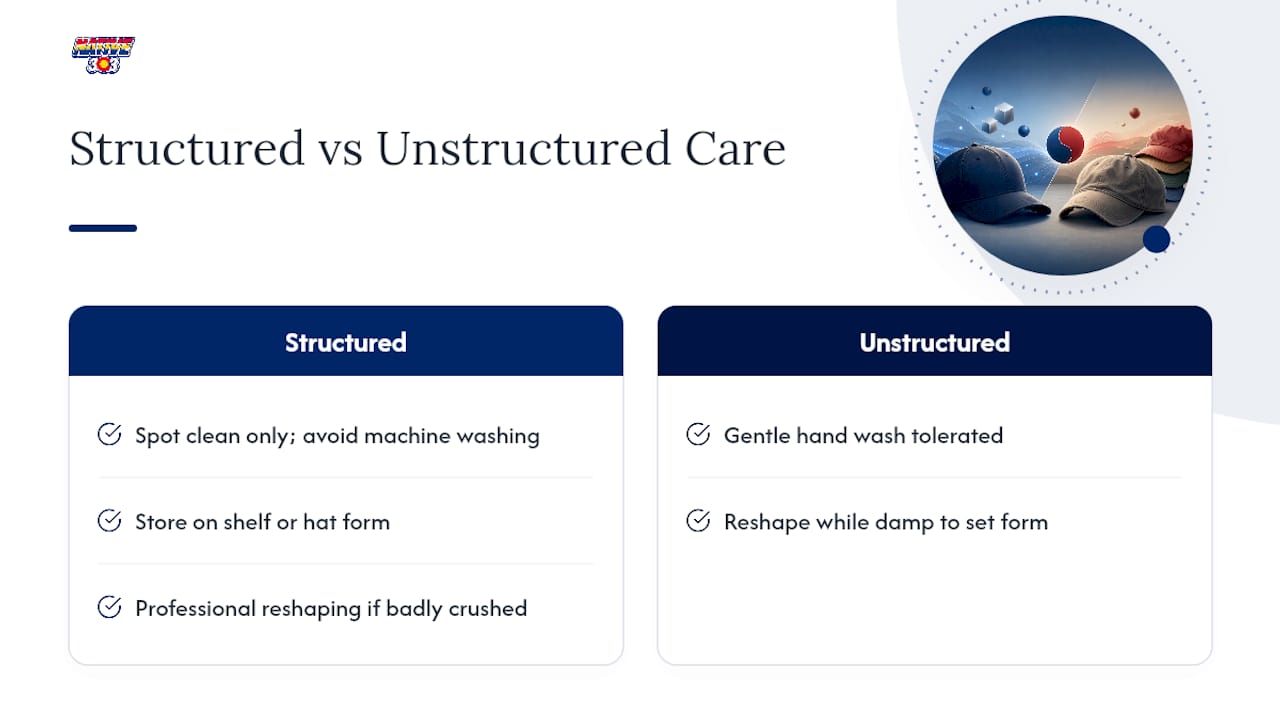
Structured hats need spot cleaning only; machine washing warps the buckram. Store them on a shelf or hat form to keep the crown round. Unstructured hats tolerate a gentle hand wash, and reshaping while damp helps them dry the way you want. If a structured crown gets crushed badly, a professional reshaping service is usually worth the cost over replacing the hat.
Who's Behind This Guide
This guide comes from Rob at Native303apparel, where the team designs nostalgia-driven apparel inspired by metro Denver's iconic eateries, clubs, and shops, including a full hat line built with both structured and unstructured constructions. Native303apparel also publishes practical fit resources like its hat size guide to help readers get sizing right once they've picked a build.

Why Native303apparel Uses Both Builds
Native303apparel leans structured when a design's detail needs a clean surface, and unstructured when the goal is everyday, broken-in comfort. Storytelling and fit come first, not the construction itself. Readers who want a specific build can request one through design-request.
— Rob
Get a Hat Built Your Way
Native303apparel is the alternative to guessing at generic headwear listings: instead of hunting through vague product descriptions to figure out buckram weight, you can just ask for the build you want. The store carries both structured and unstructured hats alongside its Denver nostalgia designs, and the custom design service lets you specify construction, embroidery detail, and fit directly.
If you already know you want a sharp, structured cap for detailed embroidery or a soft, packable unstructured hat for everyday wear, browse the current lineup at the Native303apparel store or start a request through the custom design service to get the exact build you have in mind. Once you've settled on construction, the size guide helps you lock in the right fit before you order.
Sources
- Structured vs Unstructured Caps: Which Hat Style Is Best?
- Structured vs. Unstructured Caps: Fit & Construction Guide
- Structured vs Unstructured Hats: Differences Explained | Pinnacle Promotions
- Structured vs. Unstructured Hats: Which Is Right for Your Custom Order – Wholesale Caps
FAQ
Can You Unstructure a Structured Hat?
Not really, and not without damaging it. The buckram is sewn into the panels, so removing it means taking the hat apart at the seams, which usually ruins the shape rather than softening it. If you want that relaxed feel, buy an unstructured hat instead of trying to convert one.
What Is an Unstructured Hat?
An unstructured hat has little to no internal stiffening in the crown, so it sits low and molds to your head instead of holding a fixed shape. Dad hats and relaxed 5-panels are the most common examples.
Which Hat Style Is Most Flattering?
It depends more on the outfit and occasion than face shape alone. Structured caps look sharper for polished, branded looks, while unstructured hats fit casual, everyday outfits better since they don't add height to the crown.
What Does "Structured Fit" Mean on a Hat?
A structured fit means the hat has buckram reinforcement that keeps the crown's shape consistent, on your head or off it. That's also what gives structured hats their cleaner embroidery results compared to softer, unstructured builds.
Does Native303apparel Sell Both Hat Types?
Yes. Native303apparel's hat line includes both constructions, and the custom design service lets you specify which build fits your project.