
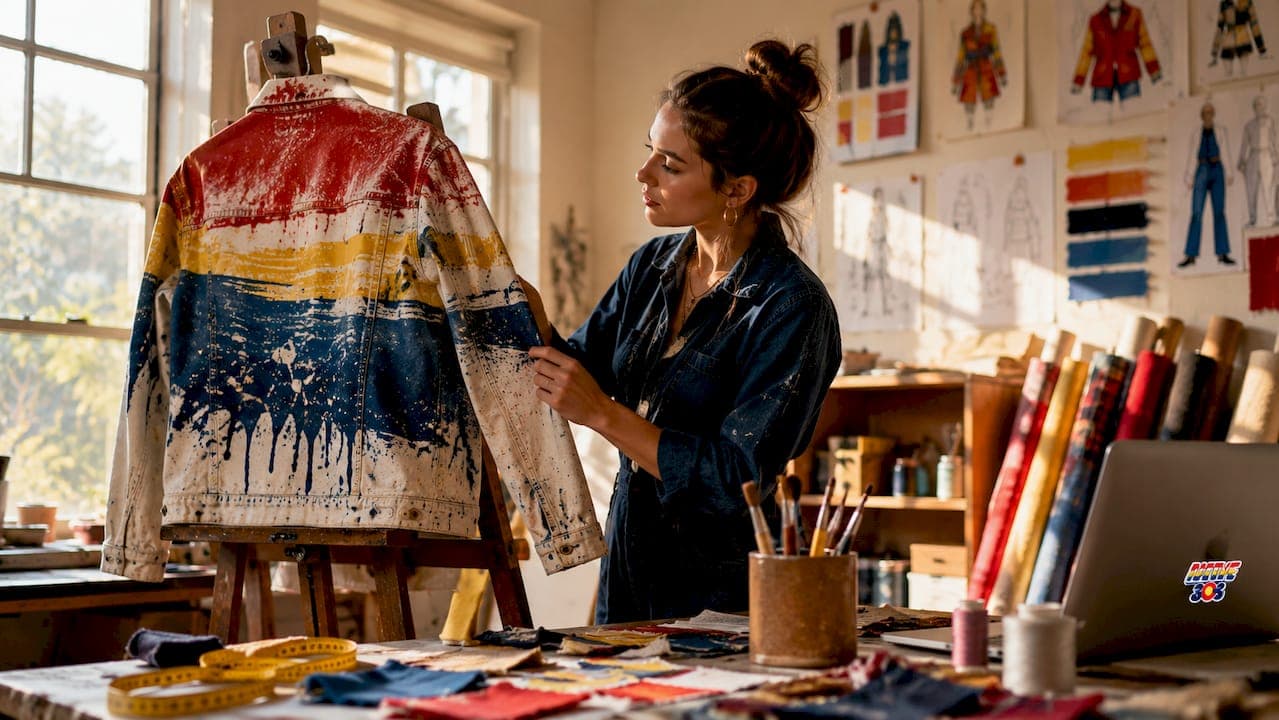
One-of-a-kind apparel designs are garments that exist as a single instance, with no plans for restocking or identical reproduction. The industry term for this category is "1-of-1" clothing, a label that signals true exclusivity rather than a marketing claim. Every aspect of a 1-of-1 piece, from patch placement to thread color, is unrepeatable by design. Native303apparel builds its entire collection on this principle, drawing inspiration from metro Denver's cultural memory to produce pieces that cannot be copied or restocked.
What are one-of-a-kind apparel designs, exactly?
A 1-of-1 garment carries a numbered identity that marks its place in the creator's timeline. That number is not a serial code for a production run. It is a record that this specific piece was made once, at a specific moment, by a specific hand.
Mass-produced clothing is optimized to look identical every time it comes off the line. One-of-a-kind clothing is optimized to look like itself, shaped by the exact conditions of its making. The distinction matters because it changes what you are actually buying. With mass production, you buy a design. With a 1-of-1, you buy an object.
The concept of numbered identity also functions as an authenticity standard. When a piece carries a number tied to the maker's catalog, it becomes traceable. That traceability is what separates a genuine exclusive fashion piece from a garment that simply claims to be rare.
What artistic techniques and materials create unique clothing styles?
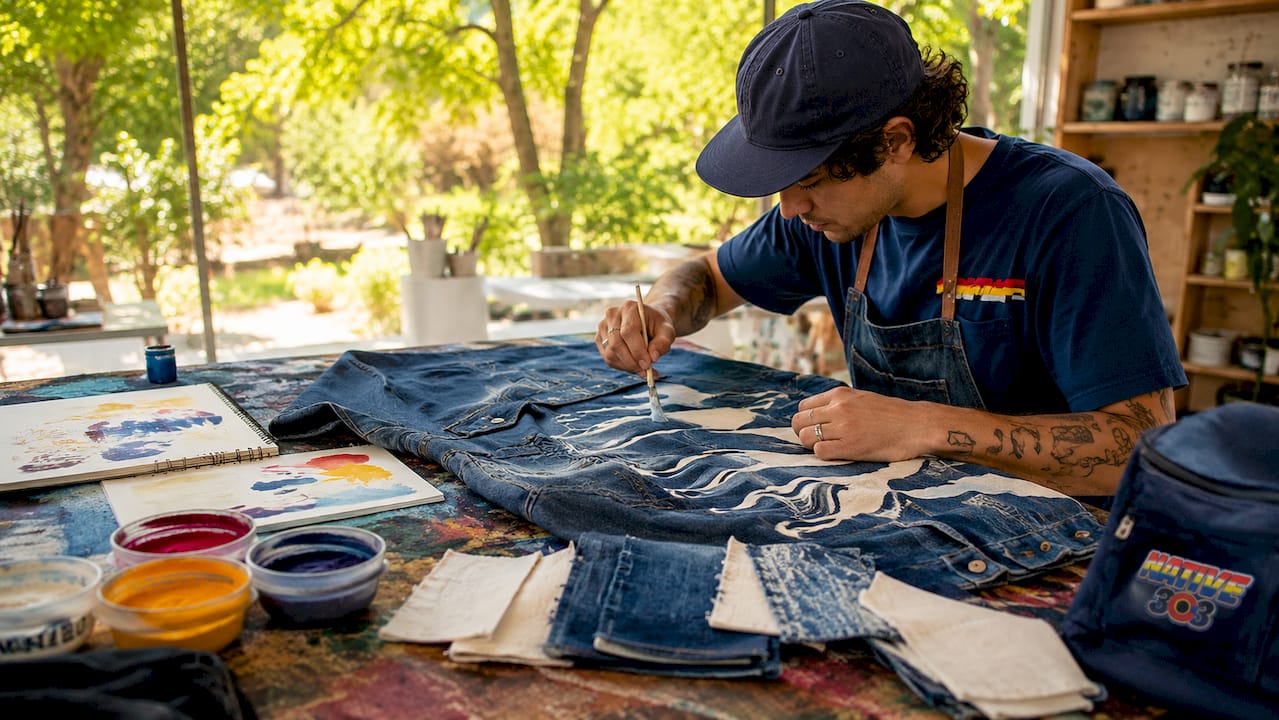
The techniques that define 1-of-1 apparel are the same techniques that make replication impossible. They rely on human hands, organic chemistry, and materials that respond differently every time they are worked.
The most recognized methods include:
- Bleach painting: A process where bleach is applied by brush or spray directly to dyed fabric. Organic edges and brush textures appear in every piece, and no two applications produce the same result.
- Hand-applied beadwork: Each bead is placed individually. The spacing, tension, and pattern shift with the maker's hand position and fatigue, creating micro-variations across the surface.
- Hand-painting: Pigment applied directly to fabric builds depth and texture that screen printing cannot replicate. The paint sits on and within the fiber, not just on top of it.
- Fabric manipulation: Techniques like gathering, pleating, and distressing alter the structure of the cloth itself. Custom bleach art manipulates fabric for depth and texture, making the result more personal than any printed design.
- Unconventional material combinations: Mixing denim with hand-dyed silk, or layering vintage patches over heavyweight fleece, produces surfaces that industrial machines cannot reproduce at scale.
The organic variation in these processes is not a flaw. It is the proof of origin.
Pro Tip: When examining a piece claimed to be handmade, look for inconsistency as a positive sign. Perfectly uniform bleach edges or machine-straight beadwork lines indicate industrial production, not artisanal work.
How does one-of-a-kind apparel differ from standard fashion collections and custom clothing?
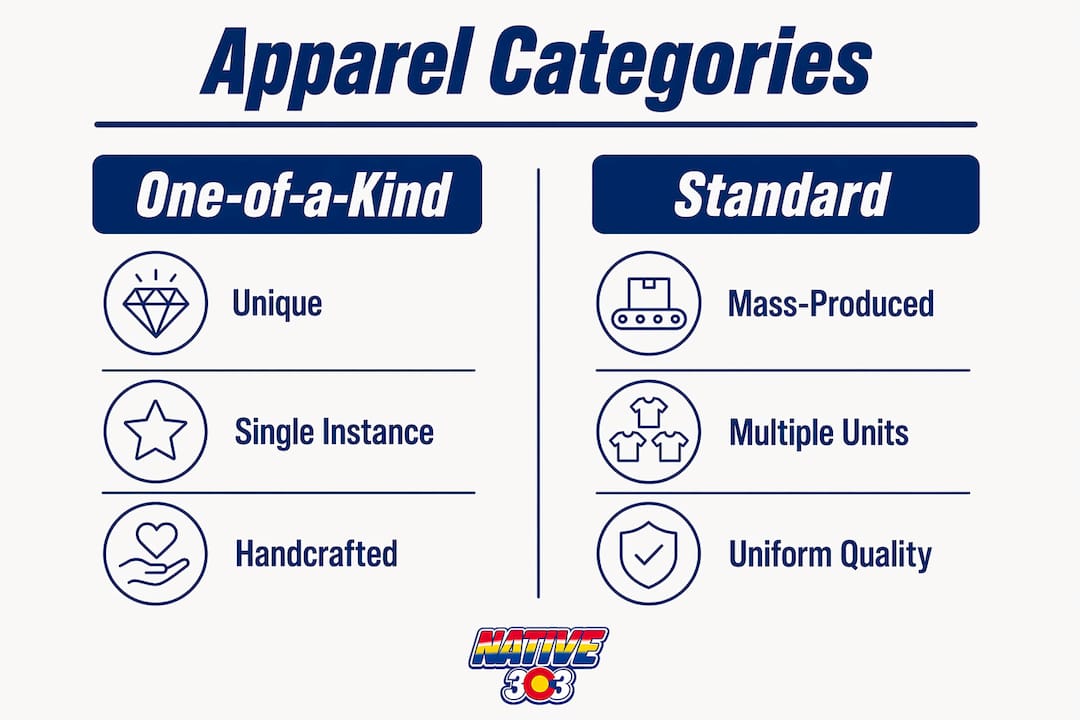
Collectors frequently confuse three categories: 1-of-1 pieces, limited editions, and custom clothing. The differences are significant and affect both value and authenticity.
A limited edition is a planned quantity. A brand decides to produce 50 or 500 units of a design, then stops. Each unit is identical to the others. The scarcity is real, but the uniqueness is not. You and 49 other people own the same object.
Custom clothing adds personalized elements to a mass-produced base. A monogram on a shirt, a name on a jersey, or a color choice from a configurator all qualify as customization. The base garment still came from a factory run. The customization is layered on top, not built into the making.
A true 1-of-1 piece has no identical base. Every aspect of its production is unique and unreproducible. The concept and narrative drive the making, not a production template.
| Category | Quantity | Base garment | Handcraft element | Restock possible |
|---|---|---|---|---|
| 1-of-1 | 1 | Unique per piece | Fully handcrafted | No |
| Limited edition | Planned run | Identical units | Minimal or none | No |
| Custom clothing | Varies | Mass-produced base | Added personalization | Yes |
| Mass production | Unlimited | Standardized | None | Yes |
The table above shows why luxury streetwear 1-of-1s stand apart. They emphasize quality in construction and material over overt branding. The piece stands out through what it is, not what logo it carries.
What is wearable art and its relationship to one-of-a-kind apparel?
Wearable art is a subcategory of one-of-a-kind fashion where the garment prioritizes artistic narrative over daily function or mass appeal. Wearable art focuses on expression and pushes craft beyond its conventional limits. These pieces appear in exhibitions, art galas, and private collections rather than retail racks.
The distinction from standard 1-of-1 apparel is one of intent. A 1-of-1 streetwear piece is made to be worn. A wearable art piece is made to be experienced. Both share the property of existing only once, but the wearable art piece often uses materials and construction methods that make regular wear impractical.
Techniques that push into wearable art territory include:
- Sculptural textile work: Fabric shaped into three-dimensional forms that extend beyond the body's silhouette.
- Mixed media construction: Incorporating non-textile materials like wire, resin, or found objects into the garment structure.
- Narrative embroidery: Thread work that tells a specific story or references a cultural moment, designed to be read as much as worn.
- Digital integration: Embedded lighting, reactive dyes, or NFC chips that connect the physical piece to a digital layer of meaning.
Wearable art pieces serve as creative outlets that allow designers to experiment beyond commercial constraints. Each piece becomes a frozen moment in the maker's timeline. That is what makes them collector objects rather than simply clothing.
Native303apparel draws on this tradition by rooting its designs in Denver's cultural history. The result is apparel that carries a specific story, not a generic aesthetic. You can read more about this approach in the brand's work on Denver wearable art.
Why do collectors and fashion enthusiasts value one-of-a-kind apparel?
The collector market for 1-of-1 apparel runs on authenticity, and authenticity has specific, verifiable markers. Collectors do not simply take a seller's word for it.
The primary value drivers are:
- Visible traces of making: Brush stroke variation, uneven bleach distribution, and hand-stitching irregularities all confirm handmade origin. Small imperfections confirm handmade origin and signal the emotional connection absent in factory goods.
- Numbered identity: A piece numbered within a maker's catalog places it in a specific moment of that creator's work. The number is a timestamp, not just a label.
- Material quality: Luxury 1-of-1 pieces use heavyweight materials and construction details that distinguish them as "crown jewels" for identity-driven collectors.
- Provenance verification: Modern 1-of-1 pieces often include embedded NFC chips that link the garment to its digital provenance record. This makes the piece traceable across ownership changes.
- Emotional connection: A 1-of-1 piece freezes a moment in the maker's timeline. Owning it means owning a slice of that creative history.
Pro Tip: Before buying a claimed 1-of-1, ask the seller for documentation of the production process. Photos of the making, a numbered certificate, or an NFC chip linked to provenance data all add verifiable weight to the authenticity claim.
How can you identify and acquire authentic one-of-a-kind pieces?
Finding genuine 1-of-1 apparel requires knowing where to look and what questions to ask. The market includes serious artisan makers alongside sellers who use the term loosely.
- Research the maker's process. Authentic 1-of-1 creators document their work. Look for process photos, studio footage, or written descriptions of the specific techniques used on each piece.
- Verify the numbering system. A genuine piece carries a number tied to the maker's catalog. Ask what that number means and how it is recorded.
- Examine the piece physically. Organic imperfections, hand-stitching variation, and material depth are visible to the eye. If the piece looks machine-perfect, it probably is.
- Check for provenance documentation. Certificates of authenticity, NFC chips, or digital records linked to the garment add a layer of verification that mass-produced items cannot replicate.
- Buy from specialized sources. Artisan markets, independent maker studios, and brands built specifically around the 1-of-1 concept are more reliable than general retail platforms. For collectors exploring the exclusive streetwear space, understanding how these pieces are positioned helps separate genuine makers from imitators.
Sizing is also a practical consideration. Because 1-of-1 pieces are not produced in standard runs, fit can vary. Reviewing a maker's size guide before purchasing prevents the frustration of acquiring a piece that does not work for your body.
Key Takeaways
One-of-a-kind apparel designs are defined by a single production instance, unrepeatable handcraft techniques, and verifiable authenticity markers that separate them from every other category of clothing.
| Point | Details |
|---|---|
| True 1-of-1 definition | A genuine piece exists once, with no restocks and no identical reproductions possible. |
| Handcraft as proof | Organic imperfections like bleach variation and hand-stitch irregularities confirm authentic handmade origin. |
| Not the same as custom | Custom clothing adds personalization to a mass-produced base; 1-of-1 pieces are unique from the first step of making. |
| Collector verification | Numbered identity, NFC provenance chips, and process documentation are the strongest authenticity markers. |
| Wearable art distinction | Wearable art prioritizes narrative and exhibition over daily wear, representing the most conceptual end of 1-of-1 fashion. |
Why I think the 1-of-1 conversation matters more than most fashion coverage admits
The fashion industry talks about exclusivity constantly. Most of what it calls exclusive is just scarcity by volume control. A brand produces fewer units and calls the result rare. That is a supply decision, not a creative one.
What genuinely one-of-a-kind apparel does is different. It makes scarcity a byproduct of process rather than a marketing choice. You cannot make another one because the conditions that created the first one are gone. The bleach has dried. The maker's hand was in a different place. The fabric responded the way it responded that day.
I find that distinction clarifying rather than sentimental. When you wear a 1-of-1 piece, you are not wearing a limited product. You are wearing a record of a specific act of making. That changes the relationship between the wearer and the object in a way that no branding exercise can replicate.
The collectors who understand this tend to care less about labels and more about process. They ask how something was made before they ask who made it. That is the right order of questions.
— Rob
Native303apparel's one-of-a-kind collections, explained
Native303apparel builds every piece around a specific cultural memory from metro Denver. The eateries, clubs, and shops that shaped the city's identity become the source material for designs that exist only once.
Each garment in the collection carries the hallmarks of genuine 1-of-1 production: handcraft techniques, no restocks, and a design concept rooted in a real place and time. If you are new to the brand, the about Native303 page gives the full story behind the collection's origins. For sizing before you buy, the size guide covers fit details for each piece. Browse the full collection at Native303apparel to see what is currently available.
FAQ
What does "1-of-1" mean in apparel?
"1-of-1" means a garment exists as a single instance, with no identical copies produced and no plans to restock it. Every element of the piece, from material choice to surface treatment, is unique to that one object.
How is one-of-a-kind fashion different from limited edition clothing?
Limited edition clothing is produced in a planned quantity where each unit is identical to the others. One-of-a-kind fashion produces a single piece where no two aspects of the making are exactly the same.
What techniques make a garment truly one-of-a-kind?
Techniques like bleach painting, hand-applied beadwork, and hand-painting create organic variations that cannot be industrially replicated. The process itself guarantees uniqueness because human hands and organic materials respond differently every time.
How do collectors verify a garment is genuinely one-of-a-kind?
Collectors look for visible handmade traces, numbered identity documentation, and modern provenance tools like embedded NFC chips that link the physical piece to a verifiable digital record.
Can a custom-ordered garment be considered one-of-a-kind?
Custom clothing adds personalization to a mass-produced base and does not qualify as a true 1-of-1. A genuine one-of-a-kind piece is unique from the first step of its making, not just in its finishing details.